
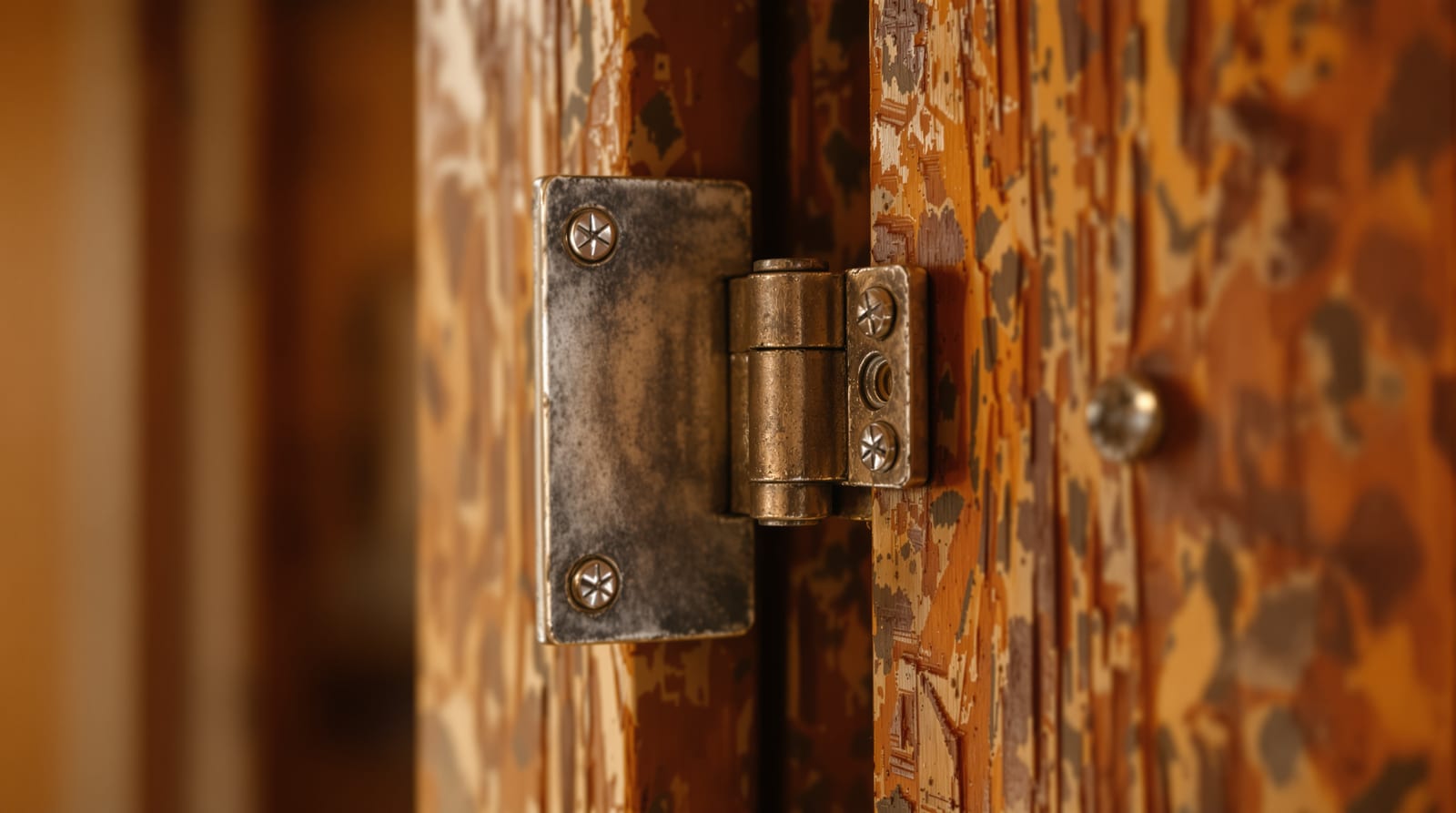
Door Reinforcement India: Strengthen an Existing Door Without Replacing It (2026)
A DIY-friendly guide to reinforcing your current door and frame — box strike plates, 3-inch screws, frame reinforcement plates, hinge bolts, edge wraps, anti-kick devices, security bars and glass film — with ₹ costs per upgrade.
When a burglar kicks a door open, the lock almost never breaks — the wood around it does. A typical Indian flush or panelled door is held shut by a latch bolt biting into a thin pressed-metal strike plate, fixed to the frame with two short 15 mm screws that barely reach past the architrave. One hard kick splits the frame at the strike, the screws tear out, and the door swings open with the lock still perfectly intact. The good news is that you do not need to throw away a sound door to fix this. A few hours of work and a couple of thousand rupees of hardware can make your existing door several times harder to force — and most of it is genuine weekend DIY.
This guide is the hands-on companion to the broader door security guide and the anti-theft door guide, which cover the full layered strategy. Here we go deep on one thing only: physically reinforcing the door and frame you already own, weak point by weak point.
Why doors fail: it is the frame, not the lock
Forced-entry tests and police break-in patterns tell the same story everywhere, including in Indian apartments and independent houses. The three things that actually give way are:
1. The strike (latch side) — the wood beside the lock splits, or the flimsy strike plate bends and its short screws pull out. This is the single most common failure.
2. The hinge side — on outward-opening or poorly fitted doors, hinge screws strip out or the leaf is prised off its pins.
3. The door edge itself — the timber around the mortise lock cracks, or a thin blade is slipped in to jimmy the latch ("loiding").
Every upgrade below targets one of these. Reinforce all three and even a determined kick meets solid steel anchored deep into the frame and wall behind it, not 15 mm of screw in soft architrave.
Weak point and reinforcement at a glance
Indicative 2026 prices, hardware only (fitting labour and 18% GST extra; varies by city and vendor):
| Weak point | Reinforcement | What it does | Indicative ₹ (hardware) | DIY? |
|---|---|---|---|---|
| Strike plate splits, screws pull out | Box strike plate + 75 mm (3") screws | Spreads kick load, anchors into stud/masonry | ₹150–800 + screws ₹50–150 | Yes |
| Frame cracks beside the lock | Door frame reinforcement plate (latch wrap) | Long steel plate ties frame together around strike | ₹600–2,500 | Yes / handyman |
| Hinge screws strip / door prised off | 75 mm hinge screws + hinge-side set screws/dog bolts | Anchors hinges deep; pins door even if hinges removed | Set screws ₹100–400; screws ₹50 | Yes |
| Door edge cracks / latch jimmied | Door-edge wrap / security plate | Steel U-channel armours the lock edge against splitting and loiding | ₹500–2,000 | Handyman |
| Door kicked in mid-panel | Anti-kick bar / floor-anchored brace | Braces leaf against the floor; resists battering | ₹500–3,000 | Yes |
| Forced while you are home | Portable door bar / jammer / chain | On-demand barricade when occupied | ₹150–2,500 | Yes |
| Glass panel smashed to reach latch | Security / safety film on glazing | Holds shattered glass together, delays reach-through | ₹80–250 / sq ft | Handyman/pro |
For a steel security door or multipoint-locking upgrade — when reinforcement is not enough — see burglar-proof doors and multipoint-locking doors instead.
1. Reinforce the strike: box strike plate + 3-inch screws
This is the highest-value, lowest-cost upgrade and where everyone should start. A standard strike plate is a thin flat plate with a single open lip; a box strike (security strike) is a heavier-gauge plate with a deep steel box or pocket that fully wraps the latch bolt, so the bolt is enclosed in metal rather than just resting against a hole in soft wood.
The bigger win is the screws. The 15–20 mm screws that come with most locks only grip the frame jamb — a thin strip of timber that splits instantly under a kick. Replace them with 75 mm (3-inch) wood screws that pass right through the jamb and architrave and bite into the structural timber stud or the masonry/concrete wall behind. On Indian RCC and brick-walled homes the frame is usually fixed to the wall with hold-fasts or grouted into the reveal, so a 75 mm screw (or a screw into a plastic/nylon wall plug drilled into the masonry) reaches solid material that no kick will move.
DIY steps:
1. Unscrew the existing strike plate. Check the latch bolt lines up cleanly with the hole when the door is shut.
2. If using a deeper box strike, you may need to chisel the mortise pocket a few millimetres deeper so the box sits flush. Test-fit before screwing.
3. Drill pilot holes for the long screws angled slightly toward the wall so they catch the stud/masonry. For brick or RCC, drill and insert a wall plug first.
4. Drive 75 mm screws through the strike, jamb and architrave into solid material. Tighten firmly but do not over-torque and strip the wood.
5. Close the door and check the bolt throws fully with no rub.
If your deadbolt is also fixed to a flimsy strike, do exactly the same for it — a deadbolt or mortise lock is only as strong as the strike it lands in.
2. Tie the whole jamb together: frame reinforcement plate
A box strike protects the few centimetres around the latch. A door frame reinforcement plate (also sold as a "latch wrap" or "door jamb shield") is a long steel plate — often 300 mm to a full door-height bar — that wraps or covers the strike side of the frame and is screwed in with many long screws, distributing a kick across a much larger area of wood and wall. It is the upgrade for a frame that has already split once, or for a soft pine/rubber-wood frame common in budget Indian flats.
These are not as commonly stocked in Indian hardware shops as in the West, but they are easy to find online, and any good carpenter can also fabricate a simple mild-steel or stainless flat-bar plate to the same effect. On a high-risk door, combining a frame plate with a box strike and 3-inch screws gives near-steel-door resistance on the latch side at a fraction of the cost.
3. Lock the hinge side: long screws and set screws
Most people armour the lock side and forget the hinges. On an inward-opening door the hinge knuckles are inside, but the screws still matter — strip them and the leaf can be wrenched. On any outward-opening door (some bathrooms, utility and balcony doors — see balcony door), the hinge pins are exposed and the whole leaf can be lifted off.
Two fixes:
- 75 mm hinge screws: replace at least one screw per hinge with a 3-inch screw into the stud/masonry, exactly as on the strike side. This is the cheapest defence against the door being prised at the hinges and it doubles as the classic fix for a sagging door.
- Hinge-side set screws / dog bolts: fixed steel pins (or non-removable "security stud" hinges) that protrude from the hinge edge of the leaf into matching holes in the frame. When the door is shut, these pins lock the hinge edge into the frame, so even if an exposed hinge pin is knocked out, the door cannot be levered open from that side. You can buy security hinges with these built in, or fit standalone dog bolts to an existing leaf.
Inline diagram: reinforced box strike and hinge dog bolt
4. Armour the door edge: edge wrap / security plate
If the lock itself is sound but the timber around the mortise is the weak point, a door-edge wrap (a U-shaped steel channel that slips over and is screwed around the lock edge of the leaf) reinforces the wood so it cannot split where the bolts pass through. It also frustrates loiding — slipping a flat blade or card behind the latch to push it back — because the steel covers the gap. On a door whose edge has already started to crack around the lock, this is often cheaper than replacing the leaf. Fitting needs a careful hand and ideally a carpenter, because the channel must align with the lock cutouts.
5. Resist the battering kick: anti-kick devices
Box strikes and frame plates already do most of the anti-kick work by anchoring the latch side. For an extra layer on a vulnerable door — a ground-floor flat, a remote farmhouse, a rented place where you cannot permanently modify the frame — an anti-kick bar or floor-anchored brace wedges the door leaf against the floor so a battering kick is resisted by the floor itself, not just the frame. Adjustable security bars that brace from the door to the floor are sold online from around ₹500–3,000 and need no drilling, which suits renters.
6. When you are home: bars, jammers and chains
Reinforcement so far is about the door when you are out. When you are inside — at night, or as a woman or senior alone at home, a real concern in many Indian households — you also want a barricade you control directly:
- Portable door bar / jammer: a telescopic bar that braces the closed door against the floor. Strong, instant, removable; ideal for hotel rooms, rentals and night use.
- Door security chain or guard latch: the familiar chain that lets you open the door a crack to see who it is. Cheap and worth fitting on every main door, but on its own a chain is weak — pair it with a wide-angle door viewer or peephole so you can identify a caller without opening at all.
- Floor-mounted slide bolt / aldrop: the classic heavy Godrej-style aldrop and tower bolts (see tower bolts and latches) remain a genuine secondary lock when you are home, provided they too are fixed with long screws into solid material.
7. Protect glass panels: security film
Many Indian main doors, balcony doors and glass doors have a glass panel right beside the latch. The easiest break-in is to smash that pane and reach in to turn the latch or thumb-turn. Security / safety window film is a thick polyester laminate applied to the inside of the glass that holds shards together when struck, so the pane resists punching through and buys crucial time and noise. It is not bulletproof, but it converts a five-second reach-through into a slow, loud, conspicuous attack. For high-risk glazing, toughened glass doors plus film, or moving the thumb-turn out of arm's reach of the glass, is the stronger answer. Film is best applied by a professional installer to avoid bubbles; ₹80–250 per sq ft is typical.
DIY versus calling a professional
| Upgrade | Comfortable DIY? | Call a pro/carpenter when |
|---|---|---|
| Box strike + 3" screws | Yes — basic drill, an hour | Frame already split badly; masonry needs core drilling |
| Long hinge screws | Yes | Door is sagging and needs re-hanging |
| Hinge dog bolts / security hinges | Yes, with care | Replacing whole hinges or aligning new holes |
| Frame reinforcement plate | Moderate | Full-height plate, hard masonry, precise alignment |
| Door-edge wrap | No — fiddly alignment | Almost always — match to lock cutouts |
| Anti-kick bar / portable jammer | Yes | None — no tools needed |
| Security film on glass | Best by installer | Always, for a bubble-free finish |
A useful rule for India: anything that is screwing hardware to wood you can see is DIY; anything that involves chiselling the door edge, cutting steel, or drilling into RCC is worth a carpenter or a security-door fitter. Branded fitters (Godrej Security Solutions and similar) will also reinforce as part of a lock or steel-door job.
A sensible reinforcement order on a budget
If you do nothing else, do the strike. A realistic phased plan for a typical Indian main door:
1. Under ₹1,000: box/reinforced strike plate + a pack of 75 mm screws, fitted to both the latch and deadbolt strikes, plus long hinge screws. This alone defeats most casual kick-ins.
2. ₹1,000–3,000: add a frame reinforcement plate and hinge dog bolts (or swap to security hinges).
3. ₹3,000–6,000: add a door-edge wrap and security film on any glass panel.
4. Beyond that: if the door is hollow-core, rotten, or you want certified resistance, stop reinforcing and look at a security-grade or steel door instead — there is a point where a new door is the better spend.
If you are unsure whether your current setup is worth reinforcing or replacing, the broader door repair guide helps you judge the condition of the leaf and frame first.
Frequently asked questions
What is the single most effective door reinforcement I can do myself?
Replace the short screws in your strike plate (and deadbolt strike) with 75 mm (3-inch) screws that reach the wall stud or masonry, and fit a box strike plate. The lock rarely fails — the wood and short screws around it do — so anchoring the strike deep into solid material defeats the most common kick-in for under ₹1,000.
Can I reinforce a hollow-core flush door, or do I have to replace it?
You can reinforce the strike and frame, which helps, but a hollow-core leaf can itself be punched through, so the gain is limited. For a main door that is hollow-core or already damaged, reinforcement is a stopgap — budget instead for a solid-core, security-grade or steel door for the entrance, and keep the existing door for a low-risk internal opening.
Will long screws or a frame plate damage my door frame or wall?
Done correctly, no — you drill pilot holes and, in brick or RCC, use wall plugs before driving the screws. The aim is to reach solid timber or masonry, not to crack the architrave. If your frame is already split, a frame reinforcement plate actually ties the cracked wood back together. For hard masonry, let a carpenter or fitter core-drill it.
Do I need security film if my door already has a grill door?
A safety grill door is excellent defence and reduces the need for film. But if there is a glass panel within arm's reach of the latch and the grill is sometimes left open (common during the day), film still adds a worthwhile layer by stopping a quick smash-and-reach. Layering is the whole point — see the door security guide for the full stack.
Are portable door bars and jammers worth it for renters?
Yes. They need no drilling, brace the door against the floor, and are strong enough to stop most forced entries while you are home — ideal for rented flats, hostels and hotel stays where you cannot modify the frame. Combine one with a chain guard and a wide-angle viewer for a no-damage security setup you can take with you.
Export this guide
Related Guides — Deep-dive reading
Door Frame Security in India (2026): Anchoring the Chowkhat Break-Ins Actually Exploit
A homeowner's guide to the real weak point behind most forced entries: the frame, not the leaf or the lock, and how to anchor, pack and reinforce a chowkhat so a strong door genuinely stays in the wall.
SecurityAnti-Theft Door Guide India: Affordable Ways to Burglar-Proof Your Entry (2026)
A practical, layered checklist of low-cost upgrades — deadbolts, strike-plate reinforcement, hinge bolts, viewers, grill doors and smart alerts — to make any Indian home door far harder to force.
Home Doors & EntrancesBurglar-Proof Doors in India: What Actually Stops a Break-In (2026)
A burglar-resistant main door is a system — solid leaf, anchored frame, multipoint lock, anti-saw bolts and visibility — not just an expensive lock. Here is how each layer works and what it costs to upgrade.
Home Doors & EntrancesRelated Tools — Try Free
Door Security Rating Calculator
Score your main door out of 100 across leaf, frame, lock and hardware — and see the top upgrades.
Security ToolWindow Hardware Cost Calculator
Estimate window hardware cost — hinges, handles, locks, rollers and multipoint gears.
Window CalculatorDoor Cost Calculator
Estimate the all-in cost of a door — leaf, frame, hardware, fitting and GST — by type, material and size.
Door Calculator