
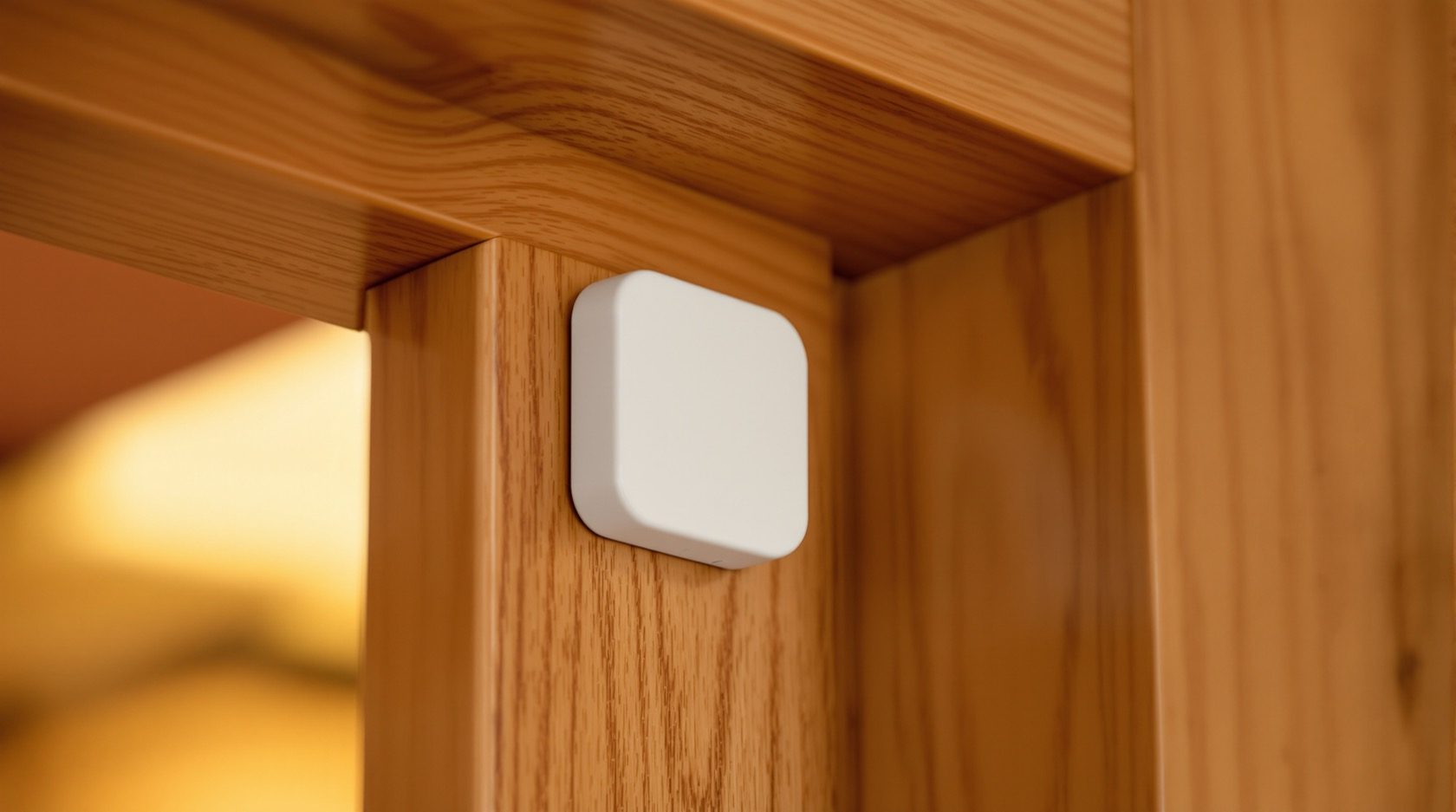
Door Sensors in India (2026): The Contact Sensor That Starts Every Alarm
How a door contact sensor works, wired versus wireless, surface-mount versus recessed, exactly where to place it, which doors to cover in an Indian home, and the honest limits worth knowing before you buy.
Every burglar alarm, however clever, rests on one humble part: the door contact. It is the cheapest sensor in the whole system, the easiest to fit, and the one that catches the single most common way an intruder enters an Indian home — straight through a door. Get the doors covered well and you have a real perimeter; skip them and the rest of the system is guarding an already-open gate.
Door sensors — properly, door contact sensors — sit at the start of the complete burglar-alarm picture. This guide explains how the little magnet-and-switch pair actually works, the wired versus wireless choice, surface-mount versus recessed, precisely where each one goes, which doors in a typical Indian home deserve one, and the honest limits worth knowing before you spend a rupee.
Scope & safety. This guide helps you choose and place door contacts and plan your coverage — all of which a homeowner can do. Sticking or screwing a two-part contact onto a door you can reach is fine. Anything that runs cable through walls back to a panel, ties into the mains supply, or works at height belongs to a licensed installer or electrician. A sensor must never obstruct a fire-escape route, and any indoor system that logs comings and goings touches personal data under the Digital Personal Data Protection Act, 2023. This is educational guidance, not legal advice.
How a door contact sensor works
Open up the idea and it is almost disappointingly simple. A door contact is two small blocks. One block holds a magnet and screws or sticks to the moving door leaf. The other holds a reed switch — two thin metal contacts sealed in a tiny glass tube — and mounts on the fixed frame, right next to the magnet. Wire or radio connects the reed switch back to the alarm panel.
When the door is shut, the magnet sits a few millimetres from the reed switch and its field pulls the two metal contacts together, closing the circuit. The panel sees a closed loop and stays at rest. The moment the door swings open, the magnet travels away with the leaf, the field weakens, the reed contacts spring apart, and the circuit breaks. That break is the signal: the panel reads "door open" and, if the system is armed, raises the alarm.
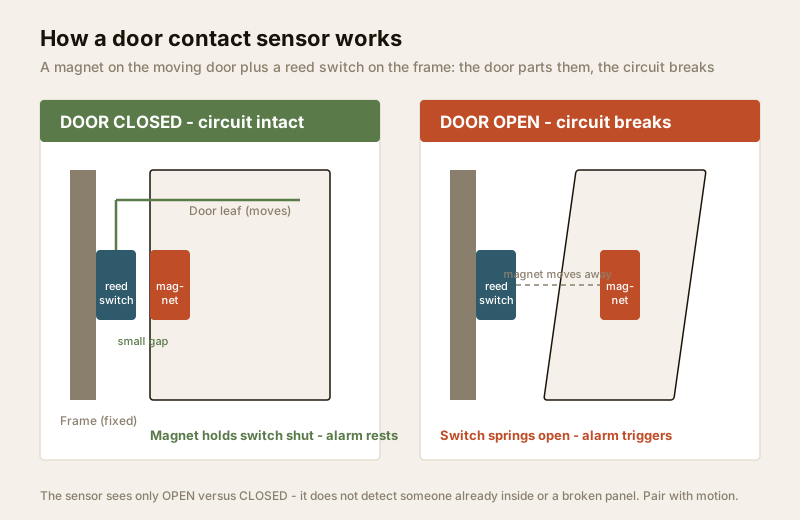
That is the whole trick. There is no camera, no clever software, nothing to calibrate — just a magnet, a switch and a gap. It is why door contacts are cheap, reliable, sip almost no power, and rarely false-alarm: a door is either open or it is not. This same magnet-and-reed pair is exactly what a window sensor uses; the two are siblings, differing only in size and mounting.
What the sensor actually reports
It is worth being precise, because the limits flow directly from this: a door contact reports one thing only — whether the door is open or closed. It does not know who opened it, whether the door was forced or unlocked, or whether someone is standing quietly inside a room. It also cannot see a burglar cutting a hole through the door panel while the leaf stays shut, because the magnet never moves. Those are not flaws to hide; they are the reason a good system pairs door contacts with a motion sensor covering the space behind the door.
Wired versus wireless
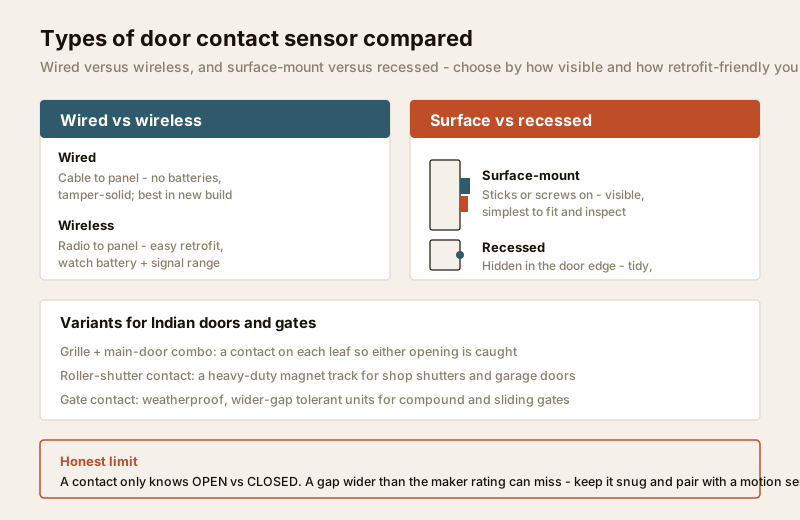
The first real decision is how the contact talks to the panel. Both do the identical job of sensing open-or-closed; they differ in fitting, upkeep and where they suit.
| Feature | Wired contact | Wireless contact |
|---|---|---|
| Connection to panel | Cable run back to the panel | Short-range radio signal |
| Best for | New build or during renovation, when cabling is easy | Retrofit into a finished home — no chasing walls |
| Power | Drawn down the cable; nothing to change | A small battery in the door block, typically 2–5 years |
| Upkeep | Effectively none | Watch the low-battery warning; replace on time |
| Tamper resilience | No radio to worry about; cable can be supervised | Good units are encrypted and supervised; cheap ones less so |
| Typical cost (per contact) | ₹150–₹500 plus cabling labour | ₹400–₹1,200, fits in minutes |
For most Indian homes retrofitting an alarm into a place that is already lived in, wireless wins on sheer practicality — no walls to chase, no dust, fitted in an afternoon. The trade is a battery to keep an eye on and a preference for good, supervised, encrypted units so the panel notices if a contact goes silent. If you are building or gut-renovating, run wired contacts on the main perimeter doors while the walls are open; they never need a battery and are the most solid choice. Many homes end up mixing both — that is exactly what a hybrid alarm system is for, and the broader wired-versus-wireless trade-offs are covered in the wired and wireless burglar alarm guides.
Surface-mount versus recessed
The second choice is how the contact physically sits on the door.
- Surface-mount contacts are the common kind: two small plastic blocks that screw or stick onto the face of the door and frame, sitting proud where you can see them. They are the cheapest, the fastest to fit, the easiest to inspect and re-stick, and they suit almost every retrofit. The only downside is that they are visible and slightly exposed.
- Recessed contacts are drilled into the edge of the door and the frame so they vanish when the door is shut — a neat, tamper-tidy look with nothing on show. They cost a little more, need a clean drilled hole in each side, and are best fitted to a solid wooden or metal door by someone comfortable with the drilling. They shine on a smart front door or anywhere you want the hardware invisible.
Where the sensor goes
Placement is where a door contact is made or wasted, and the rules are short:
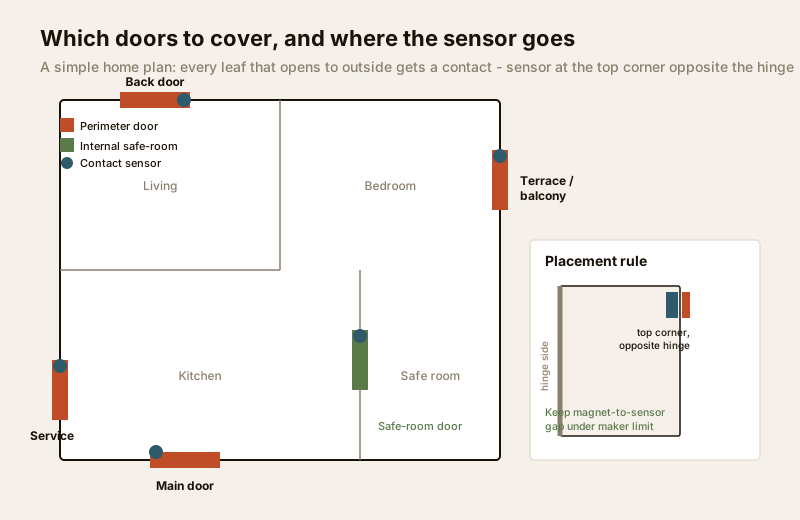
1. Top corner, opposite the hinge. Mount the pair at the top of the door on the side that swings free (the latch side), not the hinge side. The opening edge travels the farthest when the door cracks, so the magnet separates from the switch the instant the door begins to move — the earliest possible trigger. A contact on the hinge side barely moves and can be slow or miss entirely.
2. Magnet on the moving leaf, switch on the fixed frame. The reed switch is the part that wires or radios back to the panel, so it belongs on the stationary frame; the plain magnet rides the door.
3. Mind the gap. Every contact has a maximum magnet-to-switch gap in its datasheet (often around 10–20 mm for surface units). Fit the two blocks so that, with the door shut, they sit closer than that limit and line up squarely. A gap wider than the rating — a warped door, a thick weather-strip, a sloppy fit — can leave the switch open even when the door is closed, or fail to register a small opening. Snug and aligned is the whole game.
4. Same plane, same height. The magnet and switch should face each other across the door-frame joint, level with one another. On a double door, fit a contact to each leaf.
Which doors to cover
An intruder uses whichever door gets least attention, so the honest answer is: every leaf that opens to the outside, plus one or two inside. In a typical Indian home that means:
| Door | Why it matters | Priority |
|---|---|---|
| Main door | The obvious entry; also your daily arm/disarm point | Essential |
| Back / kitchen door | Often older, quieter, less overlooked — a favourite | Essential |
| Service / utility door | Used by staff and deliveries; easy to forget | High |
| Terrace / balcony door | Reachable from a parapet, ledge or neighbouring roof | High |
| Compound / sliding gate | The outer line; use a weatherproof gate contact | High for villas |
| Internal safe-room door | A last inner line around a strong-room or master bedroom | Optional but valuable |
Two India-specific patterns are worth calling out. First, the grille-plus-main-door combo: many homes have an outer metal grille and an inner wooden door on the same frame. Fit a contact to each leaf so opening either one is caught — the grille is often left as the only barrier on a hot evening, so it deserves its own sensor. Second, roller shutters and compound gates: shops, garages and villa gates use heavy roller shutters or sliding gates, which take a purpose-built roller-shutter contact with a robust magnet track and a wider gap tolerance, not a household door block. These outer-line points are part of a perimeter alarm system; think of door contacts as the innermost layer of the layered security design that runs from your gate inward.
Honest limits — and how placement answers them
A door contact is excellent at exactly one job and blind to everything else. Stated plainly, so you buy with open eyes:
- It only detects opening, not presence. Someone already inside — hidden before you armed the system, or who entered another way — sets off nothing. The answer is a motion sensor as the interior partner, so the space behind the door is watched even when no door moves. A PIR sensor is the usual choice; a dual-technology sensor resists false alarms in tricky rooms, and pet-friendly motion sensors suit homes with animals.
- It cannot see a door being broken through. Cut or kicked through the panel while the leaf stays shut and the magnet never moves. A glass-break or vibration sensor (a different sensor family, covered later) or interior motion catches this.
- A too-wide gap can miss. A warped leaf, thick weather-strip or careless fit can push the magnet-to-switch gap past the datasheet limit — so the panel never sees the door as properly closed, or misses a small opening. This is a fitting problem with a fitting fix: mount the pair snug and square, well within the rated gap. On problem doors, choose a wide-gap-rated contact.
- Self-monitored reality. Most Indian alarms are self-monitored: the panel sounds a siren and pushes an app or GSM alert to you, rather than dialling a monitoring centre with police auto-response, which is still rare here. A door contact will faithfully raise that alert — but the response is yours to arrange, so plan who acts on it.
- Power cuts. When the mains drop, the panel runs on its backup battery and the contacts keep working; make sure that battery is healthy so the door line stays live through an outage.
None of these are reasons to skip door contacts — they are the reason to pair them, which is precisely how a good system is designed. To choose the right mix for your home, the burglar-alarm system selector walks through it, and the perimeter vulnerability assessment helps you audit every opening first.
When to bring in a professional. Sticking or screwing a wireless surface contact onto a reachable door, and planning which doors to cover, are homeowner jobs. Bring in a licensed installer for recessed contacts that need drilling into a door edge, any wired run chased through walls back to the panel, roller-shutter and gate contacts, work at height, and anything mains-connected — see the electrical hub. For a whole-home design across doors, windows and motion, an installer can survey the property; use the apartment or villa security guide to frame the brief.
Key takeaways
- Door contacts are the foundation of every alarm — a magnet on the moving leaf and a reed switch on the fixed frame; when the door opens, the magnet moves away, the circuit breaks, and the alarm triggers.
- Wireless suits most retrofits (fast, no wall-chasing, watch the battery); wired suits new build (no battery, most solid). Surface-mount is cheap and easy; recessed hides in the door edge but needs drilling.
- Placement decides everything: top corner opposite the hinge, magnet on the door and switch on the frame, and the magnet-to-switch gap kept snug and within the datasheet limit.
- Cover every door to the outside — main, back, service, terrace, gate — plus the grille leaf and an optional internal safe-room door; use heavy-duty roller-shutter and gate contacts for those points.
- A contact only knows open versus closed — it misses someone already inside or a broken panel, so always pair it with a motion sensor and treat it as the innermost layer of a layered design.
References
- Manufacturer datasheets for magnetic door/window contacts — verify the rated magnet-to-switch gap, wireless battery life, encryption/supervision and IP rating for outdoor or gate use on the maker's own specification before ordering.
- Digital Personal Data Protection Act, 2023 — any alarm or access log that records comings and goings is personal data; keep app credentials private and set access terms with any installer or monitoring provider in writing.
- National Building Code of India (SP 7), Bureau of Indian Standards, and local municipal bye-laws for any mains-connected or life-safety aspect of an install, and to ensure no sensor obstructs an escape route; verify the current edition via the BIS catalogue: https://www.services.bis.gov.in/
This is an educational overview, not legal advice. Wall-chased cabling, mains-connected work, drilling recessed contacts, and any work at height are qualified professional tasks — engage licensed installers and verify any standard's current status via the BIS catalogue before relying on it.
Export this guide
Related Guides — Deep-dive reading
How to Choose a Burglar Alarm in India (2026): Sensors, Alerts and What Actually Matters
A homeowner's guide to selecting an intruder alarm that fits your flat, villa or shop and alerts you the way you want — matching the sensor mix, control panel and the big siren-versus-monitored decision to your real risk, and dodging the false-alarm traps that make people switch systems off.
SecurityWired Burglar Alarms in India (2026): The Reliability Benchmark
Why a hardwired alarm — every sensor on a cable back to the panel — is the set-and-forget benchmark for reliability, when it is the right call, and the honest trade-offs of running it in an Indian home.
SecurityFalse Alarm Prevention for Burglar Alarms in India: Causes & Fixes (2026)
Why home alarms cry wolf — ceiling fans, pets, heat, insects, weak batteries, power blips and poor door alignment — and how correct placement, the right sensors and simple upkeep keep the system trusted and armed.
SecurityRelated Tools — Try Free
Burglar Alarm System Selector
Answer a few questions about your property, cabling, coverage, monitoring and power and get the right burglar alarm — wired / wireless / hybrid, self or professionally monitored — with the design non-negotiables.
Alarm SelectorWindow Grill Design Selector
Pick a window grille style and material by priority — security, looks, budget, view — and estimate cost.
Window ToolApartment vs Villa Interior Planning Guide
Compare ceiling height, structural flexibility, lighting, storage, and services between apartments and villas.
Planning Guide