
Safety Glass for Homes in India
IS 2553, the ISI mark and where safety glazing is required by code
Most glass in a home is harmless until it breaks. Ordinary annealed (float) glass shatters into long, dagger-like shards, and the injuries it causes are not from break-ins but from everyday life — a child running into a glazed door, an elbow through a low window, a slip against a shower screen. Safety glass exists to remove that hazard. It either crumbles into blunt fragments or stays bonded in its frame, so a broken pane is an inconvenience, not a trip to the emergency room.
This guide is the where-is-it-required-by-code lens. It is not a product deep-dive — it ties the two safety-glass products to the Indian rules that say where each is mandatory. For how toughened glass is made, tempered and specified, see Toughened Glass Windows. For the build-up, interlayers and grades of laminated glass, see Laminated Glass Windows. Those two guides explain the products; this guide explains the law and the locations.
Safety glass is not about stopping intruders — that is security glass. It is about what happens to the glass when a person, not a burglar, goes through it.
What "safety glass" means in India
Indian safety glass is governed by IS 2553 (Part 1):2018, the Bureau of Indian Standards specification for safety glass used in buildings. It covers the two recognised types — toughened (tempered) and laminated — and sets how each must perform when broken. Crucially, under the Safety Glass (Quality Control) Order issued by the Ministry of Commerce and Industry, the ISI mark is mandatory: safety glass sold and installed in defined locations must carry the BIS ISI mark and the IS 2553 reference. Glass without it is not legally compliant safety glass, whatever the dealer calls it.
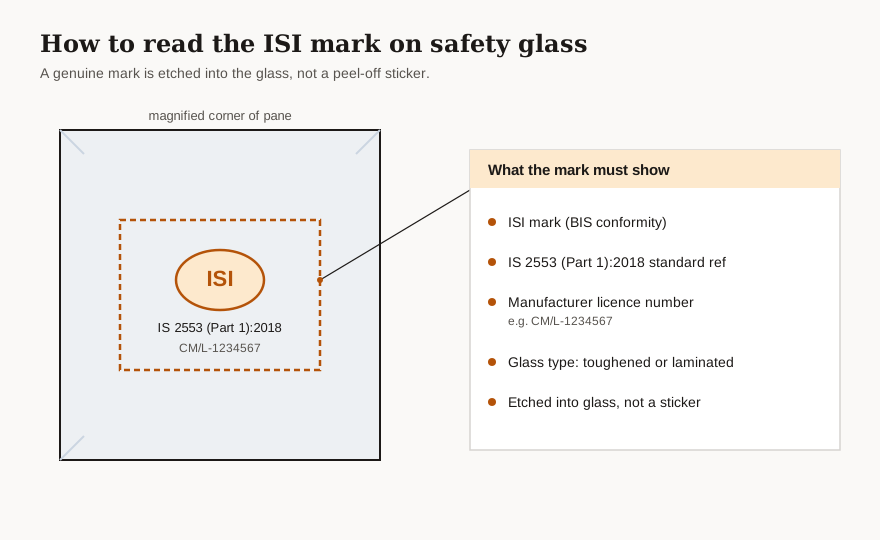
When you buy, look for the permanent etch in a corner of the pane — the ISI mark, the IS 2553 (Part 1) reference, the manufacturer's licence number and the glass type. A printed sticker is not proof; the mark must be sandblasted or acid-etched into the glass itself.
Toughened versus laminated — two ways to be safe
Both pass IS 2553, but they break very differently, and that difference decides where each belongs.
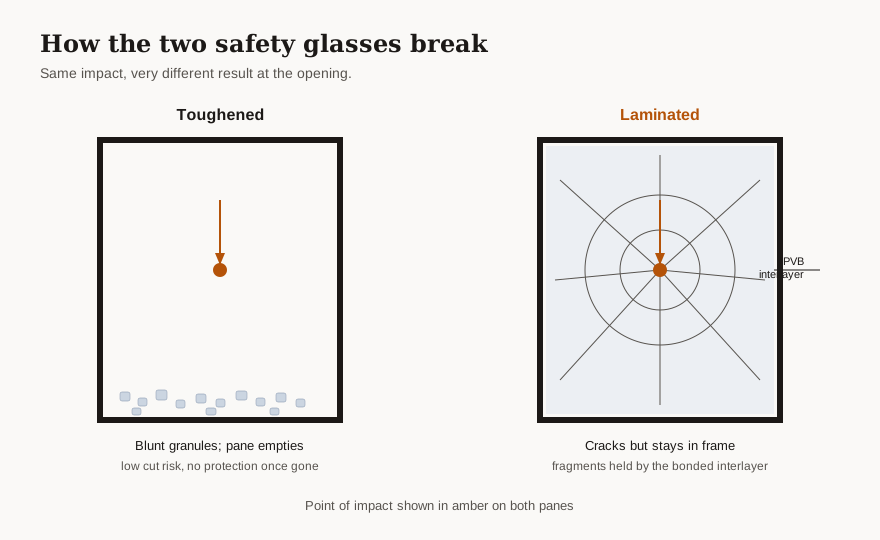
- Toughened (tempered) glass is heat-treated to roughly four to five times the strength of ordinary annealed glass. When it does break, it shatters into thousands of small, blunt, dice-like granules that rarely cut deeply. But it breaks completely — the whole pane disintegrates and the opening is left empty.
- Laminated glass bonds two or more glass plies around a PVB (polyvinyl butyral) interlayer. When struck it cracks, but the fragments stay glued to the interlayer and the pane stays in the frame. Beyond safety it also adds security delay, acoustic insulation and UV filtering.
| Property | Toughened | Laminated |
|---|---|---|
| Strength | 4 to 5 times annealed | Similar to annealed, but holds together |
| On breaking | Blunt granules, pane empties | Cracks but stays bonded in frame |
| After breaking | Opening is open | Opening stays covered |
| Extra benefits | Heat-resistant | Security, acoustic, UV |
| Best for | Doors, low windows, showers | Overhead, balustrades, security, acoustic |
The headline rule: toughened protects the person who breaks it; laminated also keeps the opening closed. That is why overhead glazing and high-fall balustrades must be laminated — a crumbled toughened skylight would shower the room below, and an empty balustrade frame is a fall waiting to happen.
Where safety glass is required by code
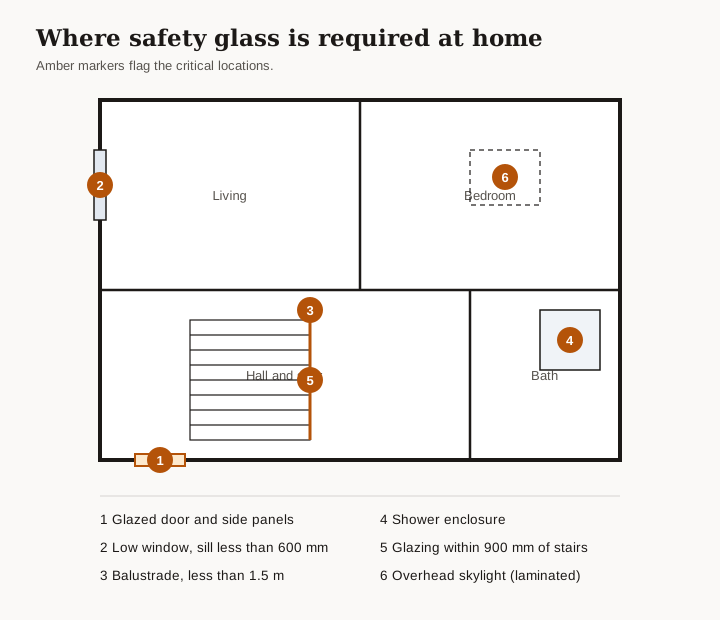
This is the heart of the guide. IS 2553, read alongside the National Building Code of India 2016, identifies critical locations — places where the risk of human impact is high — and requires safety glass there. Walk your home with this table.
| Location | Why it is risky | Required glass |
|---|---|---|
| Glazed doors and their side panels | Walked into, full-body impact | Toughened or laminated |
| Low-level windows (sill below 600 mm above floor) | At body height, easy to fall against | Toughened or laminated |
| Glazing within 900 mm of stairs and landings | Stumble or fall onto glass | Toughened or laminated |
| Shower and bath enclosures | Wet, slip, body weight against screen | Toughened (or laminated) |
| Balustrades and railings below 1.5 m | Fall-from-height if glass fails | Laminated preferred (stays in frame) |
| Overhead glazing and skylights | Falling fragments injure people below | Laminated — mandatory |
Two numbers are worth memorising for Indian homes: a window sill below 600 mm above the finished floor counts as low-level glazing, and any glazing within 900 mm of a staircase or landing is a critical location. Both are the spots where a slip turns into a glass injury.
Overhead means laminated, every time. Toughened glass overhead is a hazard, not a safeguard — it must stay bonded so it cannot rain down.
Picking the right safety glass, location by location
You do not need laminated glass everywhere; you need the right safety glass in each critical spot. Match the failure mode to the consequence.
- Front and balcony glazed doors — toughened is the common, economical choice; upgrade to laminated where you also want security delay or street noise control.
- Low living-room windows — toughened satisfies the code; laminated if the window is also exposed to the road for break-in resistance.
- Stair and landing glazing — toughened meets the rule, but laminated is safer because a stumble will not empty the opening.
- Shower screens — toughened is standard and handles heat and moisture well.
- Glass balustrades and Juliet balconies — laminated, so a failed pane still holds people back from the drop.
- Skylights and overhead canopies — laminated only, non-negotiable under the code.
A quick location checklist
Before you sign off a window or glazing schedule with your fabricator, confirm each line.
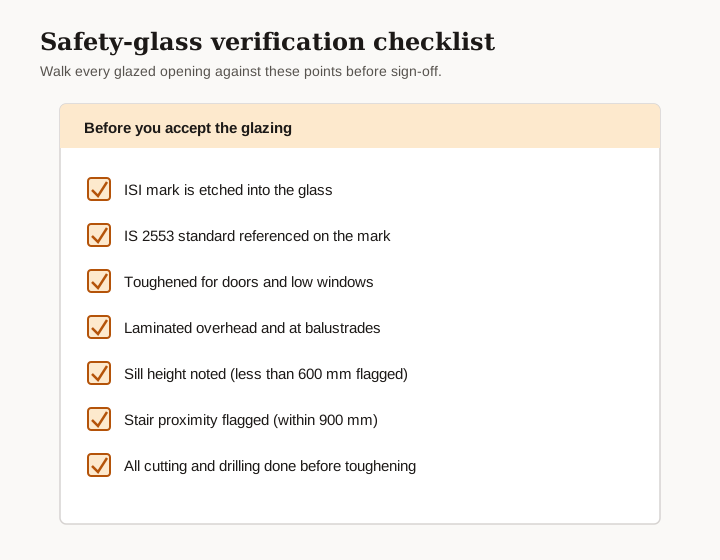
| Check | Confirm |
|---|---|
| ISI mark etched (not sticker), IS 2553 (Part 1) shown | Yes on every safety pane |
| Glazed doors and side panels | Safety glass specified |
| Any window sill below 600 mm | Marked as low-level, safety glass |
| Glazing within 900 mm of stairs or landings | Flagged on the plan |
| Shower and bath screens | Toughened (or laminated) |
| Balustrades below 1.5 m | Laminated |
| Skylights and overhead glazing | Laminated, mandatory |
| Drilling, cutting or edge-work | Done before toughening — never after |
That last line matters: toughened glass cannot be cut, drilled or edge-finished after tempering — any such work shatters the whole pane. All sizing and holes must be done before the glass is toughened, so order to exact dimensions.
How this connects to the rest of the cluster
Safety glazing is one layer of a larger window story. The full layered-defence picture — frame, glass, locks, grille and sensors — is set out in the Window Security Guide, the pillar this guide sits under. Note the honest boundary: safety glass keeps people from being injured by breaking glass; it is not, by itself, burglar-proofing. Laminated glass does add break-in delay, but security is a separate, layered job.
For the products themselves, the two dedicated deep-dives are Toughened Glass Windows (how tempering works, where toughened wins) and Laminated Glass Windows (interlayers, grades, acoustic and security benefits) — this guide is the bridge that tells you which of those two a given location demands. For where safety glass fits among all glazing options, see Types of Glass for Windows, and for the child-fall angle — low-level safety glass paired with restrictors and cordless blinds — see Child-Safe Window Design.
Get the critical locations right, insist on the etched ISI mark, and put laminated wherever a falling or failing pane would harm someone below or let someone fall. That is the whole of safety glazing: not the most expensive glass everywhere, but the correct safe glass exactly where IS 2553 says it matters.
References
- Bureau of Indian Standards — IS 2553 (Part 1):2018, Safety Glass for Buildings: https://www.bis.gov.in
- National Building Code of India 2016 (BIS): https://www.bis.gov.in
- Safety Glass (Quality Control) Order, Ministry of Commerce and Industry: https://www.bis.gov.in
Export this guide
Related Guides — Deep-dive reading
Window Security Guide
The layered-defence model for Indian homes — frame, glass, locks, grille and sensors working together
Windows & GlazingThe Complete Guide to Door and Window Security in India (2026)
The pillar reference for every opening in your home — how to think about doors, windows and glazing as a system, why the weakest opening decides your safety, and where each part of the library takes the detail further.
SecurityToughened (Tempered) Glass Windows in India: The Safety Glass Explained
The heat-treated safety glass that is four to five times stronger than ordinary glass and shatters into blunt granules instead of daggers — where it is needed, the no-cutting rule, the spontaneous-breakage caveat, cost, and how to spot it.
Windows & GlazingRelated Tools — Try Free
Acoustic Window Calculator
Estimate how much outside noise a window blocks and the resulting indoor dB level and comfort.
Window ToolWindow Grill Design Selector
Pick a window grille style and material by priority — security, looks, budget, view — and estimate cost.
Window ToolAcoustic Privacy (STC) Visualizer
Indian healthcare acoustic visualizer — compare wall assemblies and noise sources, see received SPL after STC attenuation, and check FGI 2018 / IS 1950 / NABH speech-privacy compliance with live dual-canvas waveform.
Acoustic Tool