
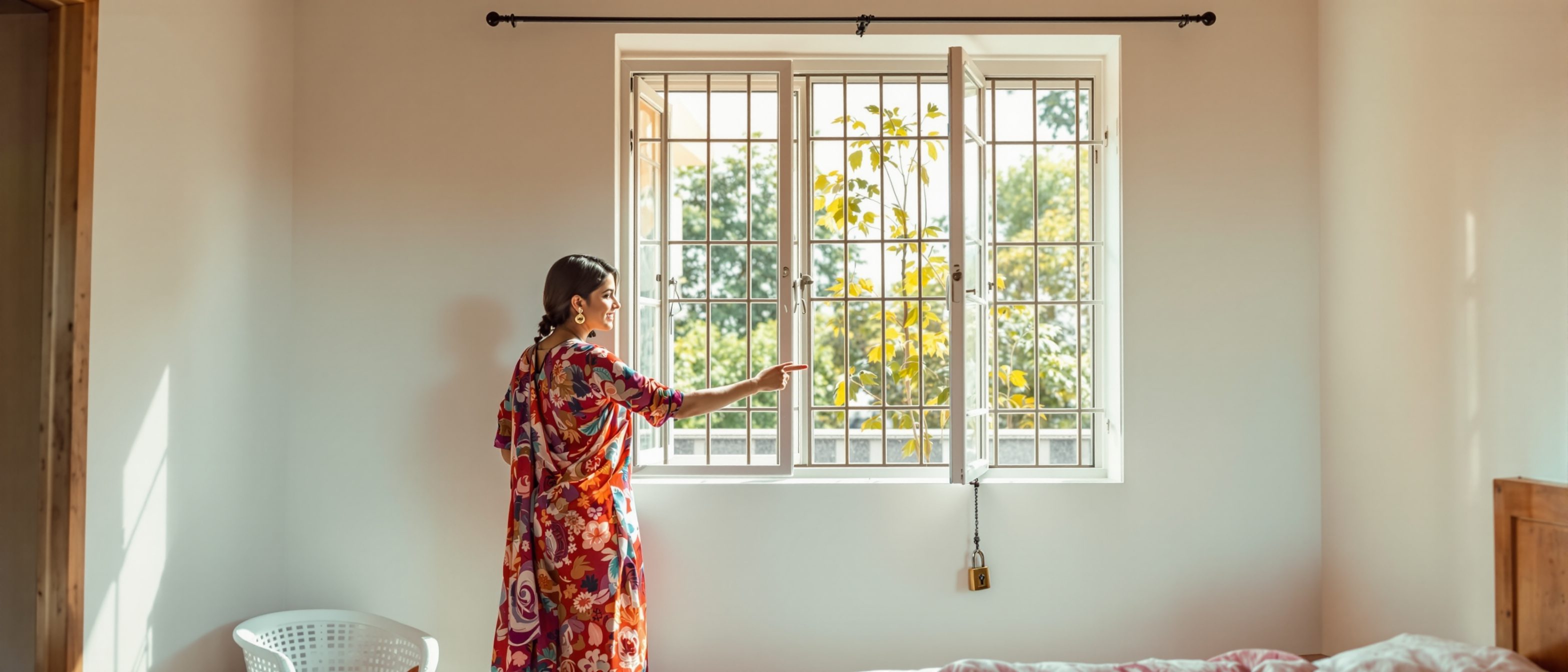
Emergency Escape Window Requirements in India
Egress window sizing, sill height and the openable-grille rule that keeps a bedroom from becoming a fire trap
In a house fire or a gas leak, the front door is often exactly where you cannot go. The smoke, the heat and the flames are usually between a sleeping family and the staircase. That is why every habitable room — and especially every bedroom and every basement — needs a second way out: a window you can actually climb through, fast, in the dark, with adults and children passing one after another. This is the emergency escape window (the "egress" window), and getting it right is a matter of life and death, not décor.
This guide is the standards and compliance view of one specific thing: the escape window — how big the clear opening must be, how low the sill must sit, and the rule that has killed more Indians in home fires than almost any other detail — the fully welded, fixed security grille that turns a bedroom into a sealed box.
An escape window is not a "nice to have". A bedroom with a fixed welded grille over its only window is a trap, and Indian fire-service post-mortems repeatedly find victims collapsed directly under barred windows.
How this differs from the broader fire-safety guide
Fire and windows is a big subject. The companion guide Fire Safety and Windows in India covers the whole picture — fire-rated glazing (E and EI ratings), fire spread between floors, smoke ventilation, distance to the plot boundary, and escape routes generally. This guide is narrower and more practical: it is only about the escape window itself — its size, its sill, and the do-not-trap-yourself grille rule. If you want the full NBC Part 4 fire-safety map, read that guide; if you want to know whether your bedroom window will get you out alive, stay here.
What a usable escape window needs
There is no single national bedroom "egress" dimension table in India the way some countries publish (the United States IRC, for instance, mandates a 0.53 sq m clear opening). The NBC 2016 instead requires that habitable rooms open to outside air for light and ventilation, and Part 4 requires that means of escape are never obstructed. So the practical escape-window targets below are drawn from international egress practice and Indian fire-service guidance — treat them as sensible minimums, then verify your local building bye-law and the fire NOC requirements for your occupancy and building height.
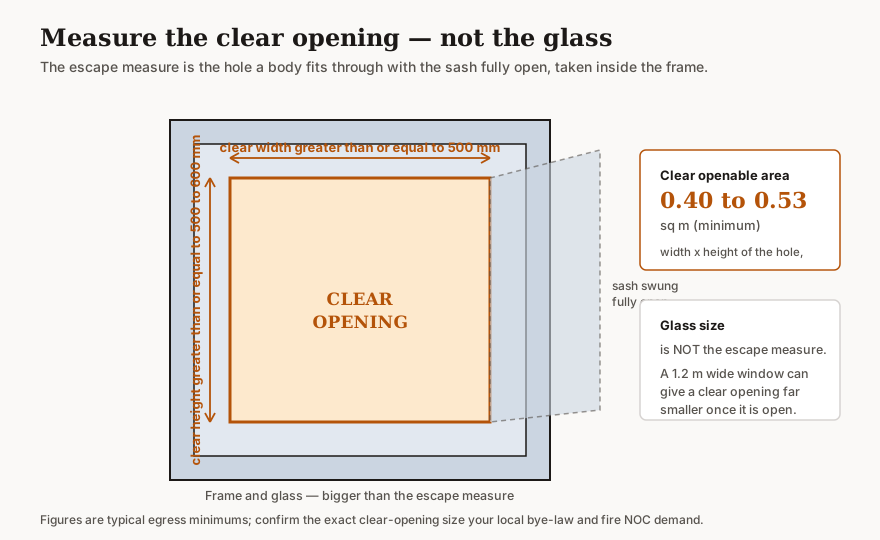
The number that matters is the clear openable opening — the actual hole a body passes through when the sash is fully open — not the glass size and not the frame size. A 1.2 m window with two fixed panels and one small openable vent has almost no clear opening at all.
| Escape-window target (indicative — verify bye-law/NOC) | Suggested minimum |
|---|---|
| Clear openable area (the actual hole) | greater than or equal to 0.40 to 0.53 sq m |
| Clear opening width | greater than or equal to 500 mm (about 50 cm) |
| Clear opening height | greater than or equal to 500 to 600 mm |
| Opening type | side-hung casement or full sliding leaf preferred over small top-hung vents |
| Glazing in escape window | toughened/laminated, but openable — not fixed |
A casement (side-hung) or a wide sliding window that opens to nearly its full size makes a far better escape than a louvred or small top-hung unit. For the difference between these, see Types of Home Windows in India.
Sill height: low enough to climb out
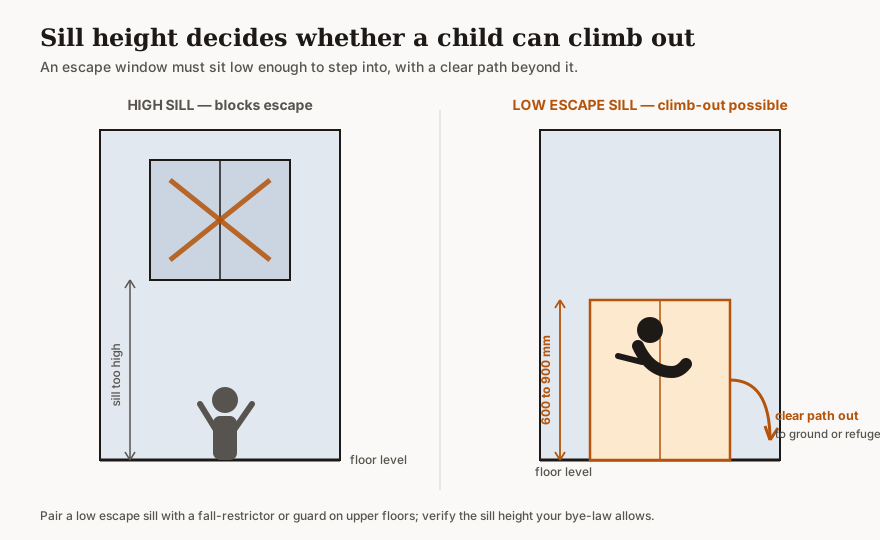
A window you cannot reach is not an escape window. If the sill is at chest height, a child or an injured adult cannot get over it.
| Room | Sill height guidance (indicative — verify bye-law) |
|---|---|
| Ground-floor bedroom (designated escape) | 600 to 900 mm from finished floor — low enough to step/climb over |
| Basement habitable room | low sill plus a clear window well and a way up to ground level |
| Upper-floor bedroom | normal sill (you cannot jump) — escape relies on the protected staircase and refuge, see below |
| Bathroom/WC | not an escape window; ventilation aperture greater than or equal to 0.37 sq m only |
There is a genuine tension here: fall safety wants high sills and child-restrictors on upper floors, while escape wants low, openable apertures. The honest resolution is that designated ground-floor escape windows sit low and open fully, while upper-floor windows rely on the protected escape route (the staircase) and the building's refuge area rather than on jumping.
The fixed-grille death trap — the single most important rule
Across Indian cities, families fit welded steel security grilles to ground-floor and even upper-floor windows against burglary. When those grilles are fully welded with no openable section, the window stops being an escape and becomes a cage. This is repeatedly cited by fire services as a leading reason people die within metres of a window.
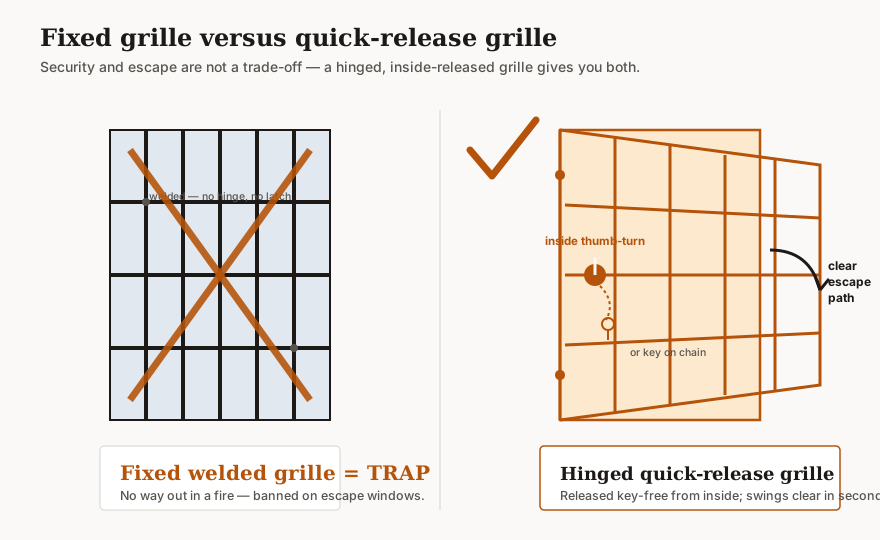
At least one window per habitable room must have an openable, quick-release security grille. A grille is acceptable for security only if a person inside can release it in seconds in the dark — without a key they have to hunt for.
| Grille type | Verdict |
|---|---|
| Fully welded fixed grille on the only/escape window | Never — this is the death trap |
| Hinged grille, padlocked, key hung on a chain right beside it inside | Acceptable if the key is always there and reachable |
| Hinged grille with an inside-operated thumb-turn / quick-release latch | Best — opens by feel, no key, in seconds |
| Collapsible/sliding grille with inside release | Acceptable if it opens fully and the release is reachable |
| Decorative MS bars that still leave a clear opening | Acceptable only if the clear opening still meets escape targets |
The companion design guide Window Grills Design Guide for India covers grille materials, patterns and fixing in detail; it carries the same egress note. The compliance message is simple: the bedroom of every home should have one grille you can open from the inside in the dark, and you should rehearse it.
Apartments and high-rises: refuge and escape routes
In flats and high-rises you usually cannot climb out and you must never use the lift in a fire. Escape depends on the building's life-safety design under NBC 2016 Part 4 and your fire NOC.
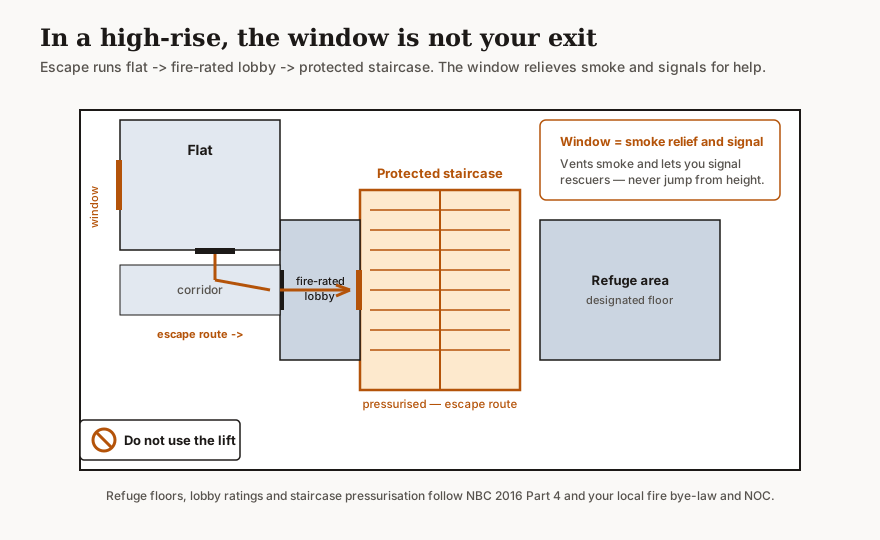
| High-rise element (NBC Part 4 — verify with fire NOC) | What it means for you |
|---|---|
| Protected/fire escape staircase | The real escape route — pressurised, fire-rated, must stay clear |
| Refuge area | A designated open/ventilated floor area in tall buildings to wait for rescue |
| Window for smoke relief, not climb-out | Above a few floors, windows are for venting and signalling, not jumping |
| Common-corridor and door grilles | Must never lock occupants in or block the corridor to the staircase |
In a flat, the action is: close the bedroom door against smoke, seal the gap with wet cloth, go to the window or balcony for air, and signal — then follow the protected staircase or wait in the refuge area for rescue. Your escape "window" in a high-rise is mostly a source of fresh air and a way to be seen.
Compliance checklist
| Check | Pass condition |
|---|---|
| At least one window per bedroom opens to outside air | Yes |
| Clear openable opening is large enough to climb through | greater than or equal to ~0.40 to 0.53 sq m, width greater than or equal to 500 mm |
| Ground-floor escape sill is low enough | ~600 to 900 mm |
| No bedroom window is fully welded shut by a grille | Every room has one openable/quick-release grille |
| Grille release is reachable in the dark | Inside thumb-turn or key on a chain beside it |
| High-rise escape route and refuge are clear | Staircase and corridor unobstructed; fire NOC valid |
| Local building bye-law and fire NOC checked | Yes — these govern in practice |
The honest caveat
India does not enforce one universal bedroom egress dimension nationwide. The NBC 2016 sets the framework (rooms open to outside air; escape routes unobstructed), and the local municipal building bye-law adopts and amends it, while the fire NOC sets occupancy-specific rules for larger and taller buildings. The numbers in this guide are sensible, internationally grounded minimums — always verify the clear-opening, sill and grille requirements with your local bye-law, fire department and a licensed fire consultant before you rely on them.
For the full standards map, see the pillar Residential Window Standards in India, the broad Building Regulations and Compliance reference, and the related code guides below.
References
Export this guide
Related Guides — Deep-dive reading
National Building Code Window Requirements
What NBC 2016 requires of a home window in India: glazed area for light, openable area for ventilation, by-room minimums, ceiling heights and the bye-law that actually governs.
Windows & GlazingFire Safety and Windows
What NBC 2016 Part 4 asks of windows in a fire: fire-rated glazing, spandrels, smoke venting and the grille-escape rule
Windows & GlazingDoor and Window Security Assessment for Indian Homes
Go opening by opening and rate the hardware itself — leaf and frame, hinges and locks, strike plates, grilles, glazing and latches — so you can grade each door and window's real resistance while never trapping anyone behind it.
SecurityRelated Tools — Try Free
Cross-Ventilation Analyzer
Estimate airflow and air changes per hour (ACH) from room size, window areas, layout, and local wind — with NBC 2016 Part 8 compliance check.
Ventilation CalculatorWindow Grill Design Selector
Pick a window grille style and material by priority — security, looks, budget, view — and estimate cost.
Window ToolWindow Size Calculator
Get the right window size, glazing area and openable area for any room using NBC daylight rules.
Window Tool