

Toughened (Tempered) Glass Windows in India: The Safety Glass Explained
The heat-treated safety glass that is four to five times stronger than ordinary glass and shatters into blunt granules instead of daggers — where it is needed, the no-cutting rule, the spontaneous-breakage caveat, cost, and how to spot it.
If your home has a big picture window, a floor-to-ceiling pane, a glass balcony door, or glazing near the shower, the glass in it is almost certainly toughened — and there is a good reason for that. Toughened glass (the same thing as tempered glass) is the workhorse safety glass of modern Indian homes. It is heat-treated to be four to five times stronger than ordinary glass, and when it does break it crumbles into thousands of blunt little granules instead of long, throat-cutting daggers.
This guide is the dedicated deep-dive on toughened glass: how it is made, where building practice (and common sense) demands it, the rare spontaneous-breakage caveat you should know about, what it costs, and how to confirm you actually got it. One thing to fix in your mind from the start: toughening is about strength, not heat or energy. It will not cool your room. For that you need a Low-E or solar-control coating — a separate decision covered in the glass pillar guide.
What "toughened" actually means
Ordinary window glass is annealed — cooled slowly during manufacture so it carries little internal stress. It is fine for small, protected panes, but it breaks into large, sharp shards.
Toughened glass starts as that same annealed glass, cut and finished to final size, then heated to around 620 to 650 degrees Celsius and quenched with jets of cold air. The outer surfaces cool and harden first while the core is still hot; as the core finally cools and contracts, it pulls the surfaces into permanent compression. That locked-in surface compression is the whole trick.
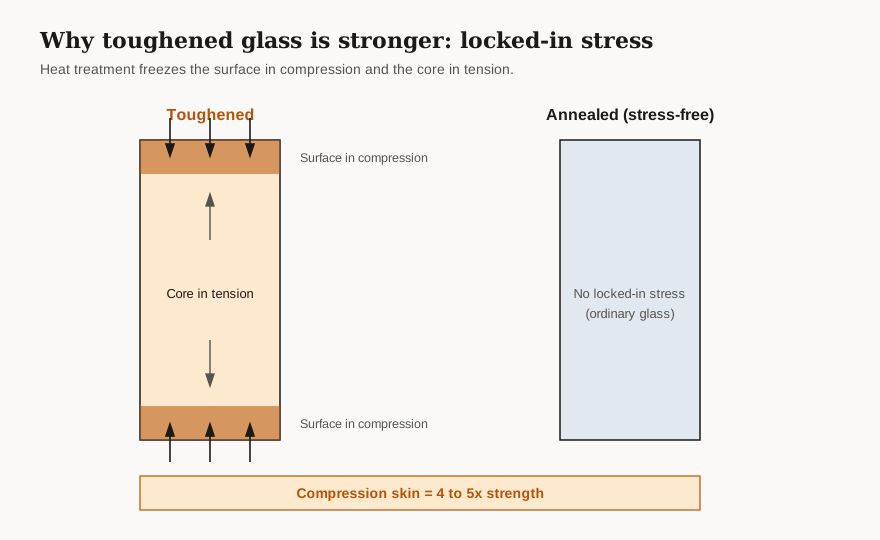
Two consequences follow:
- It is four to five times stronger than annealed glass of the same thickness — against impact, against bending, and against thermal shock (sudden temperature differences across the pane).
- It breaks safely. Because the whole pane is under tension once that compressed skin is breached, it does not crack a line — it dices all at once into thousands of small, blunt, roughly cube-shaped granules that hold together loosely and fall. They can graze, but they do not slash. This is why it qualifies as a "safety glazing material."
Annealed glass breaks into knives. Toughened glass breaks into gravel. That single difference is why it is mandatory practice anywhere a person could fall against the glass.
The rule that surprises everyone: no cutting after toughening
The locked-in stress that makes toughened glass strong also makes it impossible to cut, drill, grind, or notch after toughening. Score it and it does not snap on the line — the whole pane shatters in your hands. So every cut-out, hole, edge polish and corner radius must be done on the annealed glass first, and only then is the finished piece toughened.
The practical lesson for a homeowner: measure twice, order once. No carpenter can "trim 5 mm off" a toughened pane on site for a tight reveal, and no one can drill a fresh hole for a new handle or hinge. If you change your mind, you buy a new pane. Hand your fabricator final, verified sizes and all hardware cut-outs before the glass goes into the furnace.
Where toughened glass is needed
You do not toughen every pane in the house — a small, high kitchen window protected by a sill does not need it. You toughen the glass that a person, a child, or a falling object could realistically hit, and the glass whose own size makes ordinary glass risky.
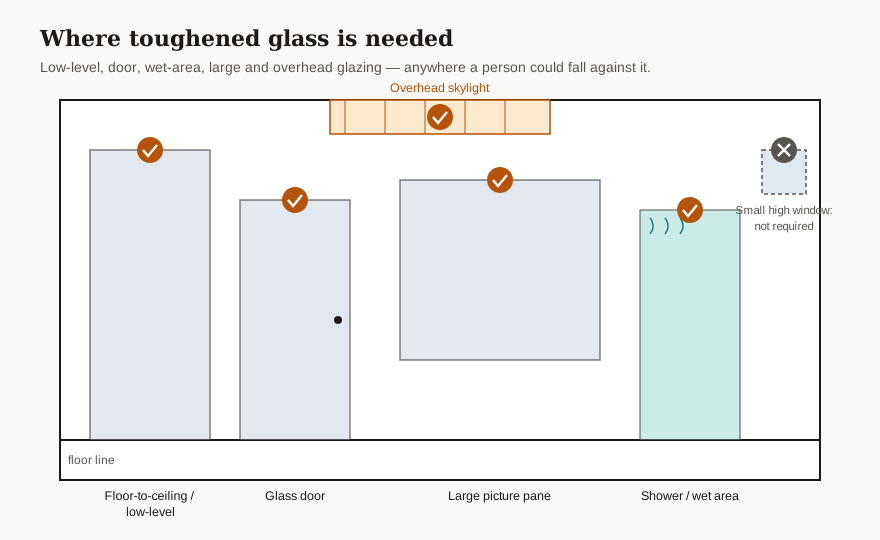
| Location | Why toughened |
|---|---|
| Large panes (picture, floor-to-ceiling, big sliders) | Big annealed sheets flex and break dangerously; toughening adds the strength |
| Low-level glazing (sill below roughly 800 mm, full-height) | Someone can fall or walk into it; safety break-pattern matters |
| Glass doors and glazed door side-lights | High-traffic impact zone; mistaken-for-open accidents |
| Near wet areas (shower screens, glazing beside bathtubs) | Slips, thermal shock from hot water, bare-foot risk if it breaks |
| Overhead and sloped glazing (skylights, canopies) | Glass over people's heads — see the laminated caveat below |
| French and balcony doors, stair and balcony balustrades | Impact plus fall-protection |
A reasonable rule of thumb used across Indian fenestration: if the pane is large, reachable at body height, in a door, or near water, specify toughened.
Toughened versus laminated: the two safety glasses
Toughened is not the only safety glass. The other is laminated, and the difference matters because they protect you in opposite ways. We cover laminated in full in Laminated Glass Windows in India — here is the clean distinction.
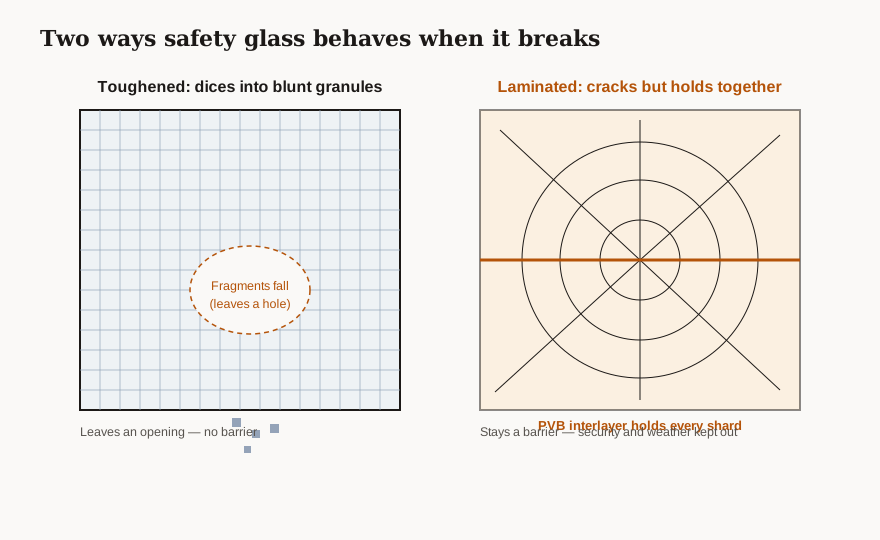
| Toughened (tempered) | Laminated | |
|---|---|---|
| Made by | Heat-treating a single pane | Bonding two or more panes with a PVB or SGP interlayer |
| Strength | 4 to 5 times annealed | Similar to annealed unless also toughened |
| When it breaks | Dices into blunt granules that fall away | Cracks but holds together on the interlayer |
| Best at | Impact strength, thermal shock, safe break | Security, retention, acoustic damping, ~99 per cent UV cut |
| Opening left behind | A hole — fragments fall | A cracked-but-intact barrier |
So toughened is the stronger glass that breaks safely but leaves a hole; laminated is the glass that holds together and keeps intruders, fragments and noise out. For the highest demand you combine them: toughened-laminated glass — toughened panes bonded with an interlayer — which is the right call for overhead glazing (you never want diced granules raining down) and for balustrades, security glazing and serious acoustic work.
The rare caveat: spontaneous breakage and heat-soaking
Toughened glass has one genuine quirk. Microscopic nickel sulphide (NiS) inclusions, left over from manufacture, can slowly expand inside the pane over months or years and trigger a sudden, unprovoked shatter — spontaneous breakage — with no impact at all. It is rare, but real, and more troubling in large overhead or facade panes.
The cure is heat-soak testing: after toughening, panes are held at around 290 degrees Celsius for a few hours, which forces most NiS-flawed panes to fail in the factory rather than years later in your skylight. For overhead glazing, large facade panes and anything you cannot easily reach to replace, ask your fabricator for heat-soaked toughened glass. For an ordinary toughened bedroom window the risk is low enough that most homeowners do not pay the premium.
What it costs
Glass is priced on top of the window frame, and toughening adds a modest premium over plain annealed glass of the same thickness. Indicative June 2026 rates, before adding 18 per cent GST:
| Glass (per square foot) | Indicative rate |
|---|---|
| Plain annealed (clear float) | ₹40 to ₹90 |
| Toughened clear | ₹120 to ₹250 |
| Toughened plus Low-E or solar-control coating | ₹250 to ₹500+ |
| Toughened-laminated | ₹350 to ₹700+ |
Thicker glass (8 mm, 10 mm, 12 mm for big or structural panes) costs more, as does any coating or lamination you add on top. These are indicative ranges — confirm with itemised quotes from your fabricator, since size, thickness, city and brand all move the number.
How to identify toughened glass
Genuine toughened glass carries a small permanent stamp or sandblasted mark etched into one corner — typically the manufacturer's name and a reference to the safety-glass standard (for example BIS or IS marking, or an international EN/ANSI mark). Before you accept delivery:
- Look at the corner for the etched/sandblasted bug — it does not wash or scrape off. No stamp is a red flag.
- Check the edges. Toughened edges are usually cleanly ground/polished and the corners slightly eased, because all finishing happened before the furnace.
- Look through polarised sunglasses at the pane in daylight — toughened glass often shows faint dark patches or strain lines (the "quench pattern") from the rollers, which annealed glass does not.
- Insist on the test certificate from the fabricator for large orders.
How it fits the rest of your window decision
Toughening answers the safety and strength question only. It does not change how much daylight (VLT) or solar heat (SHGC) the glass admits — a clear toughened pane still cooks a west room. The energy decision is a separate, additive choice: a low-SHGC Low-E coating, ideally in a double-glazed unit, to meet the Eco-Niwas Samhita envelope targets. Read those together in the glass pillar guide, and choose the safety glass alongside its laminated cousin in Laminated Glass Windows in India.
Glass, frame and shape are three separate decisions. Once the glass is settled, pick the frame that carries it in Window Frame Materials Compared, and the opening style in Types of Home Windows in India. The short version: specify toughened wherever a person could hit the glass or it could fall on someone, give your fabricator final cut sizes before toughening, heat-soak the overhead and facade panes, and check for the corner stamp on delivery.
References
- Glass and window solutions for homes (Saint-Gobain India): https://in.saint-gobain-glass.com/knowledge-center/glass-and-windows
- Best glass for windows in India 2026 (IndiFrame): https://indiframe.com/blog/best-glass-for-windows-in-india
- Types of Low-E and solar control glass (FG Glass India): https://fgglass.com/blogs-details/types-of-low-e-glass
- IS 1948 (aluminium doors, windows and ventilators, BIS): https://law.resource.org/pub/in/bis/S03/is.1948.1961.pdf
- Eco-Niwas Samhita 2018 (BEE/ECBC): https://ecbc.in/econiwas.html
Export this guide
Related Guides — Deep-dive reading
Toughened Glass Doors in India: Thickness, IS 2553, Safety & Cost
Why tempered glass is mandatory for large and low door panels, what thickness to specify, and the one rule you cannot break: it can never be cut after toughening.
Home Doors & EntrancesTypes of Home Windows in India (2026): Complete Comparison and How to Choose
Every window type compared on ventilation, cost and best use, plus a frame, glazing and climate framework to choose right.
Windows & GlazingSecurity for People Living Alone in India (2026): Calm, Practical Habits When There Is No Second Person to Notice
Living alone is an ordinary and growing part of Indian life - the student in a new city, the working single, the elder whose children are abroad, the person after a separation. It does not call for fear. It calls for a few deliberate habits, because there is no second person in the home to notice trouble, raise the alarm, or catch an accident. This is calm self-reliance, layer by layer.
SecurityRelated Tools — Try Free
Brise-Soleil Visualizer
Interactive horizontal-louvre cut-off angle calculator — sun altitude, louvre depth, and spacing inputs with a live shadow preview. Computes θ = arctan(spacing/depth) for façade shading, ECBC envelope compliance, hospital daylight design, and tropical sun-control detailing.
Sun Shading ToolGlass Selection Tool
Single vs double (DGU) vs triple glazing and the right glass type for your climate, priority and sun.
Window ToolAcoustic Window Calculator
Estimate how much outside noise a window blocks and the resulting indoor dB level and comfort.
Window Tool