
Laminated Glass Windows in India: Security, Safety and Quiet
How a thin PVB interlayer makes glass hold together when it breaks - adding burglar resistance, shatter safety, 99 per cent UV cut and noise control to your windows.
Two panes of glass with a tough plastic film glued between them. That is laminated glass in one line, and it is the most underrated upgrade you can make to a home window in India. The thin interlayer does three quiet jobs at once: it holds the glass together when it breaks (so there are no falling shards and no easy way in), it blocks almost all the ultraviolet light that fades your furniture, and it deadens outside noise. For a ground-floor flat on a busy road, a balcony railing, an overhead pane, or any window a child or a burglar can reach, laminated glass is the answer that ordinary float glass and even toughened glass cannot give.
This guide explains how laminated glass is built, what it protects you from, where it earns its cost premium, and how it differs from the other "safety glass" you will be quoted.
How laminated glass is made
Laminated glass is two (or more) panes of glass permanently bonded by a flexible plastic interlayer, fused under heat and pressure in an autoclave. The interlayer is almost always PVB (polyvinyl butyral) — the same material used in car windscreens. A stiffer, stronger interlayer called SGP (SentryGlas Plus / ionoplast) is used where higher strength and edge stability matter, such as balcony railings, glass floors and overhead glazing.
The magic is the bond. When the glass cracks, the fragments stay stuck to the interlayer instead of falling away.
Toughened glass protects you from the broken pane. Laminated glass protects you from what is on the other side of it.
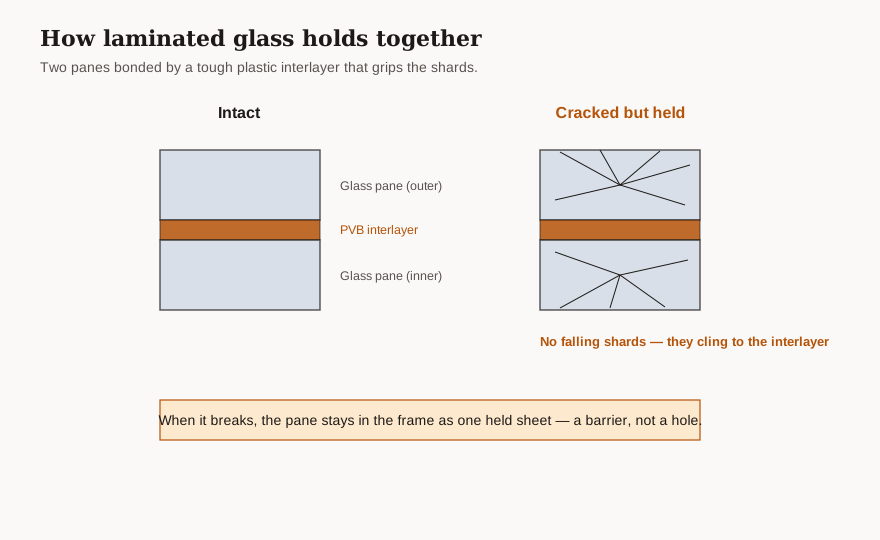
A common spec is written as 6.38 mm (two 3 mm panes plus a 0.38 mm PVB layer) or 8.38 mm and upward. Thicker glass and thicker or multiple interlayers raise strength, security and sound performance.
The four things laminated glass does
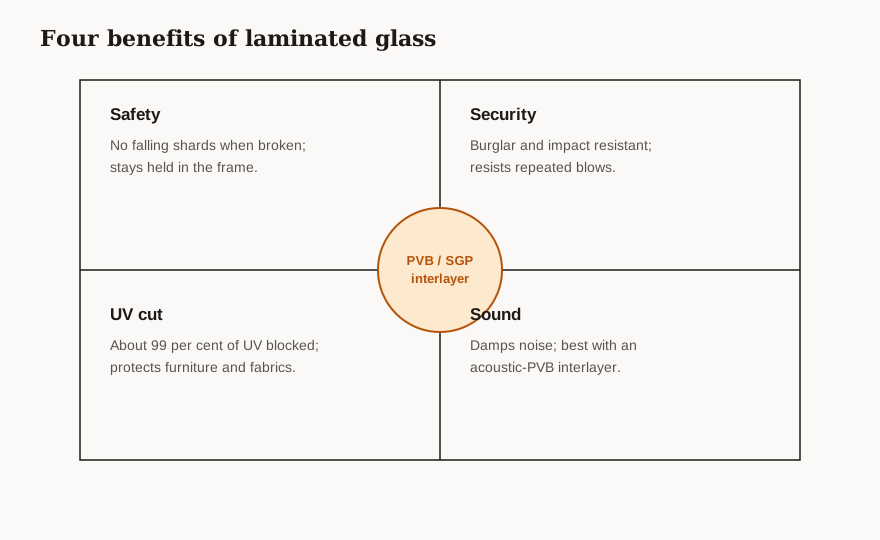
1. Safety — no falling shards
When laminated glass breaks, it spider-cracks but stays in the frame. Nothing rains down. This is why it is the right choice for overhead glazing (skylights, canopies), low-level panes near floors, and balcony railings where a person could fall against the glass. It is "safety glass" in the literal protective sense.
2. Security — it resists a break-in
This is laminated glass's signature advantage. An intruder can crack ordinary glass and step through in seconds. With laminated glass, repeated blows only craze the surface; the interlayer keeps the opening sealed. Thicker laminates and SGP interlayers raise this to genuine burglar-resistant and impact-resistant levels. For ground-floor flats, independent homes and street-facing windows, this is real peace of mind.
3. UV protection — about 99 per cent blocked
The PVB interlayer absorbs roughly 99 per cent of ultraviolet light. UV is what fades sofa fabric, timber floors, artwork and curtains. Laminated glass lets daylight through (you keep your VLT) while cutting the radiation that ages your interiors — a quiet win in India's strong sun.
4. Sound — it damps noise
The soft interlayer absorbs vibration, so laminated glass is meaningfully quieter than a single solid pane of the same thickness. For serious noise (a flat near a highway, railway or airport), a special acoustic PVB interlayer is used, usually inside a double-glazed unit — that is the sound-specialised version covered separately below.
What the numbers say
| Property | Ordinary float (annealed) | Toughened (tempered) | Laminated (PVB) |
|---|---|---|---|
| On breaking | Sharp shards fall | Blunt granules, falls out | Cracks but holds together |
| Security | Poor | Poor (shatters, falls away) | Good to high |
| UV block | Low | Low | About 99 per cent |
| Acoustic | Baseline | Baseline | Better; best with acoustic PVB |
| Can be cut after making | Yes | No | Yes (then re-laminated) |
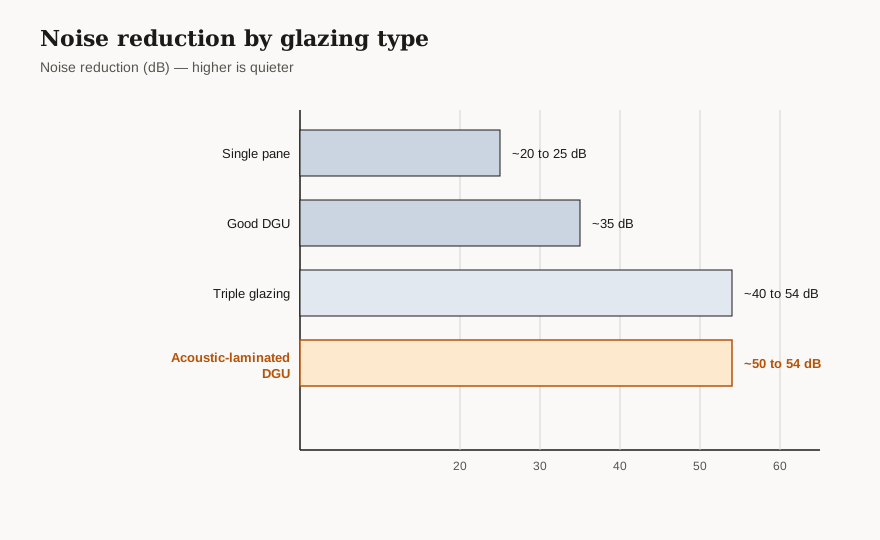
Sound is measured in decibels (dB) of reduction. A single pane gives roughly 20 to 25 dB; a good double-glazed unit around 35 dB; and an acoustic-laminated DGU up to about 50 to 54 dB. Note that for noise, lamination and thickness matter more than simply adding panes.
Toughened-laminated: strength plus retention
Toughened and laminated are not rivals — they can be combined. Toughened-laminated glass uses heat-treated (tempered) panes that are then laminated together. You get the 4 to 5 times strength of toughening and the stays-together retention of lamination. This is the premium spec for the most demanding spots: large floor-to-ceiling panels, glass balustrades, overhead glazing and high-security windows.
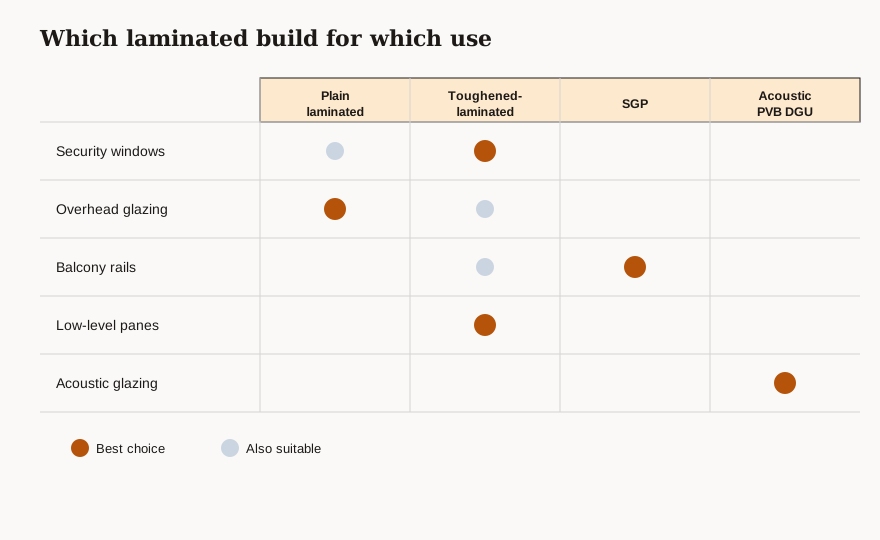
Where to use laminated glass in an Indian home
- Ground-floor and street-facing windows — security against break-ins.
- Balcony and staircase railings — toughened-laminated, so a fall against the glass is held.
- Overhead and low-level panes — skylights, canopies, full-height panels.
- Rooms with valuable furnishings — the 99 per cent UV cut protects fabrics, art and timber.
- Homes near roads, rail or airports — acoustic-laminated glazing for quiet.
Cost and GST
Laminated glass costs more than plain or single-toughened glass because it is two panes plus an interlayer, fused in an autoclave. Acoustic PVB and SGP interlayers, and toughened-laminated builds, add further premium. Glass is priced on top of the window frame, and 18 per cent GST applies. Treat any figure as indicative for June 2026 — confirm with itemised quotes from fabricators, since price moves with pane thickness, interlayer type, size and city.
For energy, remember laminated glass on its own is a safety and security product, not primarily a heat-control one. To cut heat you still want a low-SHGC, spectrally selective Low-E coating, ideally in a double-glazed unit — laminated glass pairs happily with both.
How laminated differs from its cousins
- Toughened glass is stronger but it still shatters and the granules fall out, leaving an open hole — great for safety, useless for security or sound. See Toughened glass windows in India. Laminated glass is weaker per pane but holds together, adding security, acoustic and UV benefits. The best of both is toughened-laminated.
- Acoustic glass is laminated glass — built with a special acoustic PVB interlayer, usually in an asymmetric double-glazed unit, tuned to kill traffic and aircraft noise. If quiet is your main goal, read Acoustic glass windows in India; if security and shatter-safety lead, plain laminated is enough.
- Start with the full menu in the pillar, Types of glass for windows in India, and remember the three window decisions are the glass, the frame material and the window type.
The verdict
Choose laminated glass when you want the pane to keep doing its job after it has been hit — keeping people in, intruders out, UV off your furniture and noise off your nerves. For most Indian homes the sweet spots are ground-floor security windows, railings, overhead glazing and roadside rooms. Spend up to toughened-laminated where strength and retention both matter, and to acoustic PVB where quiet is the priority. Get the spec written into your quote (pane thicknesses, interlayer type, toughened or not) and confirm the price plus 18 per cent GST with your fabricator before you order.
References
- Best glass for windows in India 2026 (IndiFrame): https://indiframe.com/blog/best-glass-for-windows-in-india
- Glass and window solutions for homes (Saint-Gobain India): https://in.saint-gobain-glass.com/knowledge-center/glass-and-windows
- Types of Low-E and solar control glass (FG Glass India): https://fgglass.com/blogs-details/types-of-low-e-glass
- IS 1081 — fixing and glazing of metal doors and windows (BIS): https://law.resource.org/pub/in/bis/S03/is.1081.1960.pdf
- Eco-Niwas Samhita 2018 (BEE/ECBC): https://ecbc.in/econiwas.html
Export this guide
Related Guides — Deep-dive reading
Floor-to-Ceiling Windows (India): Maximum Light, and the Heat Trade-Off
Full-height glazing for Indian homes — how to win the daylight and view without losing the energy code, comfort or safety.
Windows & GlazingGlass-Break Sensors in India (2026): Catching a Smashed Pane Before Entry
How acoustic glass-break sensors listen for the twin sound of breaking glass, why they cover what door and window contacts miss, and how to place one sensor to protect a whole room of windows in an Indian home or shop.
SecuritySolar Control Glass in India: Cutting Heat Without Killing the Daylight
The performance family that cuts solar heat while keeping daylight: spectrally selective Low-E, body-tinted and reflective glass, the SHGC, VLT and LSG that rank them, where it is essential, and the cost on top of your frame.
Windows & GlazingRelated Tools — Try Free
Glass Selection Tool
Single vs double (DGU) vs triple glazing and the right glass type for your climate, priority and sun.
Window ToolAcoustic Window Calculator
Estimate how much outside noise a window blocks and the resulting indoor dB level and comfort.
Window ToolWindow Energy Savings Calculator
Compare standard glazing vs Low-E and DGU windows — annual cooling savings, 10-year savings and payback.
Window Calculator