
Burglar Resistant Windows in India: RC Classes, Security Glass and How to Spec One
EN 1627 resistance classes, EN 356 laminated glazing, anti-pry hardware and how to build a forced-entry-rated window for an Indian home
A determined intruder does not pick a fight with your front door. He looks for the soft spot, and in most Indian homes that soft spot is a window: a thin aluminium latch, a single-point handle, a sheet of ordinary 5 mm float glass that pops with one tap. Burglar-resistant windows are about engineering away that soft spot. They will not make your home impregnable. What they do is buy delay measured in minutes, and delay is what defeats most break-ins, because the opportunist burglar wants in and out in well under a minute and will abandon a window that fights back.
This guide is the whole forced-entry-rated system: frame, glass, and hardware certified to resist attack as a single unit. That is different from a window grille, which is one valuable layer bolted in front of the glass. A grille deters and slows; a burglar-resistant window is rated end-to-end to a measured resistance time. The two work best together. For the bigger picture of how all the layers fit, start at the Window Security Guide.
What "resistance class" actually means
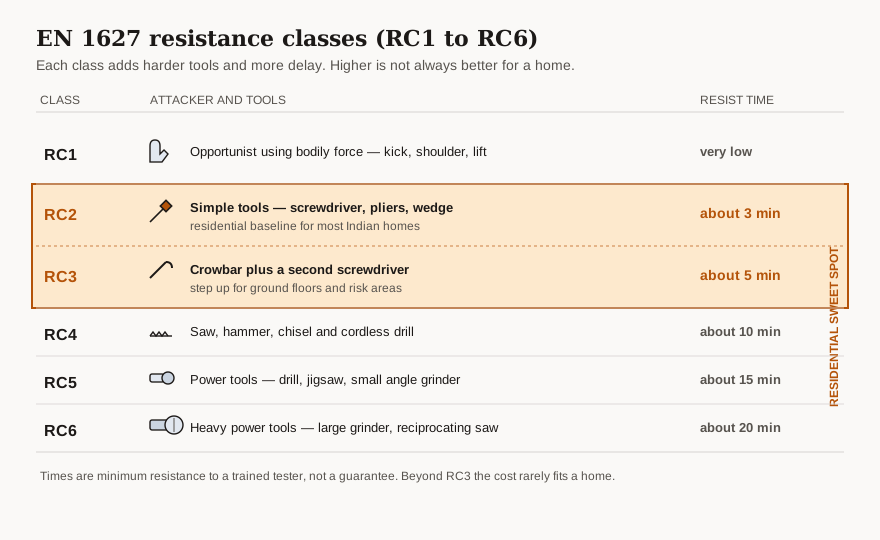
Europe rates forced-entry resistance with the standard EN 1627, which sorts windows and doors into six resistance classes, RC1 to RC6. The rating is not marketing. It comes from a lab subjecting the complete window to defined tools for a defined attack time.
| Class | Attacker and tools | Resistance time | Realistic use |
|---|---|---|---|
| RC1 | Casual, bodily force, kicks | very low | Token deterrent only |
| RC2 | Opportunist with simple tools: screwdriver, pliers, wedge | about 3 minutes | Residential baseline |
| RC3 | Experienced, adds a crowbar and second screwdriver | about 5 minutes | Vulnerable ground floor, villas |
| RC4 | Seasoned, saw, hammer, axe, cordless drill | about 10 minutes | High-value, commercial |
| RC5 | Adds power tools (angle grinder, jigsaw) | about 15 minutes | Specialist or institutional |
| RC6 | Heavy power tools, sustained | about 20 minutes | Vaults, not homes |
For an Indian home, RC2 is the sensible floor and RC3 is the upgrade for an exposed ground-floor or boundary-wall window. Anything above RC3 is rarely worth the cost for a residence.
The single most important honesty in this whole subject: the rating is a time, not a guarantee. An RC2 window resists a competent opportunist for around three minutes. That is usually enough, because most break-ins are abandoned far sooner. It is not enough against a patient, equipped, undisturbed attacker, which is exactly why you pair the window with a grille and an alarm.
Glass is half the battle: EN 356
A wonderful frame and lock are pointless if the glass shatters in one blow and the intruder reaches in to open the window. So EN 1627 classes are paired with a glazing class under EN 356, which rates how well glass resists manual attack with an axe or hammer.
| EN 356 class | Resists | Pairs with |
|---|---|---|
| P4A | Repeated hard blows, hand tools | RC2 (the minimum laminated glass) |
| P5A | Sustained heavier blows | RC2 to RC3 |
| P6B to P8B | Axe blows, near-impenetrable for minutes | RC3 and above |
The glass that earns these classes is laminated security glass: two or more panes bonded with a tough plastic interlayer (PVB). When struck it cracks but stays in the frame rather than falling away, so the opening is never created. This is the same family of glass covered in our types of glass for windows guide. For an RC2 window the rule of thumb is laminated glass of at least P4A.
Ordinary toughened glass is strong against pressure but crumbles into harmless cubes when defeated, which is great for safety and useless for security. Security needs laminated, which holds together.
What makes a window burglar-resistant
A resistance class is a property of the whole assembly. Five things have to be right together.
| Element | What it does | Spec to ask for |
|---|---|---|
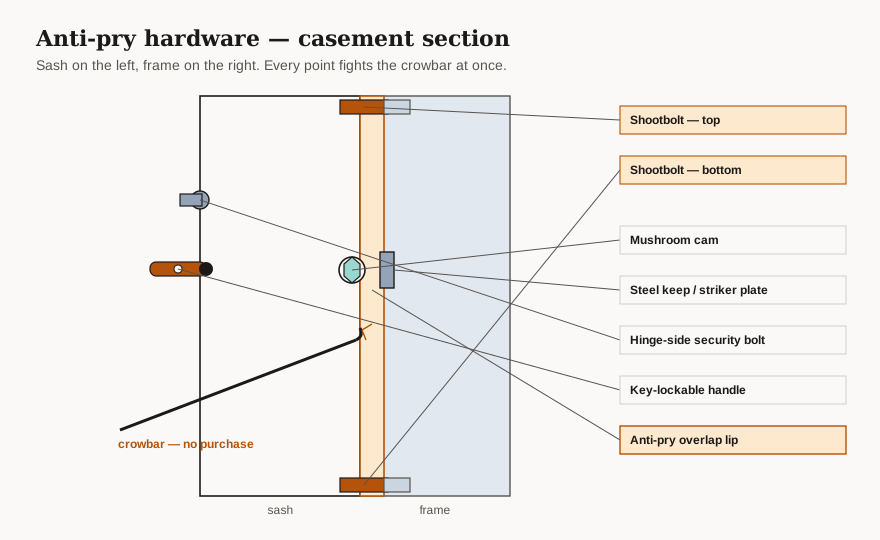
| Multipoint locking | Bolts engage at 3 or more points, not one | Espagnolette or shootbolt, top and bottom |
| Anti-pry hardware | Mushroom-head cams roll into steel keeps; resists a wedge | Mushroom cams plus steel striker plates |
| Lockable handle | Stops the handle being turned after reach-through | Key-locking or push-button handle |
| Hinge-side bolts | Fixed dog-bolts so the sash cannot be levered off its hinges | Hinge-side security bolts |
| Laminated glass | Stays in frame when struck | EN 356 P4A or better |
A single-point latch fails because all the leverage of a crowbar concentrates on one spot. Spread the locking to three or more points with mushroom cams that bite into steel keeps, and a pry bar has nothing to win. Add hinge-side bolts and the intruder cannot simply lever the whole sash out the other way.
The sliding-window problem
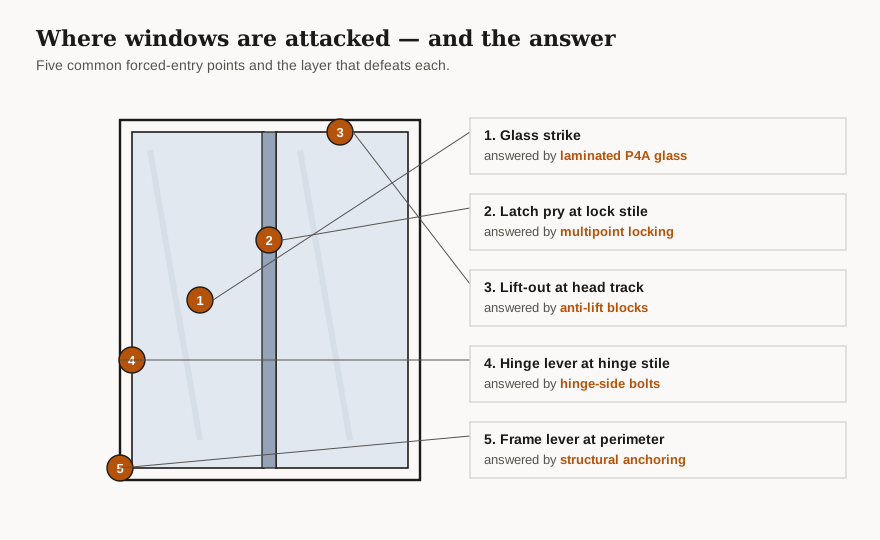
Most Indian homes use sliding aluminium windows, and they are the weakest type. The classic attacks are lifting the sash out of its track and forcing the thin single latch. A genuine burglar-resistant sliding window adds anti-lift blocks in the head track and a robust auxiliary lock or sash jammer. If you cannot certify the slider, casement windows with multipoint locking are inherently easier to make burglar-resistant. The lock and hardware detail by window type is covered in our sibling guide, window locks and hardware; that guide is the component deep-dive, whereas this one is the rated whole-window view.
How to spec an RC2 or RC3 window in India
EN 1627 windows are not yet a standard catalogue item across Indian fabricators, so you specify by component and ask for evidence.
- Tell the fabricator the class you want, RC2 or RC3, and ask whether they can supply an EN 1627 certified system or build to its component spec.
- Demand laminated glass, minimum P4A for RC2, paired with the frame. Insist on laminated, not just toughened. India's safety-glass standard IS 2553 (Part 1):2018 with the mandatory ISI mark governs the glass quality; for security the laminated grade is what matters.
- Specify multipoint locking with mushroom cams and steel keeps, a key-lockable handle, and hinge-side security bolts.
- Reinforced frame: a thin-wall aluminium section flexes under a crowbar. Ask for a heavier-gauge or steel-reinforced section.
- Anchor it properly: even a perfect window is useless if the whole frame can be levered out of the wall. Fixings into the structure, not just the plaster.
| Layer | Job | Typical India option |
|---|---|---|
| Rated window (RC2/RC3) | Delay forced entry, hold the opening | Casement, laminated P4A, multipoint |
| Grille | Visible deterrent, extra physical barrier | SS304 Rs 600 to 900 per sqft; MS Rs 150 to 300 |
| Alarm and sensor | Detection, raises the alarm | Open-close and glass-break sensors |
| Habits | Lock it, even on the first floor | Free |
A burglar-resistant window plus a grille plus an alarm is the realistic home formula: the window delays, the grille deters, the alarm detects. No one of them is enough alone.
One legal caution that overrides everything: any grille or rated window on a bedroom or escape route must still let people get out in a fire. Keep at least one openable, key-accessible grille or window per room, with the key kept where the family can find it in the dark. Security that traps you is a worse risk than burglary.
Do and avoid
| Do | Avoid |
|---|---|
| Spec RC2 minimum, RC3 for exposed ground floor | Relying on a single-point latch |
| Insist on laminated P4A glass | Accepting toughened glass as "security glass" |
| Use multipoint plus hinge-side bolts | Forgetting the hinge side entirely |
| Pair window with grille and alarm | Treating the window as burglar-PROOF |
| Anchor the frame to structure | Fixing only into plaster |
| Keep a fire-escape opening per room | Welding every grille permanently shut |
The honest bottom line
There is no burglar-proof window. A burglar-resistant window is a time machine: it converts a ten-second smash-and-reach into a three-to-five-minute struggle that most intruders will not attempt. Spend on the layer that buys delay, the glass that holds the opening, and the hardware that resists the crowbar, then back it with a grille and a sensor so that delay turns into detection. That combination, not any single product, is what keeps your family safe.
References
- EN 1627 resistance classes overview, Secured by Design: https://www.securedbydesign.com/
- EN 356 security glazing classes, Glass for Europe: https://glassforeurope.com/
- Bureau of Indian Standards, IS 2553 (Part 1):2018 Safety Glass: https://www.bis.gov.in/
- National Building Code of India 2016, BIS: https://www.bis.gov.in/standards/technical-department/national-building-code/
Related: Window Security Guide | Window Grilles Design | Window Locks and Hardware | Types of Glass for Windows
Export this guide
Related Guides — Deep-dive reading
Window Security Guide
The layered-defence model for Indian homes — frame, glass, locks, grille and sensors working together
Windows & GlazingBurglar-Resistant Doors India 2026: RC1-RC6 Security Guide
How EN 1627 resistance classes RC1 to RC6 work, what each grade actually resists, and how to spec a tested anti-burglary door set for Indian homes and shops.
Home Doors & EntrancesDoor and Window Security Assessment for Indian Homes
Go opening by opening and rate the hardware itself — leaf and frame, hinges and locks, strike plates, grilles, glazing and latches — so you can grade each door and window's real resistance while never trapping anyone behind it.
SecurityRelated Tools — Try Free
Window Hardware Cost Calculator
Estimate window hardware cost — hinges, handles, locks, rollers and multipoint gears.
Window CalculatorWindow Grill Design Selector
Pick a window grille style and material by priority — security, looks, budget, view — and estimate cost.
Window ToolDoor Security Rating Calculator
Score your main door out of 100 across leaf, frame, lock and hardware — and see the top upgrades.
Security Tool