
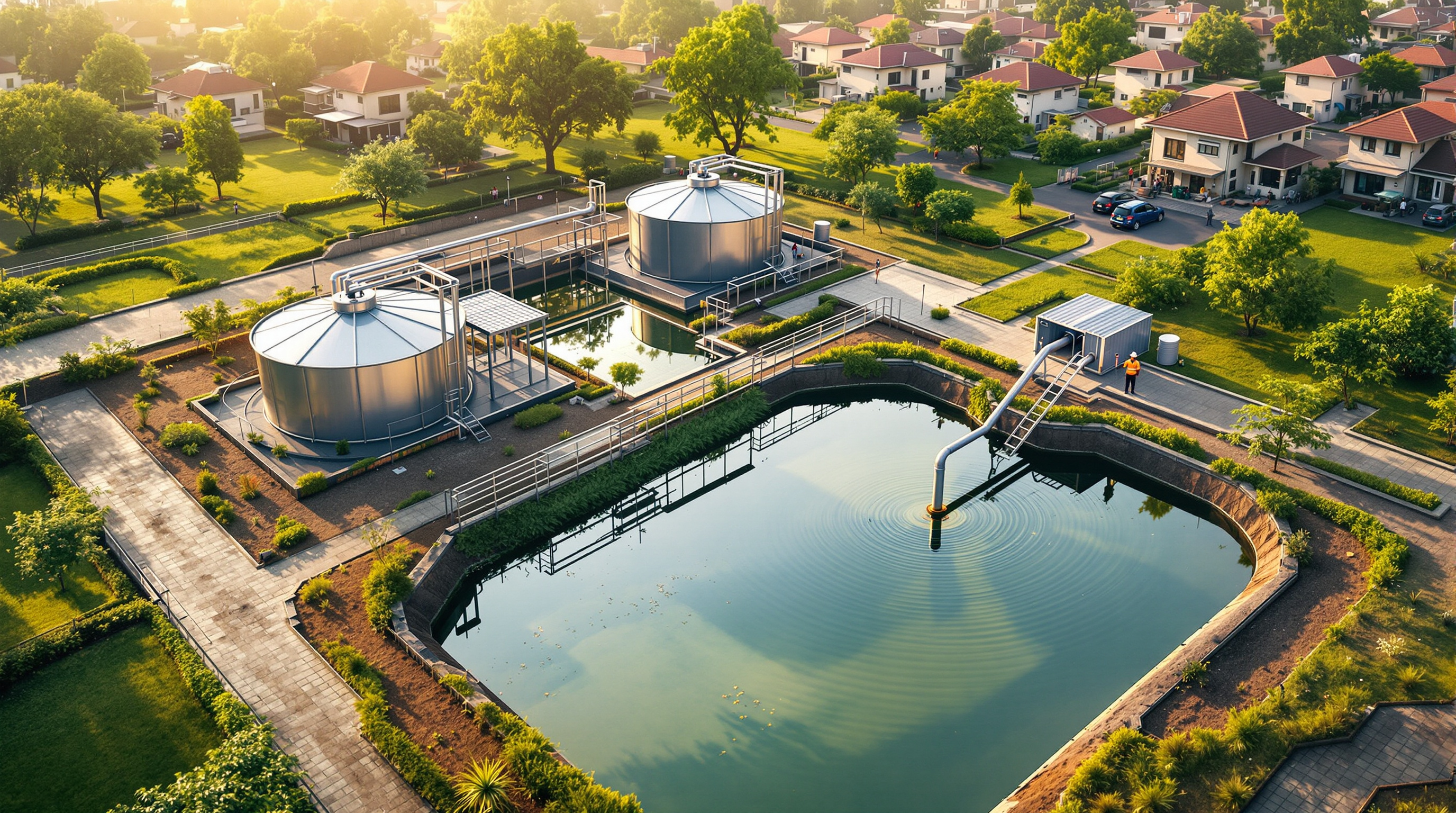
STPs and the Urban Water Circular Economy: How Reuse Closes the City Water Loop
How decentralised sewage treatment and treated-water reuse turn a building's wastewater into a resource — cutting freshwater demand, ending pollution at source, and pointing the way to a genuinely water-circular Indian city.
For most of the twentieth century, urban water flowed in a straight line: pump fresh water from a distant river or borewell, use it once, and flush the dirty remainder into a drain to become somebody else's problem downstream. That line is now broken at both ends. India's cities are running out of fresh water to pump in, and the rivers and lakes that received the waste are dying from the load. The urban water circular economy is the answer to both problems at once — and the humble Sewage Treatment Plant is the machine that makes it real.
This guide steps back from the tanks and blowers to look at the big picture: what a circular water system actually is, how decentralised STP reuse closes the loop, and what a genuinely water-circular Indian city would look like.
In a linear system, water is a consumable you buy, use once and throw away. In a circular system, water is an asset that keeps working — the same litre flushing a toilet today, watering a garden tomorrow, and recharging the aquifer the day after.
From linear to circular: the core idea
A circular economy is built on a simple reframing: there is no "away." The waste stream of one process becomes the feedstock of the next. Applied to water, it means the effluent leaving a building is not garbage to be disposed of — it is raw material for the building's own non-potable demand.
The numbers make the case. A typical Indian building consumes fresh water, and roughly 80–85% of what goes in comes back out as sewage. Treat that sewage properly and you recover most of it as reusable water. Every litre reused is a litre of fresh water you did not buy from a tanker, did not pump from a falling water table, and did not pour into a lake as pollution. The loop closes on both sides simultaneously — demand drops and discharge drops.
That is the whole argument for decentralised treatment. Instead of railroading sewage to a distant municipal plant and buying fresh water back, treatment happens where the water is produced and where it will be reused — in the basement or a corner of the plot. If you are new to the machinery, What is a Sewage Treatment Plant? and How does an STP work? cover the fundamentals; this guide assumes you already know a plant turns foul water clean and asks what that clean water is for.
The two halves of the loop
A circular water system has an intake side and a return side, and the STP sits between them like a heart.
| Linear city | Water-circular city | |
|---|---|---|
| Fresh water in | 100% of demand from mains/borewell/tanker | Only potable-grade demand met with fresh water |
| Wastewater out | Discharged to drain/lake, untreated or lightly treated | Treated to reuse standard, recovered on site |
| Non-potable demand | Met with precious fresh water | Met with recycled treated water |
| Net effect on aquifer | Depletion + pollution | Reduced draw + active recharge |
The intake side shrinks because you stop wasting drinking-grade water on jobs that never needed it — flushing, gardening, cooling, washing, construction. The return side shrinks because most of the water never leaves; only the genuine surplus is discharged, and by law it must already meet CPCB quality norms when it does.
Where the recovered water actually goes
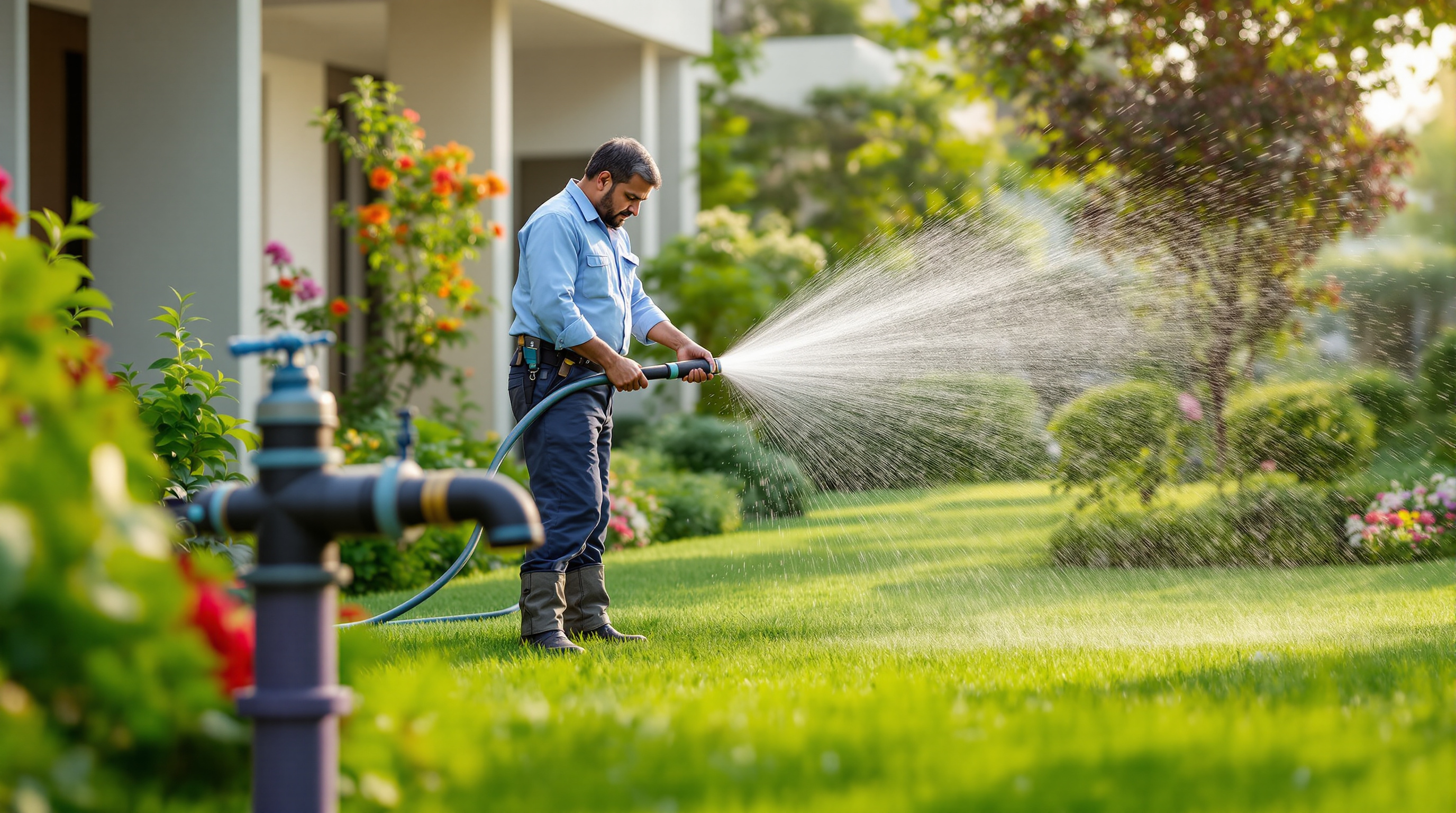
Closing the loop is only real if there is somewhere for the treated water to go. In Indian buildings the recovered water finds a home in a well-established hierarchy of non-potable uses:
- Toilet flushing — piped back up a separate dual-plumbing line; usually the single largest reuse demand in a residential or commercial building.
- Landscape and garden irrigation and lawn watering, which can absorb a large share of the daily output in a green campus.
- Cooling towers in air-conditioned commercial buildings and data centres — a thirsty, continuous demand that recycled water suits well.
- Construction, car washing, and common-area cleaning.
- Groundwater recharge — polishing the surplus and putting it back into the aquifer rather than a storm drain.
At city scale the ambition grows: surplus treated water from many plants can feed lake rejuvenation and, with appropriate quality control, agriculture on the urban fringe — returning nutrients and water to farmland instead of dumping both.
The matching of quality to use is the design discipline that makes reuse safe. Toilet flushing tolerates a modest standard; cooling towers need low hardness and biofouling control; recharge needs pathogen safety. This is why tertiary polishing — a UF membrane or activated carbon filter followed by UV or chlorination — is not an optional extra in a circular system but the stage that unlocks the highest-value reuse.
Designing for circularity, not just compliance
A plant built only to satisfy a discharge norm and a plant built to close the loop look different on paper. Circular design starts from a water balance: how much water the building draws, how much becomes sewage, how much can be recovered, and how much reuse demand actually exists to absorb it. Get this wrong and you either flood the site with treated water it cannot use, or fall short and keep buying fresh.
A few principles separate a circular design from a box-ticking one:
- Size to reuse, not just to inflow. The STP capacity calculator converts occupancy into a treatment load in KLD, and the water balance calculator checks that recovered supply and non-potable demand actually match across the day and the seasons. See also How to size an STP.
- Choose technology for reuse quality. MBBR and MBR systems produce a consistently high-grade effluent that opens up more demanding reuse; the aeration tank and clarifier still do the biological heavy lifting.
- Provide dual plumbing and storage. Recovered water needs its own distribution network and buffer tanks, or peak reuse demand and steady treatment output will never line up. An equalization tank smooths the inflow; a treated-water tank smooths the outflow.
- Prove the money. The water reuse savings calculator turns recovered litres into rupees saved on tanker and mains water, and the STP cost estimator sets that against capital and running cost. For most large developments the payback is measured in a few years, not decades.
Reliable circularity also depends on the boring disciplines of the trade: sound civil construction, proper commissioning, and honest performance testing. A plant that trips offline sends the loop straight back to linear — fresh water in, raw sewage out.
What a water-circular city looks like
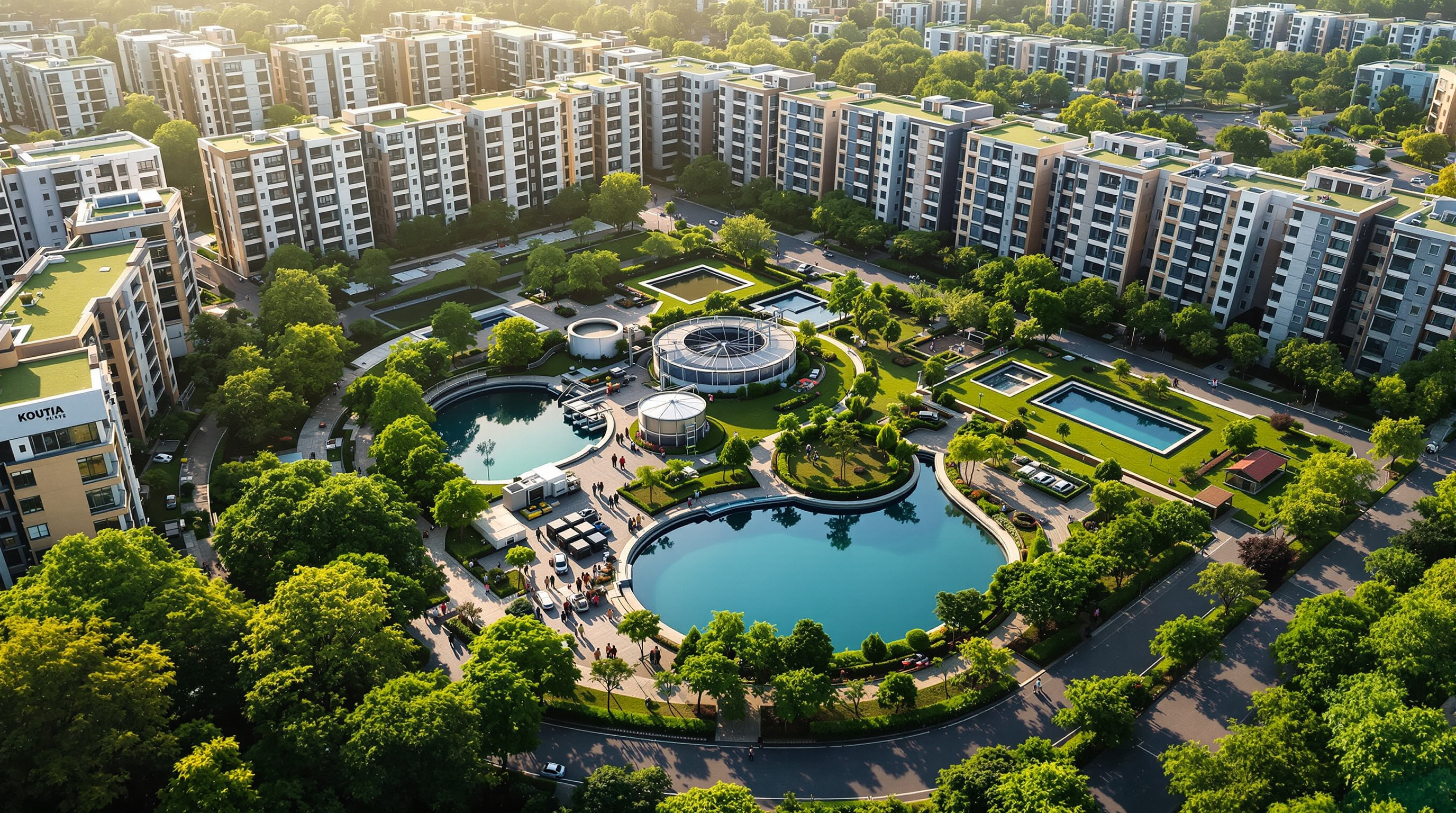
Scale the single building up to a district and a pattern emerges. Thousands of decentralised plants, each recovering 80–85% of its water on site, collectively slash the city's fresh-water draw and its pollution load without a single new dam or a new trunk sewer. The municipality's job shifts from disposing of wastewater to coordinating a distributed network of small water utilities — setting reuse standards, auditing quality, and moving surplus treated water to where the city still needs it: parched lakes, depleted aquifers, peri-urban farms.
This is the direction of travel for the "water-positive" and net-zero-water campuses already appearing across Indian tech parks and townships — buildings that recharge more than they deplete. They are not exotic. They are ordinary STPs, sized and plumbed and operated with the loop in mind.
The bottom line
The urban water circular economy is not a new technology — it is an old machine put to a better purpose. The STP that a building installs to satisfy the pollution board is the same machine that, designed for reuse, turns the city's biggest liability into its most reliable local water source. Close the loop building by building and the arithmetic changes for the whole city: less fresh water pumped in, less sewage poured out, and a water table that stops falling.
Start where every circular design starts — with the numbers. Walk the Sewage Treatment Plants guide library for the engineering depth, then run your own building through the water balance calculator to see how much of your water loop you can close today.
Export this guide
Related Guides — Deep-dive reading
Circular Water Management for Buildings & Cities: The Closed-Loop Guide
How to stop treating water as a one-way flow and design a closed loop — treat, reuse, recharge, repeat — with a sewage treatment plant at its core, for Indian buildings, campuses and cities.
Sewage Treatment PlantsSTP for IT Parks & Campuses: Central-Plant Design, Reuse & Redundancy Guide
How to plan a campus-scale sewage treatment plant for a multi-building IT park in India — the daytime flow pattern, the right technology, sizing for a central plant, and a reuse network feeding landscape, flushing and cooling towers.
Sewage Treatment PlantsRooftop Water Recycling Integration in Homes: One Non-Potable System from Rain and Greywater
How to combine rooftop rainwater harvesting with greywater and STP reuse into a single non-potable water system — the storage, dual plumbing, controls and seasonal logic that make two sources behave like one reliable supply.
Sewage Treatment PlantsRelated Tools — Try Free
Water Reuse Savings Calculator
Estimate the money you save by reusing STP-treated water instead of buying fresh supply, with daily, monthly and annual savings.
STP CalculatorLandscape Cost Calculator
Estimate a garden's cost — hardscape, softscape, lawn, irrigation, lighting and annual upkeep — by area, tier and city.
Budget CalculatorRainwater Tank Sizer
How big should your rainwater tank be? Computes annual harvest, recommended tank capacity in litres, water-bill savings, and payback — for 10 Indian cities.
RWH Calculator