
Chlorination System in an STP: Disinfection Explained
The final disinfection step that kills the pathogens biology and filtration leave behind — how chlorine dosing, contact time and residual work together to make treated sewage safe to reuse or discharge, explained for owners and operators alike.
By the time water reaches the end of a sewage treatment plant, it looks clean. The microbes have eaten the organic waste, the clarifier has settled out the sludge, and the sand and carbon filters have polished away the last fine particles. It is clear, and nearly odourless. But "clear" is not the same as "safe." Invisible in that clear water can still be millions of bacteria and viruses — the pathogens that cause typhoid, cholera and gastroenteritis. Removing them is the job of the very last step in the plant: disinfection, and in most Indian STPs that means a chlorination system.
This guide explains what a chlorination system is, how it actually kills pathogens, and the three numbers that decide whether it works — dose, contact time and residual. It is written for both the apartment-association member who signs off the STP contract and the operator who runs it every day. If you are new to the overall process, the pillar guide What is a Sewage Treatment Plant? and the Sewage Treatment Process Flow set the scene; this one zooms in on the final stage.
Every step before disinfection makes the water cleaner. Disinfection is the only step whose job is to make it safe. It is the difference between water that looks fine and water you can legally flush, irrigate and discharge.
What a chlorination system actually is
A chlorination system is a small, self-contained set of equipment bolted onto the tail end of the treatment train. Its purpose is to add a controlled dose of a chlorine-based disinfectant to the treated water, hold that water long enough for the chemical to do its killing, and then send it on to the reuse tank.
In building STPs the chlorine almost always comes as sodium hypochlorite — the same active chemical as household bleach, but supplied as a stronger solution (typically 10–12% available chlorine). Gas chlorine, used in large municipal plants, is far too hazardous for a basement or a residential plot, so hypochlorite dosing is the standard.
A typical chlorination system has four parts:
- A chemical storage tank — a corrosion-resistant HDPE or PVC tank holding the hypochlorite solution.
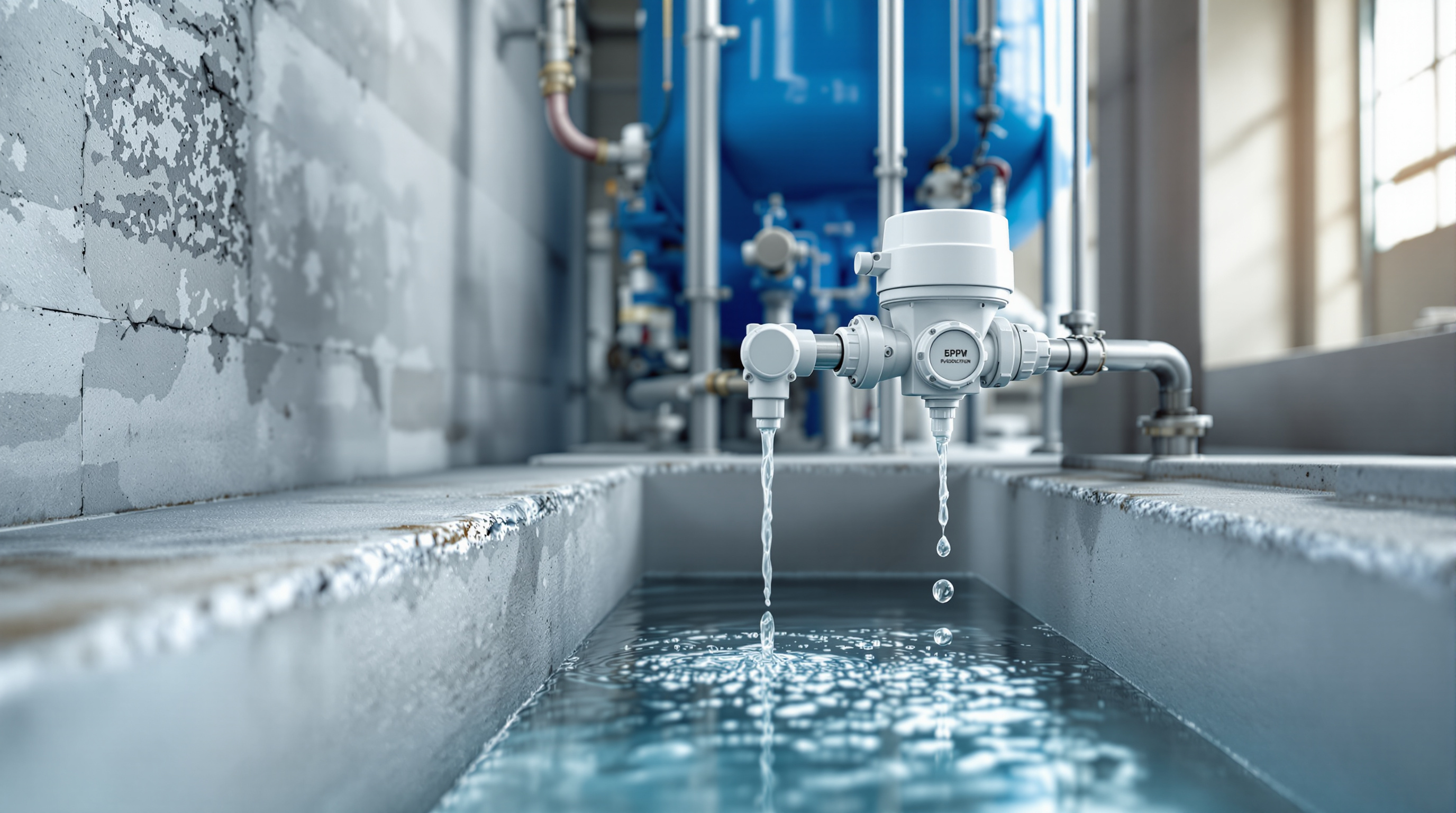
- A dosing pump — a small metering pump that injects a precise, adjustable quantity of hypochlorite into the water line. This is what sets the dose.
- A chlorine contact tank (CCT) — a baffled tank or channel where the dosed water is held so the chlorine has time to react. This is what provides the contact time.
- A residual check — a simple manual test kit or an online sensor at the outlet that confirms enough chlorine survived to prove the water was disinfected.
Get those three variables — dose, contact time and residual — right, and the system works reliably for years.
How chlorine kills pathogens
When sodium hypochlorite mixes with water it forms hypochlorous acid, a small, aggressive molecule that slips through the cell walls of bacteria and viruses and destroys the enzymes and proteins they need to live. Within minutes, the pathogen population collapses. The headline measure of success is the faecal coliform count — a stand-in for disease-causing organisms — which disinfection must drive down to the level the discharge norm allows.
Crucially, chlorine is consumed as it works. Some of it is used up reacting with any leftover organic matter and ammonia in the water — this is the chlorine demand. Only once that demand is satisfied does spare chlorine remain to keep killing pathogens and to persist in the water as a safeguard. That leftover is the residual, and it is the single most important thing an operator checks.
The CT concept: dose is only half the story
Disinfection is not just about how much chlorine you add — it is about how much, for how long. Engineers capture this in the CT value: chlorine Concentration multiplied by contact Time.
The same kill can be achieved with a high concentration for a short time, or a lower concentration for a longer time — as long as the product (CT) is high enough. This is why the contact tank matters as much as the dosing pump. A generous dose with no holding time barely works; a modest dose held for 30 minutes in a well-baffled tank works beautifully.
| Lever | What it is | Practical target (directional) |
|---|---|---|
| Dose | Hypochlorite added per litre treated | Roughly 3–5 mg/l as available chlorine for good secondary effluent |
| Contact time | Time water is held in the contact tank | At least 30 minutes at peak flow |
| Residual | Free chlorine left at the outlet | Around 0.5 mg/l to confirm the dose held |
| CT value | Concentration × time, the real driver | High enough to hit the required coliform kill |
Treat these as starting points, not gospel — the right dose depends on how clean the incoming water is. Water that still carries BOD, COD and TSS exerts a high chlorine demand and needs more; well-filtered water from an activated carbon filter needs less. A proper design starts from the treated flow in litres per day, which the STP Capacity Calculator helps you establish.
Sizing the contact tank
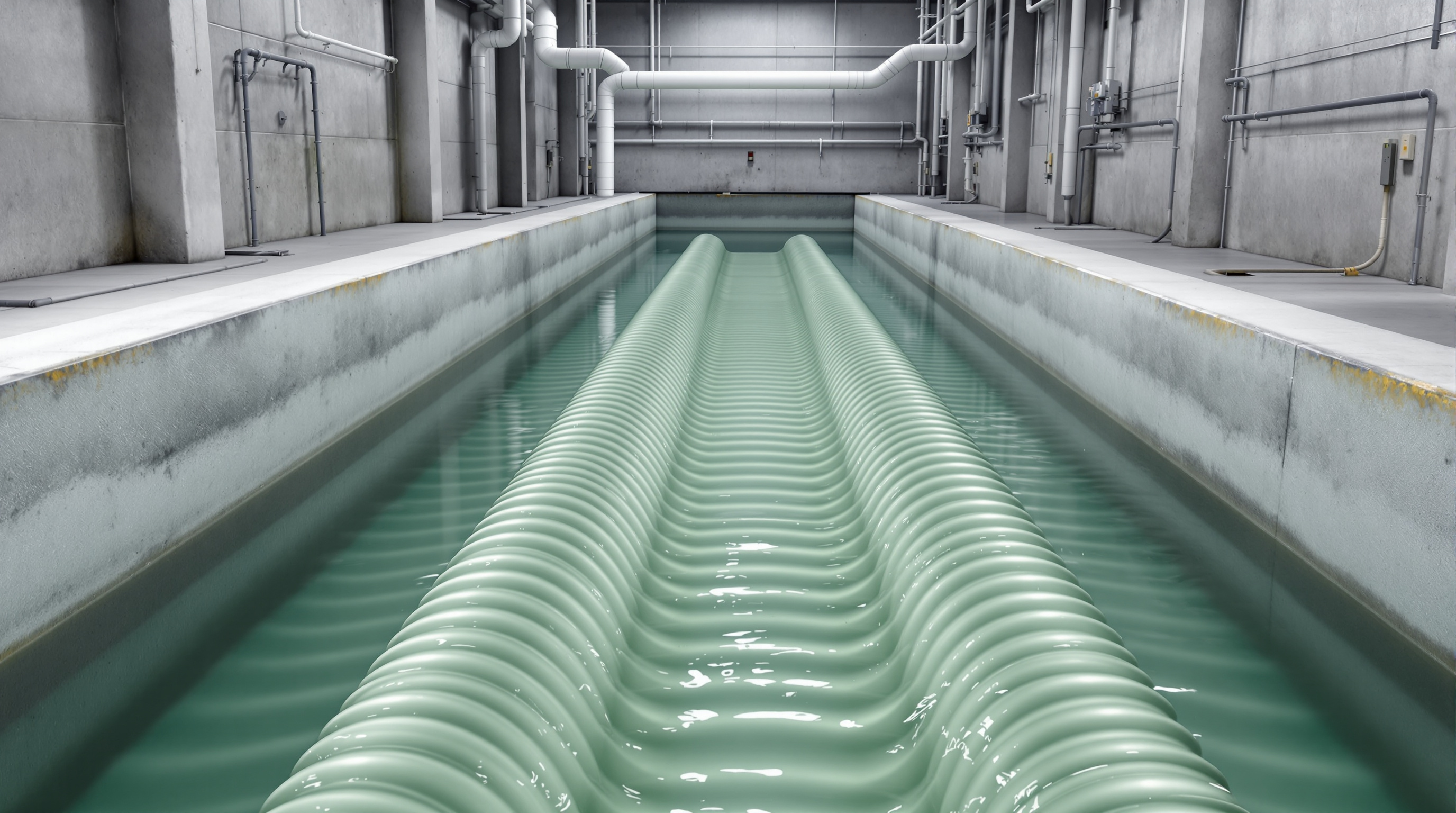
Because contact time is non-negotiable, the chlorine contact tank is sized off the plant's peak flow, not its average. The rule of thumb is a volume that gives at least 30 minutes of retention when the plant is running hardest.
Just as important is the shape. A plain box lets water short-circuit — some of it races from inlet to outlet in a fraction of the intended time, carrying live pathogens with it. So contact tanks are built with baffles that force the water to snake back and forth in a long, narrow path (a high "length-to-width ratio"), ensuring every drop is held for its full contact time. A cheap, unbaffled tank is one of the most common reasons a chlorination system quietly fails.
Residual: the proof it worked
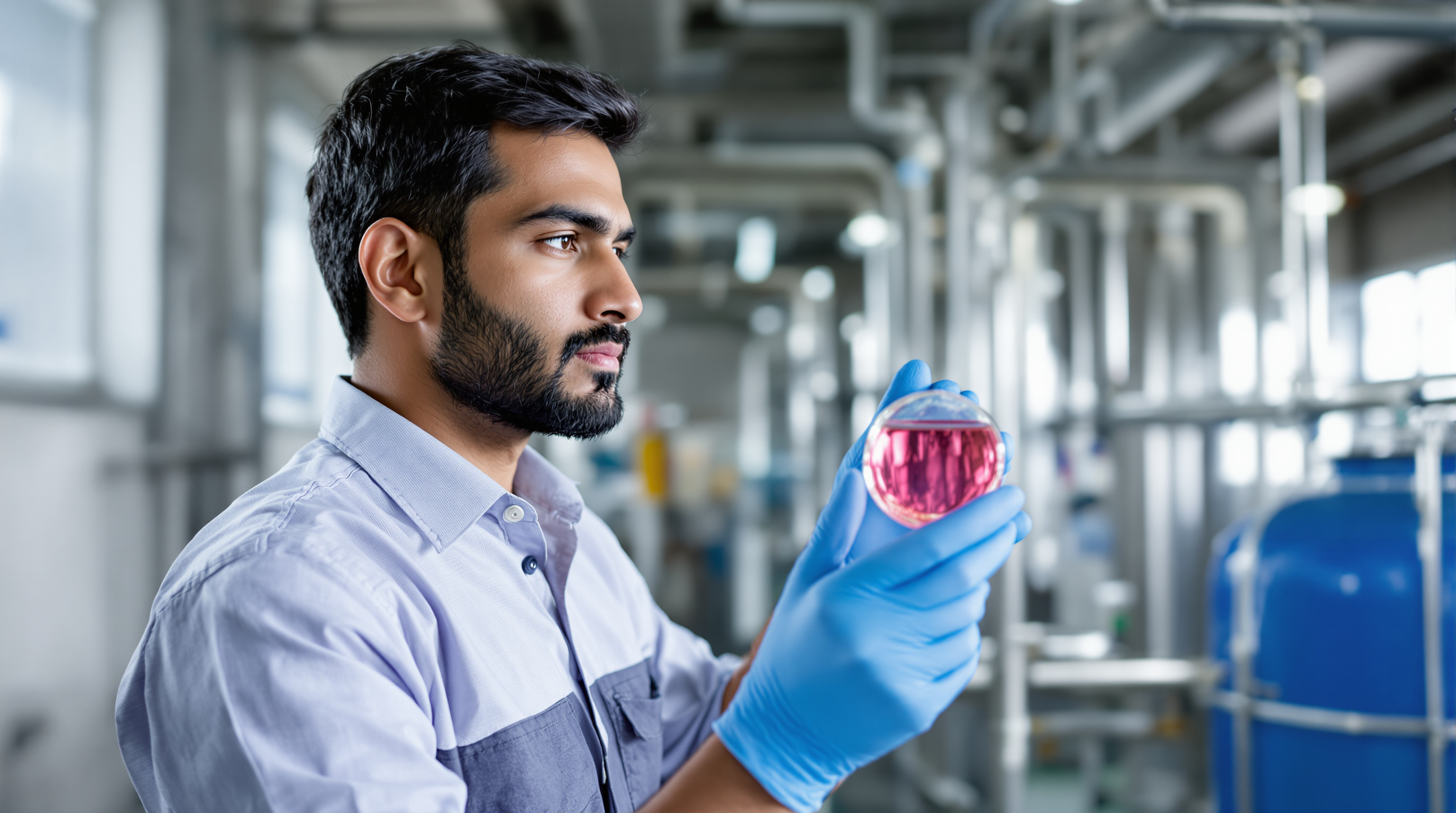
The residual is the operator's daily proof of disinfection. A free chlorine residual of roughly 0.5 mg/l at the outlet means the chlorine demand was satisfied and there was spare disinfectant to finish the job. Test it with a simple DPD colour kit or an online analyser.
- No residual → the dose was too low or demand too high; pathogens may have survived. Increase dosing.
- A healthy residual → disinfection succeeded, and the water carries a small protective reserve into the reuse tank.
- An excessive residual → over-dosing, which wastes chemical, raises cost, and creates the by-product and toxicity problems below.
By-products, dechlorination and safety
Chlorine is powerful, and that power has a downside. When it reacts with residual organic matter it can form disinfection by-products such as trihalomethanes (THMs), which are undesirable in water meant for reuse. And chlorine that stays in the water is toxic to aquatic life, so treated sewage discharged into a lake, river or drain may need dechlorination — a small dose of sodium bisulphite, or a passage through activated carbon — to neutralise the residual first. Water reused for flushing or gardening usually keeps its residual as a benefit.
Handling hypochlorite safely matters too. It is corrosive, it degrades in sunlight and heat (so stock is bought fresh and stored cool and shaded), and it must never be mixed with acids. Operators use gloves, goggles and good ventilation around the dosing skid.
Chlorine or UV? A quick comparison
The main alternative to chlorination is UV disinfection, which kills pathogens with ultraviolet light instead of chemicals.
- Chlorine is cheap, simple, and leaves a lasting residual — ideal where treated water is stored before reuse. Its drawbacks are chemical handling, by-products, and the possible need to dechlorinate before discharge.
- UV adds no chemicals and creates no by-products, but leaves no residual, so pathogens can regrow in a storage tank, and it needs genuinely clear water and clean lamp sleeves to work.
Many premium plants use both — UV as the primary kill, a light chlorine touch to hold a residual in the reuse line.
Common problems and O&M
A chlorination system is low-tech but not no-maintenance. The recurring issues:
- Dosing pump failure or a blocked injection point — the commonest cause of zero residual. Check and prime the pump; clean the non-return valve.
- Empty or degraded hypochlorite stock — solution loses strength with age and heat; reorder before it runs out and store it shaded.
- Short-circuiting in the contact tank — inspect baffles for damage or sludge build-up that cuts effective contact time.
- Skipped residual testing — without the daily DPD check, the operator is dosing blind. This is the discipline that keeps the whole step honest.
Where it sits in the flow — the bottom line
Chlorination is the final gate of the STP. It takes the clear water leaving the tertiary pressure sand and carbon filters and makes it genuinely safe — killing the pathogens that biology and filtration leave behind, and sending water fit for toilet flushing, landscaping and lawful discharge into the reuse tank. Its logic is simple and worth remembering: the right dose, held for the right time, leaving the right residual. Master those three numbers and the last step of the plant looks after itself.
To see how disinfection fits alongside every other stage, walk through the Sewage Treatment Process Flow or browse the full Sewage Treatment Plants hub — and size the plant behind it with the STP Capacity Calculator.
Export this guide
Related Guides — Deep-dive reading
Chemical Dosing in STPs: Chlorine, Coagulants, Antiscalants and pH Correction
How to dose the four chemicals every building STP relies on — with the right pumps, the right dose, safe storage, and no guesswork — so your treated water stays compliant without wasting money or damaging the plant.
Sewage Treatment PlantsThe Sewage Treatment Process Flow, Explained: Every Stage From Inlet to Reuse
Follow a drop of sewage through a typical STP — inlet, screening, aeration, clarifier, filtration, disinfection and reuse — as one connected flow, with a block diagram and a unit-by-unit table, in plain language.
Sewage Treatment PlantsUV Disinfection in an STP: Chemical-Free Pathogen Kill Explained
How ultraviolet lamps inactivate the bacteria and viruses in treated sewage without a drop of chemical or any residual — how UV dose works, why lamps foul, and how UV compares with chlorine in an Indian STP.
Sewage Treatment PlantsRelated Tools — Try Free
Chlorine Dose Calculator
Compute chlorine demand for water and sewage disinfection from daily flow and dose, returning chlorine consumption in kg/day and kg/month.
STP CalculatorRainwater Tank Sizer
How big should your rainwater tank be? Computes annual harvest, recommended tank capacity in litres, water-bill savings, and payback — for 10 Indian cities.
RWH CalculatorApartment STP Planner
Plan an apartment complex sewage treatment plant from flats and occupancy — get population load, sewage flow, recommended STP capacity in KLD, treatment technology and approximate space.
Planner