
Activated Carbon Filter (ACF) in an STP: The Polishing Filter Explained
What an activated carbon filter does inside a sewage treatment plant, how adsorption strips colour, odour and residual organics from treated water, and when the carbon is exhausted — explained for homeowners and professionals alike.
By the time water reaches the tail end of a sewage treatment plant, the hard work is mostly done. Microbes have eaten the organic load, the clarifier has settled the sludge, and a sand filter has stripped out the last fine particles. The water looks clean. But "looks clean" and "clean enough to reuse" are not the same thing. There is often a faint yellow-brown tint, a lingering musty smell, and a residue of dissolved organic molecules that no amount of settling or straining will remove. The activated carbon filter — usually shortened to ACF — is the component that deals with exactly this: the invisible finish that makes treated water genuinely reuse-grade.
This guide explains what an ACF is, the science of adsorption that makes it work, how it is sized and maintained, and when its carbon is spent and must be replaced. It sits in the tertiary, or polishing, stage of the treatment flow — the last line of defence before water is stored for reuse.
A sand filter removes what you can see — suspended particles. An activated carbon filter removes what you can smell and sense — dissolved colour, odour and organic molecules — by trapping them onto an enormous internal surface. One kilogram of activated carbon can hold a surface area larger than several tennis courts.
What an activated carbon filter actually is
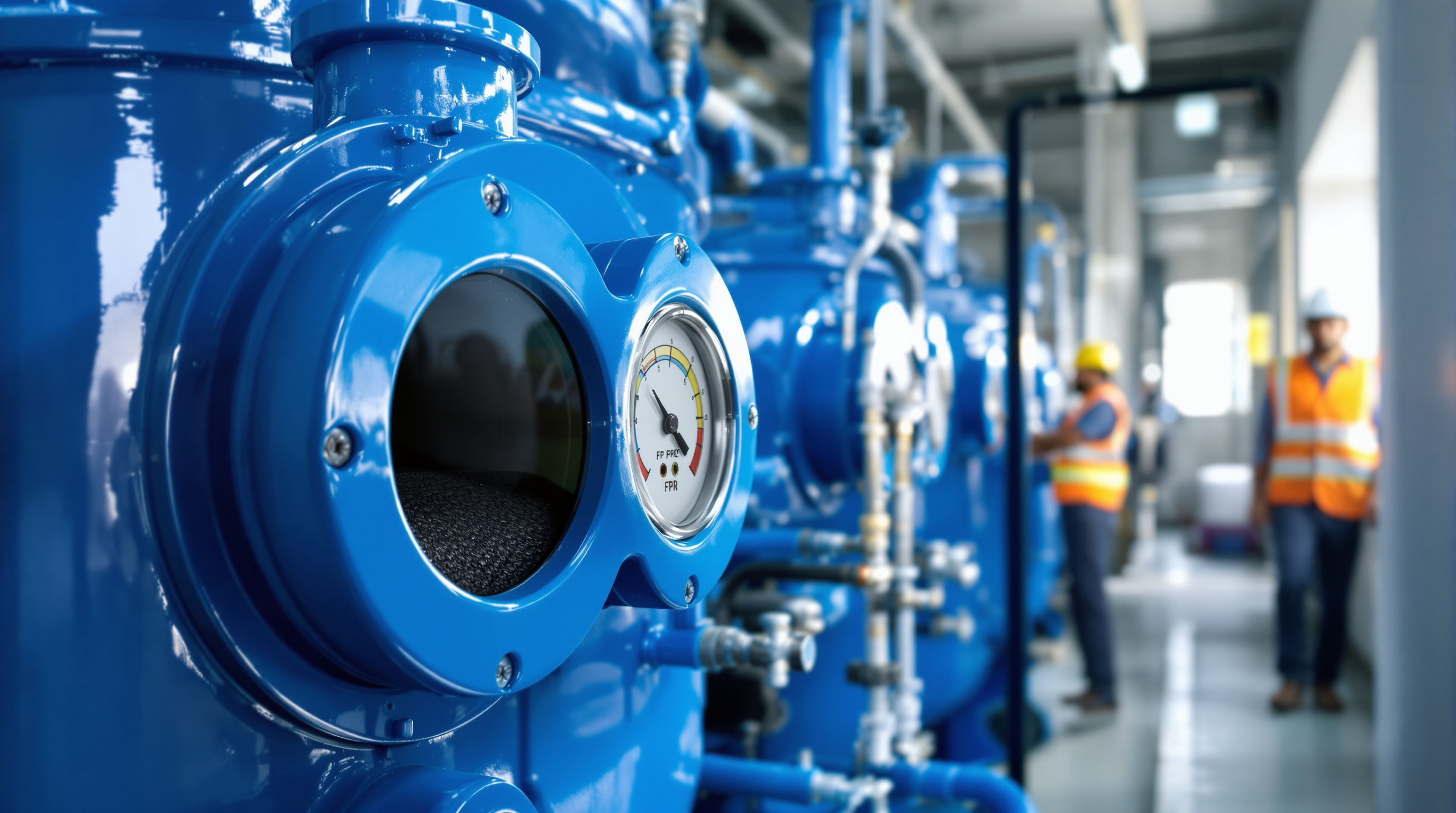
An ACF is a pressure vessel — typically a blue FRP (fibre-reinforced plastic) or mild-steel tank — packed with a bed of granular activated carbon (GAC), sitting on a supporting layer of graded gravel. Treated water from the pressure sand filter is pumped in at the top, flows down through the carbon bed under pressure, and exits clarified and deodorised at the bottom.
Activated carbon is ordinary carbon — made from coconut shell, coal or wood — that has been "activated" by heating it in steam to burn out a vast network of microscopic pores. This process turns a simple lump of char into a sponge riddled with internal channels, giving it a staggering internal surface area of 800–1,200 square metres per gram. It is this surface area, not the outside of the granules, that does the cleaning.
In an STP the ACF almost always runs as a pair with the sand filter: sand first to remove turbidity and protect the carbon from clogging, carbon second to polish. Together they form the standard two-stage filtration block ahead of disinfection.
How adsorption works (and why it is not filtration)
The key word for an ACF is adsorption — with a "d", not "absorption". The two are genuinely different:
- Absorption is soaking up, the way a sponge holds water throughout its volume.
- Adsorption is sticking to a surface. Dissolved molecules in the water are attracted to and held on the walls of the carbon's internal pores by weak molecular (van der Waals) forces.
As water trickles through the bed, molecules of dissolved organic matter, colour compounds, odour-causing chemicals and residual chlorine drift into the pores and stick to the pore walls. The water flowing out has been stripped of them. Crucially, the carbon does not chemically change these molecules or break them down — it simply holds onto them. That distinction matters, because it means the carbon has a finite capacity: every gram has only so much pore-wall surface, and once it is coated, it can hold no more.
This is why an ACF is described as a polishing filter. It is not removing bulk pollution — the biological stage already did that. It is removing the last stubborn fraction that dissolves in water and refuses to settle or strain out.
What an ACF removes — and what it does not
| Removes well | Does little for |
|---|---|
| Colour (yellow/brown tint) | Suspended solids (that's the sand filter's job) |
| Odour and musty taste | Dissolved salts / TDS (needs UF or RO) |
| Residual dissolved organics (lowers residual COD/BOD) | Nutrients like nitrogen and phosphorus |
| Free residual chlorine (de-chlorination) | Pathogens — bacteria and viruses (needs chlorination or UV) |
That last row is important: an ACF is not a disinfection step. In fact, because carbon removes chlorine and offers a moist, organic-rich surface, a neglected carbon bed can even breed bacteria. Disinfection must come as its own dedicated stage, either before or after the ACF depending on the plant design.
Where the ACF sits in the treatment flow
The activated carbon filter is one of the final components water meets. A typical polishing train runs like this:
1. Clear water from the clarifier or tube settler collects in a filter feed tank.
2. A filter feed pump pushes it through the pressure sand filter — removes turbidity and suspended solids.
3. The water then passes through the activated carbon filter — removes colour, odour and dissolved organics.
4. Finally it is disinfected by chlorine or UV and sent to the treated-water tank for reuse.
To see how this final block fits the whole plant, the full STP process flow guide walks the water from bar screen to reuse tank, and the pillar guide on what an STP is gives the big picture.
Sizing basics (directional, not a design)
ACF sizing is driven by flow rate and contact time, not just tank volume. Two directional rules of thumb engineers use:
- Filtration velocity is kept modest — roughly 10–20 cubic metres per square metre of bed area per hour. Slower flow means longer contact and better adsorption.
- Empty Bed Contact Time (EBCT) — the time water spends in the carbon bed — is typically a few minutes. Too fast, and molecules pass through before they can stick.
The vessel diameter is chosen so the design flow gives an acceptable velocity, and the carbon bed depth (often 0.8–1.5 m) provides the contact time. For a residential STP, capacity always starts from the daily flow — if you are still fixing your plant size, the STP Capacity Calculator and the Sewage Generation Calculator turn occupancy into litres per day, the number every filter is scaled from.
When the carbon is "exhausted" — and regeneration
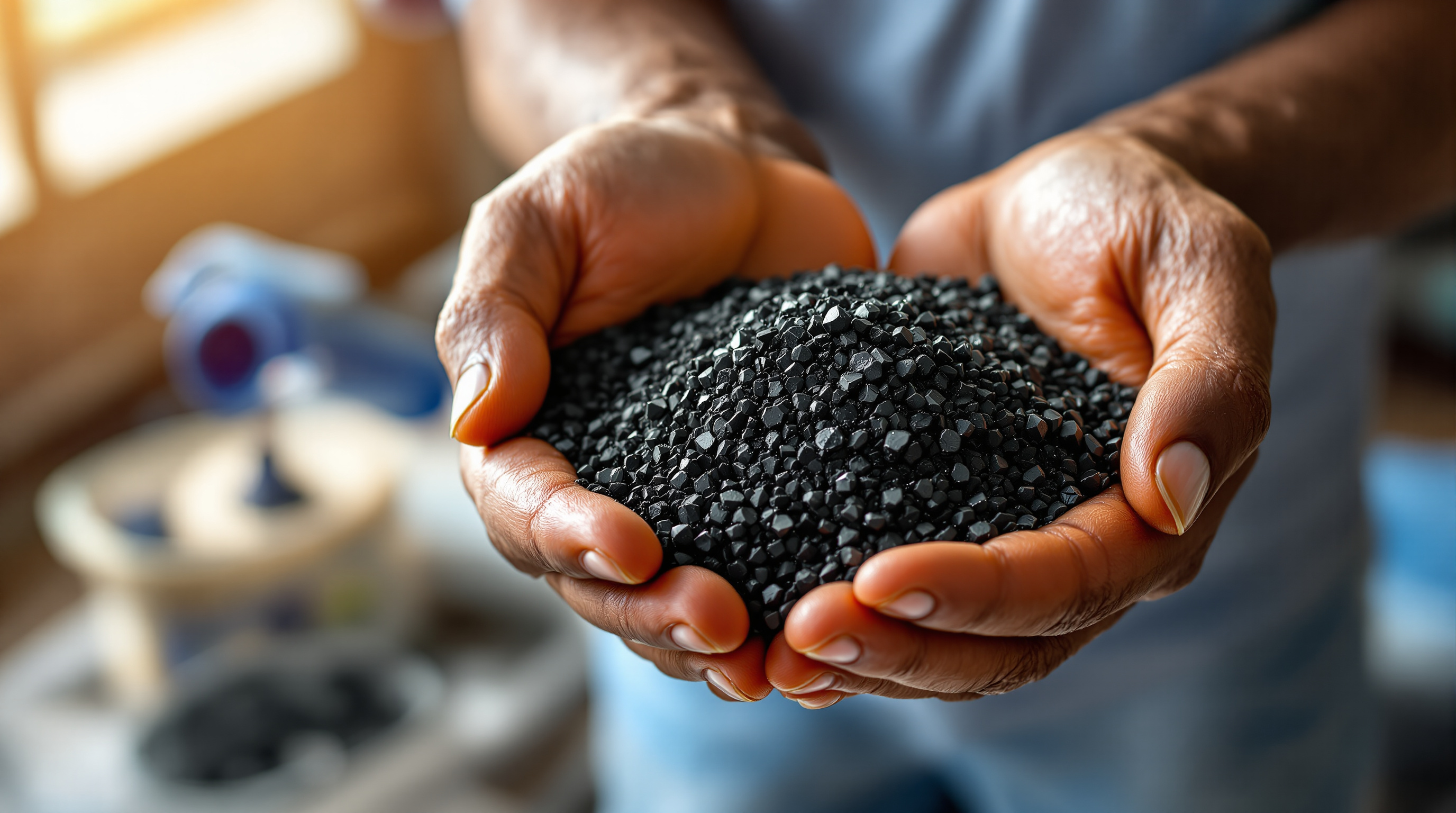
Because adsorption fills up finite surface, every carbon bed eventually reaches breakthrough — the point where the pores are saturated and colour or odour begins passing straight through into the outlet. The carbon is then said to be exhausted. Tell-tale signs:
- Treated water starts showing a tint or smell again.
- Outlet COD creeps up in lab tests.
- Chlorine demand downstream changes.
There are two ways to deal with spent carbon:
- Regeneration — heating the carbon in a controlled furnace to burn off the trapped molecules and restore its pores. This is economical only at large industrial scale; small STPs rarely do it on site.
- Replacement — for most building STPs, the practical answer is simply to dig out the old carbon and refill with fresh GAC. Typical media life in a domestic STP is 1–3 years, depending on load and how well the upstream stages are run.
A well-run biological stage and sand filter dramatically extend carbon life, because the ACF then only handles the small polishing load it is meant for — not slugs of organics that should have been removed upstream.
Routine O&M and common problems
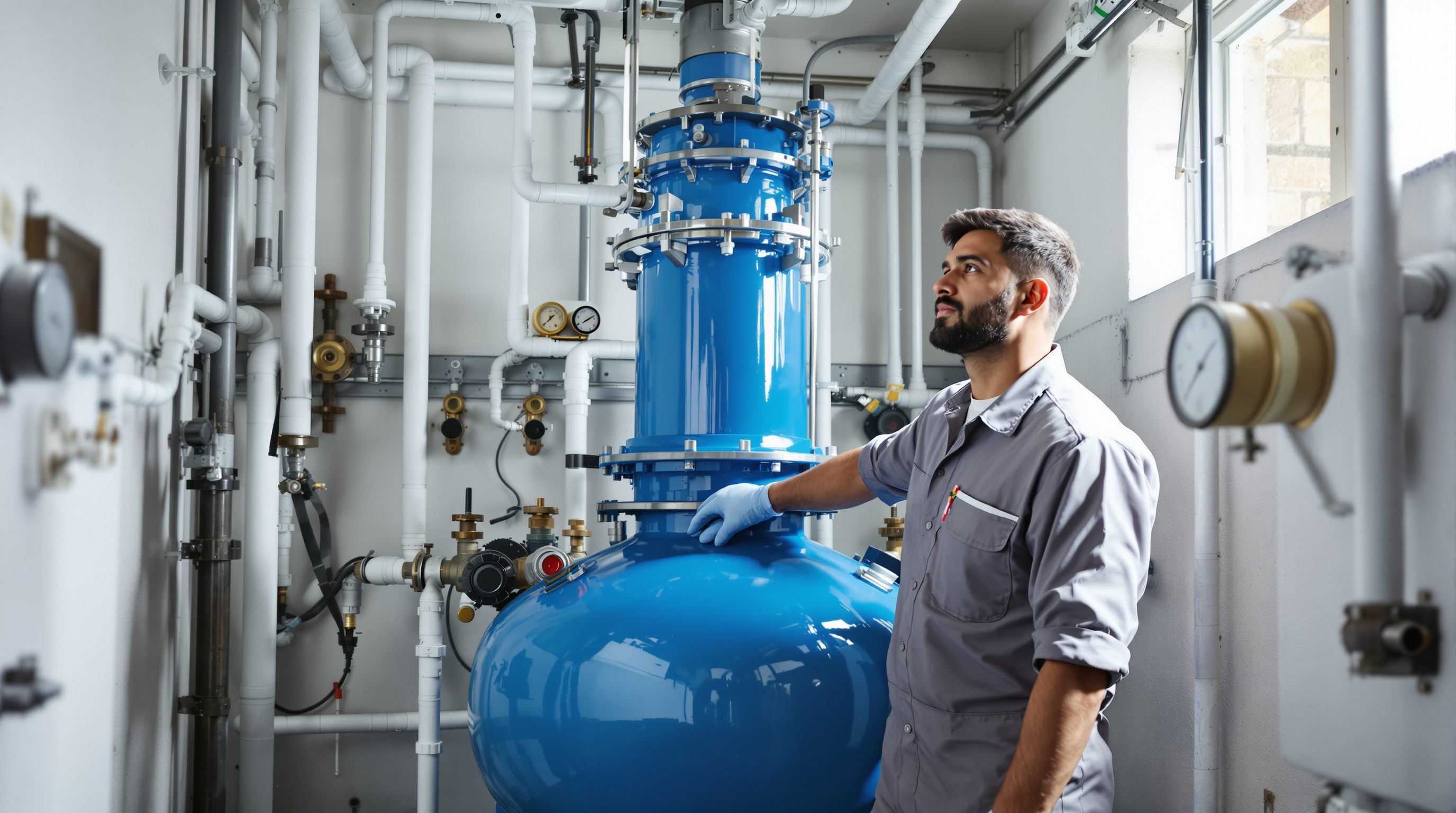
An ACF is low-maintenance but not no-maintenance. The regular jobs:
- Backwashing — periodically reversing the flow to lift and rinse the bed, clearing trapped fines and preventing channelling and pressure build-up. This is usually done along with the sand filter, on a routine cycle.
- Watching the pressure drop — a rising differential pressure across the vessel signals a clogged or compacted bed needing backwash.
- Periodic media top-up and change-out — carbon is lost slowly to backwashing and, eventually, exhaustion.
| Problem | Likely cause | Fix |
|---|---|---|
| Colour/odour returns in outlet | Carbon exhausted | Replace the GAC media |
| High pressure drop | Bed clogged with fines | Backwash; check upstream sand filter |
| Channelling (water bypasses bed) | Compaction or poor backwash | Backwash properly; re-level or replace media |
| Bacterial regrowth downstream | Carbon removed chlorine; bed fouled | Ensure disinfection after ACF; maintain media |
The bottom line
The activated carbon filter is the quiet finisher of a sewage treatment plant. It cannot settle solids, kill bacteria or remove salt — but no other component matches it for pulling out the dissolved colour, odour and organic residue that stand between "treated" water and water you would happily use to flush toilets, run cooling towers or irrigate landscaping. It works by adsorption onto an immense hidden surface, it fills up over time, and its performance quietly depends on everything upstream doing its job first.
To place the ACF in the wider system, continue with the Sewage Treatment Plants guide library, or read how its neighbour, the pressure sand filter, prepares the water that carbon then polishes.
Export this guide
Related Guides — Deep-dive reading
The Sewage Treatment Process Flow, Explained: Every Stage From Inlet to Reuse
Follow a drop of sewage through a typical STP — inlet, screening, aeration, clarifier, filtration, disinfection and reuse — as one connected flow, with a block diagram and a unit-by-unit table, in plain language.
Sewage Treatment PlantsFilter Backwashing in STPs (PSF & ACF): When and How to Do It Right
The pressure-drop triggers, the correct air-scour-and-backwash sequence, and the media top-up routine that keep your pressure sand and activated carbon filters delivering clear, reuse-grade water — a practical guide for STP operators.
Sewage Treatment PlantsHow Does an STP Work? A Step-by-Step Explanation
Follow a single drop of sewage from the building drain to reusable water — through screening, settling, the living microbial heart of the plant, and final polishing — with every stage explained in plain language and no engineering background assumed.
Sewage Treatment PlantsRelated Tools — Try Free
Chlorine Dose Calculator
Compute chlorine demand for water and sewage disinfection from daily flow and dose, returning chlorine consumption in kg/day and kg/month.
STP CalculatorFilter Sizing Calculator (PSF/ACF)
Size a pressure sand or activated carbon filter from flow and filtration rate to get vessel diameter, filter area and hourly design flow.
STP CalculatorPool Volume Calculator
Water volume in litres, US gallons and cubic metres, by pool shape and depth.
Pool Calculator