
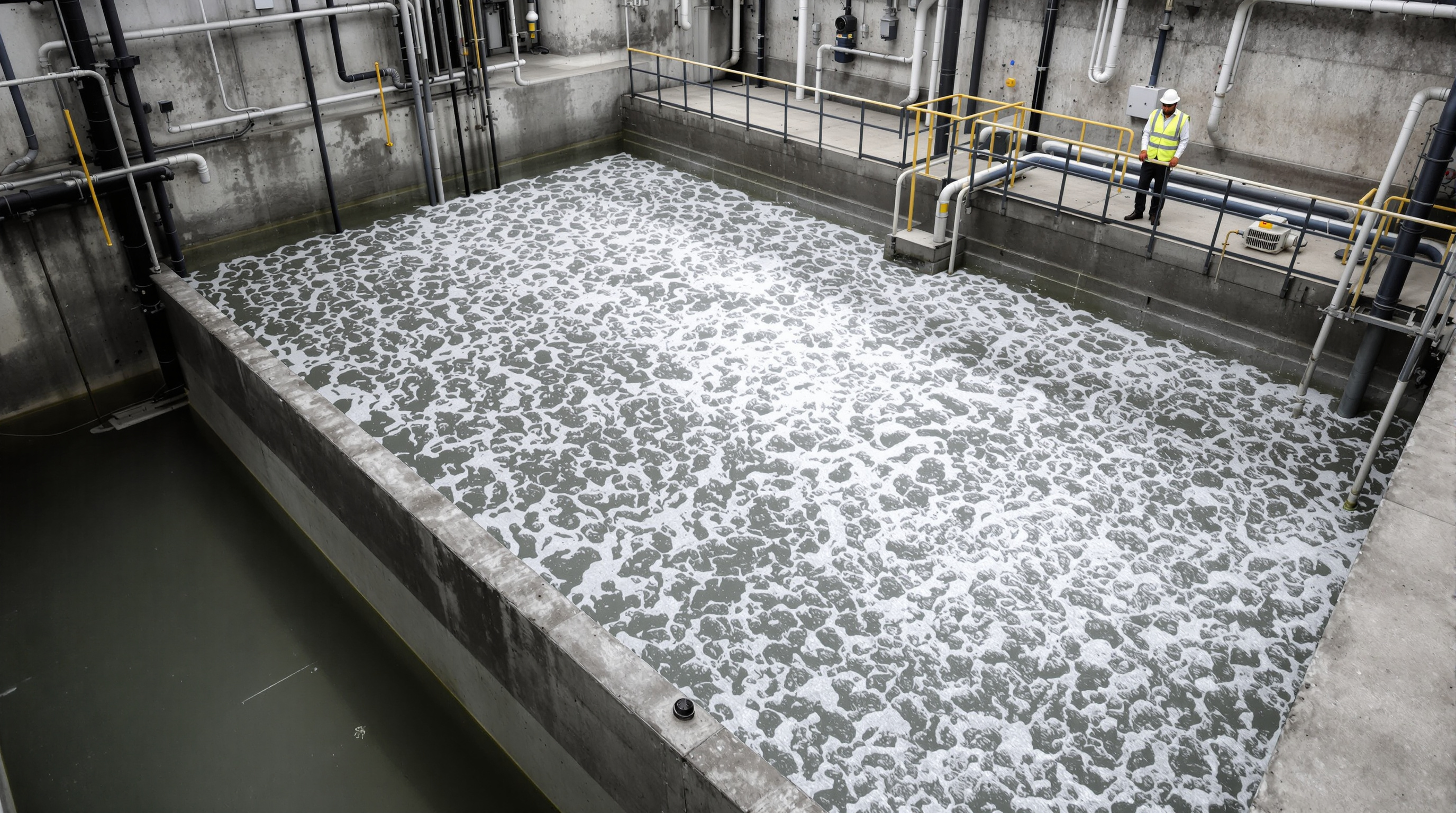
Equalization Tank in an STP: Purpose, Working & Sizing Explained
The buffer tank that catches the morning rush and the midnight trickle and hands the rest of the plant one calm, steady flow — why flow equalisation matters, how the tank also mixes and pre-aerates, and the rules of thumb for sizing it.
Sewage does not arrive at an STP in a polite, steady stream. It comes in waves. At 7 a.m. an entire apartment tower showers, flushes and runs washing machines at once, and the incoming flow spikes. By mid-morning it drops to a trickle; at 3 a.m. it is almost nothing. The strength of the sewage swings too — greasy and concentrated after breakfast, dilute and weak overnight. If that lurching, uneven flow hit the biological heart of the plant directly, the microbes would be alternately drowned and starved, and the treated water quality would yo-yo with it.
The equalization tank is the STP's shock absorber. It sits early in the treatment train, catches every surge and lull, and releases the collected sewage onward at a smooth, constant rate. Everything downstream — the aeration tank, the clarifier, the filters — then works on a calm, predictable feed instead of a series of body-blows.
An equalization tank does not clean the water. Its job is to make the flow boring — to turn a jagged daily flow curve into a flat line, so the living, sensitive processes downstream never have to cope with a peak or a drought.
What an equalization tank actually is
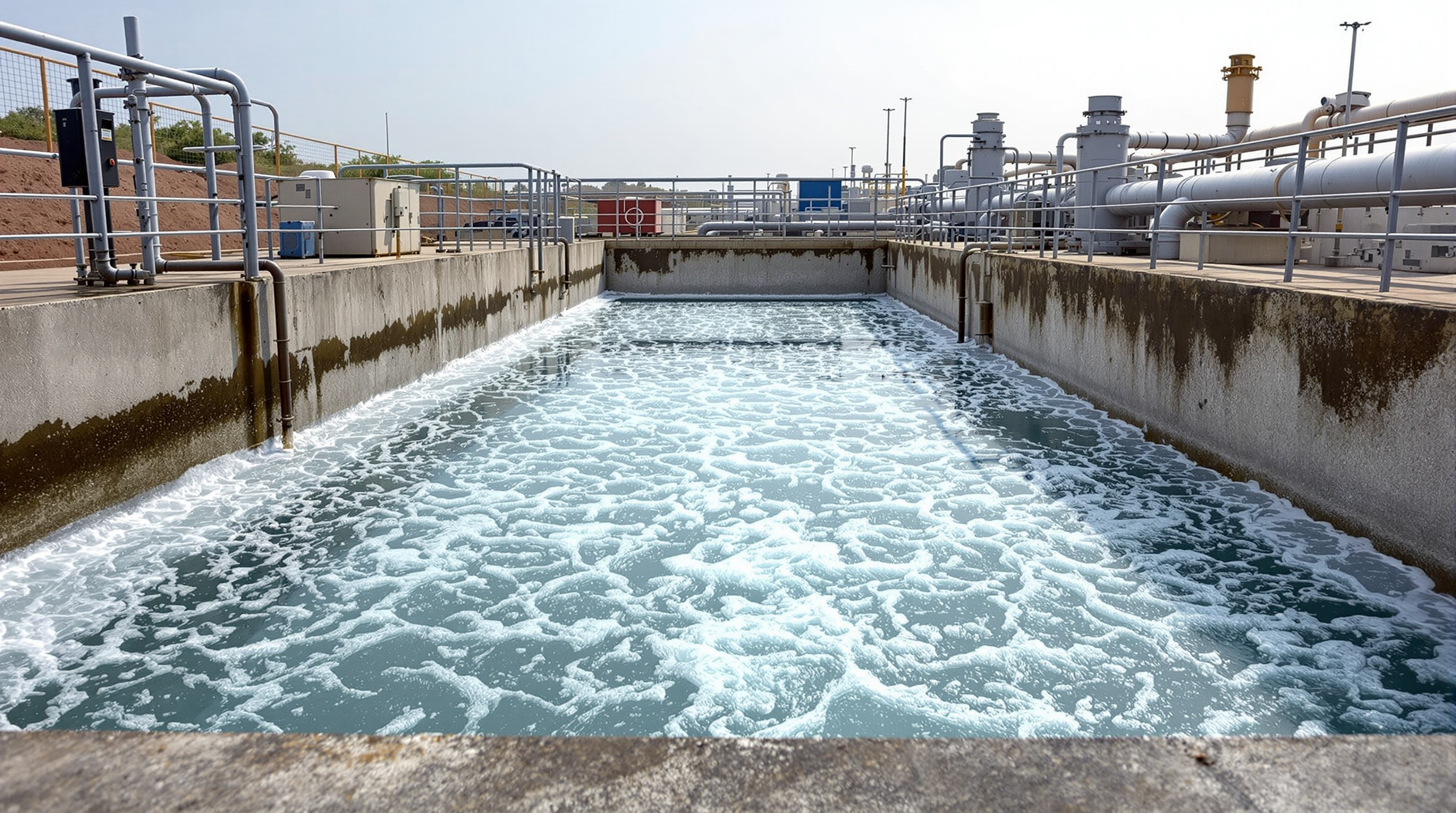
An equalization tank (often spelled equalisation, and sometimes called an EQ tank, balancing tank or buffer tank) is simply a large holding tank fitted with mixing and a controlled outlet. Raw sewage flows into it under gravity after the coarse junk has been removed by the bar screen chamber and oil and grease trap; a pump or a fixed weir then draws it out at a steady, designed rate — the plant's average flow rather than its peak.
Two things separate an equalization tank from an ordinary storage tank, and both matter:
- It is actively mixed. Coarse-bubble air or a submersible mixer keeps the contents stirred so solids stay in suspension and do not settle and rot at the bottom.
- It releases at a fixed rate. The whole point is that the outflow is constant even while the inflow swings wildly. The tank fills during peak hours and empties during quiet hours, and the two average out.
It is easy to confuse the equalization tank with the raw-sewage collection tank that often sits right beside it — and in small STPs the two functions are sometimes combined into one chamber. But their jobs are different: the collection tank gathers and lifts sewage into the plant, while the equalization tank smooths the flow before biological treatment.
Why flow equalisation matters
Skipping equalisation, or undersizing the tank, is one of the most common reasons a small STP never quite meets its discharge norms. Here is what a steady feed buys you:
- Stable biology. The bacteria in the aeration tank are living organisms. A sudden hydraulic surge washes them out of the system faster than they can regrow; a long lull starves them. A steady feed keeps the population healthy and the treatment consistent — which is the whole game in the activated sludge process and its variants.
- Smaller, cheaper downstream units. Because the plant is designed for the average flow instead of the peak, the aeration tank, blowers and clarifier can all be smaller. The equalization tank effectively trades a bit of holding volume for savings everywhere downstream.
- Load levelling, not just flow levelling. By blending several hours of sewage together, the tank also smooths out the strength — the BOD, COD and TSS peaks — so the biology sees a steady diet rather than feast and famine. A slug of concentrated kitchen waste gets diluted into the whole tank.
- A buffer against shocks. If a pump trips or a cleaning chemical is dumped down a drain, the equalization tank gives operators a few hours of holding time to react before the problem reaches the microbes.
How it works, step by step
The working cycle over a single day looks like this:
1. Peak hours (morning, evening): inflow exceeds the fixed outflow, so the tank fills and its level rises.
2. Off-peak hours (afternoon, night): inflow falls below the fixed outflow, so the tank empties and its level drops.
3. Continuously: aeration or mixing keeps everything stirred, prevents settlement and septicity, and gives a bonus of pre-aeration — a first dose of oxygen that starts knocking down odour and gives the biology a head start.
4. At the outlet: a level-controlled transfer pump (or a gravity weir) sends a constant flow to the next stage, regardless of how full the tank is.
That constant outflow is the deliverable. If you plotted the messy incoming flow and the smooth outgoing flow on the same graph, the equalization tank is the gap between them — it stores the excess during peaks and pays it back during lulls.
Sizing an equalization tank
Sizing is a balance: too small and it overflows during the morning peak, defeating its purpose; too large and you have paid for concrete and pumping you never use, and the sewage sits long enough to turn septic. Two directional rules of thumb are used in Indian practice for domestic STPs:
| Sizing basis | Typical range | When it is used |
|---|---|---|
| Detention time (on average flow) | 4 to 8 hours | The common quick-sizing method for compact residential and commercial STPs |
| Fraction of daily flow | ~30% to 50% of the design daily flow | Used where the daily flow pattern is well known or unusually peaky |
A worked feel for the numbers: for a building generating 100 KLD (100,000 litres per day), an equalization tank sized at 8 hours of detention on the average flow works out to roughly 100,000 × 8 ÷ 24 ≈ 33,000 litres, i.e. about 33 KLD of holding — close to a third of the daily flow, which is why the two rules of thumb tend to land in the same place. Add freeboard (spare height above the working level) so a bigger-than-expected peak does not spill.
Where the flow pattern is very spiky — a school with a sharp lunchtime surge, a banquet hall, a hostel — the tank is pushed toward the larger end of the range. Where flow is naturally even, the smaller end is fine.
To get to that daily flow figure in the first place, start with the Sewage Generation Calculator, which converts your building's occupancy into litres per day; the STP Capacity Calculator then turns that into an overall plant capacity. The equalization tank is sized as a slice of that number. Treat all of the above as directional — the final volume belongs to a qualified designer working to your project's actual flow diagram and to CPCB/NBC expectations, not to a rule of thumb.
Typical problems and O&M
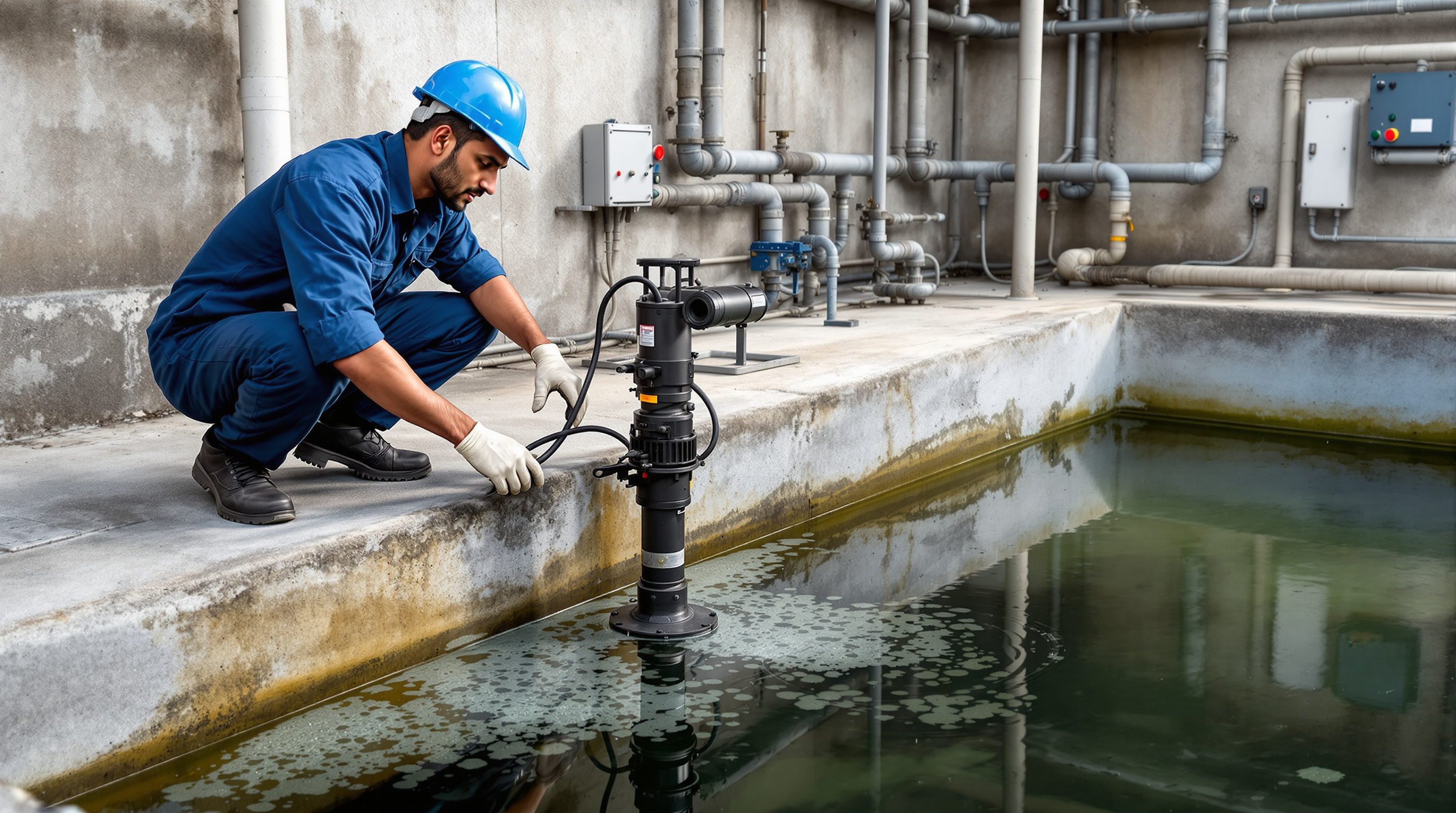
An equalization tank is mechanically simple, but neglect shows up fast — usually as smell.
- Solids settling and going septic. If the mixing or aeration fails, solids drop to the floor, decompose without oxygen and produce hydrogen sulphide — the rotten-egg smell — plus a sludge blanket that slowly steals the tank's volume. Keep the air blowers and diffusers or mixer running whenever there is sewage in the tank.
- Grease and scum crust. Fats that slipped past the grease trap can build a floating mat. Skim it and fix the trap upstream.
- Pump and float faults. The transfer pump and its level sensors are what actually deliver the steady outflow. A stuck float or a tripped pump either overflows the tank or starves the plant — so they sit squarely within routine STP pumps and instrumentation checks.
- Sludge accumulation. Even a well-mixed tank collects grit over months; periodic de-sludging keeps the working volume intact.
Good practice is a daily look for level, smell and mixing action, a weekly check of the pump and floats, and periodic de-sludging — the same rhythm as the rest of the plant.
Where it sits in the treatment flow
The equalization tank lives in preliminary treatment, after the screening and grease removal that protect it and before the biological stage it protects in turn. The running order is: bar screen → oil and grease trap → collection/equalization → aeration → clarification → filtration → disinfection. In other words, it is the last calm step before the microbes go to work — the buffer that lets everything downstream run on a steady, boring, entirely manageable flow.
To see how that full journey fits together, walk through the sewage treatment process flow, or step back to the plain-language overview in what is a sewage treatment plant.
Export this guide
Related Guides — Deep-dive reading
How Does an STP Work? A Step-by-Step Explanation
Follow a single drop of sewage from the building drain to reusable water — through screening, settling, the living microbial heart of the plant, and final polishing — with every stage explained in plain language and no engineering background assumed.
Sewage Treatment PlantsBiological Culture Management in an STP: The Heart of Good O&M
The microbes in your aeration tank do the actual work of cleaning sewage. Keep them healthy — the right MLSS, food, oxygen and nutrients — and everything else falls into place. Here is how operators manage the living culture, diagnose bulking and foaming, and recover after a crash.
Sewage Treatment PlantsThe Sewage Treatment Process Flow, Explained: Every Stage From Inlet to Reuse
Follow a drop of sewage through a typical STP — inlet, screening, aeration, clarifier, filtration, disinfection and reuse — as one connected flow, with a block diagram and a unit-by-unit table, in plain language.
Sewage Treatment PlantsRelated Tools — Try Free
Apartment STP Planner
Plan an apartment complex sewage treatment plant from flats and occupancy — get population load, sewage flow, recommended STP capacity in KLD, treatment technology and approximate space.
PlannerSewage Generation Calculator
Estimate the daily sewage a building generates and its peak flow in KLD from occupancy, LPCD, sewage return factor and peak factor.
STP CalculatorSTP Capacity Calculator
Size a sewage treatment plant in KLD from your building's occupancy — water demand, sewage generated and recommended STP capacity.
STP Calculator