
Treated STP Water for Agriculture: Safe Irrigation Guide for India
How to reuse treated sewage water to irrigate crops safely — what WHO and Indian guidance say directionally, the pathogen and heavy-metal cautions that matter, which crops suit which water grade, and how to apply it in the field.
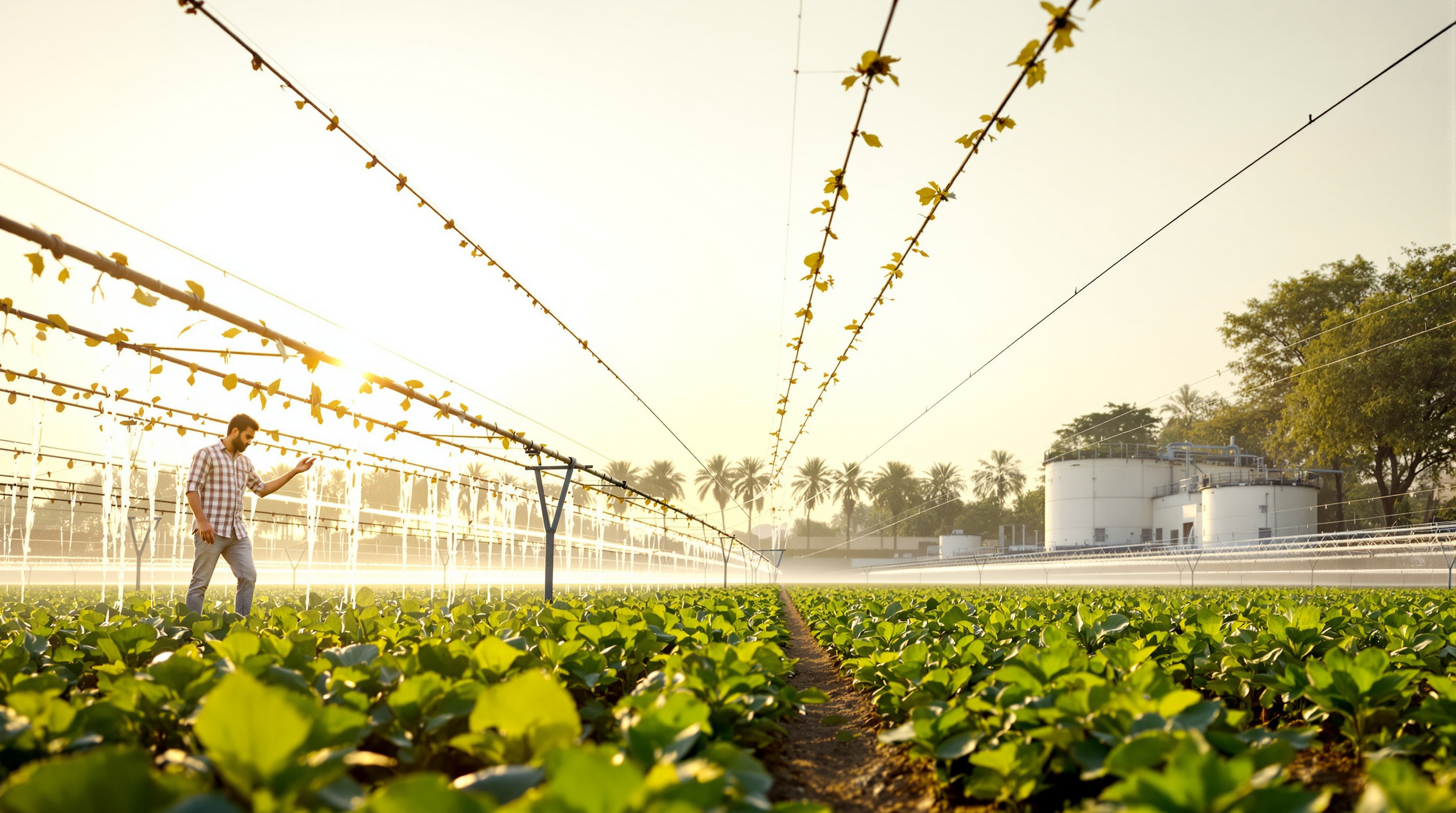
An STP does not stop being useful when the water leaves the tank. Across water-short India, the treated effluent that a housing society, campus or town produces every day is increasingly diverted onto farmland — irrigating fodder, orchards, plantations and, with care, food crops. Done well, this closes a loop that everyone wins from: the crop gets water and free nutrients, the farmer saves on fertiliser and tanker bills, and the STP operator finds a year-round outlet for effluent that would otherwise need discharge.
Done carelessly, the same water spreads pathogens to farm workers and consumers, and quietly loads soil with salts and metals that are hard to reverse. This guide is the practical middle path: what the guidance actually says, what to test for, which crops suit which grade of water, and how to get it onto the field safely.
Treated wastewater is a resource, not a waste. But it is a resource with a memory — every pathogen you fail to kill and every metal you fail to keep out will show up later, in a farm worker's illness or a poisoned soil. Match the water grade to the crop, and the risk collapses.
Why agriculture is the biggest reuse opportunity
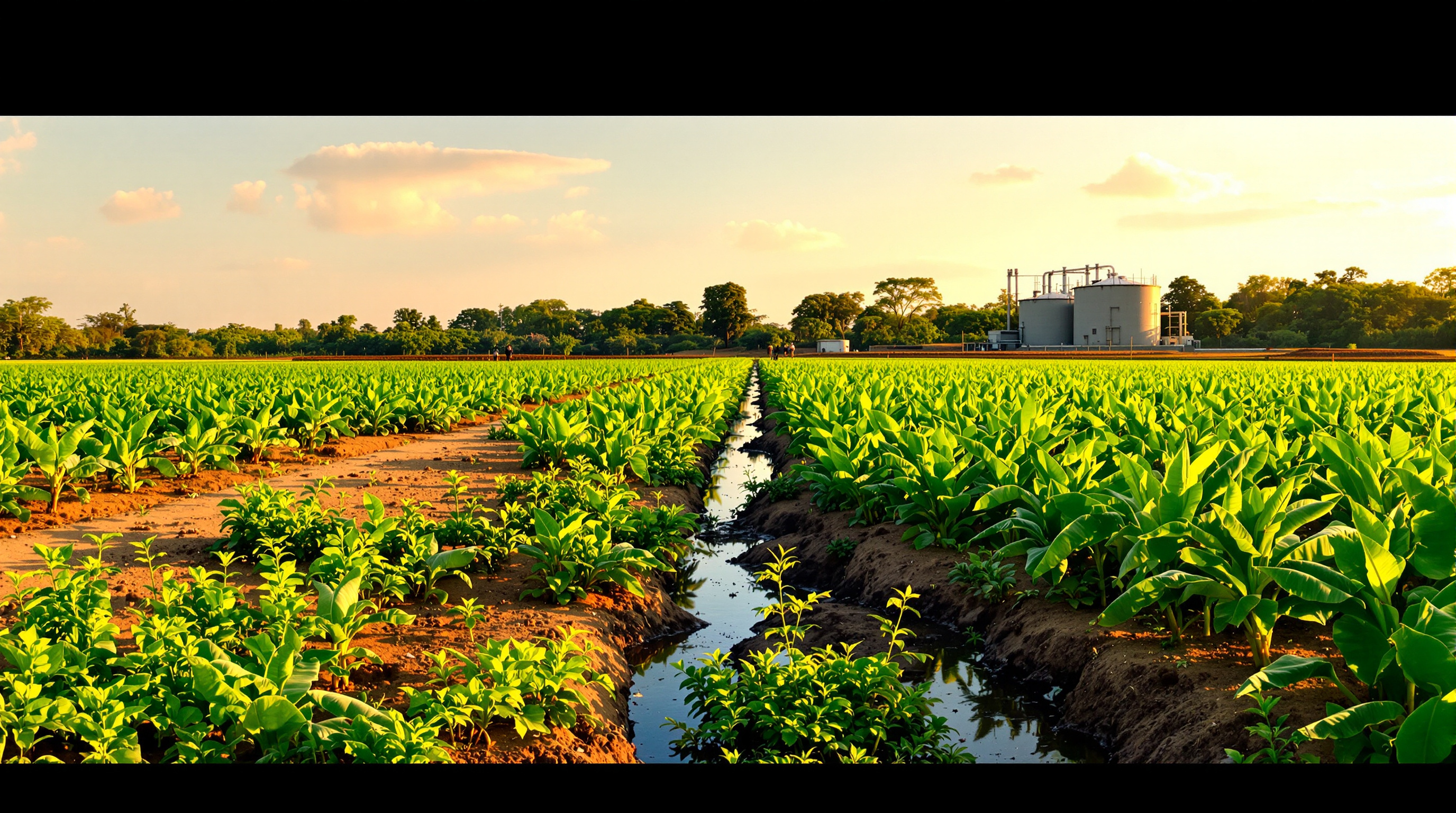
Irrigation is where treated water goes furthest. A single hectare can absorb lakhs of litres a month, so even a mid-sized STP producing a few hundred KLD can keep real farmland green through the dry season. Compared with the other reuse routes covered in this series — toilet flushing, gardening and landscape irrigation — agriculture has both the largest appetite and the highest human-exposure stakes, which is why the caution below is non-negotiable.
The prize is real:
- Water security. Reliable irrigation independent of monsoon and borewell levels.
- Free fertiliser. Treated sewage still carries nitrogen, phosphorus and potassium — often enough to cut chemical fertiliser by a third or more.
- A guaranteed effluent outlet. No discharge headaches, no surplus overflowing a balancing tank in the dry months.
Before you commit farmland to it, put the numbers in front of the decision. The Water Reuse Savings Calculator turns your daily reuse volume into rupees saved, and the STP Capacity Calculator confirms how much water you will actually have to give.
The two cautions that decide everything
Pathogens — the human-health risk
Sewage carries bacteria, viruses, protozoa and helminth (worm) eggs. Secondary biological treatment removes a lot of the organic load but does not reliably kill pathogens — that job belongs to the final disinfection stage. Helminth eggs in particular are stubborn and are the single most important target for agricultural reuse, because they survive in soil for months and infect the people who handle the crop.
This is why WHO's long-standing wastewater-reuse guidance is built around a simple idea: the more direct the human contact, the cleaner the water must be. Water sprayed on salad eaten raw must be far cleaner than water flooding a Eucalyptus plantation nobody eats. The two working categories to keep in mind:
- Restricted irrigation — industrial, fodder, timber and orchard crops where the edible part never touches the water and public access is controlled. Tolerates a lower grade of water.
- Unrestricted irrigation — vegetables and salad crops eaten raw. Demands thorough disinfection and tight helminth control.
Your disinfection stage — chlorination or UV, often after a UF membrane or activated carbon filter — is what moves you from the first category to the second.
Salinity and heavy metals — the soil-health risk
Pathogens threaten people; salts and metals threaten the land. Domestic sewage tends to be mildly saline, and any industrial or workshop inflows sneaking into the sewer can carry lead, chromium, cadmium, nickel or excess boron. Unlike pathogens, these do not die — they accumulate in the root zone irrigation after irrigation, eventually stunting crops and contaminating produce. This is precisely why an STP treating domestic sewage is suitable for farm reuse while an ETP-grade industrial effluent generally is not — see the STP-versus-ETP distinction in what an STP is.
Two field defences: keep industrial connections out of the sewer feeding the plant, and watch the sodium adsorption ratio (SAR) and electrical conductivity (EC) so sodium does not destroy soil structure over time.
What to test, and directional targets
Treat the numbers below as directional — CPCB reuse norms and state pollution-control boards set the binding limits for your project, and they vary by end use. Confirm the applicable standard before you design to it.
| Parameter | Why it matters for irrigation | Directional target |
|---|---|---|
| BOD | Organic load; high BOD clogs drip and starves soil of oxygen | Below ~10–20 mg/L for reuse-grade water |
| TSS | Suspended solids that block emitters and filters | Below ~10–20 mg/L |
| Faecal coliform | Proxy for pathogen kill from disinfection | Much stricter for raw-eaten crops than for fodder |
| Helminth eggs | The key farm-worker and consumer risk | As near zero as practical for unrestricted use |
| EC / SAR | Salinity and sodium hazard to soil structure | Low to moderate; monitor over seasons |
| Heavy metals | Accumulate in soil and produce, irreversibly | Must stay within irrigation-water limits |
A quarterly lab test of the effluent, plus periodic soil testing of the receiving field, is the cheapest insurance you will ever buy on a reuse scheme.
Matching crops to water grade
Pick the crop to fit the water you can reliably produce — not the other way around.
- Safest, start here — non-food and processed crops. Fodder grasses, cotton, timber and pulpwood plantations (Eucalyptus, bamboo), flowers and biofuel crops. The edible/handled part is remote from the water.
- Well suited — tree and orchard crops. Coconut, banana, mango, citrus and other fruit trees, especially under drip where water never wets the fruit. Widely used with treated water in India.
- With good disinfection — cooked cereals and pulses. Rice, maize, wheat, sugarcane — cooked before eating, so surface pathogens are far less of a concern.
- Only with the highest grade — raw-eaten vegetables and salads. Lettuce, coriander, tomato, cucumber. These demand unrestricted-grade water, tight helminth control, and ideally sub-surface application. Many operators simply avoid this category rather than carry the risk.
Getting it onto the field: application methods
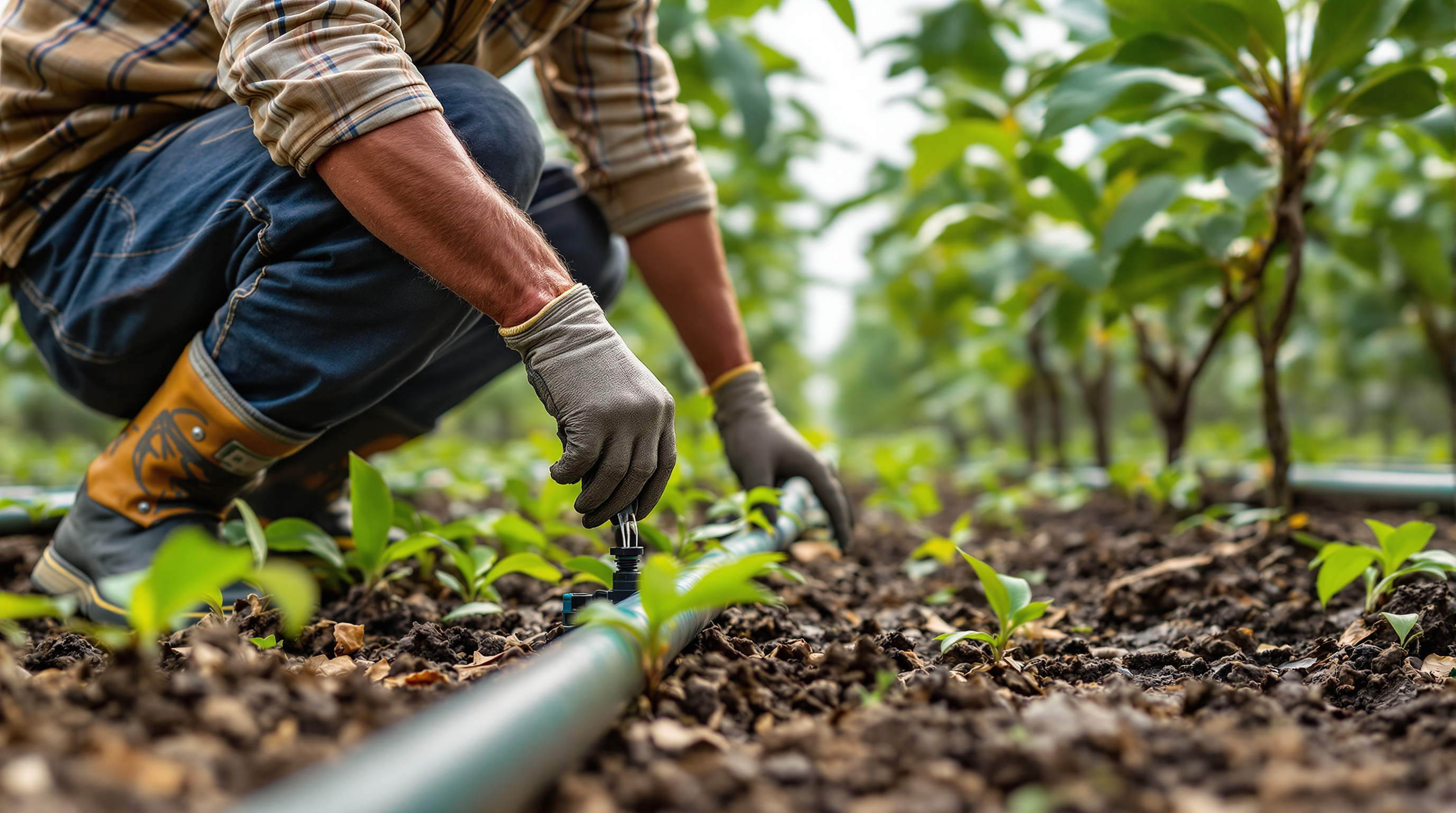
How you apply the water changes the risk as much as how you treat it.
- Drip / sub-surface drip — strongly preferred. Delivers water to the root zone, keeps it off the leaves and edible parts, minimises worker contact and evaporation, and uses the least water. The catch: emitters clog easily, so treated water for drip must be well-filtered — a UF or fine sand/carbon filter stage upstream, plus in-line screen filters, is essential.
- Furrow / flood — acceptable for restricted crops. Simple and cheap for fodder, plantations and orchards, but wets more surface and raises worker exposure. Fence off and control public access.
- Sprinkler — use with caution. Aerosols carry pathogens on the wind and wet the whole plant, so reserve sprinklers for non-food crops and keep them well away from homes and paths.
Layer on the standard safeguards: irrigate at times when workers and the public are absent, stop irrigation a week or two before harvest (the "withholding period" lets sun and soil finish killing pathogens), give field workers gloves and boots, and keep the reuse plumbing on a clearly separate, non-potable line so it is never cross-connected to drinking water.
The bottom line
Treated STP water and Indian farmland are a natural fit — the water is plentiful, the nutrients are free, and the alternative is discharging a resource the country is desperately short of. The engineering discipline is simply this: disinfect hard enough for the crop you are growing, keep industrial metals out of the sewer, apply through drip wherever you can, and test the water and the soil on a schedule. Get those four right and reuse for agriculture is not just safe — it is one of the highest-value things an STP can do.
From here, size the opportunity with the Water Reuse Savings Calculator, and browse the full Sewage Treatment Plants guide library for the disinfection, filtration and reuse guides that make farm-grade water possible.
Export this guide
Related Guides — Deep-dive reading
Using Treated STP Water for Gardening: A Safe Reuse Guide
How to safely put treated STP water on home and apartment-complex gardens — the quality you actually need, why drip beats sprinklers, the salt and chlorine traps that quietly kill plants, and the dual-plumbing basics that make it all work.
Sewage Treatment PlantsTreated Water for Landscape Irrigation: Distribution, Storage, Quality & Salinity
How to irrigate large lawns, planted podiums and campus landscapes with STP-treated water — the distribution network, storage sizing, the quality numbers that keep plants alive, and how to manage salt build-up in the soil over the years.
Sewage Treatment PlantsChlorination System in an STP: Disinfection Explained
The final disinfection step that kills the pathogens biology and filtration leave behind — how chlorine dosing, contact time and residual work together to make treated sewage safe to reuse or discharge, explained for owners and operators alike.
Sewage Treatment PlantsRelated Tools — Try Free
Water Reuse Savings Calculator
Estimate the money you save by reusing STP-treated water instead of buying fresh supply, with daily, monthly and annual savings.
STP CalculatorWater Carbon Savings Calculator
Estimate the CO2 emissions you avoid each year by reusing treated water instead of fresh supply, with annual tonnes saved and a tree-equivalent.
SustainabilityCross-Ventilation Analyzer
Estimate airflow and air changes per hour (ACH) from room size, window areas, layout, and local wind — with NBC 2016 Part 8 compliance check.
Ventilation Calculator