
Aeration Tank: The Biological Heart of an STP
The tank where blowers push oxygen into billions of microbes that eat the sewage's organic load — how it works, what DO, MLSS, F/M and HRT mean, and why it quietly runs up the biggest electricity bill in the plant.
If a sewage treatment plant had a heart, it would be the aeration tank. Every other stage in the plant either prepares water for this tank or cleans up after it. This is where the real work happens — where the pollution in your building's sewage is not filtered out or settled away, but actually eaten, destroyed by billions of living microbes doing the same job they do in a healthy river, only far faster and inside a controlled concrete box.
For an apartment association or a facilities manager, the aeration tank is also the part of the STP worth understanding best. It is the stage that decides whether your treated water passes the discharge test, and it is the single biggest reason the electricity bill for the plant is what it is. Get this tank right and the whole STP behaves. Get it wrong and nothing downstream can save you.
The aeration tank does not remove pollution — it digests it. You are not running a filter here; you are keeping a living colony of microbes alive, fed and breathing, so they consume the waste for you.
What the aeration tank actually does
The aeration tank sits in the secondary (biological) treatment stage of the plant, after the sewage has been screened, de-gritted and buffered in the equalization tank, and before the water goes to a clarifier to settle. Its job is to remove the dissolved and fine organic pollution — the BOD and COD — that no screen or settling tank can catch.
Inside the tank, three things are always happening together:
- Microbes eat. A dense population of bacteria and other micro-organisms — the "biomass" or activated sludge — feeds on the organic matter in the sewage, using it as food and multiplying.
- Blowers supply oxygen. Those microbes are aerobic; they need dissolved oxygen to breathe. Air blowers and diffusers push a continuous stream of air into the water to keep them alive and working.
- The mix stays suspended. The same air (or a surface mixer) keeps the biomass and the incoming sewage churning together so every microbe stays in contact with its food.
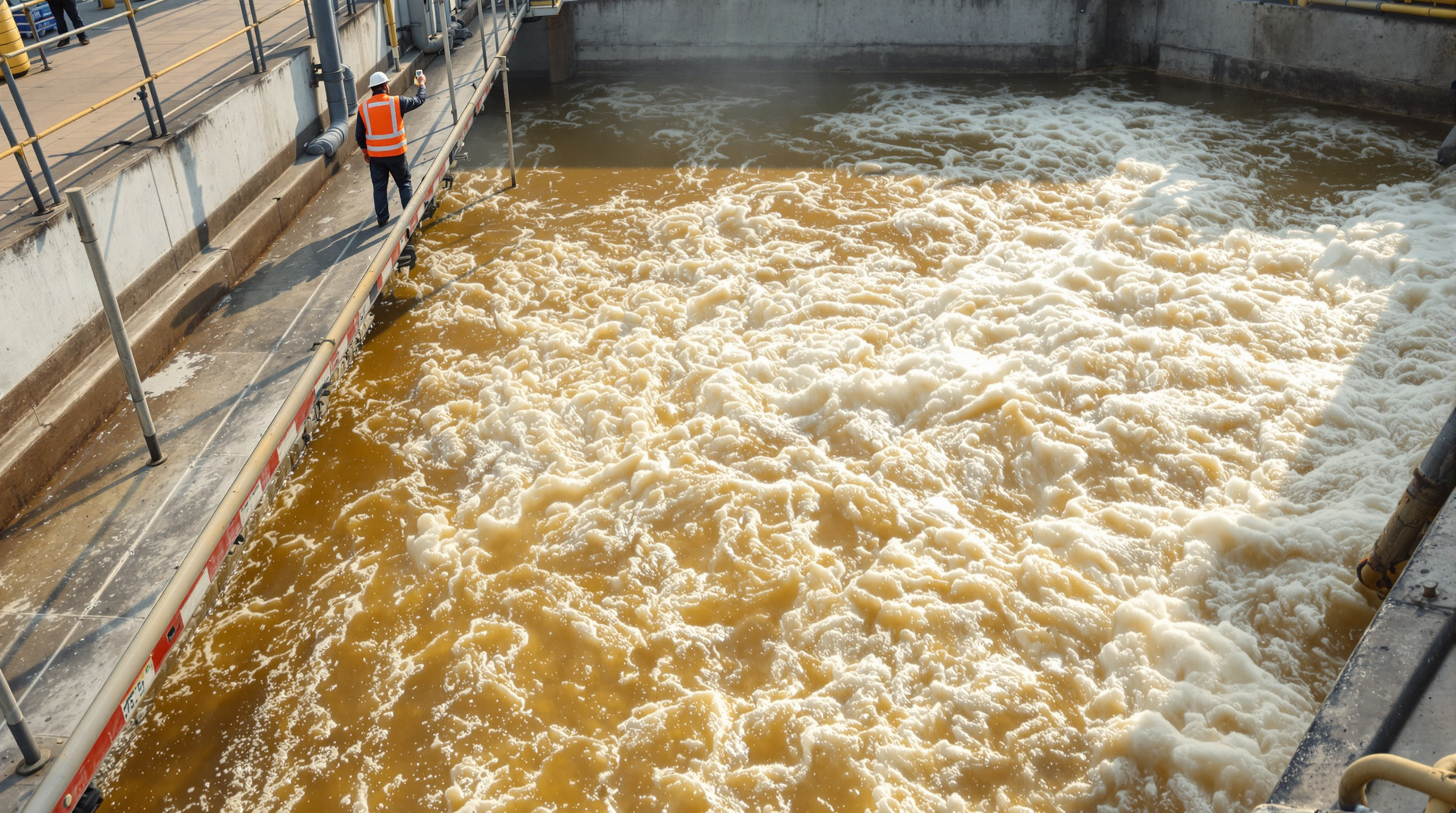
The brown, frothing, coffee-coloured liquid you see boiling in the tank is called mixed liquor — a soup of water, sewage and living sludge. This whole approach is the foundation of the activated sludge process, and its cousins the SBR, MBBR, MBR and extended aeration systems are all variations on how this one tank is run.
The four numbers that run the tank
Operators do not judge an aeration tank by how it looks — they judge it by four measurements. If you only remember four terms from this guide, make it these.
| Term | What it means | Typical direction |
|---|---|---|
| DO (Dissolved Oxygen) | How much oxygen is actually in the water for microbes to breathe | Kept around 1.5–2.5 mg/l — enough to keep them healthy, not so much you waste power |
| MLSS (Mixed Liquor Suspended Solids) | The concentration of biomass — how many microbes are living in the tank | Commonly 2,500–4,000 mg/l for conventional systems; higher in extended aeration |
| F/M ratio (Food-to-Microorganism) | How much food (BOD) is arriving per unit of biomass | A low, steady ratio gives cleaner water; too high starves the system's performance |
| HRT (Hydraulic Retention Time) | How long the sewage stays in the tank | Often 6–8 hours for conventional ASP, and much longer (18–24 h) for extended aeration |
These four are linked. DO control is the daily lever — too little oxygen and the microbes suffocate, the sludge turns black and smells; too much and you are simply burning electricity for nothing. MLSS tells you whether your microbe population is the right size for the load. The F/M ratio balances the two — the amount of food against the number of mouths. And HRT decides whether the water sits in the tank long enough for the microbes to finish eating before it moves on. If you want to see how retention time and headcount translate into tank volume, the STP Capacity Calculator and the Sewage Generation Calculator are the quickest way to put real numbers to your own building.
Diffused vs surface aeration
There are two common ways to get oxygen into the tank, and the choice shapes both the power bill and the maintenance routine.
- Diffused aeration is the modern default. Blowers on the surface push air down through pipes to fine-bubble diffusers on the tank floor. The rising curtain of tiny bubbles transfers oxygen efficiently and mixes the tank at the same time. Fine-bubble diffusers give the best oxygen-transfer efficiency, which is why most new Indian STPs use them — but the membranes need periodic cleaning and the blowers run continuously.
- Surface aeration uses mechanical aerators — floating or fixed paddles and cones that thrash the surface, splashing water into the air to pick up oxygen. It is simpler and cheaper to install, tolerant of rough conditions, and still common in older or larger plants and in oxidation ditches. It is generally less energy-efficient at transferring oxygen and can create spray and aerosols.
Whichever method is used, the equipment doing the breathing for your microbes is covered in more depth in the air blowers and diffusers guide, and the sensors and controls that hold DO steady are part of STP pumps and instrumentation.
Why it is the biggest power user
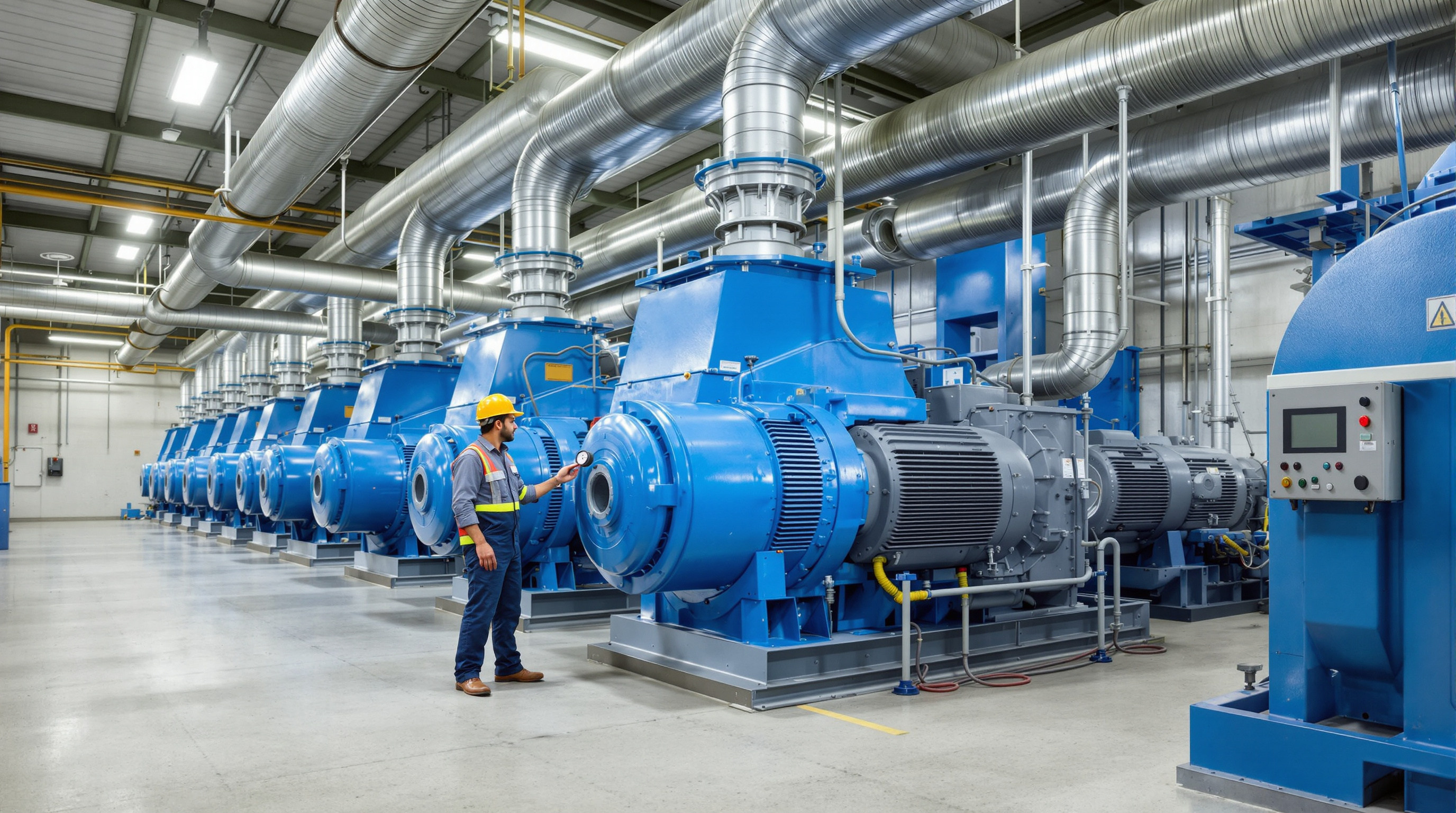
Here is the fact that surprises every new apartment committee: aeration alone typically accounts for 50–65% of an STP's entire electricity consumption. The blowers run around the clock, and pushing air into water is inherently energy-hungry.
That is exactly why DO control matters financially, not just biologically. Running the blowers harder than the microbes actually need is the most common way STPs waste money. Modern plants fit DO sensors that automatically throttle the blowers — or switch between them — to hold dissolved oxygen in the target band, cutting power without starving the biology. For a large residential complex, tuning aeration well can shave a meaningful slice off the monthly running cost. If you are comparing an STP against other options, this running cost is part of why the STP vs septic tank and STP vs municipal sewer trade-offs look the way they do.
Common problems and O&M
The aeration tank is robust, but a living system can fall sick. The usual troubles:
- Low DO / black, smelly sludge. The blowers cannot keep up, or a diffuser is clogged. The microbes go anaerobic and the tank turns septic. Check blower output and clean or replace diffusers.
- Bulking sludge. The biomass turns light and stringy and refuses to settle in the clarifier, carrying over into the treated water. Usually a symptom of an unbalanced F/M ratio or low DO.
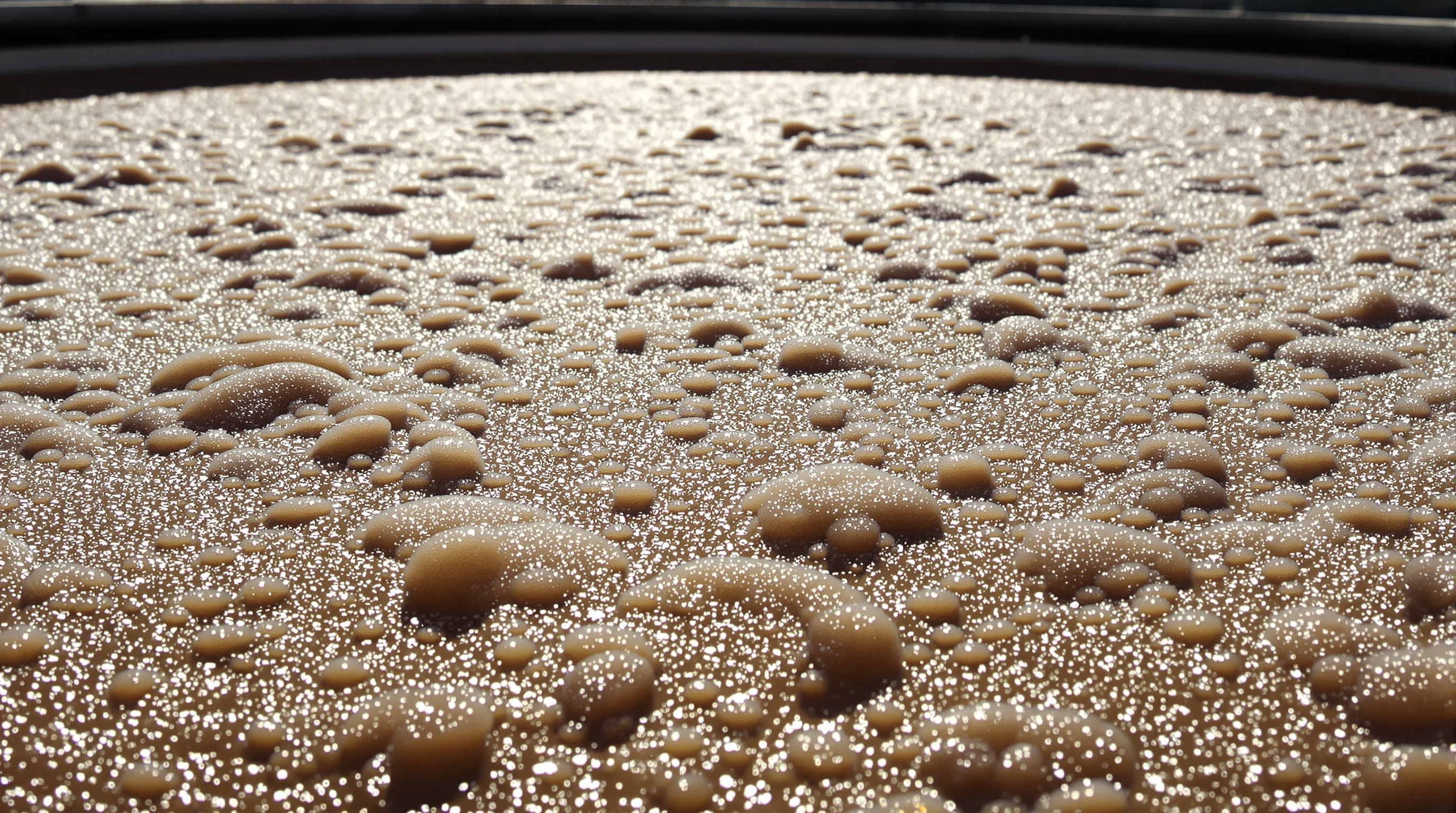
- Foaming. A thick brown or white froth builds up on the surface — often from excess grease reaching the tank (a job the oil and grease trap upstream should prevent) or from certain filamentous organisms.
- Shock loads. A sudden surge of strong or toxic wastewater can knock the microbe population back; a well-sized equalization tank upstream is the main defence.
Good operation is mostly routine: check DO daily, test MLSS regularly, keep the blowers serviced and the diffusers clean, and never let the tank sit without air for long. A starved or suffocated culture can take days to recover — a colony of microbes is not something you can switch off overnight and restart in the morning.
Where it sits in the flow
In the plant's relay race, the aeration tank is the anchor leg. Screened, buffered sewage arrives from the equalization tank; the aeration tank digests the dissolved pollution; the clarifier then settles the fattened biomass, sending most of it back to keep the tank's population up and the rest to the sludge holding tank. To see how this stage connects to everything before and after it, walk the full sewage treatment process flow, or step back to the big picture in what is a sewage treatment plant and the wider STP guide library.
The bottom line is simple. Almost anyone can build the concrete box. The skill — and the difference between an STP that passes its tests cheaply and one that fails them expensively — is in keeping the life inside that box fed, breathing and balanced. That is the real work of the aeration tank, the biological heart of the plant.
Export this guide
Related Guides — Deep-dive reading
Biological Culture Management in an STP: The Heart of Good O&M
The microbes in your aeration tank do the actual work of cleaning sewage. Keep them healthy — the right MLSS, food, oxygen and nutrients — and everything else falls into place. Here is how operators manage the living culture, diagnose bulking and foaming, and recover after a crash.
Sewage Treatment PlantsAir Blowers & Diffusers in an STP: How Aeration Actually Works
The blowers that push air and the diffusers that turn it into bubbles are the lungs of your sewage treatment plant. Here is how they work, how they are sized, and why they decide most of your electricity bill.
Sewage Treatment PlantsReducing STP Electricity Consumption: The O&M Guide to Cutting Your Biggest Running Cost
Aeration eats 50–70% of an STP's power bill. This practical guide shows facility managers and operators how to right-size air, add DO control and VFDs, fix leaks, run off-peak, and cut the monthly electricity spend without ever breaking discharge norms.
Sewage Treatment PlantsRelated Tools — Try Free
Population Equivalent (PE) Calculator
Convert an organic pollution load into Population Equivalent from flow and BOD concentration — the BOD load in kg/day and equivalent number of people.
STP CalculatorSTP Capacity Calculator
Size a sewage treatment plant in KLD from your building's occupancy — water demand, sewage generated and recommended STP capacity.
STP CalculatorSTP Technology Selector
Weight your priorities — footprint, effluent quality, cost, power and simplicity — and get a scored recommendation between Extended Aeration, MBBR, SBR and MBR.
Selector