
Membrane Bioreactor (MBR): The Highest-Quality STP Technology
How a membrane bioreactor swaps the settling clarifier for ultra-fine membranes to produce near-reuse-grade effluent in the smallest possible footprint — the working principle, the superb water quality, the high-MLSS advantage, and the real trade-offs of cost, fouling and power.
Every biological sewage treatment plant faces the same final problem: once the microbes have eaten the waste, you have to separate those microbes back out of the water. For a century the answer was gravity — send the mixture to a large, calm clarifier and wait for the biological floc to settle. It works, but it is slow, it needs a big tank, and it is only ever as good as how well the sludge chooses to settle that day. The membrane bioreactor throws that problem out entirely. Instead of waiting for microbes to settle, it simply filters them out through a barrier so fine that almost nothing but clean water gets through.
The result is the highest effluent quality of any conventional STP technology, delivered in the smallest footprint — which is exactly why MBR has become the technology of choice for space-starved, high-reuse projects across urban India. This guide explains how it works, what it does brilliantly, and where its costs bite. If you are new to the underlying process, the pillar guide What is a Sewage Treatment Plant? and How Does an STP Work? are the gentler starting points; this one assumes you already know the four stages.
An MBR is simply the activated sludge process with its clarifier replaced by a physical membrane. That one swap changes almost everything downstream — the effluent gets cleaner, the plant gets smaller, and the operating rulebook gets stricter.
What a membrane bioreactor actually is
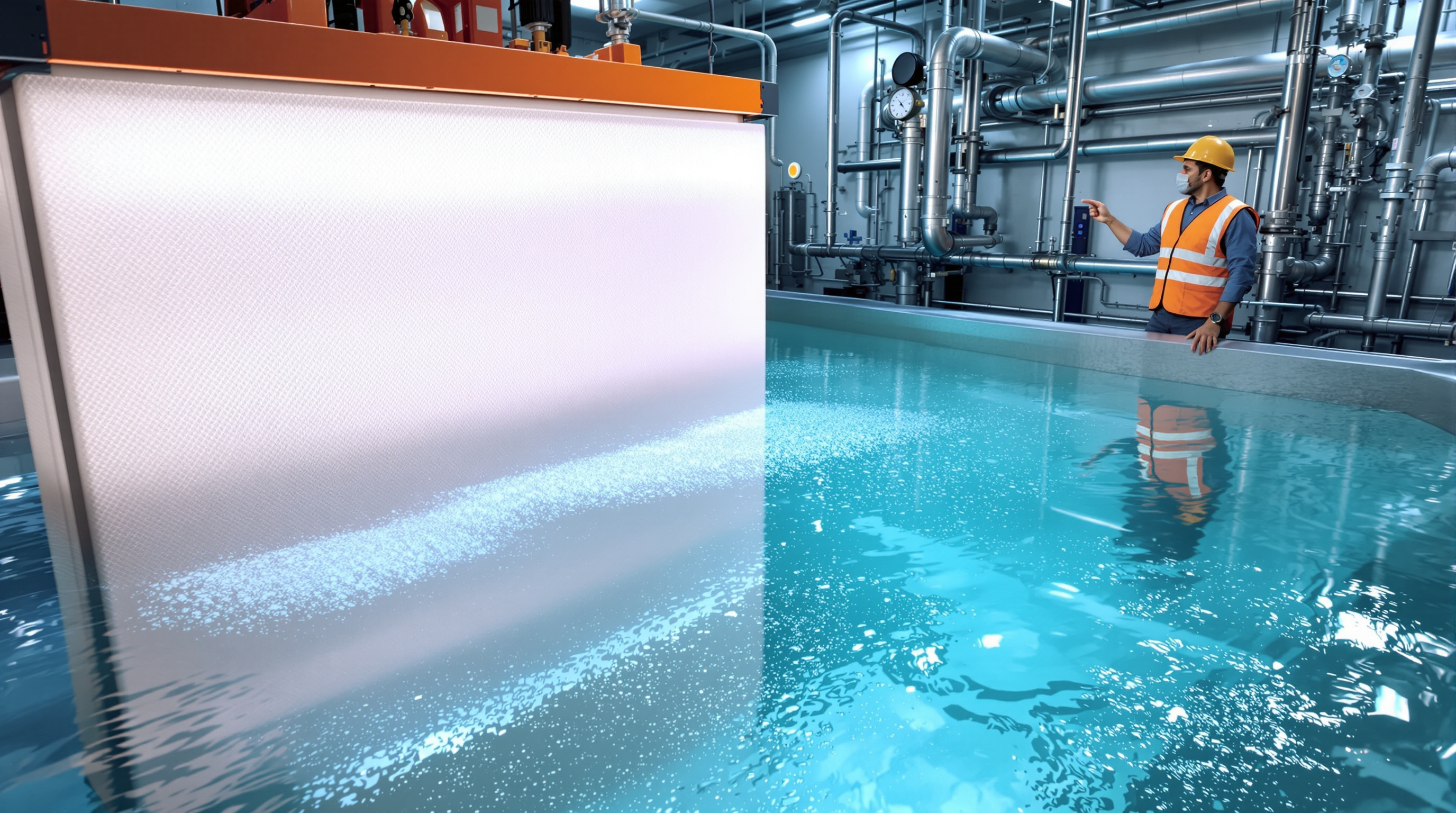
At its heart, a membrane bioreactor is the familiar Activated Sludge Process — microbes in an aerated tank eating dissolved organic waste — with one decisive modification. The secondary clarifier is deleted, and in its place sits a bank of ultrafiltration (UF) or microfiltration (MF) membranes with pore sizes measured in fractions of a micron (typically 0.01–0.4 µm).
Water is drawn through these membranes under a gentle vacuum. The pores are far too small to let bacteria, suspended solids or floc pass — those stay behind in the tank — so what comes out the other side, called permeate, is already crystal clear and effectively free of solids and pathogens. In a conventional plant, tertiary sand filters and often a separate clarifier do this job over several tanks; in an MBR, a single submerged module does it inside the aeration tank itself.
Two configurations dominate:
- Submerged (immersed) MBR — the membranes sit directly inside the bioreactor. Coarse air bubbles scour their surface to keep them clean, and a suction pump pulls permeate through. This is the standard for municipal and building sewage, because it uses the least energy.
- Side-stream MBR — the mixed liquor is pumped out to external membrane housings under pressure. More robust and easier to clean, but power-hungry, so it is reserved for tough industrial effluents rather than domestic sewage.
For domestic STPs in India, "MBR" almost always means the submerged type.
Why the effluent is so good
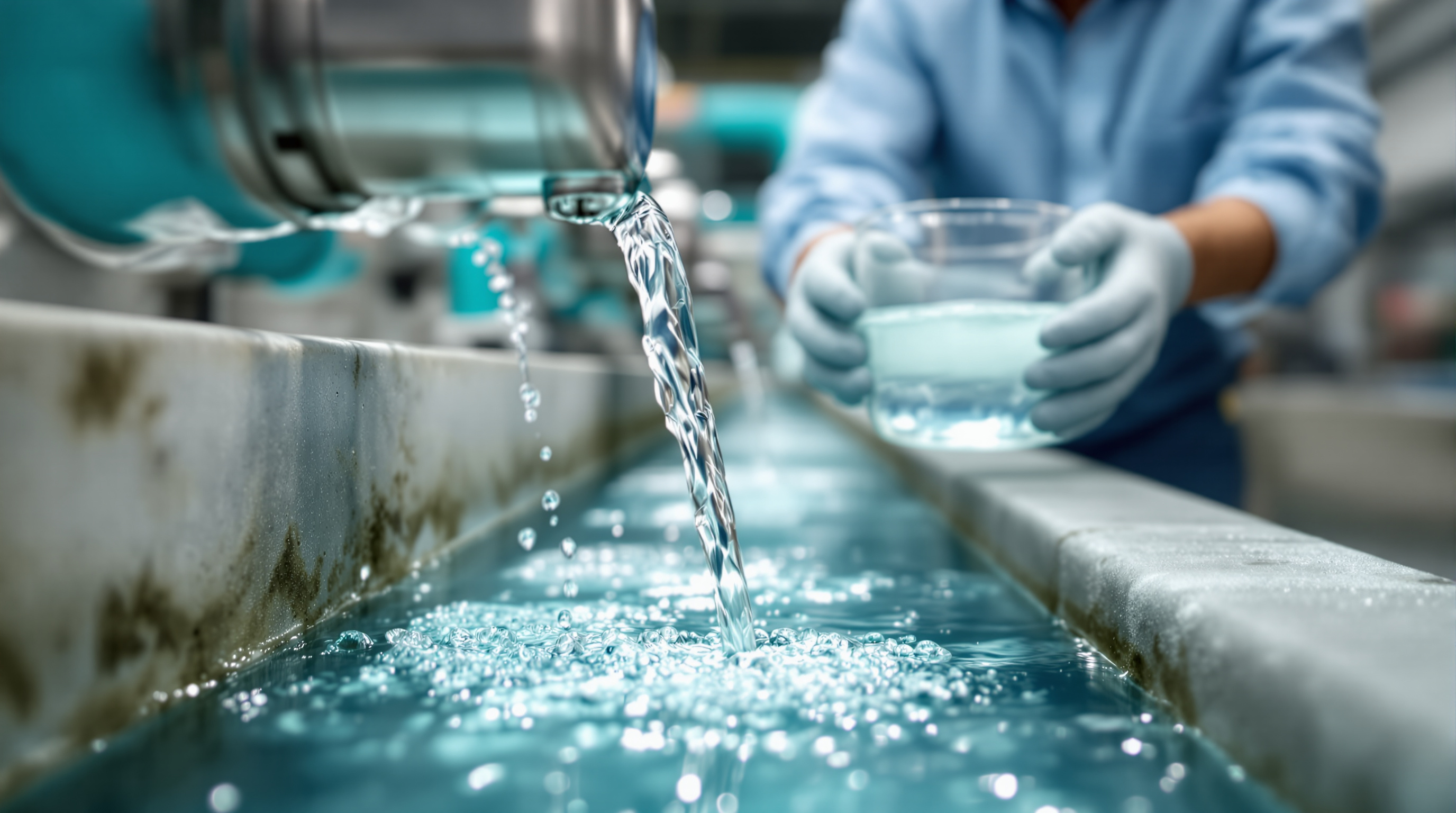
The membrane is an absolute physical barrier, and that single fact drives every quality advantage MBR has over settling-based plants.
- Solids are gone, not merely reduced. A clarifier lets clear water decant off the top and always allows some fine floc to carry over. A membrane physically blocks it. MBR permeate routinely shows BOD below 5 mg/l, COD sharply reduced, and TSS effectively nil — numbers a conventional ASP or MBBR plant struggles to hit without extra polishing. If those parameters are unfamiliar, Wastewater Characteristics: BOD, COD, TSS, pH explains what each measures.
- Pathogens are largely filtered out. UF pores are small enough to reject bacteria and most protozoa, so the disinfection load drops dramatically. A small UV or chlorine dose finishes the job rather than doing all of it.
- Consistent quality regardless of sludge behaviour. In settling plants, a "bulking" or poorly-settling sludge wrecks effluent overnight. An MBR does not care how the sludge settles, because it never asks it to settle — the barrier holds no matter what.
This is why MBR permeate is described as near-reuse-grade: with only light disinfection it is fit for toilet flushing, landscaping, cooling towers, and even feeds the front end of RO systems in zero liquid discharge schemes, where consistent, low-solids feed water is essential.
The high-MLSS advantage — and why it shrinks the plant
Here is the second reason MBR is so compact. Because the membrane, not gravity, does the separating, the plant no longer needs the sludge to settle — so you can run the bioreactor much thicker.
The concentration of microbes in the tank is measured as MLSS (Mixed Liquor Suspended Solids). A conventional activated sludge plant runs at roughly 3,000–4,000 mg/l MLSS, because above that the clarifier can no longer settle the sludge fast enough. An MBR happily runs at 8,000–12,000 mg/l — two to three times denser.
More microbes per litre means more treatment capacity per litre of tank, so:
- The aeration tank can be far smaller for the same load.
- There is no secondary clarifier at all, saving a whole large vessel.
- Tertiary sand and carbon filters are usually redundant, since the membrane already delivers filtered-grade water.
Add it up and an MBR plant can occupy 40–60% less footprint than an equivalent ASP or extended-aeration plant. On a tight urban plot, in a basement, or on a rooftop where every square metre is contested, that saving alone often justifies the technology. If you are comparing it against the space of an extended aeration or SBR plant, this is the decisive difference.
The trade-offs: what you pay for that quality
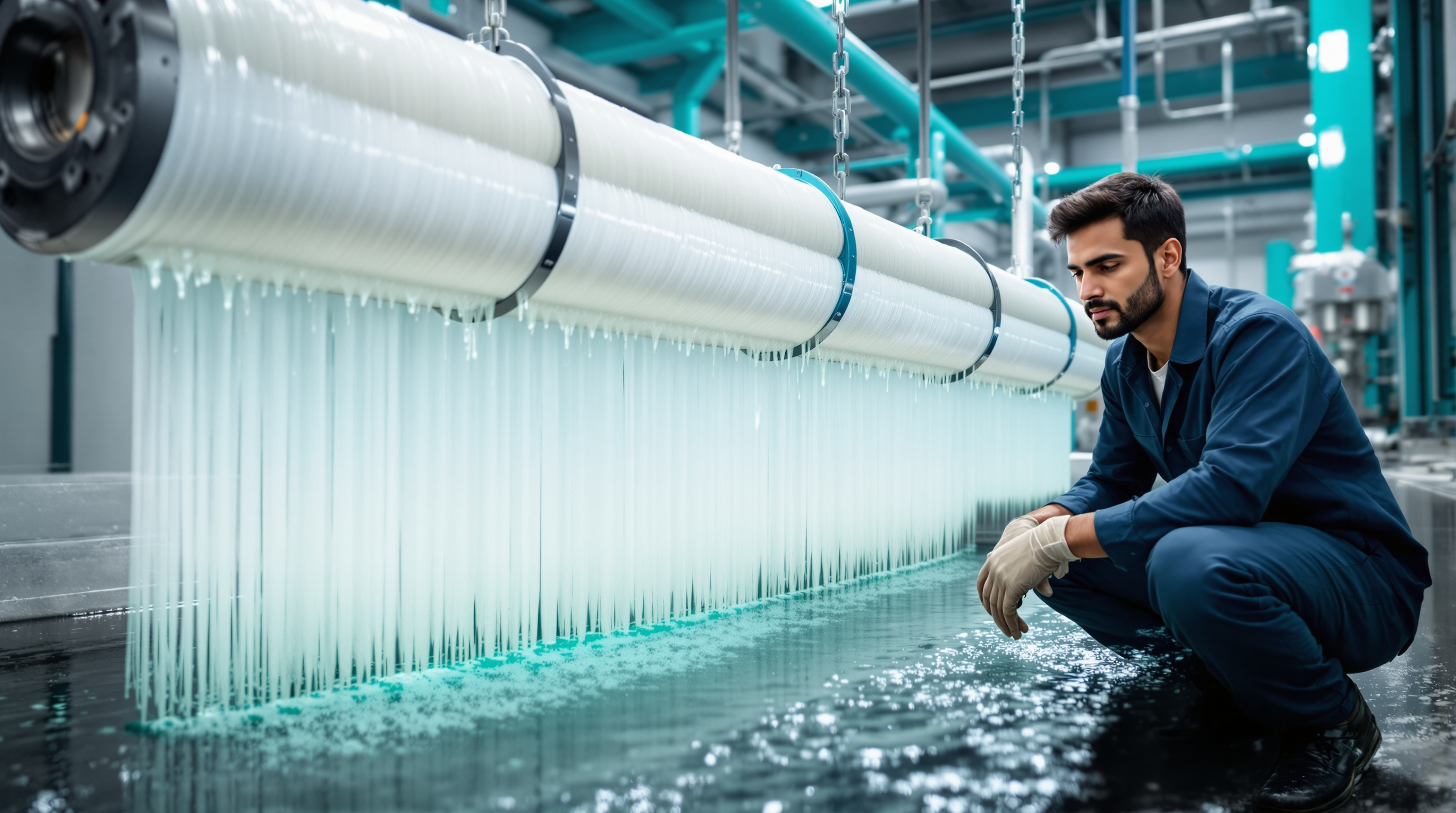
None of this is free. MBR buys its quality and compactness with real, ongoing costs that every designer and facility manager must weigh honestly.
Membrane cost. The membrane modules are the expensive heart of the plant, and they do not last forever — expect a replacement cycle of roughly 7–10 years, and budget for it from day one. This raises both the capital cost and the long-term lifecycle cost above a conventional plant.
Fouling and cleaning. The membrane's greatest strength — blocking everything — is also its weakness. Solids, biofilm and grease steadily clog the pores, a process called fouling, which raises the suction pressure needed to pull water through. MBRs therefore demand disciplined maintenance:
- Air scouring runs continuously to sweep solids off the membrane surface.
- Back-flushing periodically reverses flow to dislodge foulants.
- Chemical cleaning — periodic soaks in dilute hypochlorite or citric acid — restores flux every few weeks or months (called CIP, clean-in-place).
Skip this discipline and the membranes clog irreversibly. An MBR is unforgiving of neglect in a way a robust MBBR plant simply is not.
Power. The continuous air scouring, on top of the biological aeration, makes MBR the most energy-hungry of the common STP technologies. Expect a noticeably higher electricity bill per KLD treated than an ASP or MBBR plant.
Pre-treatment is non-negotiable. Because hair, grit and grease shred or blind membranes, MBR demands fine screening (typically down to ~1 mm) and effective oil-and-grease removal ahead of the bioreactor. A stray rag can damage a module worth lakhs.
MBR vs conventional STP at a glance
| Factor | Membrane Bioreactor (MBR) | Conventional ASP / MBBR |
|---|---|---|
| Solids separation | Physical UF/MF membrane | Gravity clarifier + sand filter |
| Effluent quality | Near-reuse-grade; TSS ~nil, BOD < 5 | Good, but needs tertiary polishing |
| MLSS operating range | 8,000–12,000 mg/l | 3,000–4,000 mg/l |
| Footprint | Smallest — no clarifier, no filters | 40–60% larger |
| Capital cost | High (membrane modules) | Lower |
| Power consumption | Highest (scour + aeration) | Lower |
| Maintenance skill | High — fouling, cleaning, CIP discipline | Moderate |
| Membrane replacement | Every ~7–10 years | Not applicable |
| Best suited to | Space-tight, high-reuse projects | Standard sites with room to spare |
Where MBR is genuinely worth it
MBR is not the default choice for every building — it is a deliberate one, made when its specific strengths solve a specific problem. It earns its premium when:
- Space is the binding constraint — a basement plant room, a rooftop STP, a dense urban plot, or a project that simply cannot spare land for a clarifier and filter block.
- Reuse standards are demanding — where the treated water feeds cooling towers, high-end landscaping, RO/ZLD trains, or discharge norms that require consistently sub-10 BOD and near-zero TSS.
- The developer values consistency — a luxury hotel, hospital, data centre or premium residential tower where variable effluent quality is unacceptable and skilled O&M staff are on hand.
Conversely, for a standard residential apartment with room on the plot and a competent but not specialist operator, a robust MBBR or SBR plant is usually the wiser, cheaper, more forgiving choice. MBR rewards projects that genuinely need what it offers and can maintain it; it punishes those that buy it for prestige and then neglect it.
The bottom line
A membrane bioreactor is the activated sludge process with its clarifier replaced by an ultra-fine membrane — and that one swap delivers the cleanest effluent and the smallest footprint of any mainstream STP technology, by letting the plant run thick with microbes and filtering the water rather than settling it. The price is real: higher capital cost, periodic membrane replacement, relentless anti-fouling maintenance, and the highest power bill in the category. Choose it when space is scarce and reuse quality is paramount — and only if you are ready to maintain it properly.
To weigh MBR against the alternatives, browse the full Sewage Treatment Plants hub, and to size the plant your project would actually need, spend a minute with the STP Capacity Calculator — it turns an occupancy figure into a treatment capacity in litres per day, the number every MBR design begins from.
Export this guide
Related Guides — Deep-dive reading
RO Integration in STPs: When Reverse Osmosis After an STP Makes Sense
Bolting reverse osmosis onto a sewage treatment plant turns reuse-grade water into near-distilled water for cooling towers, boilers and zero-liquid-discharge. Here is when RO integration in an STP is worth it, what pretreatment it demands, and how to handle the reject.
Sewage Treatment PlantsUF Membrane in Advanced STPs: The Physical Barrier for Reuse-Grade Water
How an ultrafiltration (UF) membrane acts as an absolute physical barrier in an STP — straining out solids, turbidity and bacteria to deliver near-crystal, low-SDI water ahead of reuse or RO. Pore size, flux, fouling and CIP cleaning, and where a standalone UF sits versus an MBR.
Sewage Treatment PlantsAeration Tank: The Biological Heart of an STP
The tank where blowers push oxygen into billions of microbes that eat the sewage's organic load — how it works, what DO, MLSS, F/M and HRT mean, and why it quietly runs up the biggest electricity bill in the plant.
Sewage Treatment PlantsRelated Tools — Try Free
Rainwater Tank Sizer
How big should your rainwater tank be? Computes annual harvest, recommended tank capacity in litres, water-bill savings, and payback — for 10 Indian cities.
RWH CalculatorApartment STP Planner
Plan an apartment complex sewage treatment plant from flats and occupancy — get population load, sewage flow, recommended STP capacity in KLD, treatment technology and approximate space.
PlannerSTP Lifecycle Cost Comparison Tool
Compare MBBR, SBR and MBR sewage treatment plants on total lifecycle cost — capex plus lifetime energy — at your capacity, lifespan and power tariff, and see the lowest-cost technology.
STP Calculator