
Moving Bed Biofilm Reactor (MBBR): Media, Working & Benefits
The most popular STP technology in Indian apartments, explained: how thousands of free-floating plastic carriers grow a living biofilm, why that packs high treatment into a small tank, what the media fill ratio means, and how MBBR compares to ASP and MBR.
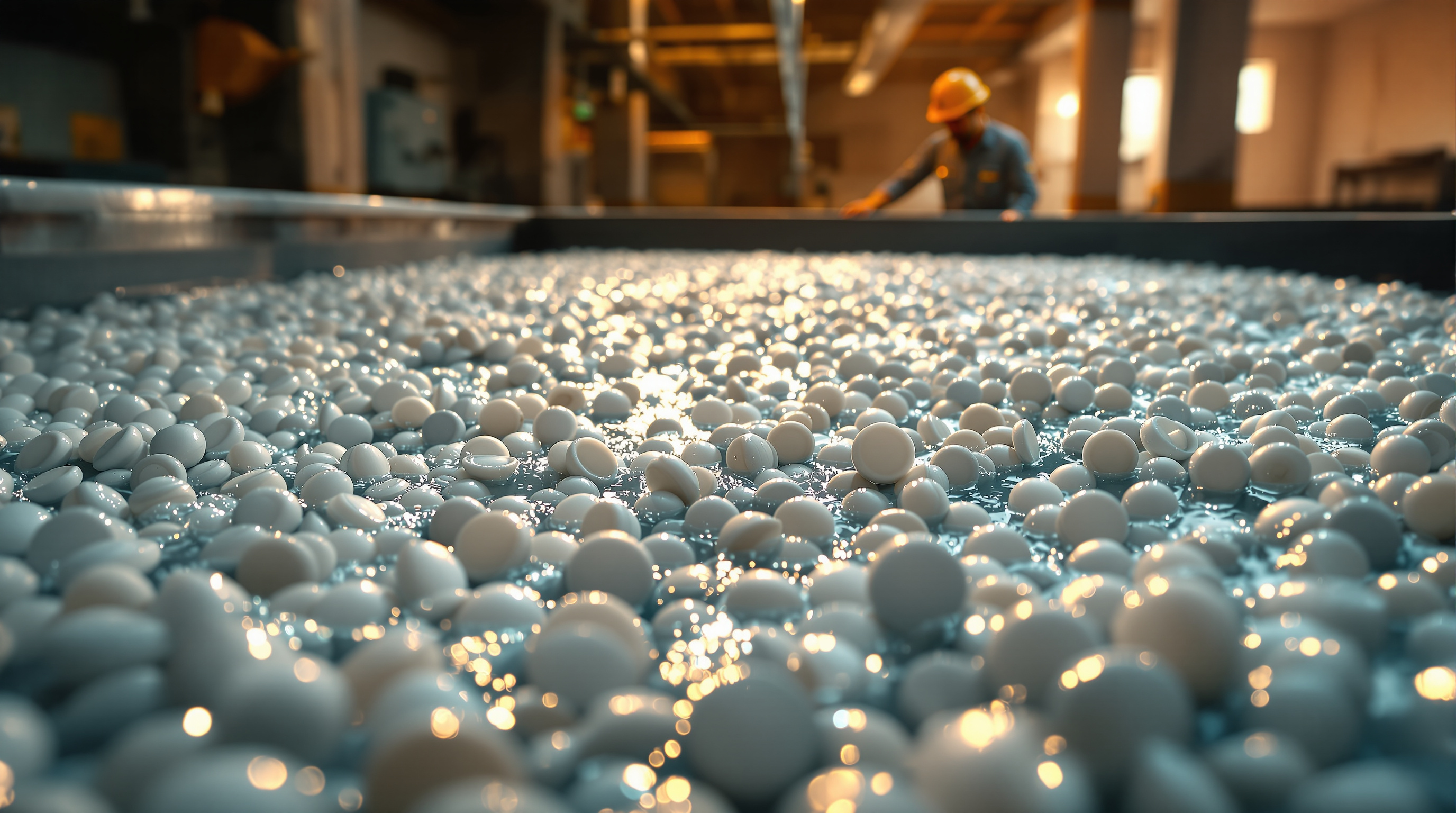
Walk into the basement plant room of almost any new apartment complex in Bengaluru, Pune or Hyderabad, peer into the aeration tank, and you will likely see the same thing: a churning, frothing soup full of thousands of small plastic wheels tumbling over each other in the bubbles. Those little plastic pieces are the reason the plant works, and the technology has a name — the Moving Bed Biofilm Reactor, or MBBR. It has quietly become the default choice for the STP that sits under your building.
This guide explains what an MBBR actually is, what those plastic carriers do, why the amount of them (the fill ratio) matters, and why builders and facility managers keep picking it over older technologies. If you are new to sewage treatment altogether, start with the pillar guide What is a Sewage Treatment Plant?; this one assumes you know the four-stage journey and zooms in on one particular way of doing the biological heart of it.
An MBBR does not float its microbes loose in the water like older plants do. It gives them thousands of tiny plastic homes to grow on — so the tank holds far more bacteria, in far less space, than a plain aeration tank ever could.
The core idea: attached growth vs suspended growth
Every biological STP relies on the same deal: billions of bacteria eat the dissolved organic pollution in the sewage as food, and in doing so they clean the water. The question that separates one technology from another is simply where those bacteria live.
- In a classic Activated Sludge Process (ASP), the bacteria float freely in the water as suspended clumps. This is suspended growth. It works, but the microbes are always trying to wash out of the tank with the water, so you must constantly settle them and pump them back — a step called Return Activated Sludge (RAS).
- In an MBBR, the bacteria are not loose. They grow as a slimy coating — a biofilm — on the surface of thousands of small plastic carriers that stay inside the tank. This is attached growth.
That single shift, from loose microbes to microbes anchored on carriers, is the whole trick. Because the treatment bacteria live on the media and the media never leaves the tank, an MBBR carries a huge, stable population of bugs without the constant sludge-recycling dance that the Activated Sludge Process depends on. MBBR is the attached-growth cousin of the Rotating Biological Contactor (RBC) — but instead of the biofilm growing on rotating discs, it grows on free-floating carriers kept moving by air.
The media: those little plastic wheels

The carriers — the "media" — are the heart of the system, so it is worth understanding them.
They are small pieces of HDPE plastic (high-density polyethylene), usually shaped like tiny wheels, cylinders or cross-cut spools, typically a few millimetres to a couple of centimetres across. Their shape is not decorative. Each carrier is engineered to be riddled with internal channels, fins and cross-walls, because the goal is to pack the maximum surface area into the smallest piece of plastic. Surface area is where biofilm grows, and biofilm is what treats the water.
Two properties define good media:
- Protected surface area. The number that matters is not the outer surface but the protected internal surface — the sheltered inner walls where biofilm can grow without being scrubbed off when carriers collide. A single cubic metre of good media can offer several hundred square metres of protected growing surface. That is why a small MBBR tank can hold as many working bacteria as a much larger plain aeration tank.
- Near-neutral buoyancy. The plastic is tuned to be almost exactly as dense as water, so the gentle churn of the aeration bubbles is enough to keep every carrier moving freely — tumbling, colliding, distributing evenly through the whole tank. The carriers should neither sink dead to the bottom nor float uselessly on top.
As sewage flows past, bacteria settle on the sheltered inner surfaces and multiply into a thin, living biofilm. The outer layer of that biofilm, exposed to the tumbling and collisions, continually sloughs off — and this self-cleaning keeps the film young, thin and hungry, which is exactly what you want for fast treatment.
Fill ratio: how much media goes in
You never fill an MBBR tank completely with carriers. The media occupies only a fraction of the tank volume, and that fraction is called the fill ratio (or filling degree).
The reason is motion. The carriers must be free to tumble and circulate; if you pack too many in, they jam, the movement stops, and the biofilm suffocates and goes septic. So designers typically fill an MBBR tank to somewhere in the region of 40–60% of its volume with media, and essentially never beyond about two-thirds — leaving the rest as free water so the carriers always have room to move.
The elegance is that the fill ratio is a design dial. A higher fill ratio means more surface area, more biofilm, and more treatment capacity in the same tank. This is why MBBR is so popular for upgrades: an old, overloaded ASP tank that can no longer cope with a building's growing population can often be retrofitted by simply dropping in a batch of carriers, boosting its capacity without pouring a single new tank.
How an MBBR works, step by step
The MBBR is only the secondary (biological) stage of the plant. The sewage still has to be screened and de-gritted first, and polished and disinfected afterward — the standard journey covered in How Does an STP Work?. Inside the MBBR itself:
1. Screened sewage enters the reactor tank, which is already loaded with carriers and kept in constant motion.
2. Blowers pump air through diffusers at the bottom. This does two jobs at once — it supplies the oxygen the aerobic bacteria need to eat cleanly, and its rising bubbles keep the carriers tumbling and evenly mixed. (In tanks designed for nitrogen removal, a mechanical mixer does the moving without adding air.)
3. The biofilm on the carriers devours the pollution. As the sewage circulates past thousands of biofilm-coated carriers, the bacteria absorb the dissolved organic matter — driving down the BOD and COD — while the carriers stay put inside the tank.
4. Old biofilm sloughs off as carriers collide, and this shed biomass drifts out with the treated water as a fine sludge.
5. The water flows to a settling tank (clarifier), where that sloughed biofilm settles out, leaving clear water to move on to filtration and disinfection.
Here is the crucial contrast with ASP: because the working bacteria live locked onto the carriers, there is no need to return sludge to keep the population up. The clarifier only has to catch the small amount of biofilm that naturally falls off — it is not the life-support system it is in an activated sludge plant. No RAS pumps, no sludge-recycle line, less to go wrong.
Why apartments love it: the benefits
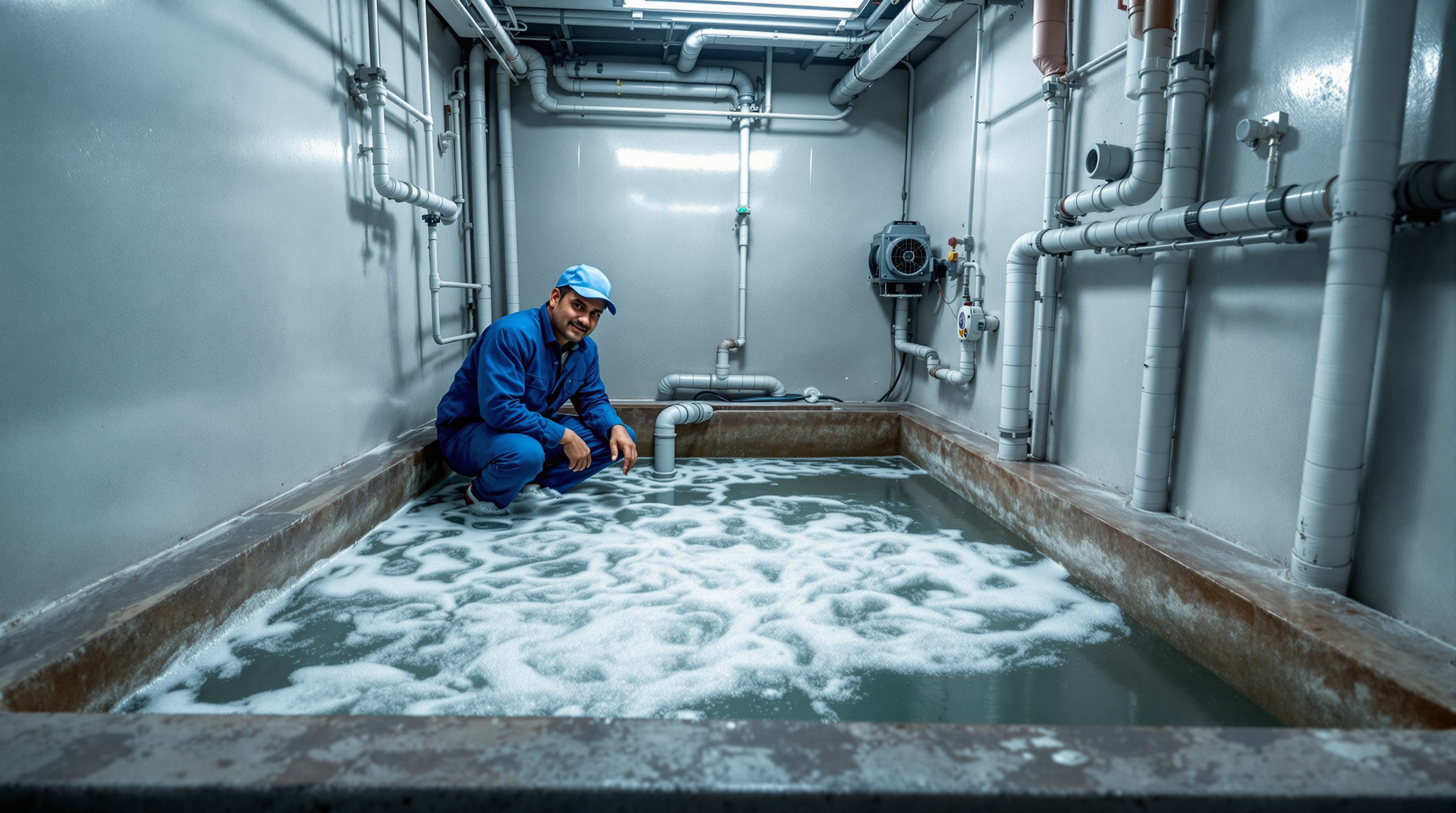
Put together, the attached-growth design gives MBBR a set of advantages that map almost perfectly onto what an Indian residential STP needs:
- High treatment in a small footprint. All that protected surface area packs a large bacterial population into a compact tank — precious when the STP is squeezed into a basement or a corner of the plot.
- Resilience to load swings. Apartment sewage surges — heavy in the morning, near-zero at 3 a.m., and spiking during festivals or holidays when the complex fills up. Because the biomass is anchored on the media and cannot wash out, an MBBR shrugs off shock loads that would upset a suspended-growth plant. This robustness is its single biggest selling point for residential use.
- No RAS, simpler operation. With no sludge-recycle line to balance, there are fewer pumps, fewer settings and less for a modestly-skilled operator to get wrong — a real advantage given how many apartment STPs are run by undertrained staff.
- Easy to upgrade. Need more capacity later? Add more carriers. Few technologies scale up so cheaply.
- Lower sludge production and no bulking. MBBRs generally produce less waste sludge than ASP, and they are immune to "sludge bulking" — the filamentous-growth problem that makes activated sludge refuse to settle.
MBBR vs ASP vs MBR
MBBR sits in the middle of the technology ladder — more capable and compact than plain ASP, simpler and cheaper than a membrane plant. Here is how the three compare on the terms that matter to a building.
| Factor | ASP (Activated Sludge) | MBBR (Moving Bed Biofilm) | MBR (Membrane Bioreactor) |
|---|---|---|---|
| Biomass type | Suspended (floating) | Attached (on carriers) | Suspended, held by membranes |
| Footprint | Largest | Compact | Smallest |
| Return sludge (RAS) | Required | Not needed | Not needed |
| Shock-load resilience | Poor | Excellent | Good |
| Treated water quality | Good | Good | Excellent (near reuse-grade) |
| Capital cost | Low | Moderate | High |
| Operating complexity | Moderate | Low | High (membrane cleaning) |
| Best fit | Large plants, ample land | Apartments, hotels, retrofits | Where water is reused for high-grade uses |
The short version: choose ASP when land is cheap and the load steady; choose MBR when you need the very highest water quality and can pay for it; and choose MBBR when you want reliable, compact, low-fuss treatment that tolerates a building's messy real-world flows — which describes most Indian apartments. A close relative worth knowing is the Sequential Batch Reactor (SBR), which achieves compactness a different way, by treating in timed batches in a single tank.
The honest limitations
No technology is free of trade-offs. MBBR's are worth knowing before you specify one:
- The clarifier still matters. MBBR does not settle its own solids — a well-designed downstream clarifier or tube settler is essential, and a bad one will let biofilm carry over and spoil the output.
- Media is a real cost and a real risk. The carriers are a genuine capital item, and a broken or missing outlet sieve can let them escape into pumps and pipes downstream — a classic and expensive field failure. The retention screens must be maintained.
- Water quality is good, not spotless. MBBR reliably meets normal discharge and flush-reuse norms, but for the most demanding reuse it does not match an MBR without extra polishing.
The bottom line
A moving bed biofilm reactor is the activated sludge idea, reinvented for small spaces and real-world buildings: instead of floating the treatment bacteria loose in the water, it grows them as a biofilm on thousands of free-floating plastic carriers that stay churning inside the tank. That one change buys a huge bacterial population in a compact footprint, freedom from sludge recycling, and a plant that laughs off the load swings an apartment throws at it — which is exactly why the MBBR has become the workhorse of Indian residential STPs.
From here, compare it with the technology it improved on in The Activated Sludge Process, and with the premium alternative in the Membrane Bioreactor guide. And to see how large a plant your own building needs — the number every MBBR design starts from — spend a minute with the STP Capacity Calculator.
Export this guide
Related Guides — Deep-dive reading
Biological Culture Management in an STP: The Heart of Good O&M
The microbes in your aeration tank do the actual work of cleaning sewage. Keep them healthy — the right MLSS, food, oxygen and nutrients — and everything else falls into place. Here is how operators manage the living culture, diagnose bulking and foaming, and recover after a crash.
Sewage Treatment PlantsAeration Tank: The Biological Heart of an STP
The tank where blowers push oxygen into billions of microbes that eat the sewage's organic load — how it works, what DO, MLSS, F/M and HRT mean, and why it quietly runs up the biggest electricity bill in the plant.
Sewage Treatment PlantsMembrane Bioreactor (MBR): The Highest-Quality STP Technology
How a membrane bioreactor swaps the settling clarifier for ultra-fine membranes to produce near-reuse-grade effluent in the smallest possible footprint — the working principle, the superb water quality, the high-MLSS advantage, and the real trade-offs of cost, fouling and power.
Sewage Treatment PlantsRelated Tools — Try Free
Apartment STP Planner
Plan an apartment complex sewage treatment plant from flats and occupancy — get population load, sewage flow, recommended STP capacity in KLD, treatment technology and approximate space.
PlannerSTP Technology Comparison Matrix
Compare Extended Aeration, MBBR, SBR, MBR and UASB across six criteria, set your priority, and see the best-fit STP technology instantly.
ComparatorSTP Technology Selector
Weight your priorities — footprint, effluent quality, cost, power and simplicity — and get a scored recommendation between Extended Aeration, MBBR, SBR and MBR.
Selector