
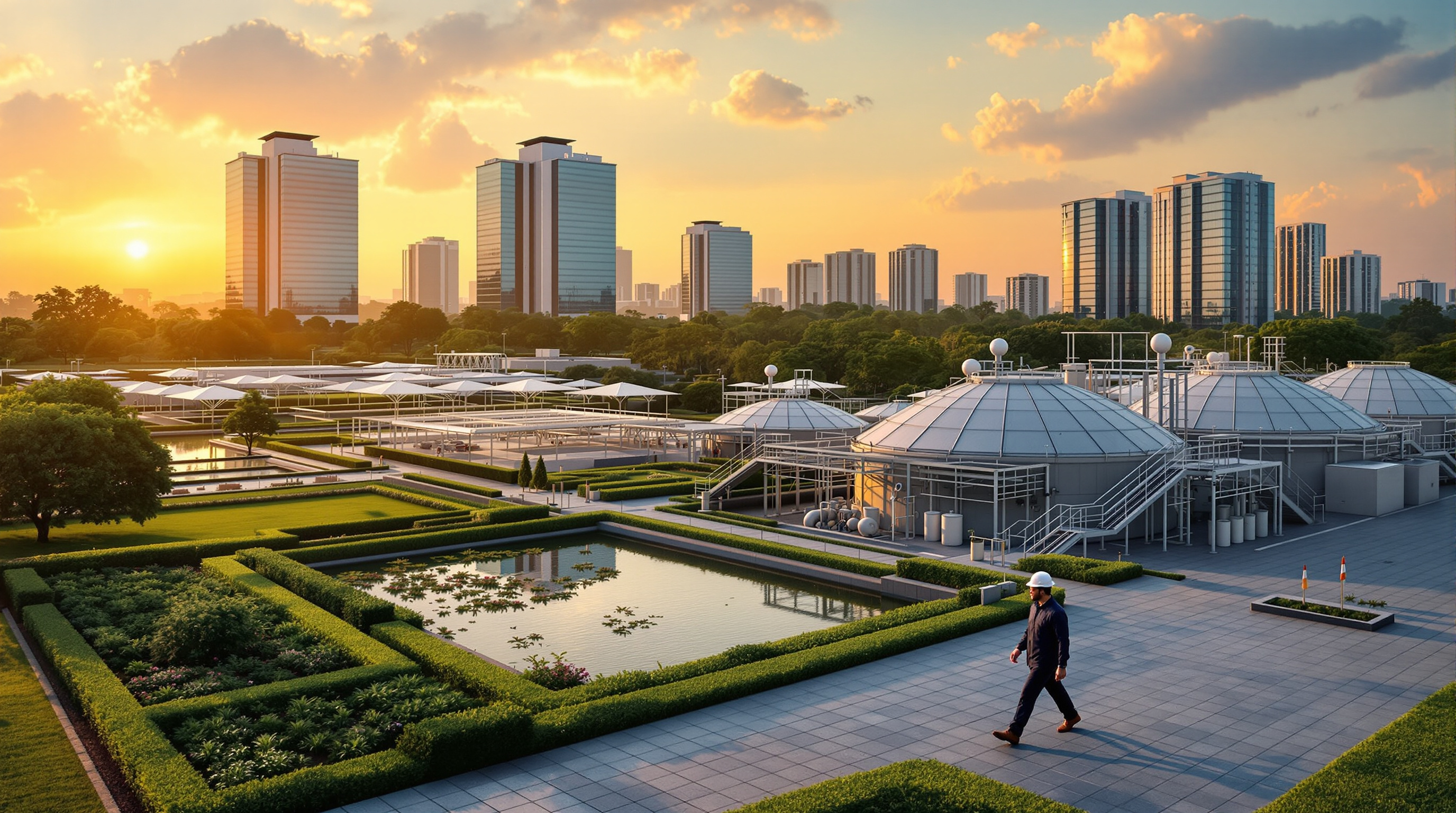
STP for IT Parks & Campuses: Central-Plant Design, Reuse & Redundancy Guide
How to plan a campus-scale sewage treatment plant for a multi-building IT park in India — the daytime flow pattern, the right technology, sizing for a central plant, and a reuse network feeding landscape, flushing and cooling towers.
An IT park is a small city that empties out every night. Ten thousand people, sometimes many more, arrive within a two-hour window, use the washrooms and pantries hard through the day, and are gone by evening. The wastewater that campus produces is unlike a residential colony's in almost every way — it is concentrated into working hours, spread across a dozen buildings, and expected to come back as a resource that keeps the lawns green and the chillers running. Designing an STP for IT parks is therefore less about a single tank and more about a central plant plus a reuse network, sized and staged for a load that swings violently between 9 a.m. and 9 p.m.
This guide is for the developer, facilities head or MEP consultant planning that plant. If you are new to the fundamentals, start with what a sewage treatment plant is and how an STP works; here we go straight to what makes a campus different.
An IT campus STP is designed around absence, not presence. The plant must swallow a fierce daytime peak, then idle for twelve hours without the biology starving — and it must deliver reuse water on demand even when almost no sewage is coming in.
The wastewater profile of an IT campus
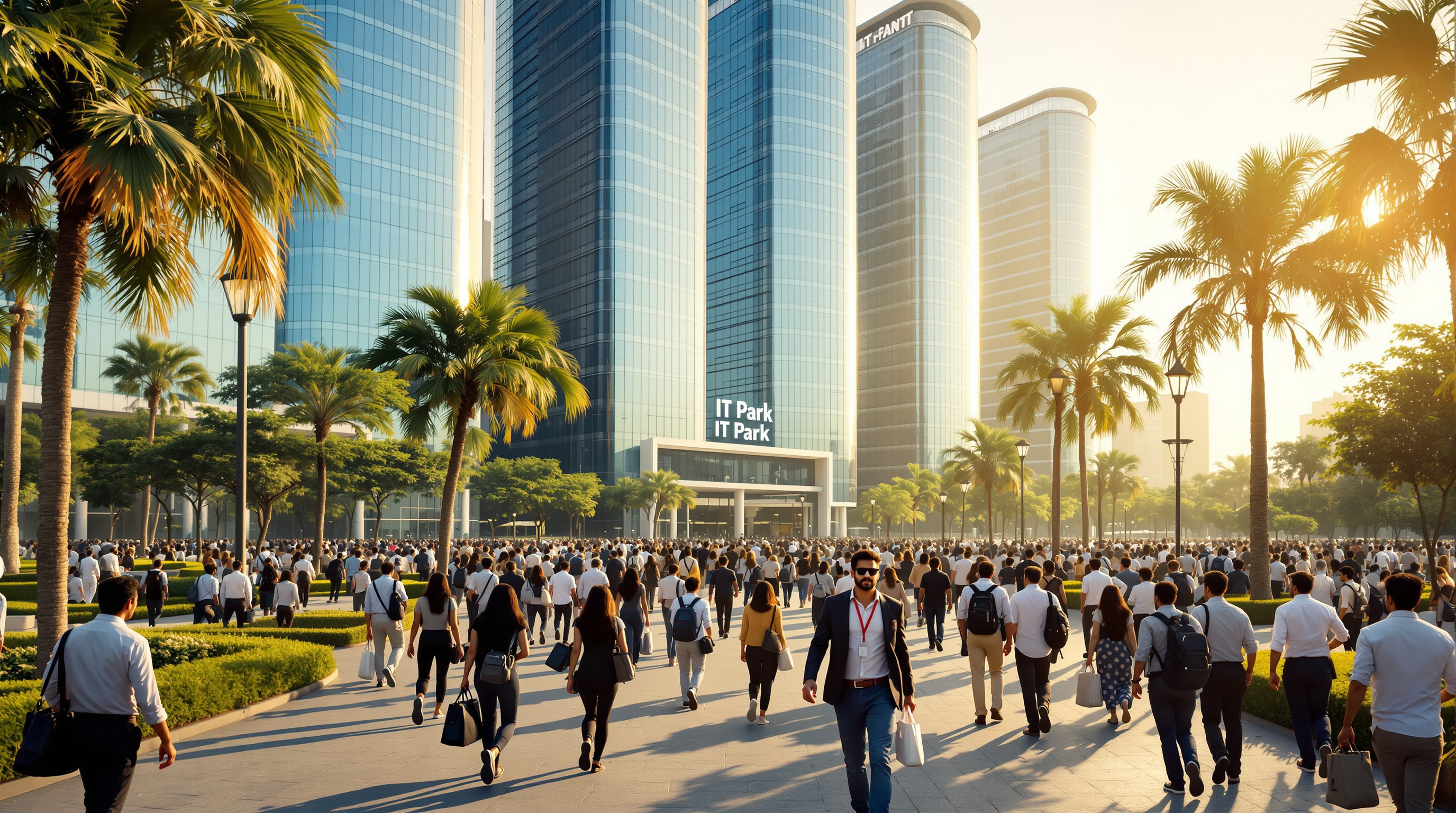
Get the profile right and every downstream decision follows. Four things set a corporate campus apart from housing.
A sharp, single-shift flow curve. Residential sewage arrives in two gentle waves (morning and night). An IT park's arrives as a tall daytime block — near-zero at night, a steep morning ramp, a lunch spike, and a hard evening cut-off. Peak factors of 3 to 4 times the average hourly flow are normal. The plant's balancing must absorb this or the biology gets shock-loaded.
Lower per-head flow, but predictable. An office user is on site for the working day only, so per-capita generation is far lower than a resident's. A common planning figure is around 45 litres per person per day for office occupancy, against 90–135 LPCD for homes — but with high certainty on headcount, because access is card-controlled. Use the water consumption calculator and the sewage generation calculator to convert your seat count into a real design flow.
Pantry and food-court load. The special contaminant on a tech campus is oil, grease and food solids from cafeterias, coffee stations and food courts feeding thousands of meals. This drives a higher grease-trap duty and a slightly elevated BOD in the kitchen stream. If you want a refresher on BOD, COD and TSS, see the wastewater characteristics guide.
Multiple buildings, one plot. Sewage originates in scattered towers but is best treated once. That argues for a central STP fed by a gravity/pumped collection network, rather than a small plant per building — the same logic that governs an STP for office buildings scaled up across a campus. Much of the flow discipline here mirrors an STP for shopping malls, where footfall also dictates the curve.
| Attribute | Residential colony | IT park campus |
|---|---|---|
| Flow timing | Twin peaks, all day | Daytime block, empty nights |
| Peak factor | ~2.5x | 3–4x |
| Per-capita flow | 90–135 LPCD | ~45 LPCD (office) |
| Signature load | Kitchen + bathing | Pantry/food-court grease |
| Plant model | One plant per cluster | Central plant + reuse grid |
| Reuse demand | Flushing + garden | Flushing + landscape + cooling towers |
Which STP technology suits, and why
The swing between peak and idle is the deciding factor. Three technologies dominate campus tenders.
- MBBR (Moving Bed Biofilm Reactor). The workhorse for most IT parks. Because the biomass grows on floating media rather than living free in the water, an MBBR tolerates the daily starve-and-feed cycle far better than a conventional activated sludge process. It is compact, forgiving of variable load, and cheaper to run than a membrane plant. For a large majority of campuses it is the sensible default.
- SBR (Sequential Batch Reactor). A good fit where the flow is genuinely batchy. An SBR treats in timed cycles, which maps neatly onto a plant that fills through the day and processes in stages — and it gives strong nutrient removal in one tank.
- MBR (Membrane Bioreactor). Choose an MBR when the reuse spec is demanding — cooling towers and high-grade landscape — and when land is scarce. The membrane delivers near-tertiary water straight out of the biology, cutting the filtration train, but at higher capital and power cost and with careful membrane maintenance. On dense, high-value campuses the smaller footprint often justifies it.
Whatever the reactor, the heart of the plant is the same oxygen-and-microbes principle explained in the aeration tank guide, and the water still walks through the standard treatment process flow of screening, biology, settling, filtration and disinfection.
Sizing a central campus plant
Campus sizing rewards discipline because the numbers are large and the peaks are extreme.
1. Start from design occupancy, not built-up area. Seats plus visitors plus food-court covers, at the office LPCD figure, gives the average daily flow. A 10,000-seat park at ~45 LPCD lands near 450 KLD of sewage before contingency.
2. Add a real peak factor. Size the balancing/equalisation tank and the pumps for the 3–4x hourly peak, not the daily average — this is where campus plants most often fall short.
3. Modularise in streams. Split the plant into two or more parallel trains rather than one giant reactor. This is the single most important campus decision: it buys redundancy and lets you run fewer streams during phased occupancy or holidays.
4. Plan for phasing. IT parks fill building by building over years. Size civil works for the full campus but commission mechanical streams in step with occupancy, so you are not aerating an empty tank for three years.
Feed your headcount into the STP capacity calculator for a first-pass KLD figure, then let your consultant firm it up against the peak curve.
The reuse network: where the value is
On a campus the treated water is not a disposal problem — it is a utility, and the reuse network is often the reason the business case closes. A well-run plant recovers 80–85% of consumption. That water goes to:
- Toilet flushing, piped back to every tower on a dedicated dual-plumbing line — the largest and most reliable sink.
- Landscape irrigation across the campus greens, ideally on drip to hold down demand.
- Cooling-tower make-up for the central chiller plant — the signature IT-park reuse, and the one that most needs consistent, low-fouling water quality (a strong argument for MBR or a robust tertiary polish).
- Water features and hardscape washing.
- Groundwater recharge for the surplus.
The catch: reuse demand peaks in the day and at night the plant is nearly dry, so a treated-water storage reservoir is essential to buffer supply against demand. For deeper reuse plumbing ideas, the rooftop water recycling integration guide is a useful companion.
Redundancy, compliance and reporting
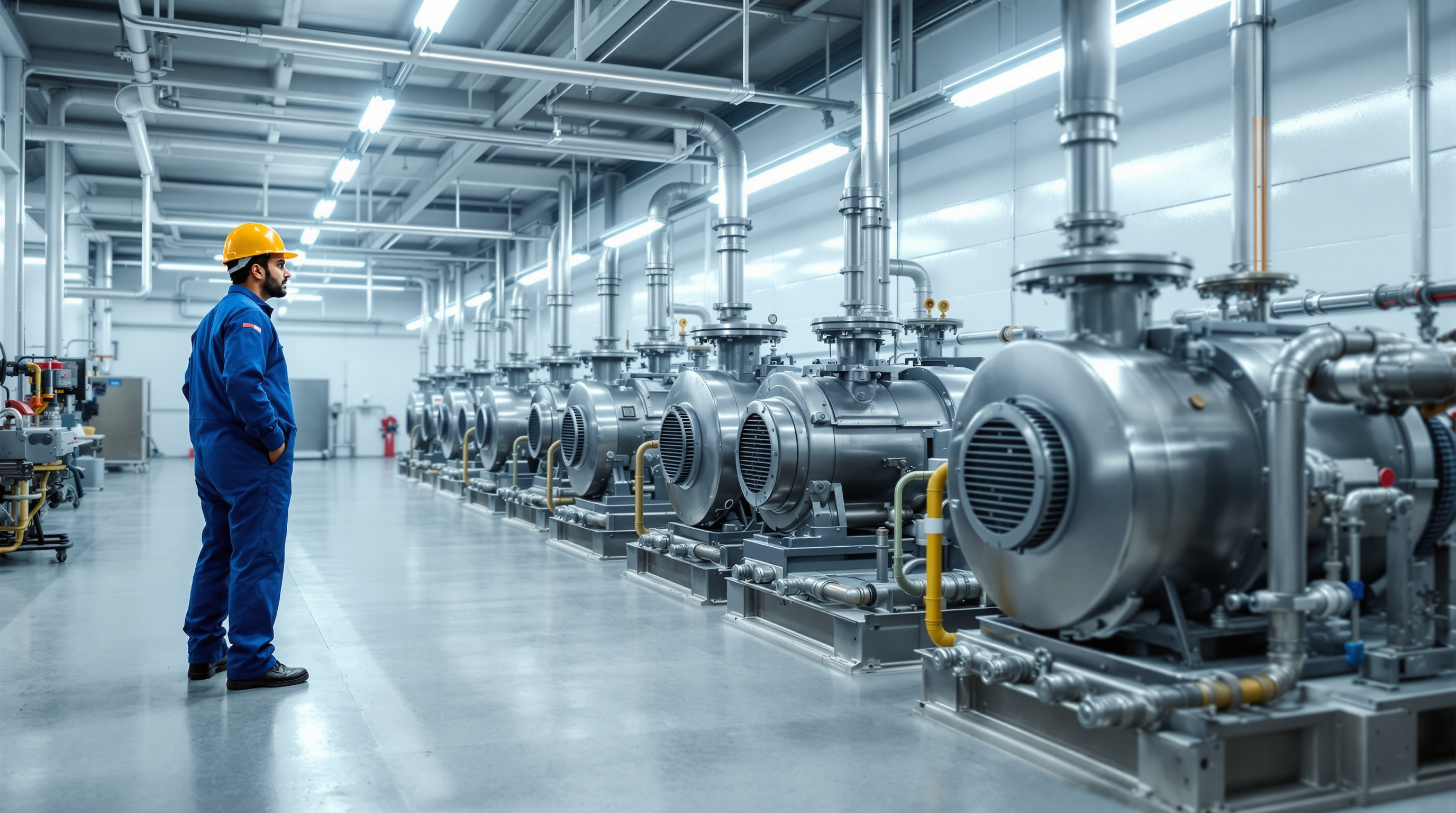
Redundancy is not optional. A campus cannot shut its washrooms because a blower failed. Design N+1 on critical rotating equipment — blowers, transfer and reuse pumps — plus the parallel treatment streams noted above, standby power on the DG set, and online monitoring. Many state boards now expect an online effluent quality monitoring link for large plants.
Compliance. The plant must consistently meet the treated-water standards your state pollution control board applies under CPCB direction, and the reuse plumbing must follow NBC dual-line and cross-connection rules. Because a large park is a high-visibility "consent to operate" case, treat the discharge and reuse records as live, audited data, not a filing-cabinet formality. Understanding why every modern building needs an STP frames the regulatory driver.
Sustainability reporting. This is where a campus STP earns its keep beyond compliance. Litres reused, freshwater displaced, and tanker trips avoided all feed directly into green-building certification (IGBC/LEED) and corporate ESG and water-stewardship disclosures that tenants increasingly demand. Meter the reuse line and the plant becomes a reporting asset, not just infrastructure.
Common mistakes on IT-park STPs
- Undersized balancing tank. Sizing to daily average and ignoring the 3–4x daytime peak shock-loads the biology. Balance for the curve.
- Aerating an empty campus. No phasing plan means running full mechanical capacity for a half-occupied park, burning power for years.
- Grease neglect. Thousands of food-court meals overwhelm an under-sized grease train and foul the reactor. Size it for the catering load.
- No reuse storage. Treating water all day but having nowhere to hold it for night-time landscape and cooling demand wastes the whole point.
- Single-stream design. One big reactor with no parallel train means any outage takes the entire campus offline.
- Cooling-tower water too raw. Feeding chillers water that fouls the fill; match the tertiary spec (or MBR) to the reuse quality.
A campus STP done well is quiet, modular and almost invisible — and it turns a tech park's daily tide of wastewater into the water that keeps it green and cool. To go deeper on technologies and sizing, browse the Sewage Treatment Plants guide library, and compare notes with the closely related STP for office buildings and STP for industrial parks guides.
Export this guide
Related Guides — Deep-dive reading
STP for Shopping Malls: Mixed Loads, Big Reuse
Why a mall's wastewater is unlike any other building's — a punishing mix of food-court grease, washroom peaks and huge cooling-tower thirst — and how to size, site and choose an STP that turns all of it back into usable water in the basement.
Sewage Treatment PlantsSTP for Hotels: High Per-Guest Loads, FOG & Water Reuse Explained
Why hotel wastewater is heavier and swingier than an apartment's, which STP technology (MBBR vs MBR) actually fits, how to size for peak occupancy, and where the treated water pays for itself — in laundry, cooling and landscape.
Sewage Treatment PlantsSTP for Office Buildings & IT Offices: Sizing, Reuse & Design Guide
Why office STPs need lower per-person LPCD, a weekday-only flow strategy and a generous equalisation tank — plus which technology suits, how to size it, and where flushing and cooling-tower reuse pay for themselves.
Sewage Treatment PlantsRelated Tools — Try Free
Rainwater Tank Sizer
How big should your rainwater tank be? Computes annual harvest, recommended tank capacity in litres, water-bill savings, and payback — for 10 Indian cities.
RWH CalculatorLandscape Cost Calculator
Estimate a garden's cost — hardscape, softscape, lawn, irrigation, lighting and annual upkeep — by area, tier and city.
Budget CalculatorSewage Generation Calculator
Estimate the daily sewage a building generates and its peak flow in KLD from occupancy, LPCD, sewage return factor and peak factor.
STP Calculator