
UF Membrane in Advanced STPs: The Physical Barrier for Reuse-Grade Water
How an ultrafiltration (UF) membrane acts as an absolute physical barrier in an STP — straining out solids, turbidity and bacteria to deliver near-crystal, low-SDI water ahead of reuse or RO. Pore size, flux, fouling and CIP cleaning, and where a standalone UF sits versus an MBR.
Every biological sewage treatment plant does the hard chemical work up front — microbes eat the pollution, solids are settled out, filters catch the stray particles. But when the treated water is destined for something demanding — feeding a reverse-osmosis (RO) train, a cooling tower, or a premium reuse line — "clear enough" is no longer good enough. What those uses need is water that is reliably free of suspended solids and turbidity, every hour of every day, regardless of how the biology behaved that morning. That guarantee is exactly what an ultrafiltration (UF) membrane provides.
A UF membrane is not a biological process and it does not eat anything. It is a physical sieve — a barrier with holes so small that solids, turbidity, and even most bacteria simply cannot pass through. This guide explains what a UF membrane in an STP actually is, how it works, how engineers size and clean it, and where a standalone UF unit fits against a full membrane bioreactor (MBR). If you are new to how the wider plant works, the pillar guide What is a Sewage Treatment Plant? is the gentler starting point; this one assumes you already know the treatment stages.
A UF membrane is an absolute physical barrier. A sand filter reduces turbidity on a good day; a UF membrane removes it on every day, because a particle either fits through the pore or it does not — there is no in-between.
What a UF membrane actually is
Ultrafiltration sits in the middle of the membrane family, defined by how fine its pores are. Ranked from coarse to fine, the pressure-driven membranes run: microfiltration (MF), then ultrafiltration (UF), then nanofiltration (NF), then reverse osmosis (RO). A UF membrane's pores are typically 0.01 to 0.05 micron — roughly a thousand times finer than a human hair, and small enough to reject anything larger than a dissolved molecule.
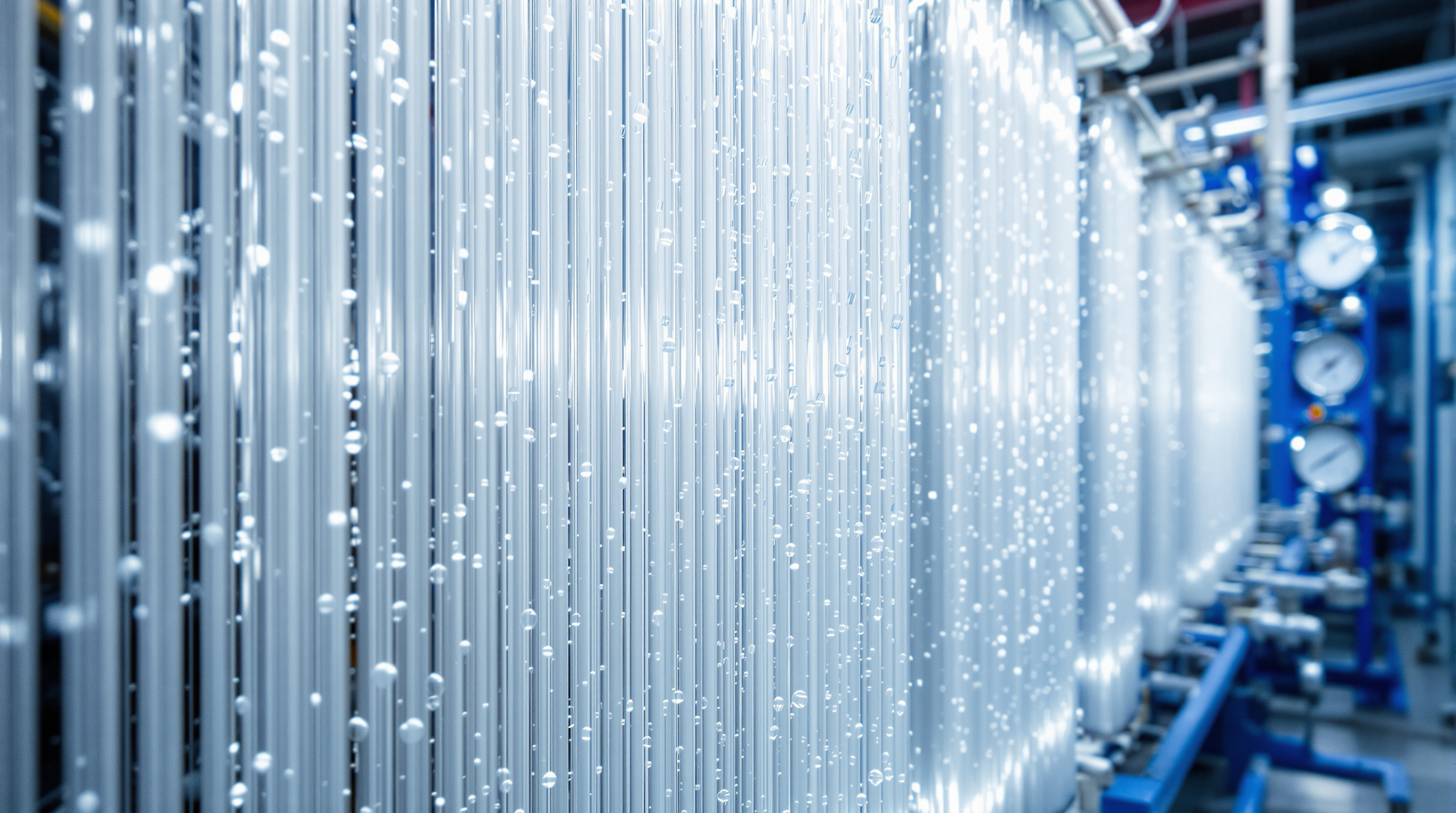
In an STP, the membrane almost always takes the form of hollow fibres: thousands of hair-thin straws bundled into a module. Water is pushed (or pulled by gentle suction) across the fibre wall, and only clean water — called permeate — makes it through. Everything bigger stays behind on the feed side and is periodically flushed away.
What a UF membrane reliably holds back:
- Suspended solids and turbidity — driven to near-zero, typically well under 1 NTU.
- Bacteria and most protozoa — physically too large to pass, so the disinfection load downstream drops sharply.
- Colloidal matter and fine floc — the tiny carried-over particles that sand filters let slip through.
What it does not remove: dissolved salts, dissolved organics, and viruses smaller than the pore. UF cleans up the physical quality of the water — it is not a desalination or a chemical-polishing step. That is why it so often sits ahead of an RO stage rather than replacing it.
The job it does in the treatment flow
There are two very different ways a UF membrane earns its place in an advanced STP, and it is worth being clear about which one you are looking at.
1. As the heart of an MBR. In a membrane bioreactor, the UF (or MF) membrane is submerged directly inside the aeration tank and replaces the secondary clarifier entirely. The biology and the filtration happen in one vessel. This is the most common way UF appears in modern building STPs.
2. As a standalone tertiary polishing unit. Here the UF sits after a conventional plant — after the clarifier, often replacing or backing up the pressure sand filter. It takes already-biologically-treated water and strains it to membrane-grade clarity. This is the configuration you choose when you want to upgrade an existing activated sludge or MBBR plant's output to feed an RO system without rebuilding the biology.
In both cases the payoff is the same: a consistent, low-solids feed. Fit it into the wider sequence using the sewage treatment process flow guide, which shows where tertiary steps land.
Why "low SDI" is the whole point

If the treated water is headed for RO, one number matters more than turbidity alone: the Silt Density Index (SDI). SDI measures how quickly fine, colloidal fouling material clogs a test filter — in effect, how "sticky" the water is to an RO membrane. RO manufacturers typically demand a feed SDI below 3, ideally below 2. Conventional sand-and-carbon polishing struggles to hit that reliably; a UF membrane delivers it as a matter of course.
This is the quiet reason UF has become standard ahead of reuse-grade RO and zero liquid discharge schemes. A stable, low-SDI feed means the downstream RO membranes foul far more slowly, run at lower pressure, last longer, and need cleaning less often. UF protects the expensive RO investment behind it.
Sizing a UF: flux and recovery
You do not size a UF by volume the way you size a tank — you size it by flux, the rate at which water passes through each square metre of membrane. Flux is quoted in LMH (litres per square metre per hour). The design logic is directional and simple:
- Total flow needed (litres/hour) ÷ design flux (LMH) = membrane area required.
- Running at higher flux packs more throughput into less membrane — cheaper to buy, but it fouls faster and needs cleaning more often.
- Running at lower, gentler flux costs more membrane up front but runs stable for longer between cleans.
For domestic-sewage UF the design flux typically sits in a modest band (often in the low tens of LMH), deliberately conservative because sewage-derived water fouls readily. Recovery — the share of feed water that comes out as usable permeate — is generally high, commonly 90–95%, with the small remainder leaving as reject during backwash.
| Parameter | UF membrane in an STP | Typical role |
|---|---|---|
| Pore size | ~0.01–0.05 micron | Physical rejection cut-off |
| Format | Hollow-fibre modules | Maximises area in small space |
| Permeate turbidity | Typically < 1 NTU | Near-turbidity-free |
| Feed SDI to RO | Reliably < 3 | Protects downstream RO |
| Design flux | Low tens of LMH (directional) | Sets membrane area |
| Recovery | ~90–95% | Feed converted to permeate |
| Removes | Solids, turbidity, bacteria | Physical barrier |
| Does NOT remove | Dissolved salts, viruses, dissolved organics | Needs RO/disinfection after |
Treat these as directional design anchors, not code values — every membrane supplier publishes its own module-specific limits, and the plant designer sizes to those.
Fouling and CIP: the discipline UF demands
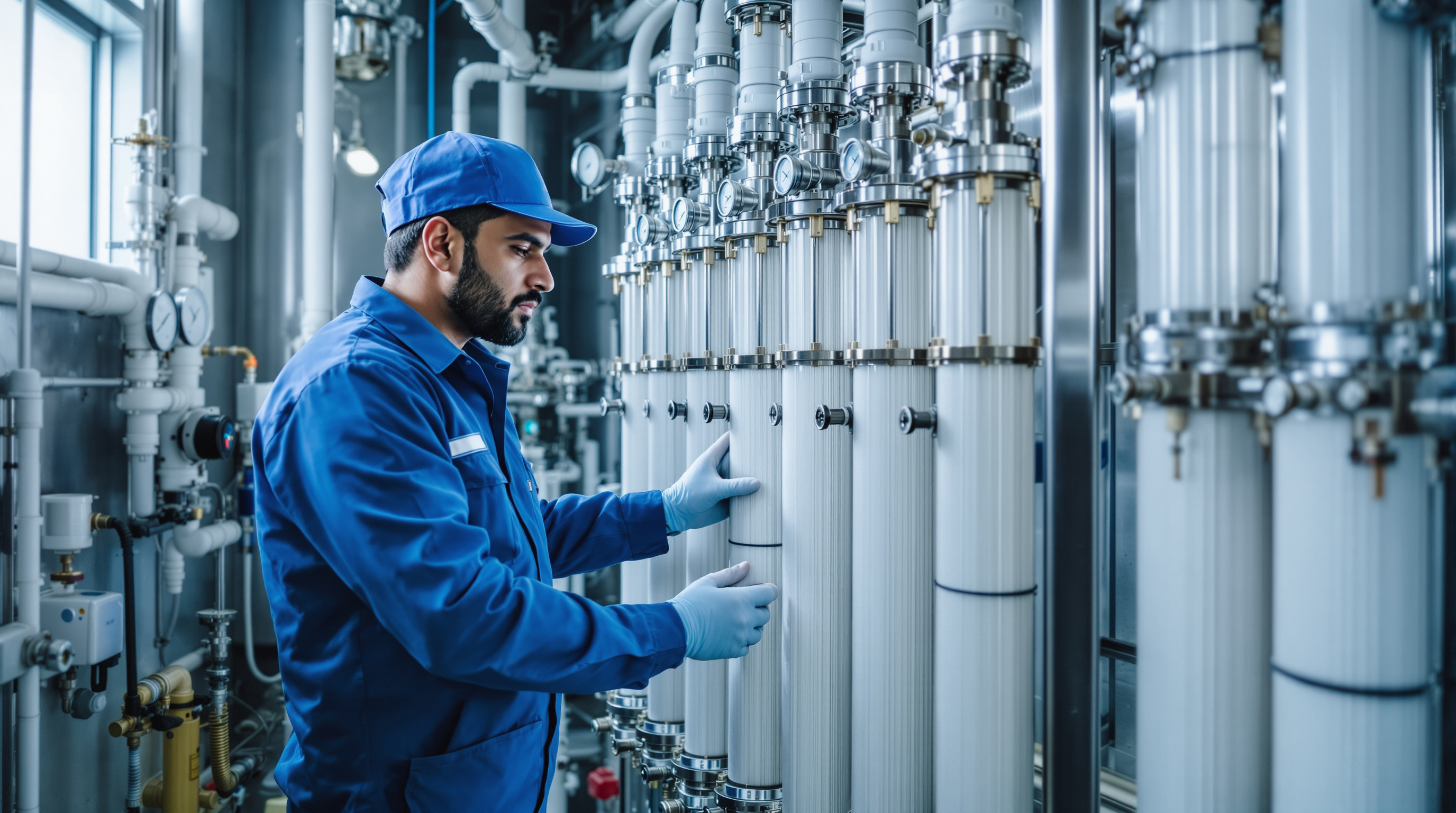
A UF membrane's greatest strength — blocking everything — is also its weakness. The rejected material accumulates against the fibres, the pressure needed to push water through creeps up, and flux falls. This is fouling, and managing it is the entire operating rulebook of a membrane plant. If BOD, COD, TSS and the other feed parameters are unfamiliar, Wastewater Characteristics explains why a dirtier feed fouls faster.
Fouling is fought on three timescales:
- Air scouring / cross-flow (continuous). In a submerged UF, coarse bubbles sweep solids off the fibre surface constantly so cake never builds up.
- Backwash (every 20–60 minutes). Flow is briefly reversed to push permeate back out through the pores, lifting off the loose fouling layer. Fast, automatic, routine.
- CIP — Clean-In-Place (weeks to months). When backwashing no longer restores flux, the module is soaked in a chemical solution. Two cleans are usual: an alkaline/hypochlorite wash to strip organic and biological fouling, and an acidic wash (citric or similar) to dissolve mineral scale. CIP restores the membrane to near-new flux.
The non-negotiable rule: UF is unforgiving of neglect. Skip the backwash cycles or defer the CIP and fouling becomes irreversible — the fibres blind permanently and you are buying new modules years early. Effective fine screening and oil-and-grease removal upstream are equally non-negotiable, because a slug of grease or a stray rag can blind or shred a module worth lakhs. A robust sand-and-carbon train tolerates abuse; a membrane does not.
Standalone UF vs MBR — which one do you need?
Because the same membrane appears in both, the two get confused. The distinction is simply where it sits:
- Choose an MBR when you are building new and space is the binding constraint. Submerging the membrane in the aeration tank deletes the clarifier and tertiary filters, shrinking the whole plant by 40–60%. You get the cleanest effluent in the smallest footprint — at the highest power and maintenance cost.
- Choose a standalone tertiary UF when you already have a working conventional plant and only need to upgrade its output — typically to feed an RO/ZLD train or a demanding reuse line. You keep the existing biology and bolt UF on as a polishing skid.
Either way, a light dose of UV disinfection or chlorine usually finishes the water, since UF has already removed most of the bacteria the disinfectant would otherwise have to kill.
The bottom line
A UF membrane turns an STP's biologically clean water into physically guaranteed clean water — near-zero turbidity, near-zero suspended solids, low SDI — by straining it through pores around 0.01–0.05 micron rather than trusting settling and sand filters to do the job. That reliability is precisely what makes it the standard front-end for RO, reuse and zero-liquid-discharge schemes. The price is discipline: constant backwashing, periodic CIP cleaning, clean feed water, and modules that must be replaced every several years. Design the flux conservatively, protect the membrane from grease and grit, and honour the cleaning schedule — and a UF unit will hand you the most consistent water quality in the plant.
To place UF against the full range of technologies, browse the Sewage Treatment Plants hub, and to size the plant your project actually needs, spend a minute with the STP Capacity Calculator — it converts an occupancy figure into a treatment capacity in litres per day, the number every membrane design begins from.
Export this guide
Related Guides — Deep-dive reading
RO Integration in STPs: When Reverse Osmosis After an STP Makes Sense
Bolting reverse osmosis onto a sewage treatment plant turns reuse-grade water into near-distilled water for cooling towers, boilers and zero-liquid-discharge. Here is when RO integration in an STP is worth it, what pretreatment it demands, and how to handle the reject.
Sewage Treatment PlantsMembrane Bioreactor (MBR): The Highest-Quality STP Technology
How a membrane bioreactor swaps the settling clarifier for ultra-fine membranes to produce near-reuse-grade effluent in the smallest possible footprint — the working principle, the superb water quality, the high-MLSS advantage, and the real trade-offs of cost, fouling and power.
Sewage Treatment PlantsPharmaceutical Wastewater Treatment: Why It Needs an ETP, Not an STP
Pharma effluent carries high COD, toxic and refractory compounds, swinging pH and traces of active drug ingredients — a load that overwhelms a domestic STP. Here is what makes it so hard to treat, and the ETP train engineers build to handle it in India.
Sewage Treatment PlantsRelated Tools — Try Free
Material Schedule Generator
Generate a room-wise finish schedule — walls, floors, ceilings, trim, and joinery by location.
Material ScheduleMBBR vs MBR Comparator
Weight seven decision criteria and get a scored recommendation between MBBR and MBR sewage-treatment technologies.
ComparatorPool Volume Calculator
Water volume in litres, US gallons and cubic metres, by pool shape and depth.
Pool Calculator