
Clarifier (Settling Tank) in an STP: How It Works
The quiet tank where biological floc settles out and clear water rises — how a clarifier gives you clean effluent, why sludge return (RAS) and wasting (WAS) matter, and the simple design numbers that decide whether it works.
Of all the tanks in a sewage treatment plant, the clarifier is the one that looks like nothing is happening. No bubbling, no churning, no noise — just a large tank of calm water with a bridge slowly turning across it. Yet this quiet tank is where the plant finally proves it worked. Everything the microbes achieved upstream is invisible until the clarifier separates the clean water from the biological mass — and hands you the clear effluent that is the whole point of the plant.
This guide explains what a clarifier is, the job it does in the treatment train, how settling actually works, and the handful of design numbers — surface overflow rate, weir loading and sludge return — that separate a clarifier that gives sparkling effluent from one that pushes solids out with the water.
A clarifier does not clean water. It separates water that is already clean from the living sludge that cleaned it — using nothing but stillness and gravity. Get the stillness wrong and the whole plant's effluent goes cloudy, no matter how good the biology.
What a clarifier is
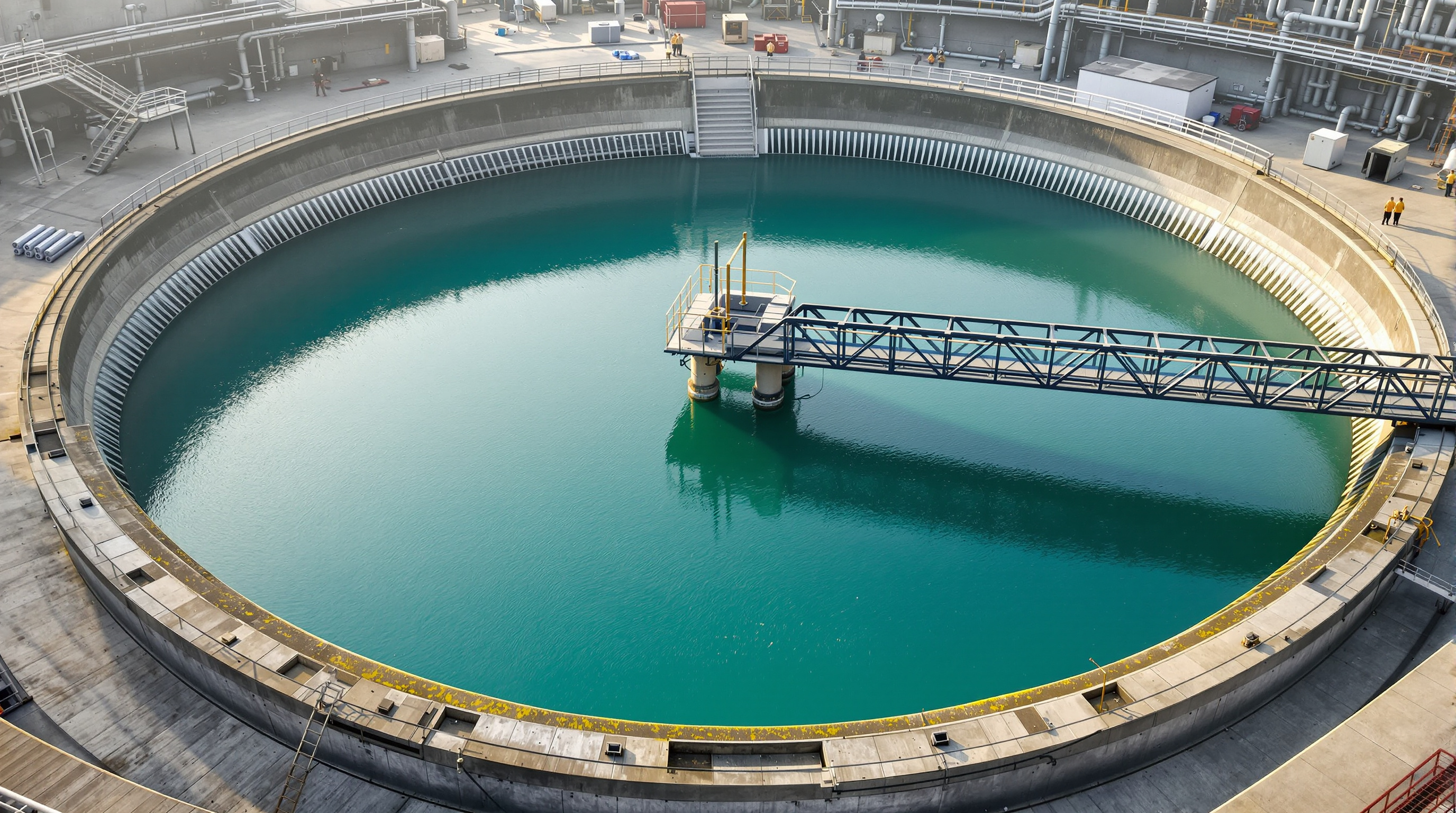
A clarifier, also called a settling tank or secondary settling tank (SST), is a large, quiet basin placed immediately after the aeration tank in the biological stage of an STP. Its job is deceptively simple: hold the mixed liquor still long enough for the solids to sink, so clear water can be drawn off the top.
To understand why it exists, you have to picture what leaves the aeration tank. In the activated sludge process and its cousins, billions of bacteria eat the dissolved organic waste and, in doing so, clump together into small brown particles called floc. The water coming out of aeration is therefore not dirty in the chemical sense — the pollution has been consumed — but it is thick with this suspended biological floc. That mixture of clean-ish water and living solids is called mixed liquor. If you discharged it as-is, it would look like muddy water and fail every TSS test. The clarifier's entire purpose is to get the floc out.
Where it sits in the treatment flow
Follow the water and the clarifier's role becomes obvious. In a typical treatment train:
- Aeration tank → microbes eat the waste and grow into floc.
- Clarifier → the mixed liquor sits still; floc settles to the bottom, clear water rises to the top.
- Clear water over the weir → moves on to tertiary filtration and disinfection.
- Settled sludge at the bottom → most is pumped back to aeration; the surplus is wasted.
That last split — some sludge back, some sludge out — is the clever part, and it is worth understanding properly.
RAS and WAS: the two sludge streams
The floc that settles at the bottom of a clarifier is not waste. It is a dense population of exactly the hungry, well-trained bacteria the plant needs. So the operator does not throw it all away — most of it goes back to work.
| Stream | Full name | Where it goes | Why |
|---|---|---|---|
| RAS | Return Activated Sludge | Pumped from the clarifier floor back to the aeration tank | Keeps the aeration tank stocked with a strong, established microbe population so it can keep eating incoming waste |
| WAS | Waste Activated Sludge | The surplus, sent to the sludge holding tank | The bugs breed continuously; if you never removed any, the tank would overload. Wasting keeps the population steady |
Think of it like a workforce. RAS is the experienced staff you send back to the factory floor every morning. WAS is the retirement stream — because the workforce keeps having children, you must let some go, or the factory bursts. The balance between the two — set by how fast the RAS and WAS pumps run — is one of the most important controls an operator has over the whole plant. Too little RAS and the aeration tank goes weak; too little WAS and the clarifier fills with sludge until it overflows solids.
How settling actually works
Inside the clarifier, four things are happening at once, quietly:
- Inlet stilling. The mixed liquor enters through a centre well or a baffled inlet that kills the incoming velocity. The number-one enemy of settling is turbulence — any current keeps the floc suspended. The tank is engineered to be as quiescent (still) as possible.
- Settling. Freed from the churn, floc particles sink under gravity. Because floc particles bump into and stick to each other on the way down, they settle faster together than alone — this is called flocculent settling, and it is why a healthy, well-formed floc is so valuable.
- Sludge blanket. The settled floc forms a distinct layer near the bottom called the sludge blanket. A slow-turning scraper (in a circular tank) or a travelling bridge (in a rectangular one) gently rakes this blanket toward a central or end hopper, from where RAS and WAS are drawn.
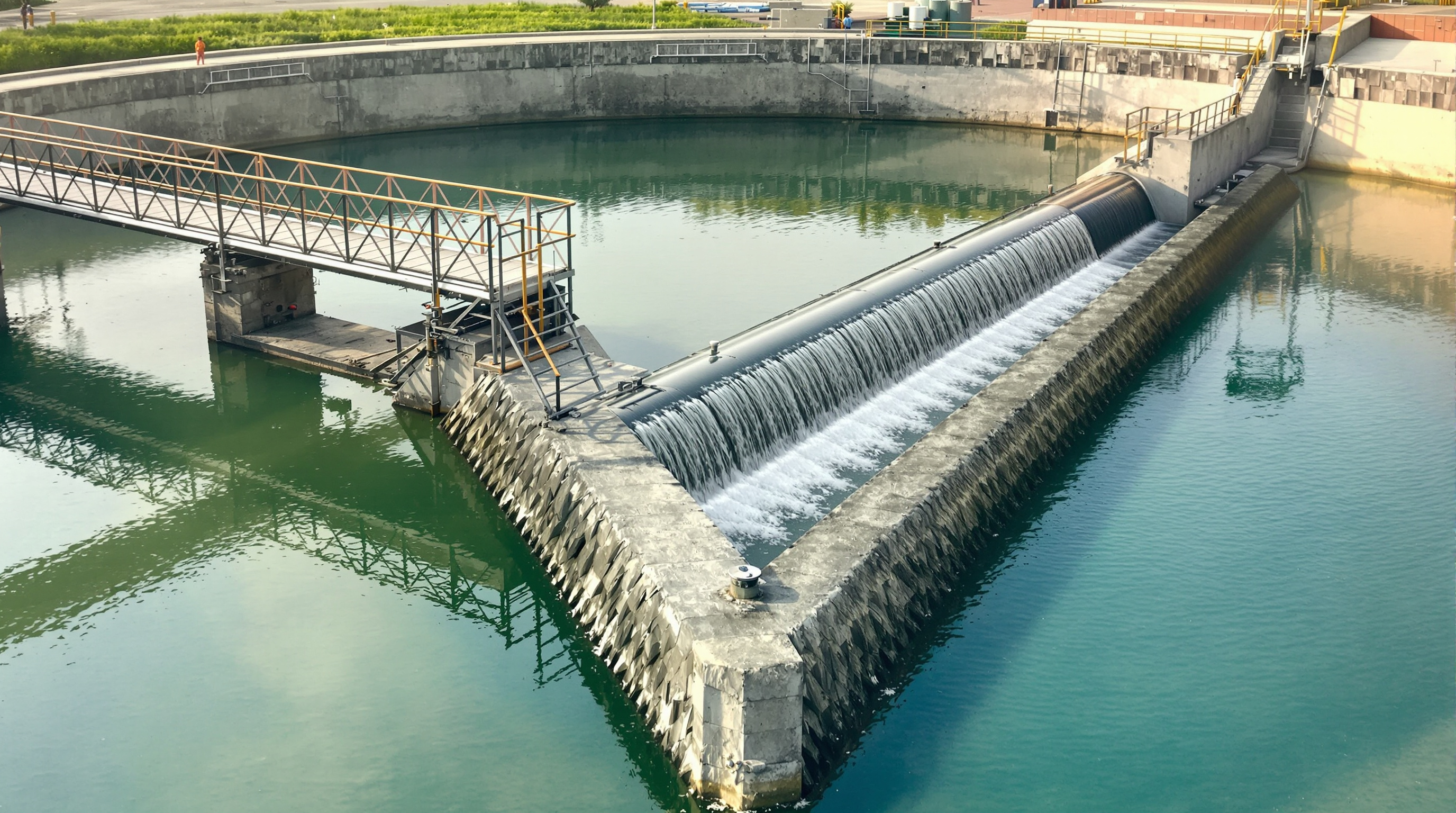
- Clear water rising. Above the blanket, the clarified water rises slowly and spills over a weir — a notched edge running around the tank rim — into a collection channel called a launder. Water leaving over that weir is your treated effluent.
The visible slow-moving bridge is doing two jobs: scraping settled sludge inward at the bottom, and often skimming any floating scum off the top.
The design numbers that matter
You do not need to design a clarifier by hand, but three directional numbers explain why a clarifier is the size it is — and why an undersized one fails.
1. Surface Overflow Rate (SOR). This is the single most important clarifier number. It is the flow of water divided by the tank's surface area, expressed in litres per square metre per hour (or m³/m²/day). Picture it as the upward speed of the rising water. If the water rises faster than a floc particle can sink, the floc gets carried up and out over the weir — and your effluent turns cloudy. So SOR must be kept gently low. For a domestic STP secondary clarifier, designers typically target roughly 0.6–1.2 m³ per m² per hour at average flow. Smaller SOR means a bigger tank surface and calmer, more reliable settling.
2. Weir Loading Rate. This is the flow divided by the total length of weir the water spills over, in m³ per metre of weir per day. If too much water pours over a short weir, it creates a local upward current right at the rim that plucks floc off the top of the sludge blanket. Longer weirs (which is why launders often run around the full circumference, or in double channels) spread the flow thin and keep it gentle.
3. Hydraulic Retention Time & side water depth. The water needs to dwell long enough to settle — commonly around 2 to 3 hours at average flow — and the tank needs enough depth (typically 3 metres or more) to hold a sludge blanket without it reaching the weir.
If you want to translate your building's occupancy into the flow figure that drives all three of these, the STP Capacity Calculator converts a headcount into litres-per-day, and the Sewage Generation Calculator does the same from water consumption — the starting number for any clarifier sizing.
Circular vs plate settlers
The classic clarifier is a circular tank with a central feed and a rotating scraper — reliable and forgiving, but it needs a large footprint. Where space is tight (most Indian basements), designers often replace or supplement it with a tube settler: a bank of closely-spaced inclined tubes or plates that multiply the effective settling area inside a small tank. Same physics, far smaller footprint — which is why plate and tube settlers are now common in compact packaged STPs.
Common problems and O&M
A clarifier has few moving parts, but when it misbehaves the whole plant's output looks bad. The usual culprits:
- Cloudy effluent / solids carry-over. Almost always a settling problem: too much flow (high SOR), a shock hydraulic surge, or poor floc. An equalization tank upstream exists precisely to smooth surges before they hit the clarifier.
- Sludge bulking. When filamentous bacteria overgrow, floc becomes fluffy and refuses to settle — the sludge blanket swells and rises toward the weir. This is a biology problem in the aeration tank, not the clarifier itself, but the clarifier is where you see it first.
- Rising sludge (denitrification). Sludge that sat too long forms nitrogen gas bubbles that float clumps of it to the surface. Fixed by drawing sludge (RAS/WAS) faster so it does not stagnate.
- Short-circuiting. Poor inlet baffling lets incoming water shoot straight across to the weir without settling. A design and installation issue.
- Weir fouling and scum. Algae and grease build up on the weir and launder; routine cleaning keeps the overflow even.
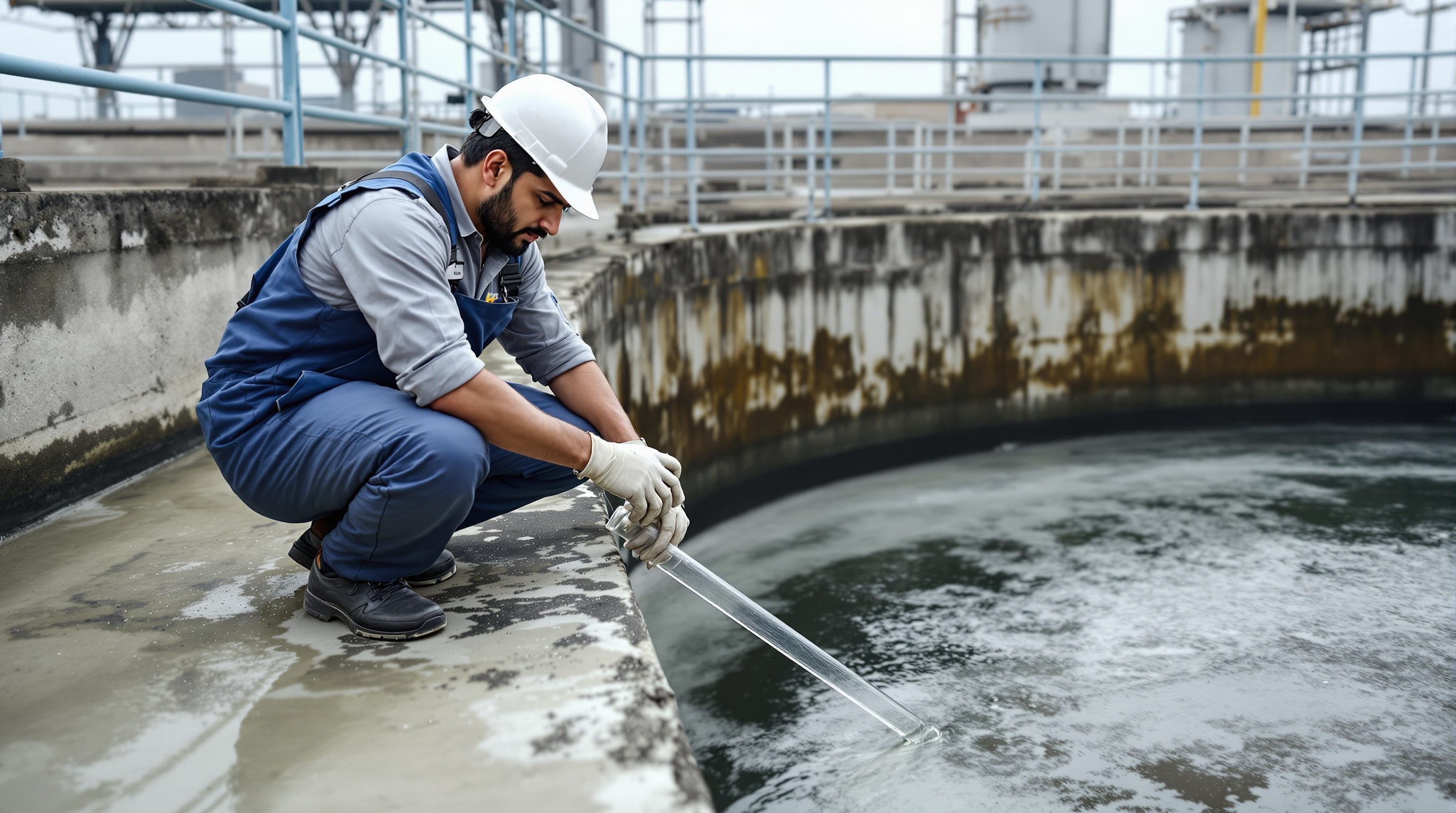
Day-to-day operation is mostly about watching the sludge blanket (a simple blanket-depth check with a sludge judge) and tuning the RAS/WAS pumps to keep it at a healthy level — neither so thin the plant loses its bugs nor so thick it overflows.
The bottom line
The clarifier is where an STP's biological work becomes visible water. It cleans nothing itself — it separates, using patience and gravity, the clear treated water from the living floc that did the cleaning, then sends most of that floc back to work (RAS) and retires the surplus (WAS). Keep it quiet, keep the surface overflow and weir loading gentle, and keep the sludge blanket in check, and it will hand you clear effluent every hour of every day.
To see how the clarifier fits into the full biological stage, read How an STP works and the Activated Sludge Process guide. For the bigger picture of every tank and stage, start at What is a Sewage Treatment Plant or browse the full STP guide library.
Export this guide
Related Guides — Deep-dive reading
Aeration Tank: The Biological Heart of an STP
The tank where blowers push oxygen into billions of microbes that eat the sewage's organic load — how it works, what DO, MLSS, F/M and HRT mean, and why it quietly runs up the biggest electricity bill in the plant.
Sewage Treatment PlantsThe Sewage Treatment Process Flow, Explained: Every Stage From Inlet to Reuse
Follow a drop of sewage through a typical STP — inlet, screening, aeration, clarifier, filtration, disinfection and reuse — as one connected flow, with a block diagram and a unit-by-unit table, in plain language.
Sewage Treatment PlantsBiological Culture Management in an STP: The Heart of Good O&M
The microbes in your aeration tank do the actual work of cleaning sewage. Keep them healthy — the right MLSS, food, oxygen and nutrients — and everything else falls into place. Here is how operators manage the living culture, diagnose bulking and foaming, and recover after a crash.
Sewage Treatment PlantsRelated Tools — Try Free
STP Capacity Calculator
Size a sewage treatment plant in KLD from your building's occupancy — water demand, sewage generated and recommended STP capacity.
STP CalculatorHydraulic Retention Time (HRT) Calculator
Compute a reactor or tank's hydraulic retention time from its volume and daily flow, and benchmark it against recommended ASP, MBBR and SBR ranges.
STP CalculatorSewage Generation Calculator
Estimate the daily sewage a building generates and its peak flow in KLD from occupancy, LPCD, sewage return factor and peak factor.
STP Calculator