
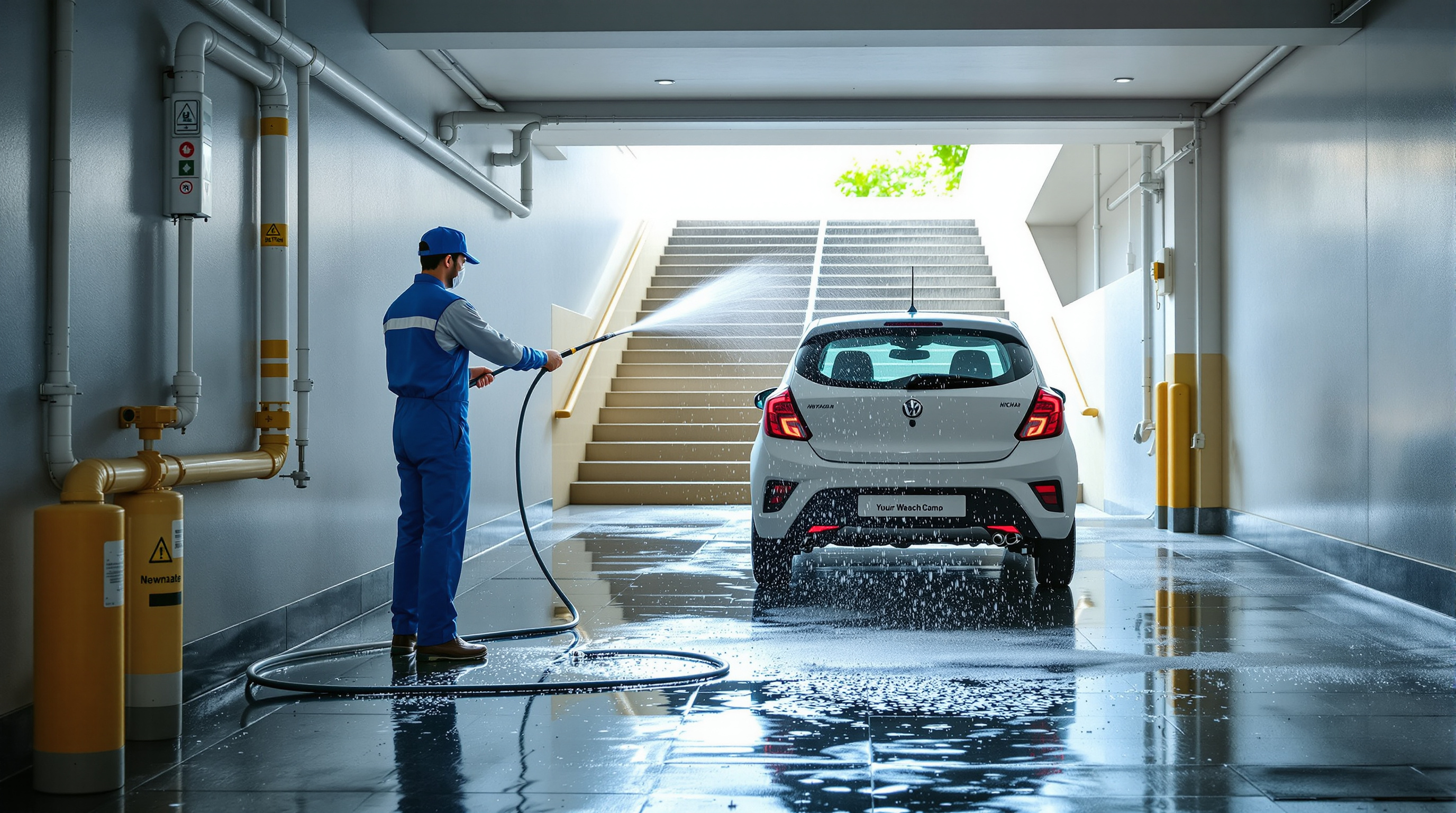
Treated Water for Car & Vehicle Washing: Quality, Chlorine & Setup
How to safely reuse your STP's treated water to wash cars, driveways and common areas — the exact quality it needs, why residual chlorine matters, how to avoid spots and streaks on paint, and how to plumb the supply.
Every apartment complex, tech park and gated community in India washes a surprising amount of metal and concrete. Cars and two-wheelers get rinsed, driveways get hosed, ramps and lobbies get sluiced down, and the clubhouse forecourt gets a daily wash. Almost all of that has traditionally been done with fresh, treatment-grade municipal or borewell water — the same water a household would drink. It is an obvious waste, because the water leaving your sewage treatment plant is easily good enough for the job, and there is plenty of it.
Washing is one of the highest-value, lowest-risk reuses of treated water, sitting comfortably alongside flushing and gardening. But "good enough" hides a real engineering point: a car's paint is far less forgiving than a lawn. Water that a garden shrugs off can leave spots on a bonnet or a haze on glass. This guide covers exactly what quality treated water needs for washing, why residual chlorine is the parameter people get wrong, how to avoid staining, and how to set the supply up.
Treated water is perfect for washing — the caution is not hygiene but cosmetics. Get the clarity, the chlorine and the dissolved-solids right, and you will never tell the difference on a clean car.
Why washing is an ideal reuse
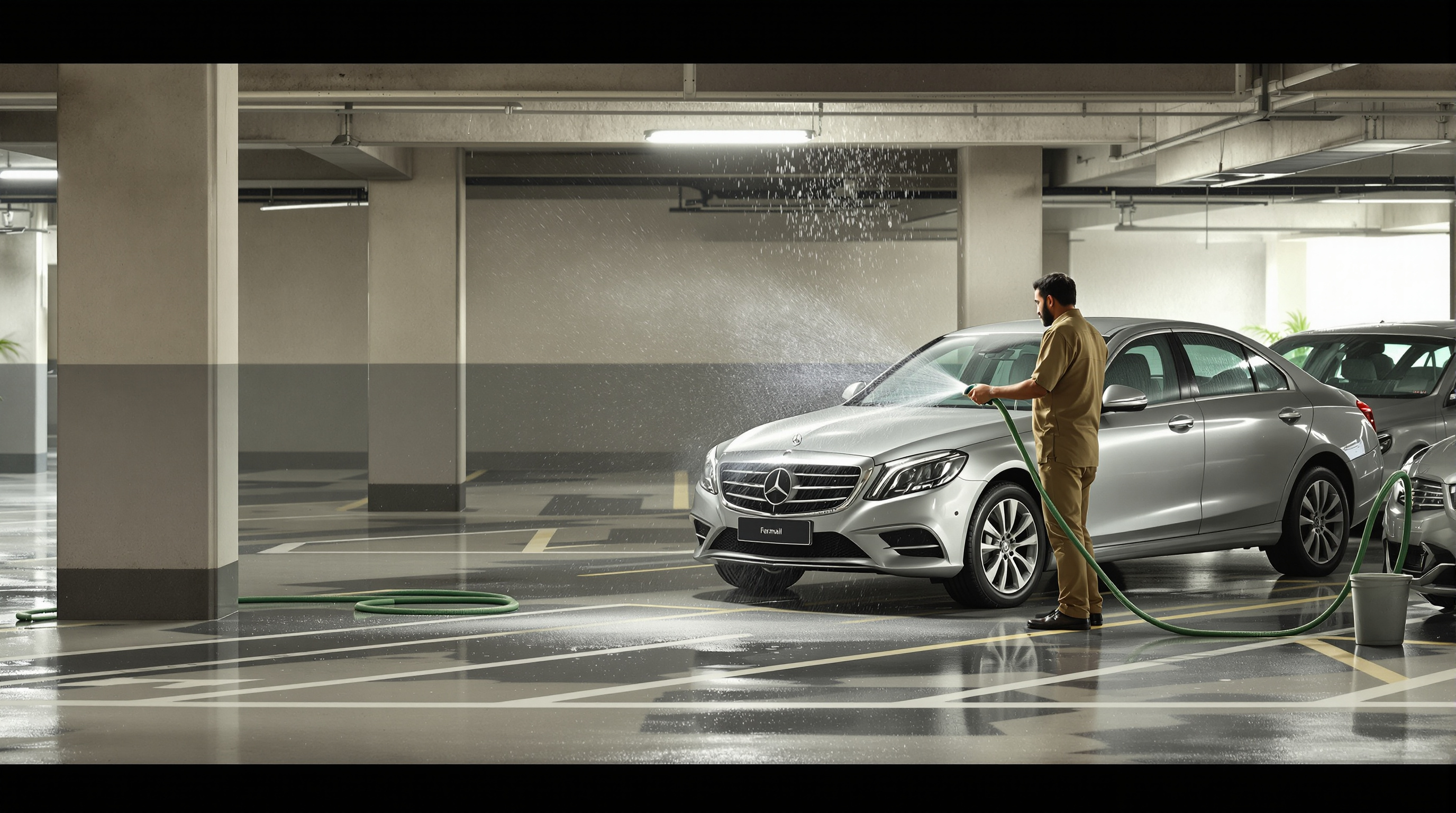
Washing demand is steady, year-round and completely non-potable — nobody drinks it, nobody cooks with it. That makes it a natural home for reclaimed water, freeing up precious fresh water for the taps that genuinely need it.
- The volumes match. A single car wash uses roughly 40–80 litres; a busy society washing dozens of vehicles plus common areas can consume several kilolitres a day. Your STP produces exactly this kind of surplus.
- It is visible and it saves money. Residents see cars being washed with recycled water, and the association sees the tanker bill fall. Run the numbers with the Water Reuse Savings Calculator to see the monthly rupee impact for your own headcount.
- It closes the loop on site. Combined with flushing and landscape use, washing helps push a building toward the 80–85% reuse that a well-run decentralised STP can achieve.
If you are still deciding how the total treated-water budget should be split between flushing, gardening and washing, size it first with the Water Balance Calculator.
The quality treated water needs for washing
Washing water does not need to be potable, but it does need to be visibly clean, low in dissolved solids, free of odour, and safely disinfected. Tertiary-treated STP water — meaning it has been through filtration and disinfection after the biological stage — should meet all four. The targets below are directional (align them with CPCB reuse expectations and your local pollution-control board), and represent good practice rather than a single legal number.
| Parameter | Target for washing | Why it matters |
|---|---|---|
| BOD | < 10 mg/L | Higher BOD means residual organics that smell and leave films |
| TSS / turbidity | < 10 mg/L, visually clear | Suspended particles cause streaks and fine scratching on paint |
| TDS | ideally < 500–600 mg/L | High dissolved solids are the main cause of white water spots |
| Residual chlorine | 0.2–0.5 mg/L at point of use | Keeps water hygienic and stops biofilm regrowth in storage and lines |
| pH | 6.5–8.5 | Extremes risk corrosion of fittings and dulling of paint over time |
| Odour | none | A washing water that smells will never be accepted by residents |
The two parameters people underestimate are TDS and residual chlorine. A garden does not care about either; a car does. We will take each in turn.
The two things that stain: TDS and drying
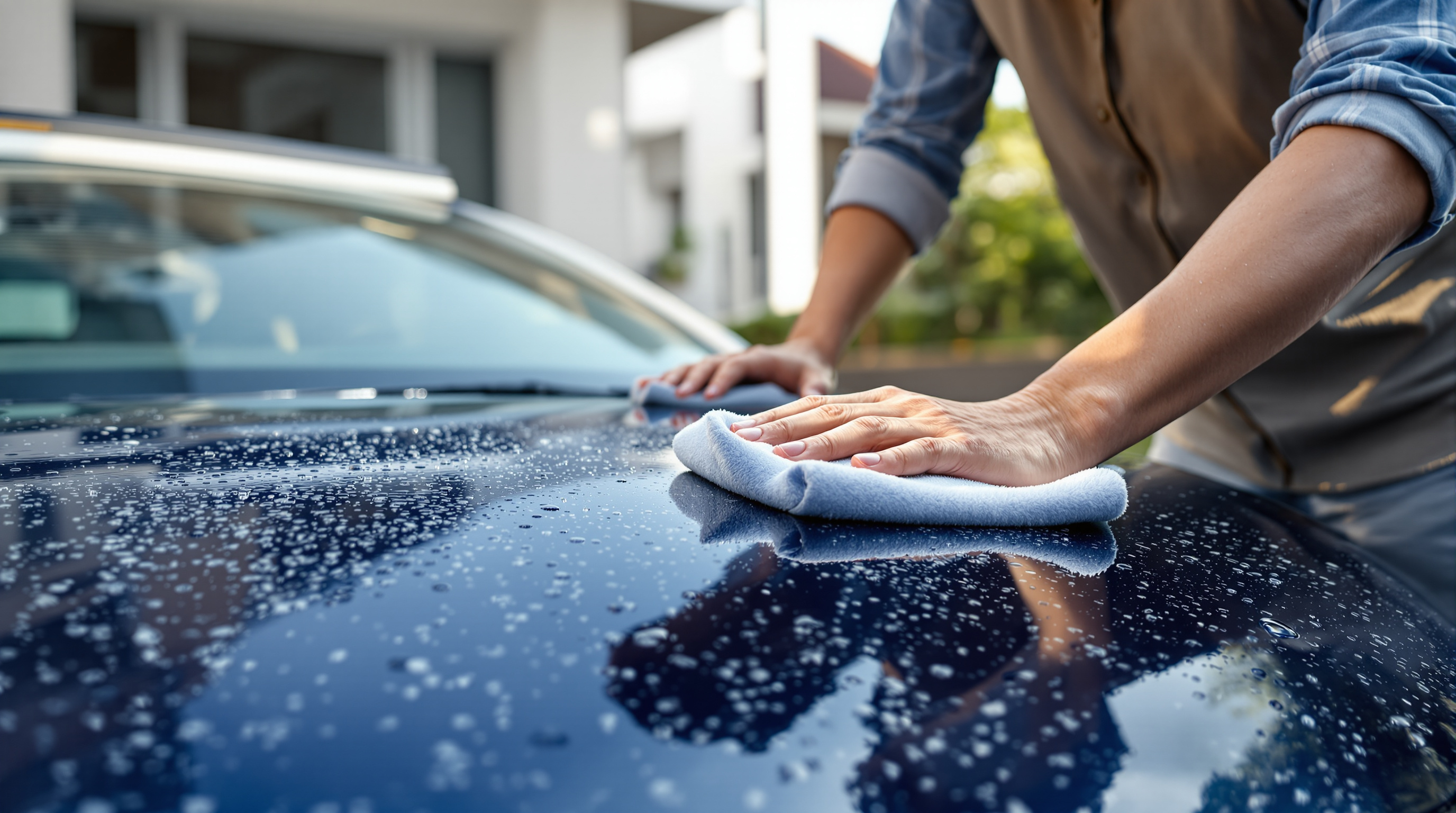
The complaint you will actually hear is "there are white spots on my car." Those spots are almost never dirt — they are dissolved solids left behind when droplets evaporate. Every drop of water that dries in place deposits its minerals as a visible ring. The higher the TDS, the more obvious the spot, and hard sun on a dark bonnet makes it worse.
This is a physics problem, not a treatment failure, and it has practical answers:
- Keep TDS down. Biological STPs do not remove dissolved salts, so if your treated water runs high on TDS, a share of ultrafiltration or reverse-osmosis permeate blended into the washing line brings it under control. An activated carbon filter in the tertiary train also helps with any residual colour and odour.
- Wash in shade and dry the surface. The oldest trick still works — wash out of direct sun and wipe the car down with a microfibre cloth or squeegee so no droplet dries on its own. This alone eliminates most spotting even at moderate TDS.
- Final rinse discipline. For glass and dark paint, a wipe-dry final pass matters more than the water grade.
For driveways, ramps and common areas, none of this applies — concrete and paver blocks do not spot, so treated water can be used there with no cosmetic caution at all. The staining conversation is only ever about vehicle bodywork.
Residual chlorine: the parameter to get right
Treated water that sits in a tank and travels through pipes will grow bacteria and biofilm again unless a small residual disinfectant is maintained. For washing water, hold a residual chlorine of about 0.2–0.5 mg/L at the tap. That keeps the water hygienic for people handling it and stops the slimy regrowth that fouls storage tanks and nozzles.
The balance is the trick:
- Too little chlorine and the water turns, develops odour, and grows biofilm in the washing line — the fastest way to get residents to reject the whole scheme.
- Too much chlorine and you risk a smell, mild irritation for the washing staff, and — over repeated exposure — dulling of paint and attack on rubber trims and wiper blades.
A properly tuned chlorination system on the treated-water line, checked regularly, holds the residual in band. If your STP uses UV disinfection as the primary kill step, remember UV leaves no residual — so for water that will be stored and reticulated to washing points, a small dosing of chlorine downstream is still needed to protect the distribution.
Setting up the supply
Reusing treated water for washing is a plumbing and signage exercise as much as a treatment one. The core rule of all non-potable reuse applies: the treated-water line must be completely separate from the potable line, and unmistakably marked.
- Dual plumbing and colour coding. Run a dedicated treated-water main to the washing points, conventionally in a distinct colour, with "Treated water — not for drinking" labels at every outlet. This is the same dual-plumbing discipline used for toilet flushing.
- No cross-connection, ever. Fit a physical air gap or an approved backflow preventer where any top-up or interface with potable water exists. A cross-connection is the one genuinely serious safety failure in reuse, and it is entirely avoidable.
- A dedicated washing/reuse tank. Store treated water in its own tank with the chlorine residual maintained, feeding hose points, wash bays and hydrant-style taps in the parking areas via a small pressure pump. Keep the tank covered and cleaned on schedule.
- Reliable pressure. Washing needs usable pressure at the nozzle, so size the reuse pump and hose bibs properly — see STP pumps and instrumentation for the sizing logic.
- Point-of-use screening. A simple cartridge or fine strainer at the wash bay catches any stray particle before it reaches a nozzle, protecting both the fitting and the paint.
Most of this is designed in from day one on a new project. Retrofitting into an existing basement is also common — the constraint is usually routing the second pipe, not the treatment.
The bottom line
Washing cars, two-wheelers, driveways and common areas with treated water is one of the easiest wins in building-scale water reuse: the demand is steady, the water is non-potable, and the savings are visible on the tanker bill. The engineering is undramatic. Deliver tertiary-treated water that is visibly clear, low in TDS, odour-free and carrying a small residual chlorine; keep it on a separate, clearly labelled line with no cross-connection; and wash in shade with a wipe-down to beat spotting. Do that and the recycled water is indistinguishable from fresh on a finished car — while quietly cutting your freshwater demand every single day.
From here, size the opportunity for your building with the Water Reuse Savings Calculator, and explore the rest of the reuse family — gardening, toilet flushing and more — in the Sewage Treatment Plants guide library.
Export this guide
Related Guides — Deep-dive reading
Treated Water for Toilet Flushing: The Complete STP Reuse Guide
How dual plumbing, a dedicated flush tank and pump, colour-coded lines, and residual chlorine turn STP effluent into the single biggest water saving a building can make — done safely, without a single cross-connection.
Sewage Treatment PlantsDual Water Supply for Indian Buildings: Dual Plumbing, Colour-Coded Networks & Cross-Connection Control
How a dual water supply splits a building into two independent lines — fresh potable water for drinking and bathing, treated/recycled water for WC flushing, gardening and washdown — with colour-coded piping, separate storage, and the backflow protection that keeps the two from ever mixing.
PlumbingUsing Treated STP Water for Gardening: A Safe Reuse Guide
How to safely put treated STP water on home and apartment-complex gardens — the quality you actually need, why drip beats sprinklers, the salt and chlorine traps that quietly kill plants, and the dual-plumbing basics that make it all work.
Sewage Treatment PlantsRelated Tools — Try Free
Water Reuse Savings Calculator
Estimate the money you save by reusing STP-treated water instead of buying fresh supply, with daily, monthly and annual savings.
STP CalculatorWater Carbon Savings Calculator
Estimate the CO2 emissions you avoid each year by reusing treated water instead of fresh supply, with annual tonnes saved and a tree-equivalent.
SustainabilityApartment Video Door System Planner
Enter flats, entrances, floors and guard desk for a first-pass building intercom plan — door stations, indoor monitors, guard station, the right architecture and an indicative cost band.
Building Planner