
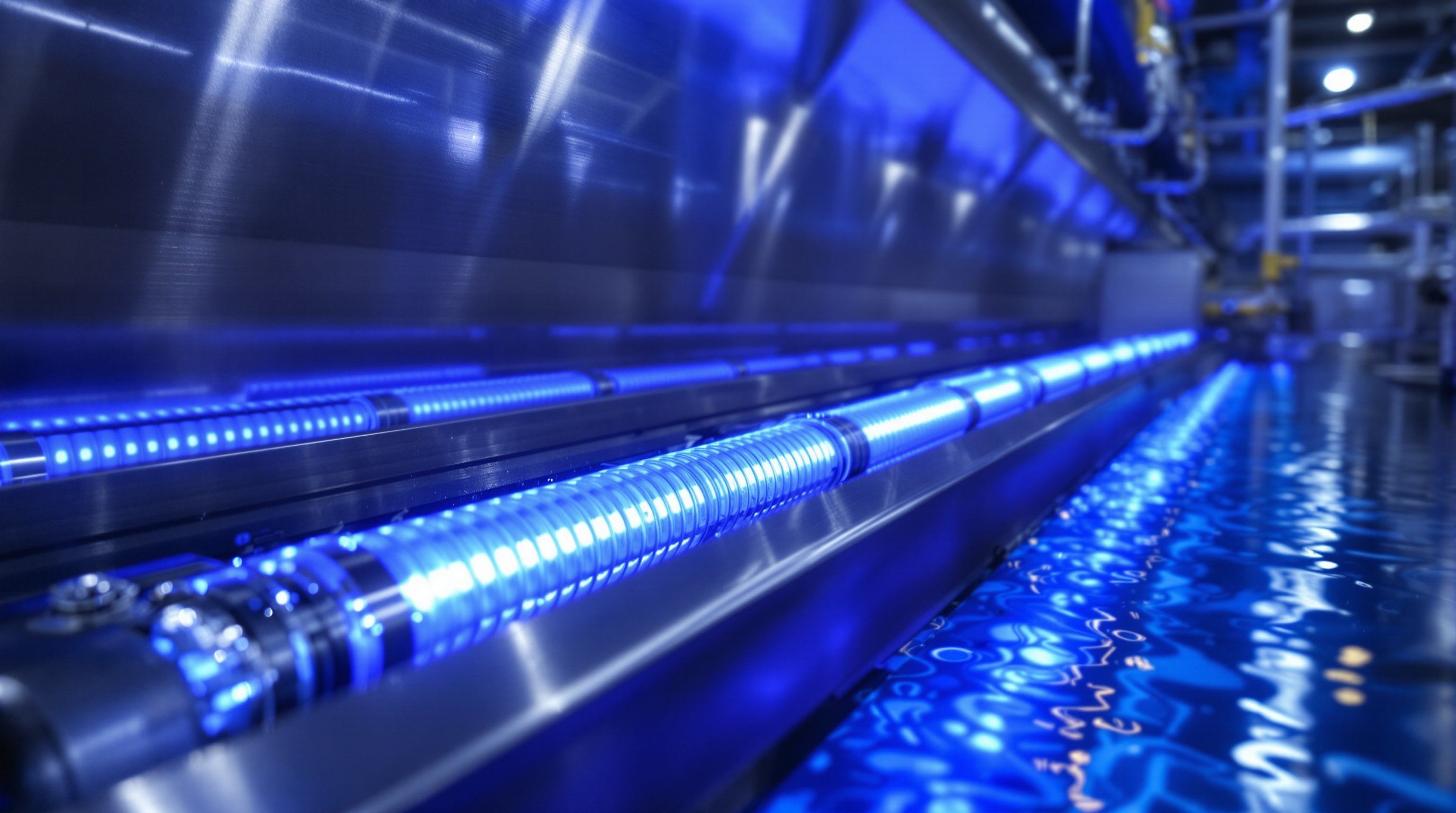
UV Disinfection in an STP: Chemical-Free Pathogen Kill Explained
How ultraviolet lamps inactivate the bacteria and viruses in treated sewage without a drop of chemical or any residual — how UV dose works, why lamps foul, and how UV compares with chlorine in an Indian STP.
By the time treated water reaches the last chamber of a sewage treatment plant, it looks clean — clear, odourless, ready to reuse. But looks are not the whole story. Water that has passed through the biological and filtration stages can still carry millions of living bacteria and viruses per litre. Removing the visible pollution is one job; killing what you cannot see is another. That final job — disinfection — is where UV comes in.
UV disinfection uses ultraviolet light to inactivate the pathogens in treated sewage without adding a single chemical to the water. It is the quiet, chemical-free alternative to chlorine, and it is increasingly the default choice in modern Indian STPs that reuse their water inside the building.
UV does not "kill" germs the way a poison does — it scrambles their DNA with a specific wavelength of light so they can no longer reproduce. A microbe that cannot multiply cannot cause disease. The water leaves the lamp chemically unchanged: same water in, same water out, minus the living threat.
What UV disinfection actually is
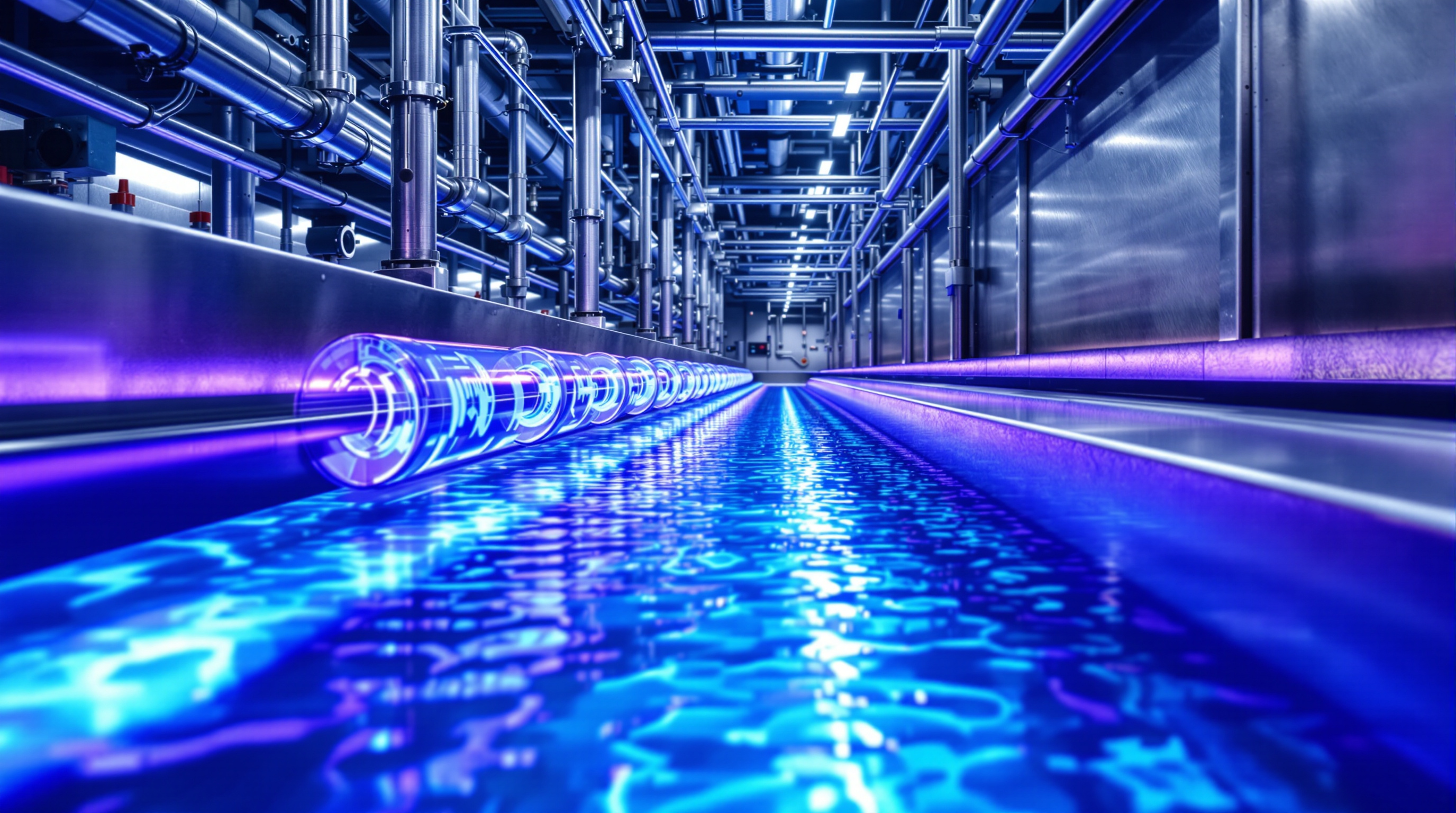
A UV disinfection unit is deceptively simple. Treated water flows through a channel or a closed pipe past a bank of ultraviolet lamps, each sealed inside a protective quartz sleeve so the lamp never touches the water. The lamps emit light at a germicidal wavelength — around 254 nanometres, in the UV-C band — that is invisible to us but lethal to microorganisms.
As each bacterium, virus or protozoan drifts past the glowing lamps, the UV-C light penetrates its cell wall and damages the DNA and RNA inside. The organism is not blown apart; it is simply rendered sterile — unable to divide, unable to infect. This is why engineers say UV inactivates rather than kills.
Two features make UV fundamentally different from every chemical method:
- No chemical is added. Nothing is dosed into the water, nothing is stored on site, and there is nothing to overdose or run out of.
- No residual is left behind. UV acts only inside the reactor, in the fraction of a second the water is passing the lamps. The moment the water leaves, disinfection stops.
That second point is both UV's greatest strength and its one real limitation, as we will see.
UV sits in the final polishing line of the plant, after the clarifier, the pressure sand filter and the activated carbon filter. By that point the water is clear enough for light to pass through — and that clarity is exactly what UV depends on.
How UV dose works: intensity × time
Everything about UV performance comes down to one idea: dose. The UV dose delivered to the water is simply the light intensity multiplied by how long the water is exposed to it:
Dose = Intensity × Exposure time
Dose is usually expressed in millijoules per square centimetre (mJ/cm²). Every type of organism has a dose it can survive and a dose that finishes it off — hardier viruses need more, common faecal bacteria need less. Design a system to deliver enough dose for the toughest pathogen you care about, and everything weaker is handled automatically.
Because dose is a product of two things, an engineer has two levers:
| Lever | What it means | How it is controlled |
|---|---|---|
| Intensity | How brightly the UV-C reaches the microbe | Lamp power, number of lamps, cleanliness of quartz sleeves, and how clear the water is |
| Exposure time | How long the water stays in front of the lamps | The flow rate and the length/volume of the UV channel |
The hidden third factor is the water itself. Cloudy or coloured water absorbs and scatters UV before it reaches the microbes — engineers measure this as UV transmittance (UVT), the percentage of UV light that passes through a sample. Low UVT (dirty water) means microbes hiding in the shadows survive. This is why UV is the last step: it only works if the upstream tube settlers and filters have already done their job and delivered genuinely clear, low-TSS water.
Sizing a UV system — the directional basics
You do not design a UV unit from scratch as a building owner, but it helps to know what drives the size. A UV system is specified around three numbers:
- Peak flow rate. The unit must deliver full dose even at the busiest hour, not just the daily average. Start from your building's actual flow — the Sewage Generation Calculator and the STP Capacity Calculator give you the KLD figure every UV design begins from.
- Target log-reduction. How far the pathogen count must drop — often expressed as a "3-log" or "4-log" reduction (99.9% or 99.99%). Reuse for flushing and gardening sets the bar; discharge norms for faecal coliform set another.
- Design UVT. The clarity the upstream plant can reliably deliver. A well-run STP might hold 60–70% UVT; a poorly filtered one forces far more lamp power for the same kill.
From these, the supplier picks the lamp count, arrangement and channel size. Over-sizing wastes energy; under-sizing lets pathogens slip through on peak-flow mornings when everyone showers at once.
Lamp maintenance and fouling — the real O&M story
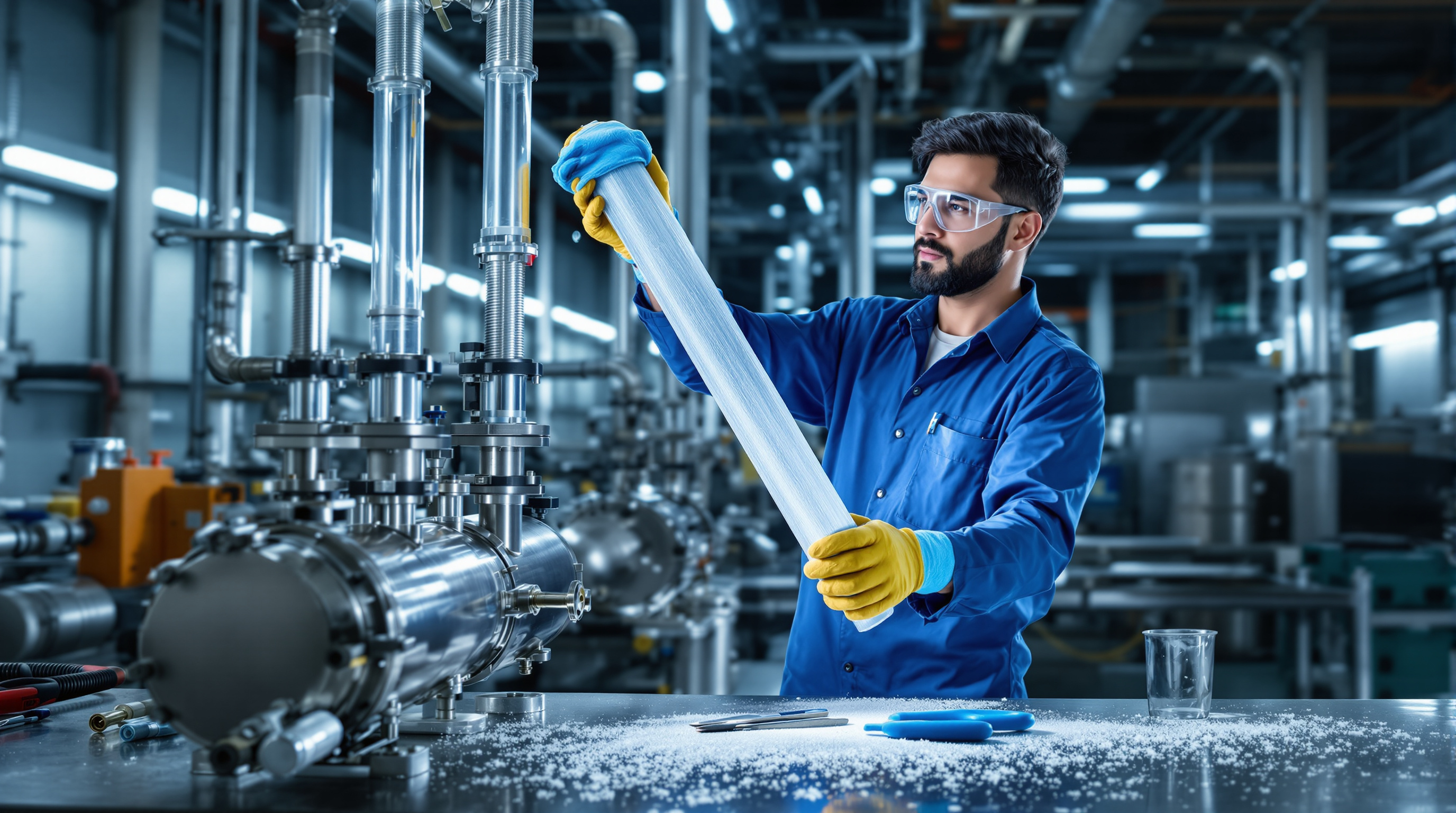
UV has no chemicals to manage, but it is not maintenance-free. Its weak spot is the quartz sleeve around each lamp. In sewage-derived water, a thin film of minerals, iron and organic matter steadily coats the sleeve — engineers call this fouling. A fouled sleeve blocks the very light the system relies on, and UV intensity can fall quietly by a third or more while the lamps still appear to be glowing normally. The water looks disinfected; it is not.
Sensible UV operation in an Indian STP means:
- Regular sleeve cleaning. Wiping or acid-cleaning the quartz sleeves on a routine schedule — weekly to monthly depending on water quality. Larger systems use automatic mechanical wipers.
- Lamp replacement on schedule. UV lamps do not burn out like a bulb; they age. Output drops gradually over roughly 9,000–12,000 hours (about a year of continuous use). A lamp still lit at 60% output is no longer delivering design dose and must be replaced.
- A UV intensity sensor. The single most valuable instrument on the unit — it watches the actual light reaching the water and alarms when fouling or ageing pulls the dose below target.
- Clean feed water. UV performance is only as good as the tertiary filtration ahead of it. Neglected filters are the most common reason a UV system silently under-performs.
UV versus chlorine: which to choose
Most Indian STPs disinfect with either UV or a chlorination system, and each has a clear personality.
| Factor | UV disinfection | Chlorination |
|---|---|---|
| Chemical handling | None — no storage, no dosing, no hazard | Chlorine stock to store, dose and handle safely |
| Residual protection | None — stops the instant water leaves the lamp | Leaves a residual that keeps working in tanks and pipes |
| By-products | None | Can form chlorinated by-products; needs care with reuse |
| Speed | Instant — contact in seconds | Needs a contact tank and holding time |
| Effect on virus & protozoa | Strong across a broad range | Weaker against some hardy organisms |
| Ongoing cost driver | Electricity + lamp replacement | Chemical consumption |
| Main weakness | Fouling; needs clear water; no residual | By-products; taste/odour; safety of stored chemical |
The deciding factor is usually residual. If treated water sits in a storage tank and travels through long flushing pipes before use, a chlorine residual guards against re-growth along the way — something UV cannot do. Many well-designed plants therefore use UV as the primary disinfectant and a small chlorine dose as a residual top-up on the way to storage, getting the chemical-free kill of UV with the lingering protection of chlorine. Where the treated water is used quickly and locally, UV alone is often enough — and cleaner.
Where UV fits in the bigger picture
UV disinfection is a small box at the end of a long train, but it is the box that makes reuse safe. Every stage before it — screening, aeration, settling, filtration — exists to hand UV water clear enough for light to do its work. Get the upstream plant right and UV rewards you with genuinely pathogen-free water, no chemicals, no residual, no fuss.
To see how the whole train fits together, walk the full STP process flow, or step back to the Sewage Treatment Plants guide library to explore each component in turn. And to fix the number every disinfection design starts from — your building's daily flow — spend a minute with the STP Capacity Calculator.
Export this guide
Related Guides — Deep-dive reading
Chlorination System in an STP: Disinfection Explained
The final disinfection step that kills the pathogens biology and filtration leave behind — how chlorine dosing, contact time and residual work together to make treated sewage safe to reuse or discharge, explained for owners and operators alike.
Sewage Treatment PlantsHow Does an STP Work? A Step-by-Step Explanation
Follow a single drop of sewage from the building drain to reusable water — through screening, settling, the living microbial heart of the plant, and final polishing — with every stage explained in plain language and no engineering background assumed.
Sewage Treatment PlantsThe Sewage Treatment Process Flow, Explained: Every Stage From Inlet to Reuse
Follow a drop of sewage through a typical STP — inlet, screening, aeration, clarifier, filtration, disinfection and reuse — as one connected flow, with a block diagram and a unit-by-unit table, in plain language.
Sewage Treatment PlantsRelated Tools — Try Free
Sewage Generation Calculator
Estimate the daily sewage a building generates and its peak flow in KLD from occupancy, LPCD, sewage return factor and peak factor.
STP CalculatorSTP Capacity Calculator
Size a sewage treatment plant in KLD from your building's occupancy — water demand, sewage generated and recommended STP capacity.
STP CalculatorFilter Sizing Calculator (PSF/ACF)
Size a pressure sand or activated carbon filter from flow and filtration rate to get vessel diameter, filter area and hourly design flow.
STP Calculator