
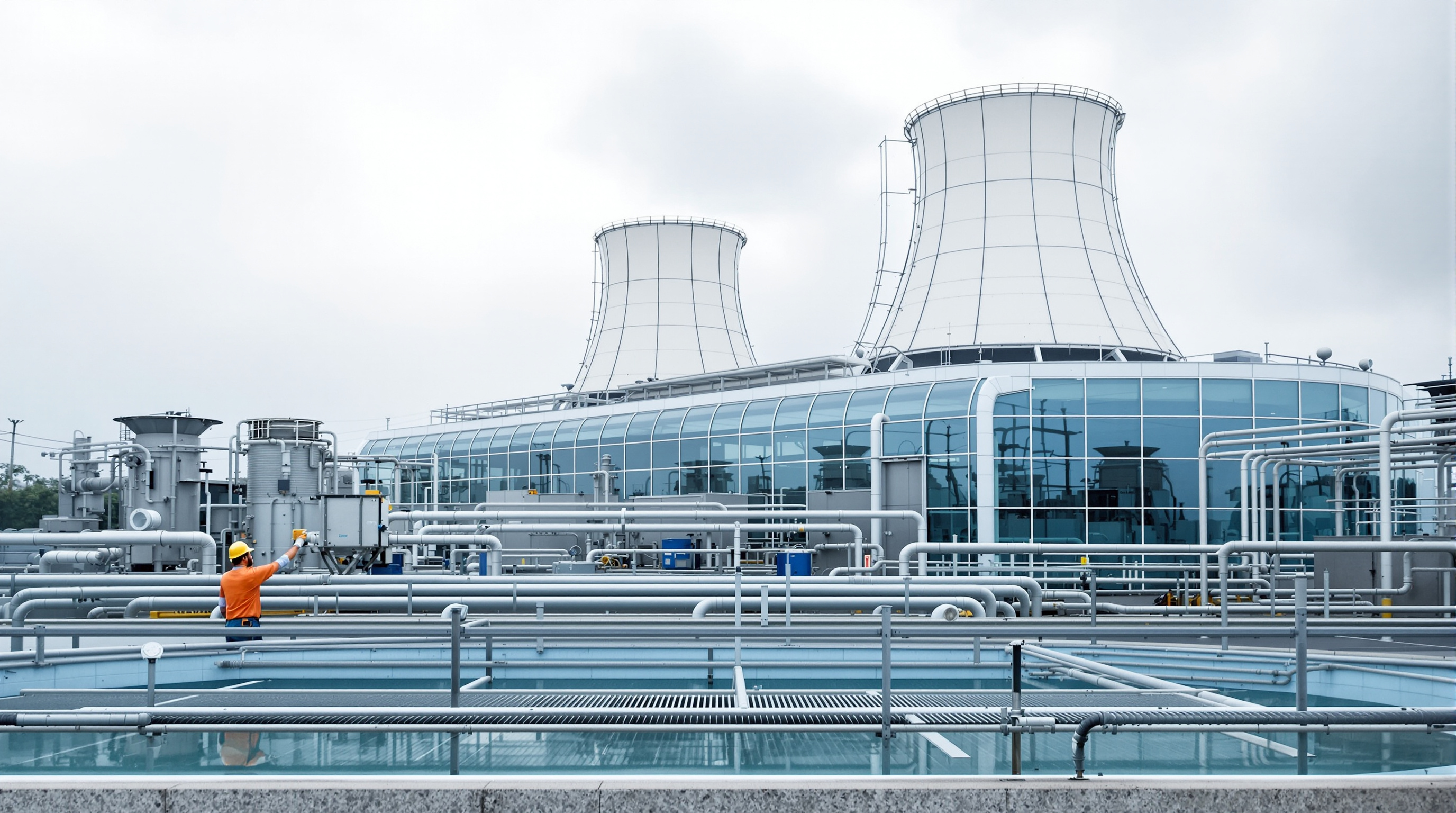
Treated Water for Cooling Towers: Using STP Water as Cooling-Tower Make-Up
How to reuse treated sewage as cooling-tower make-up water safely — the hardness, TDS and microbiology limits that matter, the scaling, corrosion and biofouling risks, and the tertiary treatment a commercial building needs to make it work.
In an air-conditioned office tower, IT park or mall, the single thirstiest machine on the property is usually the cooling tower. It evaporates water by the thousands of litres every hour to reject the heat the chillers pull out of the building — and every litre evaporated has to be replaced with fresh make-up water. For a large commercial complex that is one of the biggest single water demands on the site, often larger than flushing and landscaping combined.
Which raises an obvious question for anyone running an on-site sewage treatment plant: can the treated water feed the cooling towers instead of costly tanker or municipal freshwater? The answer is yes — this is one of the largest, most valuable reuse applications available to a commercial building — but cooling towers are a far fussier customer than a garden or a flush tank. Get the water quality wrong and you trade a water bill for a scaling, corrosion and biofouling problem that eats your chillers.
A cooling tower is a giant concentrator. It evaporates pure water and leaves every dissolved salt, every nutrient and every microbe behind — so whatever is in your make-up water gets multiplied several times over inside the system. Reuse only works when the treated water is clean enough to survive that concentration.
Why cooling towers are so demanding
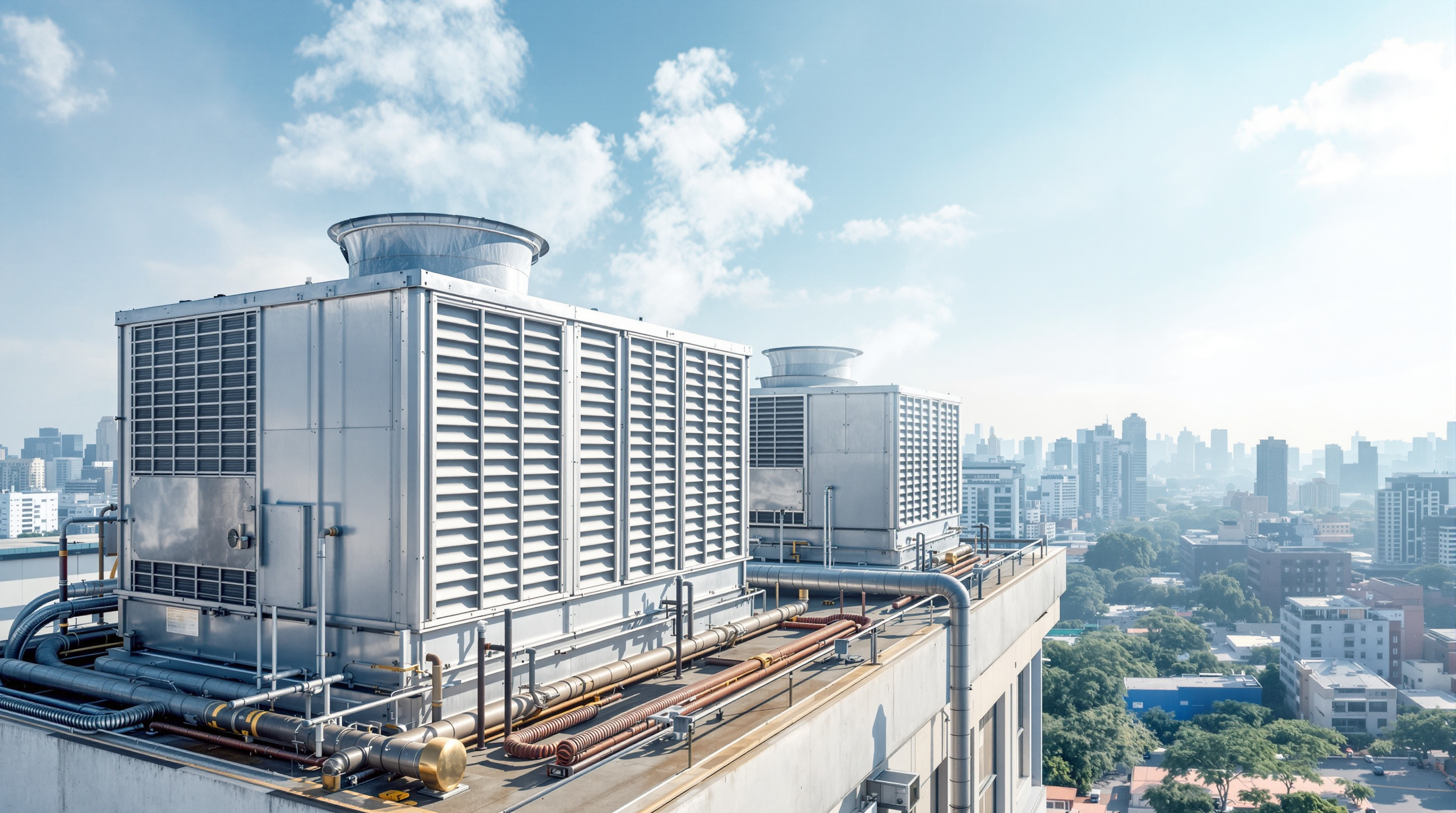
Unlike toilet flushing or landscape irrigation, where slightly hard or nutrient-rich water is harmless, a cooling tower recirculates the same water continuously and concentrates it. Engineers describe this with cycles of concentration (CoC) — the ratio of dissolved solids in the circulating water to the make-up water. Run at 4 cycles and the TDS, hardness and everything else in your make-up is roughly four times higher inside the tower.
That concentrating action turns three ordinary water-quality issues into three expensive failure modes:
- Scaling — calcium and magnesium hardness precipitate as hard scale on the hottest surfaces (the condenser tubes), insulating them and crippling heat transfer.
- Corrosion — high chlorides, sulphates and dissolved solids attack mild steel and copper, thinning pipes and tubes.
- Biofouling — this is the big one for treated sewage. Warm, oxygen-rich water plus leftover nutrients (nitrogen and phosphorus) plus sunlight is a perfect culture medium. Slime blocks nozzles, throttles flow, shelters Legionella, and dramatically worsens both scaling and corrosion underneath it.
Treated sewage is uniquely prone to the third problem, because even well-treated effluent carries residual organics and nutrients that a cooling tower will happily grow into a biofilm.
The quality targets that matter
There is no single national "cooling-tower water" standard the way there is for discharge, so most Indian designers work backward from the chiller and cooling-tower OEM's water-quality envelope and from long-established industry practice. The table below gives typical make-up targets for treated water headed to a cooling tower — directional values, not a substitute for your equipment maker's spec.
| Parameter | Typical make-up target | Why it matters |
|---|---|---|
| Total hardness (as CaCO₃) | < 130–200 mg/L | Drives scaling on condenser tubes; softening needed if high |
| TDS | < 500–1000 mg/L | Sets how many cycles you can run before corrosion/scaling |
| Chlorides | < 200 mg/L | Key corrosion driver, especially for stainless and copper |
| BOD / COD | BOD < 5–10 mg/L | Residual organics feed biofilm |
| Ammoniacal nitrogen | < 1–5 mg/L | Nutrient for microbes; also corrodes copper alloys |
| Phosphate | Low / controlled | Nutrient for biofilm; must be dosed, not arriving free |
| Turbidity / TSS | < 2–5 NTU | Suspended solids foul fill and heat-exchange surfaces |
| pH | 6.5–8.5 | Outside this band, scaling or corrosion accelerates |
| Microbiology | Very low counts | Legionella and slime-formers are a health and fouling risk |
Compare these against what a conventional secondary STP produces and the gap is clear. A standard MBBR or activated-sludge plant with basic chlorination might deliver BOD around 10–20 and turbidity well above 5 NTU, still carrying nutrients and hardness. That is fine for flushing; it is not fine for a chiller. Cooling-tower reuse is a tertiary-grade application.
The tertiary treatment you need
To take secondary-treated effluent up to cooling-tower grade, the plant needs a polishing train beyond the biological core described in how an STP works. The typical additions, in order:
- Deep filtration — an ultrafiltration (UF membrane) stage, or at minimum a well-run pressure sand filter, to pull turbidity and TSS down near zero. UF also strips most bacteria, which directly attacks the biofouling risk.
- Activated carbon — an activated carbon filter to remove residual organics, colour and odour that would otherwise feed biofilm.
- Softening or partial demineralisation — if incoming hardness or TDS is high, a softener (or a partial RO stream blended back) brings hardness and dissolved solids into the target band so you can run more cycles.
- Robust disinfection — chlorination to hold a residual in the tower loop, often paired with UV disinfection on the make-up line. A free-chlorine or biocide residual in the circulating water is non-negotiable for Legionella control.
- Chemical dosing at the tower — scale inhibitor, corrosion inhibitor and a biocide programme dosed into the recirculating water, tuned to the actual make-up chemistry.
For MBR-based plants the picture is easier: a membrane bioreactor already delivers very low turbidity and BOD, so it is often the shortest route to cooling-tower-grade water — frequently needing only softening (where hardness demands it) plus disinfection downstream.
Doing the water balance
Before committing, size the two flows against each other. A cooling tower's make-up demand is dominated by evaporation (roughly 1–1.5% of the circulating flow per 5.5°C of cooling range) plus blowdown (the bleed you deliberately dump to keep cycles under control) plus small drift losses. Against that sits your STP's treated-water output — typically 80–85% of building consumption.
For many commercial buildings the treated-water supply comfortably covers cooling make-up with surplus left for flushing and landscaping; for a heavily cooled data-centre or mall it may be the reverse. The Water Balance Calculator helps you match STP output against cooling, flushing and irrigation demand across the day, and the STP Capacity Calculator fixes the plant size those numbers depend on. One planning caution: cooling load is seasonal and daytime-heavy, while sewage generation is steadier — so you will still need buffer storage and, on peak summer days, a top-up source.
The economics
This is where cooling-tower reuse earns its keep. Cooling make-up is a large, continuous, year-round demand, and in most Indian metros bought-in water (municipal or tanker) is both expensive and unreliable. Replacing even a few lakh litres a month of freshwater make-up with treated water pays back the tertiary polishing kit quickly — and insulates the building's air-conditioning from water-supply disruptions.
The honest counter-entry is operating cost: the tertiary train (UF, carbon, softening) and the cooling-water chemical programme add power, membrane-replacement and dosing costs, plus tighter monitoring. Net, it is still strongly positive for most large commercial buildings, but it must be modelled, not assumed. The Water Reuse Savings Calculator and the STP Cost Estimator let you put rupee figures on both sides before you specify the plant.
Practical cautions before you commit
- Involve the chiller OEM early. Their warranty hinges on water quality; get their make-up spec in writing and design the treatment to meet it, not the other way round.
- Treat Legionella as a design input, not an afterthought. Nutrient-bearing reclaimed water in a warm tower is exactly the risk scenario; a documented biocide-and-residual regime is essential.
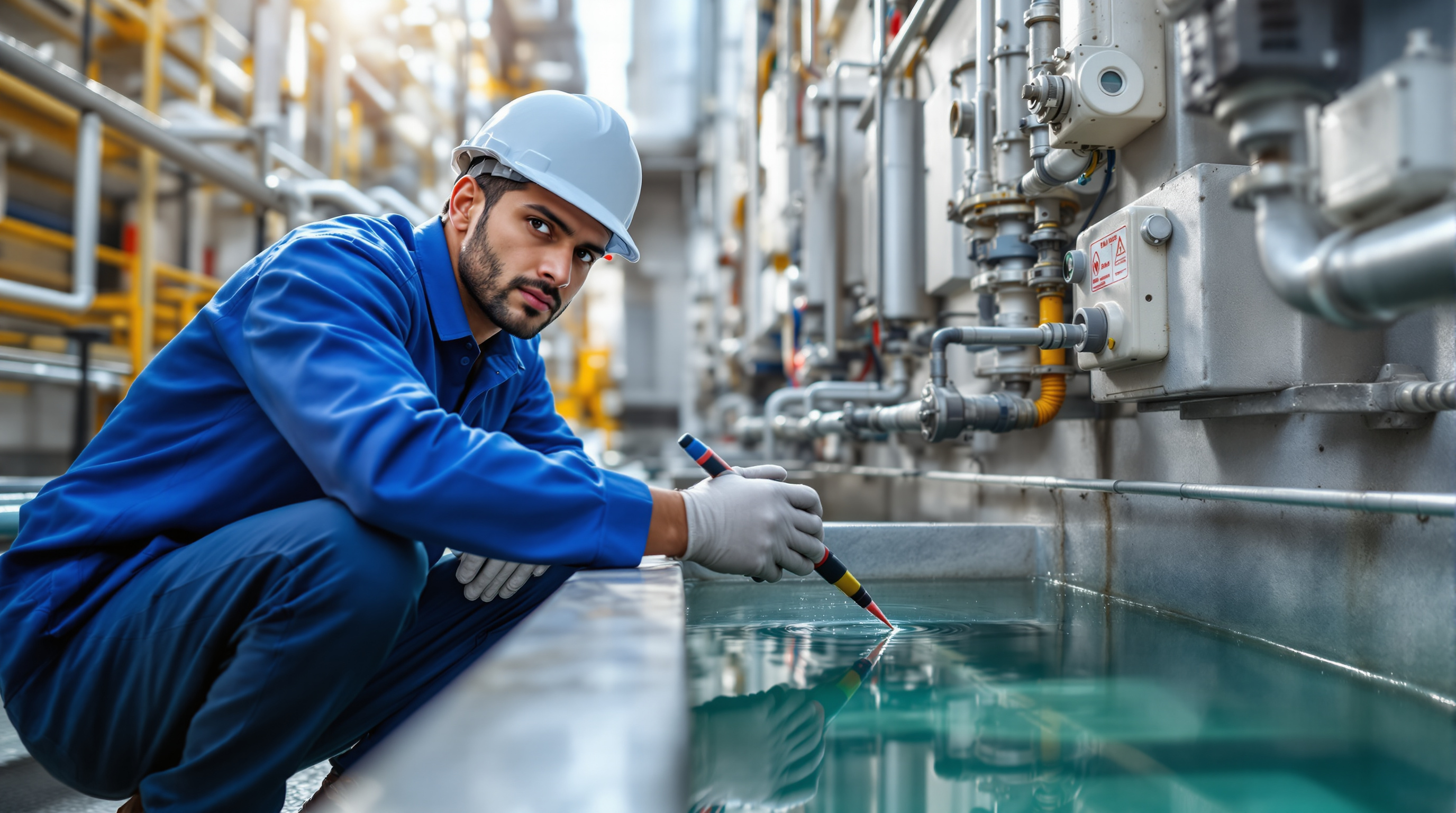
- Monitor continuously. Conductivity (as a TDS proxy), pH and residual chlorine should be logged — the instrumentation that makes this automatic is a small addition to the plant.
- Keep a fallback. Always design for a freshwater top-up so a treatment upset never starves the cooling towers.
The bottom line
Feeding treated water to cooling towers is one of the highest-value reuse routes an Indian commercial building has — but it is a tertiary-grade job, not a garden hose. Hit the hardness, TDS, nutrient and microbiology limits with proper polishing and disinfection, run a disciplined cooling-water chemical programme, and you convert your STP's output into the biggest single freshwater saving on the site. Skip the polishing, and you convert it into scaled tubes and slimed fill. The difference is entirely in the tertiary treatment and the monitoring behind it.
Explore the rest of the Sewage Treatment Plants guide library for the treatment stages and reuse routes that surround this one.
Export this guide
Related Guides — Deep-dive reading
STP for IT Parks & Campuses: Central-Plant Design, Reuse & Redundancy Guide
How to plan a campus-scale sewage treatment plant for a multi-building IT park in India — the daytime flow pattern, the right technology, sizing for a central plant, and a reuse network feeding landscape, flushing and cooling towers.
Sewage Treatment PlantsCommercial STP Cost Guide: Pricing for Hotels, Malls & Offices in India (2026)
What a commercial sewage treatment plant really costs to build and run — capacity bands, why higher reuse and tertiary polishing push the price up, and how cooling-tower and flushing reuse pays it back. Honest ranges, not false precision.
Sewage Treatment PlantsZero Liquid Discharge (ZLD): When No Water Leaves the Site
What zero liquid discharge actually means, the biological-plus-RO-plus-evaporator train that recovers nearly all the water and leaves only dry solids, why it is expensive and energy-hungry, when it is mandated, and the lighter near-ZLD options that make sense for most buildings.
Sewage Treatment PlantsRelated Tools — Try Free
Water Reuse Savings Calculator
Estimate the money you save by reusing STP-treated water instead of buying fresh supply, with daily, monthly and annual savings.
STP CalculatorWater Carbon Savings Calculator
Estimate the CO2 emissions you avoid each year by reusing treated water instead of fresh supply, with annual tonnes saved and a tree-equivalent.
SustainabilitySTP Water Balance Calculator
Map a building's water balance in KLD — fresh supply, sewage, treated-water reuse and discharge — and see what share of your sewage is reused.
Water Calculator