

Burglar Alarm Cost in India: Price Ranges, Fitting & Running Costs (2026)
What a burglar alarm actually costs in India, honestly: upfront equipment by tier and home size, installation labour, and the recurring costs of SIM, monitoring, AMC and batteries, all as indicative 2026 ranges.
Ask three installers what a burglar alarm costs and you will get three very different numbers, because they are quietly answering three different questions. One is pricing a boxed DIY kit you stick up yourself; another is quoting a wired panel with a day's labour; the third is bundling a multi-zone system with an app, a GSM dialler and a yearly contract. None of them is lying — the honest answer is a set of ranges, not a single figure, and the ranges move with your home size, the number of sensors, wired versus wireless, and whether anyone monitors the system after it is fitted.
This guide breaks the burglar alarm cost into the three buckets that actually matter: the upfront equipment, the one-time installation labour, and the recurring drip of SIM recharges, monitoring, maintenance and batteries that most quotes conveniently leave out. Every figure here is an indicative 2026 range, inclusive of GST where noted, and every one varies by city, brand and installer. It is the closing piece of Studio Matrx's burglar alarm hub — once you have chosen wired, wireless or hybrid, this is what it costs to own.
Scope & safety. This is a budgeting guide, not a fitting manual. Every price here is an indicative 2026 range that varies by city, brand, installer and how many sensors your home needs — treat them as a way to sanity-check a quote, never as a fixed rate to hold anyone to. Panel wiring, mains connection and drilling belong to a licensed installer or electrician; you plan the zones, decide the system and budget honestly. For a tailored number, use the burglar alarm cost estimator and the system selector. This is educational guidance, not legal advice.
The three buckets every honest quote splits
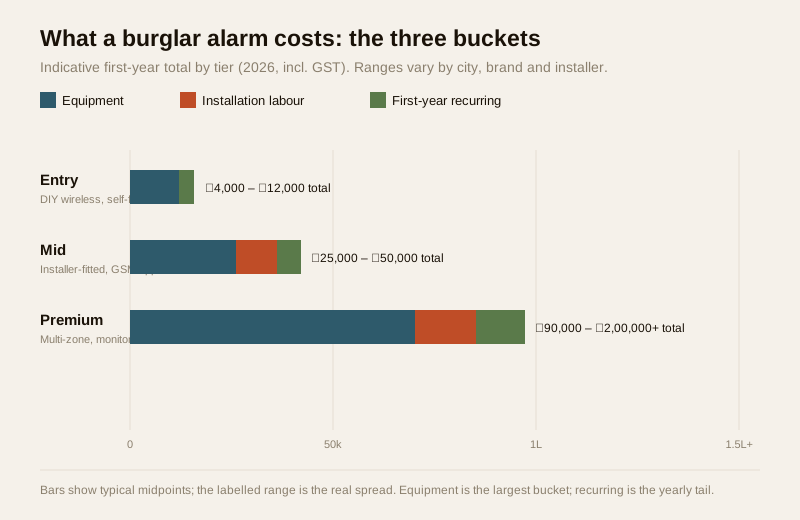
A burglar alarm is not a single purchase; it is three costs stretched over years. Confusing them is how people end up shocked at year two.
- Upfront equipment. The panel (or hub), keypad or key-fob, the sensors — door/window contacts, motion detectors, glass-break — the siren, and any GSM/app module. This is the number most ads shout about.
- Installation labour. A one-time charge to mount, wire (for a wired system), configure zones, connect power and commission the system. A wireless kit can cut this to near zero if you self-fit.
- Recurring running costs. The quiet ones: the GSM SIM recharge, any professional monitoring subscription, the AMC, and battery replacement. Skip these and the system slowly stops working.
Bucket 1: upfront equipment by tier
Equipment splits cleanly into three tiers. The jump between them is mostly about coverage (how many zones and sensors), whether it is wired or wireless, and whether it can reach you when you are away.
| Tier | What it is | Typical make-up | Indicative equipment cost (2026, incl. GST) |
|---|---|---|---|
| Entry | DIY wireless kit, self-monitored | Hub, 1 keypad/fob, 2–4 door/PIR sensors, siren; alerts by loud siren only or a basic app | ₹3,000 – ₹12,000 |
| Mid | Installer-fitted, wired or hybrid | Panel, keypad, 6–10 mixed sensors (door, PIR motion, glass-break), indoor + outdoor siren, backup battery | ₹12,000 – ₹40,000 |
| Premium | Multi-zone with GSM + app | Multi-zone panel, app control, 4G GSM dialler, dual-tech and pet-friendly sensors, panic buttons, strobe + siren, UPS-backed | ₹40,000 – ₹1,50,000+ |
Two things drive you up a tier. The first is zones and sensors — every extra door, window and room you protect is another contact or detector. The second is reach: a siren-only entry kit is deaf once you leave the street, while a GSM/app system tells you on your phone in Bengaluru that a sensor tripped in your Pune flat. That reach is the single biggest reason to spend up.
A note on the 2G sunset: India's 2G networks are being wound down, so any GSM dialler you buy in 2026 should be 4G. A cheap 2G module is not a saving — it is a system that will go silent when the network does.
Bucket 2: installation labour
Labour is where wired and wireless part ways sharply.
| System type | What the labour covers | Indicative labour cost (2026) |
|---|---|---|
| DIY wireless, self-fit | You mount stick-on sensors and pair them; no charge | ₹0 |
| Wireless, installer-fit | Professional mounts, configures zones, tests | ₹1,500 – ₹5,000 |
| Wired, new (retrofit) | Running cable through walls/ceilings, panel wiring, mains connection, commissioning | ₹5,000 – ₹25,000+ |
| Wired, during construction | Cabling laid with the electricals (cheapest time to wire) | folded into electrical work |
The cheapest wired system is one you plan before the plaster goes on — running alarm cable alongside the electrical wiring during construction costs a fraction of chasing walls later. A retrofit wired system in a finished home is the priciest to install because someone has to hide cable in a home that is already lived in. This is precisely the trade-off in the wired versus wireless decision: wireless trades a little long-term battery hassle for near-zero install disruption.
Labour, like equipment, carries GST, and a reputable installer will show it on the invoice. A quote with no GST line and no written scope is a quote to be wary of.
Bucket 3: the recurring costs nobody mentions
This is the bucket that ambushes people. A ₹15,000 system is not a ₹15,000 commitment — it has a yearly tail.
| Recurring item | What it is | Indicative cost (2026) | Notes |
|---|---|---|---|
| GSM SIM | Keeps the dialler/app connected | ₹150 – ₹300 / month, or ₹1,500 – ₹3,000 / year | Lapses silently — a dead SIM means no alert; use a long-validity or auto-recharge plan |
| Professional monitoring | A monitoring service watches alerts, runs a call-list | ₹3,000 – ₹15,000 / year where offered | Patchy availability in India; most homes self-monitor |
| AMC | Yearly service: testing, battery checks, faults | ₹1,500 – ₹8,000 / year | Worth it for larger/older systems; small kits can go pay-per-visit |
| Battery replacement | Sensor cells + panel backup battery | ₹100 – ₹500 per sensor; ₹1,000 – ₹3,000 panel battery | Sensor cells every 1–3 years; panel battery every 3–5 |
| Pay-per-visit repair | Call-out when something breaks (no AMC) | ₹500 – ₹2,000 per visit | The alternative to an AMC for small systems |
Two honest India realities sit inside this table. First, professional monitoring is not the norm here. There is no verified-alarm-to-police auto-dispatch in India — a human on the call-list verifies the alert and then dials 112 or 100, and in practice the society guard or a neighbour is the real first responder (see gated-community security and apartment security). So most homes self-monitor: siren plus a GSM/app alert to the owner and a call-list. That saves the monitoring subscription but puts the response on you.
Second, the SIM lapses without warning. A GSM alarm with a dead SIM looks armed but cannot call anyone — this is one of the commonest reasons a system fails on the night it matters. Budget the recharge as a fixed yearly line, not an afterthought, and prefer an auto-recharge or annual-validity plan.
Cost by home size
Coverage scales with the size of the home, because a bigger home has more doors, more windows and more rooms to cover. These are indicative first-year all-in ranges (equipment + install + first-year recurring), 2026.
| Home size | Typical coverage | Entry (self-fit wireless) | Mid (installer, GSM/app) | Premium (multi-zone, monitored) |
|---|---|---|---|---|
| 1 BHK / flat | Main door, 1–2 windows, 1 motion | ₹4,000 – ₹12,000 | ₹15,000 – ₹30,000 | ₹35,000 – ₹60,000 |
| 2–3 BHK | 2 doors, several windows, 2–3 motion | ₹8,000 – ₹18,000 | ₹25,000 – ₹50,000 | ₹50,000 – ₹90,000 |
| Villa / independent house | Multiple doors, perimeter, beam sensors, several zones | ₹15,000 – ₹35,000 | ₹45,000 – ₹90,000 | ₹90,000 – ₹2,00,000+ |
| Shop / small office | Shutter/door contacts, motion, silent/panic alerts, siren | ₹10,000 – ₹25,000 | ₹30,000 – ₹70,000 | ₹70,000 – ₹1,50,000 |
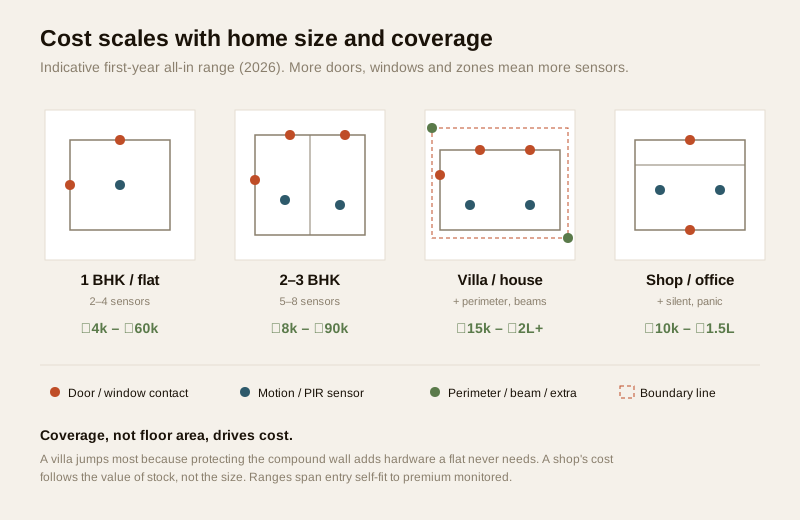
A villa or independent house is the steepest jump, because protecting the boundary — perimeter and beam sensors across a compound wall or gate — adds hardware a flat simply does not need. A shop's cost is driven less by size than by what it holds: high-value stock justifies a silent alarm and panic buttons alongside the audible siren.
What drives the price up or down
Two homes the same size can differ two-fold. The levers:
- Number of zones and sensors. The biggest single driver. Each extra door or window contact, motion detector or glass-break sensor adds hardware and configuration. Plan zones deliberately — see alarm zoning — rather than over-buying sensors for rooms that never need arming.
- Wired vs wireless. Wireless saves on labour but adds battery replacement over time; wired costs more to fit (much more as a retrofit) but has no sensor batteries. The hybrid middle path wires what is easy and goes wireless where cabling is painful.
- Monitoring. Self-monitored is free to run but leans on you; professional monitoring adds a yearly fee where it is even available.
- Brand and build quality. A known brand with a real datasheet, proper backup battery and 4G module costs more than a no-name kit — and false alarms from a flaky cheap sensor cost you in call-outs and lost trust. Fewer, better sensors, correctly placed, beat many cheap ones.
- Reliability extras. Backup battery and UPS matter in India's constant power cuts: a system that dies with the evening load-shedding, or false-triggers on a power blip, is a false economy. Good false-alarm prevention — correct placement, pet-friendly sensors, entry/exit delays — is itself a cost saver, because every false alarm erodes the will to keep the system armed.
The value framing: cost against a break-in
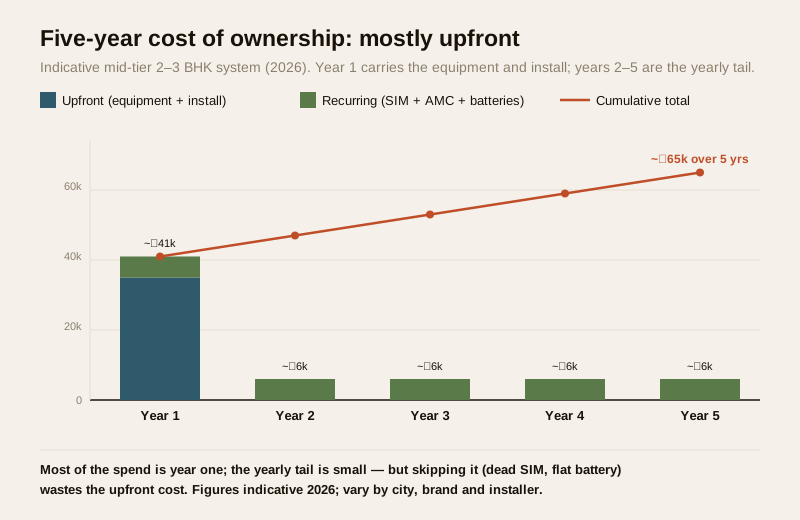
It helps to weigh the yearly cost against what it guards. A mid-tier 2–3 BHK system might run ₹25,000–₹50,000 in year one and a few thousand rupees a year after. Against that sits the loss from a single break-in — jewellery, electronics, cash and the harder-to-price sense of safety — which routinely runs into lakhs, plus the disruption of a police complaint and insurance claim. An alarm does not guarantee nothing is ever taken, but a loud siren and an instant app alert turn an unhurried burglary into a rushed, interrupted one, and often send an intruder looking for an easier target.
Framed that way, the recurring costs — the SIM recharge, the AMC, the battery — are not the expensive part. The expensive part is a system that was fitted, then quietly allowed to die: a lapsed SIM, a flat battery, a sensor no one ever tests. The running budget exists to keep the upfront spend from becoming a wasted one.
Reading a quote honestly
When you compare two quotes, make them comparable first:
- Ask for equipment, labour and GST as separate lines, plus a sensor count and where each goes.
- Ask what is recurring: SIM plan, monitoring fee (if any), AMC, and the expected battery-replacement cycle.
- Confirm the GSM module is 4G, not 2G.
- Check the backup battery / UPS is included and sized for your typical power cut.
- Get the AMC terms in writing — visits per year, response time, whether parts are included.
The cost estimator turns your home size and sensor count into a tailored range you can hold a quote against, and the system selector helps you decide wired, wireless or hybrid before you price anything.
When to bring in a professional. You plan the zones, decide the tier and set the running budget. Hand panel wiring, mains connection, drilling, cable runs and commissioning to a licensed installer or electrician — see the electrical hub. Get the quote itemised (equipment, labour, GST) and the AMC terms in writing before you sign. For the fuller picture of designing a system rather than just pricing it, start from the complete burglar-alarm guide and the wider home-security guide.
Key takeaways
- There is no single price — a burglar alarm cost is three buckets (upfront equipment, one-time installation labour, and recurring running costs), and every figure is an indicative 2026 range that varies by city, brand and installer.
- Equipment splits by tier: an entry DIY-wireless kit runs ₹3,000–₹12,000, a mid installer-fitted system ₹12,000–₹40,000, and a premium multi-zone GSM/app system ₹40,000–₹1,50,000+; reach (app/GSM alert) is the biggest reason to spend up.
- Cost scales with home size and coverage — a 1 BHK needs a handful of sensors while a villa adds perimeter and beam hardware; the number of zones and sensors is the single largest price driver.
- The recurring tail is real: budget the GSM SIM recharge (it lapses silently), the AMC or pay-per-visit, and battery replacement — most Indian homes self-monitor because there is no verified auto-dispatch to police.
- Weigh it against a break-in loss, not against zero — the wasteful spend is a system fitted and then left to die on a dead SIM or flat battery; use the cost estimator to sanity-check any quote.
References
- Manufacturer specifications and datasheets — verify sensor counts, battery type and life, backup-battery capacity, and that any GSM dialler is 4G on the maker's own datasheet before ordering; prices quoted here are indicative 2026 ranges only, not manufacturer rates.
- National emergency response — in India an alarm alert is verified by a person who then dials 112 (or 100); there is no verified-alarm auto-dispatch, so budget for self-monitoring and a call-list. See https://112.gov.in/
- National Building Code of India (SP 7) and Bureau of Indian Standards for any electrical, wiring or mains-connection aspect of an install; verify the current edition via the BIS catalogue: https://www.services.bis.gov.in/
This is an educational overview, not legal or financial advice. All prices are indicative 2026 ranges that vary by city, brand and installer — get a written, itemised quote. Panel wiring, mains connection and any electrical work are qualified professional tasks; engage licensed installers and verify any standard's current status via the BIS catalogue before relying on it.
Export this guide
Related Guides — Deep-dive reading
How to Choose a Burglar Alarm in India (2026): Sensors, Alerts and What Actually Matters
A homeowner's guide to selecting an intruder alarm that fits your flat, villa or shop and alerts you the way you want — matching the sensor mix, control panel and the big siren-versus-monitored decision to your real risk, and dodging the false-alarm traps that make people switch systems off.
SecurityFalse Alarm Prevention for Burglar Alarms in India: Causes & Fixes (2026)
Why home alarms cry wolf — ceiling fans, pets, heat, insects, weak batteries, power blips and poor door alignment — and how correct placement, the right sensors and simple upkeep keep the system trusted and armed.
SecurityWired Burglar Alarms in India (2026): The Reliability Benchmark
Why a hardwired alarm — every sensor on a cable back to the panel — is the set-and-forget benchmark for reliability, when it is the right call, and the honest trade-offs of running it in an Indian home.
SecurityRelated Tools — Try Free
Security System Cost Estimator
Estimate the all-in capex with GST, annual running cost and 5-year total cost of ownership of a home or building security system.
Cost EstimatorApartment Video Door System Planner
Enter flats, entrances, floors and guard desk for a first-pass building intercom plan — door stations, indoor monitors, guard station, the right architecture and an indicative cost band.
Building PlannerBurglar Alarm System Selector
Answer a few questions about your property, cabling, coverage, monitoring and power and get the right burglar alarm — wired / wireless / hybrid, self or professionally monitored — with the design non-negotiables.
Alarm Selector