
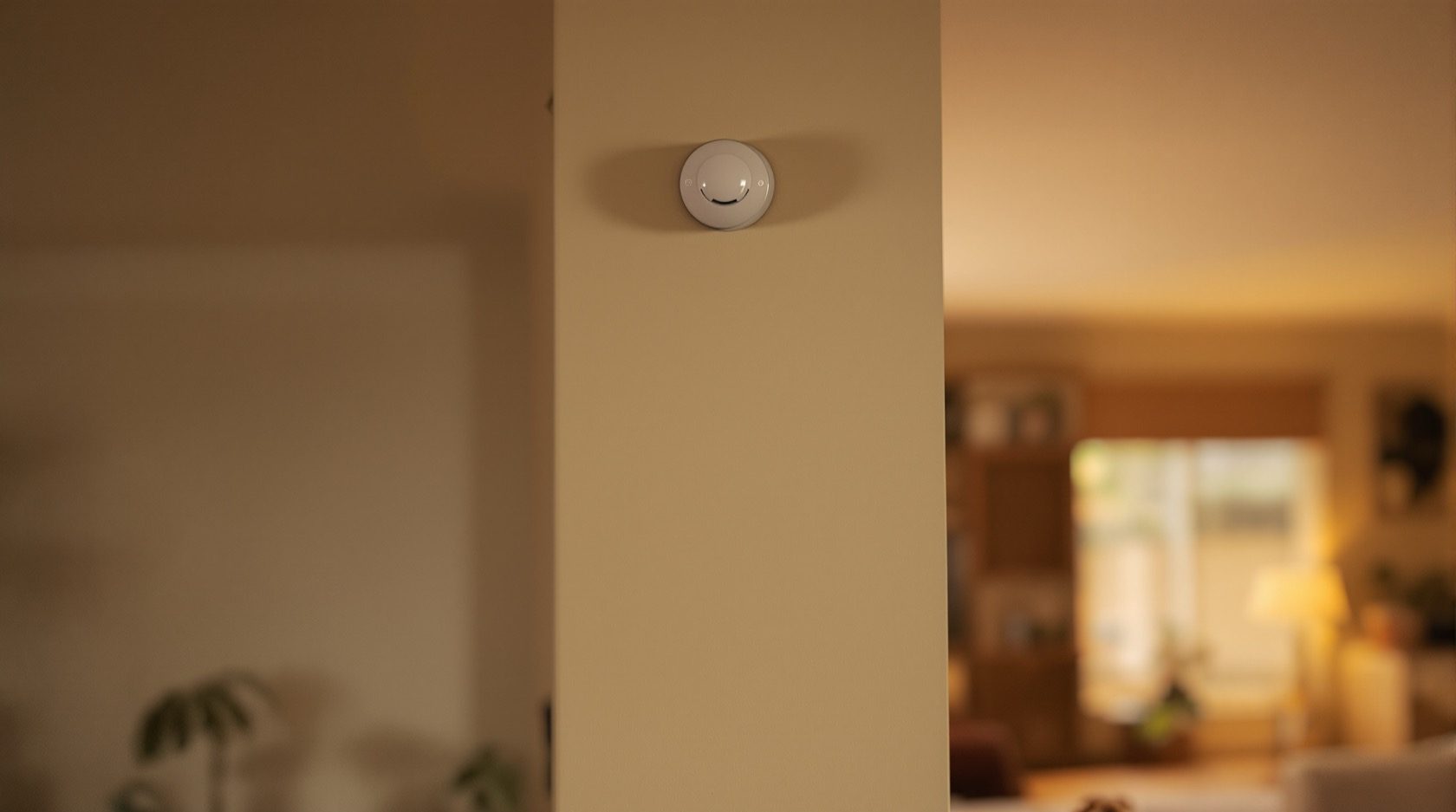
Pet-Friendly Motion Sensors in India (2026): Alarms That Ignore the Dog
How pet-immune PIR sensors let you arm the alarm at night without the dog or cat setting it off, and how to choose, weight-rate and place them so the system stays trusted.
Ask any installer why a household stopped arming its brand-new alarm, and the answer is almost always the same: the pet kept setting it off. The dog wandered into the hall at 2am, the sensor saw a warm moving body, the siren went, the neighbours woke, and within a week the family gave up and left the system disarmed. An alarm that is never armed protects nothing.
Pet-friendly motion sensors — more precisely, pet-immune passive-infrared (PIR) sensors — exist to solve exactly this. They are built to see a person but ignore a cat or a dog below a stated weight, so you can arm the house at night with the pet loose inside and still get a real alert if someone climbs in. This guide explains how that immunity actually works, where its honest limits are, and — the part that decides success or failure — how to place the sensor so the pet stays out of the human-detection band. It sits inside the Studio Matrx motion-sensor family and the broader burglar-alarm hub.
Scope & safety. This guide helps you choose and position sensors well and hold your installer to a good layout. Mounting a sensor at the specified height, and any wiring back to the panel or the mains, is a licensed professional's job — see the electrical hub. Where a sensor "sees" inside your home touches privacy, so keep motion sensors to shared living areas, not bathrooms or bedrooms you would not want recorded, in the spirit of the Digital Personal Data Protection Act, 2023. This is educational guidance, not legal advice.
Why pets and alarms fight — and why it matters in India
Indian homes are increasingly pet homes. Dogs and cats roam the house at night, exactly when the alarm is armed and everyone is asleep. A standard motion sensor cannot tell the difference between a burglar and a beagle: both are warm, both move. The result is the single most common cause of a distrusted alarm — the false alarm, which we cover in prose throughout, and which the motion-sensor overview treats as the enemy to design out.
This matters more in India for three grounded reasons:
- Most Indian alarms are self-monitored. The siren sounds and a GSM or app alert reaches your phone; there is rarely a monitoring station with police auto-response. So every false alarm is your 2am problem, and after a few you simply stop arming.
- Summer heat erodes the safety margin. A PIR works by contrast between a warm body and the cooler background. In a 45-degree Indian summer the background is already hot, contrast falls, and a poorly chosen sensor gets twitchy — more reason to buy a good one and place it well.
- Homes are compact and full of pet routes. Sofas against walls, open staircases, cat shelves and window sills mean a pet can easily climb to human height, which — as we will see — is the one thing that defeats pet immunity.
How a PIR sees — and how pet immunity is engineered
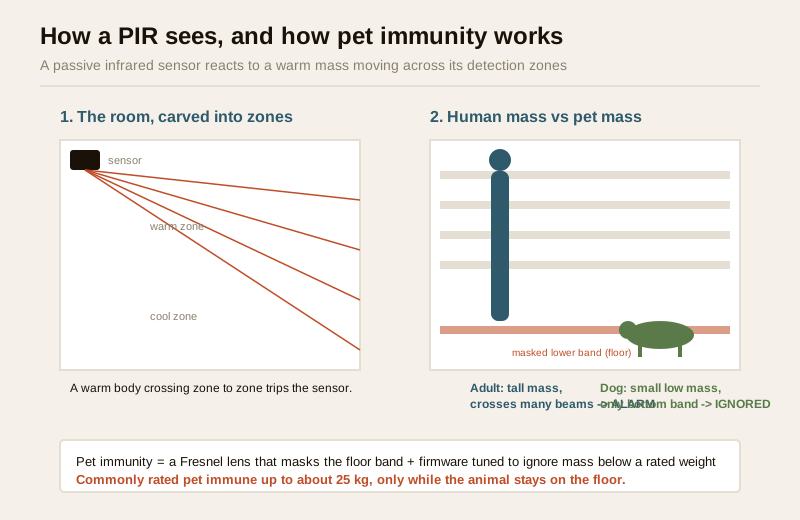
A PIR sensor is passive: it emits nothing, it simply watches the infrared heat of the room. In front of the sensor sits a Fresnel lens, a moulded plastic lens divided into many small facets. Each facet focuses one narrow slice of the room onto the pyroelectric element, so the room is carved up into a fan of detection "beams" or zones. When a warm body crosses from one zone into the next, the heat signal on the element changes, and that change — a warm mass moving across the pattern — is what trips the sensor.
Pet immunity is achieved by combining two design choices:
1. A specially shaped Fresnel lens that masks the lower detection zone. The lens is engineered so that the beams which sweep the floor — roughly the bottom band where a cat or dog lives — are weakened or left out. The sensor's "seeing" is concentrated in the upper band where a standing human torso passes. The lower the animal, the less of it the sensor ever looks at.
2. Signal processing tuned to the infrared mass of the target. A standing adult presents a large, tall heat signature that crosses several zones at once; a dog on the floor presents a small, low signature crossing only one or two low zones. Pet-immune firmware is tuned to fire on the large multi-zone signal and to ignore the smaller single-zone one — up to a stated animal weight.
That stated weight is the number on the box: commonly pet immune up to about 25 kg on domestic sensors, with some rated to smaller thresholds (7–18 kg) and a few to 35–45 kg. The rating is not a promise about one specific dog; it is the mass of infrared signal below which the sensor is designed to stay quiet, provided the animal stays on the floor. That proviso is the whole game, and placement is how you honour it.
Choosing a pet-friendly sensor: respect the rating
Buying is the easy half. Match the sensor to the animals actually in the house, with headroom.
| If your pet is | Look for | Note |
|---|---|---|
| One cat or a small dog (up to ~10 kg) | Pet immune up to 18–25 kg | Comfortable margin; the usual domestic sensor |
| A medium dog (10–25 kg) | Pet immune up to 25 kg, ideally a notch higher | Stay under the rating with margin; two pets add up |
| A large dog (over 25 kg) | A higher-rated pet sensor, or a different tactic | See the honest-limits section — often better to zone the pet out |
| Two or more pets that move together | Rate for the combined mass, or reduce coverage low down | Two dogs crossing together read as one larger mass |
A few buying pointers grounded in Indian conditions:
- Do not over-buy field of view. A very wide 110-degree lens sweeping a big open-plan room sees more pet routes. A narrower "corridor" or "curtain" lens aimed along a hallway the pet rarely uses can be a cleaner choice.
- Look for adjustable sensitivity and pulse count. A sensor that lets the installer require two zone crossings before it fires is far calmer around a single ceiling-fan draft or a passing pet.
- Prefer wireless for retrofit, wired for a new build. The trade-offs are covered in wireless, wired and hybrid alarm guides; pet immunity is a property of the sensor head, available in all three.
- Mind the heat. In hot rooms, a sensor with temperature compensation holds its contrast better through an Indian summer.
The burglar-alarm system selector can help you shortlist a kit; then match each room's sensor to that room's pets.
Placement is everything: keep the pet in the lower band
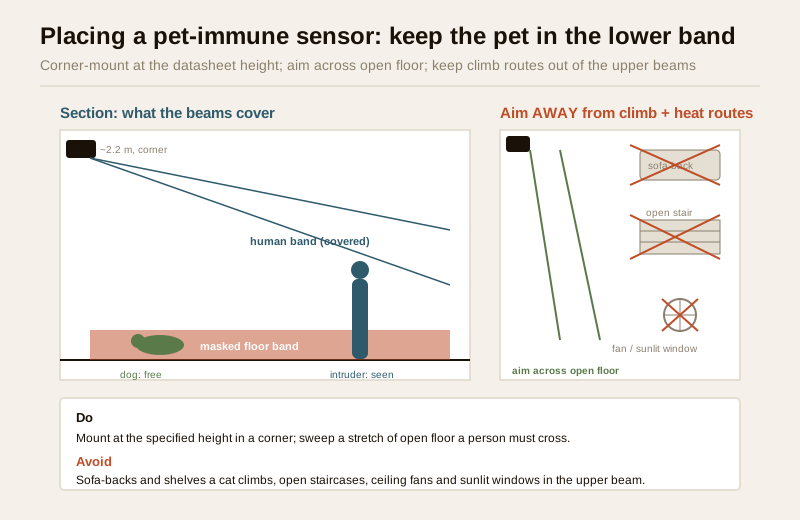
Here is the rule that decides whether a pet-immune sensor works: the pet must stay in the masked lower zone and never rise into the human-detection band. A cat on the floor is invisible; the same cat on top of the sofa is now at torso height, squarely in the beams meant for a burglar, and it will trip the alarm. Pet immunity is a floor-level promise, and your job is to make sure the pet's world stays on the floor within the sensor's view.
Translate that into concrete placement:
- Mount at the height the datasheet specifies — typically around 2 to 2.3 m, in the corner of the room. Too low and the masked floor band lifts up to swallow furniture the pet climbs; too high and you lose a human near the far wall. Follow the maker's figure, not a guess.
- Aim the sensor so climbable furniture, stairs and cat-jump routes fall OUTSIDE the upper beams. Point it across a stretch of open floor a person would have to cross, not straight at the sofa-back, the staircase, or the shelf the cat patrols. If the cat's favourite high perch sits in the beam, the perch — not the pet — is the problem to design around.
- Watch the open staircase. A pet trotting up an open stair rises steadily into the human band step by step. Either keep the stair out of the sensor's cone, or protect the stairwell a different way (below).
- Keep drafts and heat sources out of view. Do not aim a PIR at a ceiling fan, an air-conditioner vent, a window with direct sun, or a kitchen doorway. Moving hot air and sun patches cause false alarms that have nothing to do with pets, as the PIR guide explains.
- Corner-mount for a clean sweep. A corner gives the widest human coverage across open floor while keeping the low pet band consistent.
The honest limits — stated as placement guidance, never evasion
A pet-immune sensor is a tuned instrument, not a magic wand, and being straight about its edges is what keeps your system trusted. These limits are buying-and-placement facts, not tricks:
- A pet over the rating is over the rating. A large dog heavier than the sensor's weight threshold presents a human-sized infrared mass and can legitimately trip it. The answer is not a bigger sensitivity fudge; it is a different design (below).
- A pet that climbs to human height defeats the immunity. As stressed above, the masking only works at floor level. Cats especially will find the highest perch in the room; if that perch is in the beam, expect trips.
- Immunity and sensitivity pull against each other. Turning sensitivity up to catch a distant intruder also makes the sensor more likely to notice the pet; a good layout lets you keep sensitivity honest without leaning on the pet setting.
- Heat closes the margin. On the hottest days, reduced contrast can make a marginal sensor behave worse around pets. Placement away from heat and a temperature-compensated sensor buy that margin back.
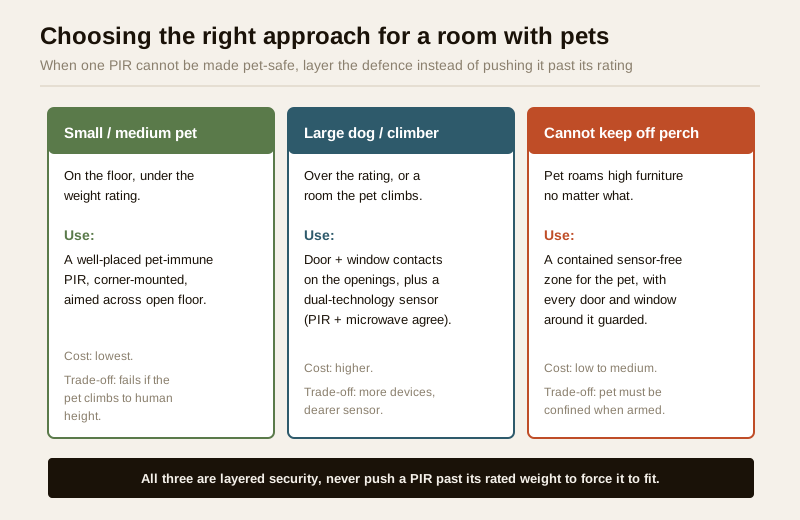
When a room genuinely cannot be made pet-safe with a single PIR, you have three clean, defensive options — each strengthens the system rather than weakening it:
1. Guard the openings instead of the room. Door sensors and window sensors fire when an entry point actually opens, and a pet cannot open a latched door or window. In a room the pet owns, perimeter contacts plus a perimeter-first design can carry the load with no interior motion sensor at all.
2. Use a dual-technology sensor in the tricky room. A dual-technology sensor requires BOTH a PIR and a microwave channel to agree before it alarms, which sharply cuts false trips from a pet, a fan or a sun patch — at higher cost. It is the right tool for a large-dog room or a hall full of drafts.
3. Give the pet a sensor-free zone. Confine the pet to one room or a crate when the alarm is armed, and leave that room off the interior-motion zones while every door and window around it stays protected. A calm, contained pet plus contacts on the openings is often the simplest reliable answer.
None of these is a compromise on security — they are the layered approach the layered-security design guide recommends: rings of protection so no single sensor's limit leaves a gap.
Commissioning: walk-test with the pet in mind
A pet-immune sensor is only proven once you have watched it behave. After the installer mounts and aims it:
- Walk-test the human coverage. Move through the room as an intruder would, at full height, and confirm the sensor catches you across the whole floor it is meant to guard. Check the far corners and the entry path.
- Live with it disarmed for a few nights and watch the event log. Most panels and apps record every motion trigger. Let the pet roam with the system in a test or chime mode and read the log: if the sensor is logging the pet, you can see when — usually the moment it climbs onto something — and re-aim before you ever arm for real.
- Re-test after you rearrange furniture. Move the sofa under the sensor and you may have just built a cat-ramp into the human band. Any change to climbable furniture near a sensor is a reason to walk-test again.
This patient tuning is exactly what separates a system the family trusts and arms every night from one that gets abandoned. For the wider picture of how motion sensors fit alarms in flats and houses, see the apartment and villa security guides and the complete burglar-alarm pillar.
When to bring in a professional. Choosing the sensor, deciding where it points, and walk-testing it are yours to own. Hand the mounting at height, the wiring back to the panel, any mains-connected power, and the final sensitivity/pulse-count tuning to a licensed installer or electrician — see the electrical hub. If a room has a large dog or a determined climber, ask your installer specifically about door/window contacts and a dual-technology sensor for that room rather than pushing a single PIR past its rating.
Key takeaways
- Pet-friendly motion sensors ignore a dog or cat below a stated weight (commonly pet immune up to about 25 kg) so you can actually arm the house at night — because the number-one reason Indian families stop arming is the pet false alarm.
- The immunity is engineered two ways: a Fresnel lens that masks the lower, floor-level detection band, plus signal processing tuned to fire on a large human infrared mass and ignore the smaller low mass of a pet.
- Respect the weight rating with margin — rate for the combined mass of all your pets, and prefer adjustable sensitivity, a temperature-compensated sensor for hot rooms, and a lens no wider than the room needs.
- Placement is the whole game: mount at the datasheet height, aim across open floor, and keep climbable sofas, open stairs and cat perches OUT of the upper beams — a pet at human height defeats the immunity.
- State the limits honestly and layer: for a dog over the rating or a room the pet climbs, use door and window contacts, a dual-technology sensor, or a contained pet-free zone — never push a PIR past its rating.
References
- Manufacturer datasheets — verify the pet-immunity weight rating, the specified mounting height, the lens field of view, and any temperature-compensation and pulse-count settings on the maker's own specification sheet before buying or installing.
- Digital Personal Data Protection Act, 2023 — motion sensors observe movement inside the home; confine indoor sensors to shared living areas and treat any logging of household movement as personal data to be handled with care.
- National Building Code of India (SP 7), Bureau of Indian Standards, and local bye-laws for any low-voltage or mains wiring associated with an alarm install; confirm the current edition via the BIS catalogue: https://www.services.bis.gov.in/
This is an educational overview, not legal advice. Mounting at height, cabling and any electrical work are qualified professional tasks — engage licensed installers and verify a sensor's pet-immunity rating on the manufacturer's datasheet before relying on it.
Export this guide
Related Guides — Deep-dive reading
False Alarm Prevention for Burglar Alarms in India: Causes & Fixes (2026)
Why home alarms cry wolf — ceiling fans, pets, heat, insects, weak batteries, power blips and poor door alignment — and how correct placement, the right sensors and simple upkeep keep the system trusted and armed.
SecurityHow to Choose a Burglar Alarm in India (2026): Sensors, Alerts and What Actually Matters
A homeowner's guide to selecting an intruder alarm that fits your flat, villa or shop and alerts you the way you want — matching the sensor mix, control panel and the big siren-versus-monitored decision to your real risk, and dodging the false-alarm traps that make people switch systems off.
SecurityMotion Sensors for Home Security in India (2026): The Complete Guide
The umbrella guide to indoor motion detection: how PIR, microwave, dual-technology and ultrasonic sensors work, where to place them in an Indian home, and how good placement designs out false alarms from fans, AC, heat and pets.
SecurityRelated Tools — Try Free
Full-Room BOQ — Living, Bedroom, Kitchen, Bath
Room-wise BOQ across living, bedrooms, kitchen, utility, and bathrooms with line-item pricing.
Full-Room BOQApartment Furniture Size Chart
Standard furniture dimensions for Indian apartments — sofas, beds, tables, dining, storage.
Reference ChartBurglar Alarm System Selector
Answer a few questions about your property, cabling, coverage, monitoring and power and get the right burglar alarm — wired / wireless / hybrid, self or professionally monitored — with the design non-negotiables.
Alarm Selector