

Alarm Zoning for Indian Homes: Partitions, Perimeter & Staged Arming (2026)
How to divide a home or building into alarm zones and partitions so you can arm the perimeter at night while people sleep inside, arm everything when out, and keep panic and fire zones live around the clock.
A burglar alarm is only as clever as the way you divide the building it protects. Bolt every sensor onto a single on/off switch and you get an all-or-nothing box: armed, and you cannot walk to the kitchen for water at 2 a.m. without the siren screaming; disarmed, and the whole house is blind while you sleep. Almost every "the alarm is more trouble than it is worth" story in India traces back to a system that was never zoned.
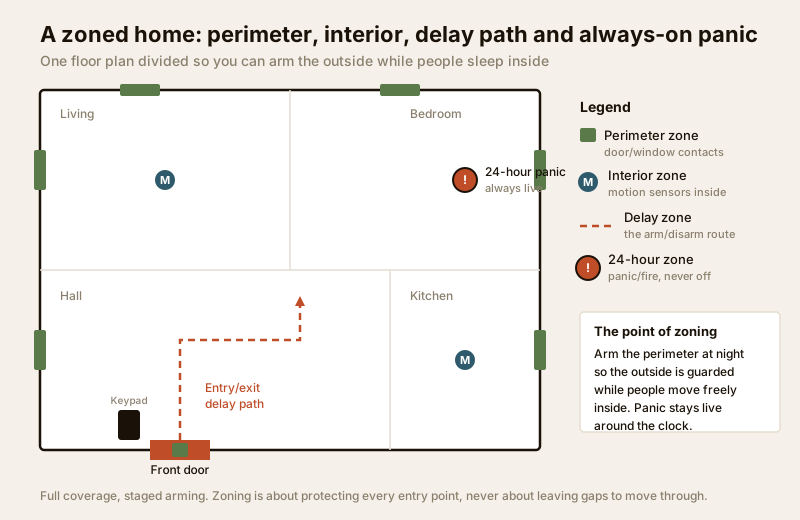
Alarm zoning is the practice of dividing a home or building into separate protected areas — zones and partitions — so the panel can arm them in intelligent combinations. Arm just the outer shell at night while the family sleeps inside. Arm everything when the house is empty. Keep panic and fire always live, day and night, whatever else is on or off. Done well, zoning does two jobs at once: it gives you fuller, smarter protection, and it slashes the false alarms that make people stop using their system. This guide is part of the Studio Matrx burglar alarm hub and sits alongside its siblings on false-alarm prevention, installation, maintenance and cost.
Scope & safety. This guide helps you plan how a system should be divided and armed; the panel programming, wiring and mains connection belong to a licensed installer or electrician — see the electrical hub. Zoning is strictly about designing full coverage and staged arming so every entry point is watched. It is never about leaving areas unprotected to move through undetected, and nothing here explains how to defeat a sensor. A 24-hour panic or fire zone must never be defeated by an arming choice, and security hardware must never block a fire-escape route. This is educational guidance, not legal advice.
What a "zone" actually is
On an alarm panel, a zone is a single input the panel watches — usually one sensor or a small group of sensors wired or paired together and given a name, such as "front door," "living-room PIR" or "rear windows." When a zone is triggered while it is armed, the panel reacts according to the type you assigned that zone. The whole art of zoning is choosing sensible zones and giving each the right type.
A partition is a bigger idea: a group of zones the panel can arm and disarm as one independent sub-system, with its own keypad and code. Think of a partition as a separate "virtual alarm" inside the same panel. A shop on the ground floor and a home above it are the classic Indian case — the shopkeeper arms the shop partition at closing time without touching the home partition upstairs, and vice-versa. Not every home needs partitions, but every home benefits from zones.
The building blocks are the sensors themselves — door sensors, window sensors, motion sensors and their PIR and dual-technology variants, glass-break sensors and outdoor beam sensors. Zoning is what turns that scatter of sensors into a coordinated system.
The five zone types
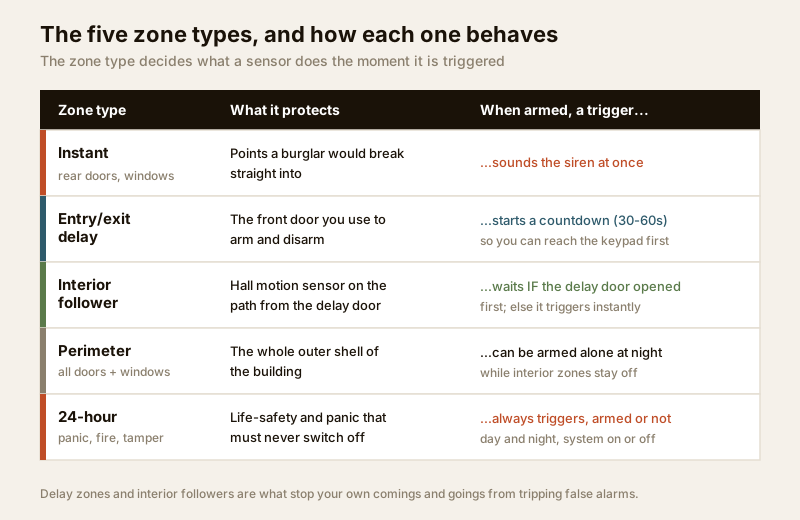
The single most useful thing to understand about zoning is that a sensor's type decides what happens the instant it is triggered. Five types cover almost every home and small building.
| Zone type | Where it goes | Behaviour when armed |
|---|---|---|
| Instant (burglary) | Rear doors, windows, sensors a burglar hits directly | Triggers the siren immediately, no delay |
| Entry/exit delay | The one door you use to arm and disarm | Starts a countdown (typically 30–60s) so you can reach the keypad before the siren sounds |
| Interior follower | A hall or lobby PIR on the path from the delay door | Stays silent if the delay door was opened first (you are on your way to disarm); triggers instantly otherwise |
| Perimeter | All outer doors and windows as a group | Can be armed on its own (night mode) while interior zones stay off |
| 24-hour | Panic buttons, fire/smoke, tamper switches | Always active — triggers whether the system is armed or disarmed, day or night |
The delay and follower types are the quiet heroes: they are precisely what stop your own daily comings and goings from setting off the alarm. Walk in the front door, the countdown gives you time to punch your code, and the hall PIR politely waits because it saw the delay door open first. Get either of these wrong and you either cannot enter your own house without a false alarm, or you leave a real gap — which is why programming zone types is an installer job, not a DIY guess.
The 24-hour zone deserves special respect
A 24-hour zone ignores the armed/disarmed state entirely. Panic buttons, smoke and heat detectors, gas sensors and panel tamper switches all belong here, because a fire or a hold-up does not wait for you to arm the system. Your panic buttons should always be 24-hour zones, and a silent panic that alerts a call-list without sounding a siren can be a 24-hour zone too. No arming choice you ever make should switch these off — that is the one line zoning must never cross.
Staged arming: the three modes that make it worth it
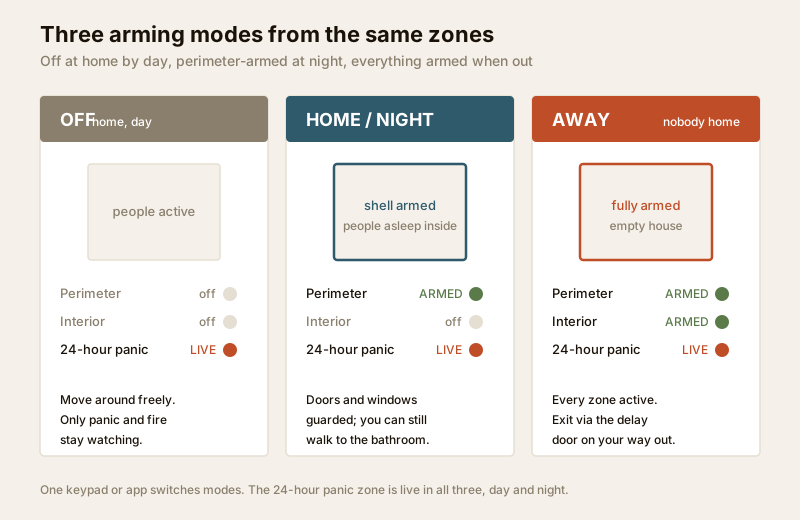
Zones only pay off when you can arm them in combinations. Three modes cover nearly every household rhythm.
- Off (disarmed). Home during the day, people moving around. Nothing burglary-related is armed — but the 24-hour panic and fire zones stay live.
- Home / Night (perimeter-armed, "stay" mode). People are inside, usually asleep. The panel arms the perimeter — every door and window contact — but leaves the interior motion zones off, so someone can walk to the bathroom without tripping anything. If a burglar forces a door or window, the perimeter catches them at the shell, before they are inside. This is the mode most Indian homes under-use, and it is the single biggest reason to zone at all.
- Away (fully armed). Nobody home. Every zone is armed — perimeter and interior motion — so any movement anywhere is caught. You leave through the delay door, which gives you the exit countdown to get out.
One keypad or app switches between them. A good system lets you arm "night" with a single button at bedtime and "away" as you leave, and the system selector can help you pick a panel that supports proper stay/away arming rather than a bare on/off box.
Why this improves protection and cuts false alarms
Staged arming is not a convenience trick; it changes the security maths. Without a night mode, most families simply leave the alarm off while they sleep — the most vulnerable hours — because arming it fully would mean sirens over every midnight kitchen trip. A perimeter night mode removes that excuse: the outside is guarded, the inside is free, so the alarm actually gets used when it matters. Meanwhile, because interior PIRs are off at night, the commonest indoor false-alarm triggers — a ceiling fan swinging a certificate, a curtain, a pet, warm air from an AC — cannot fire while people sleep. Zoning is one of the strongest levers you have for false-alarm prevention, which matters enormously in India where a false siren burns goodwill with the society guard and neighbours who are your real first responders.
How many zones does a home need?
There is no single answer, but there is a sensible floor. Every external door and every accessible window is a candidate for its own zone or a small grouped zone; add interior motion for the away mode and 24-hour zones for panic and fire. The table below is an indicative starting point, not a rule.
| Property | Indicative zones | Typical make-up |
|---|---|---|
| 1–2 BHK apartment | 4–8 | Main door (delay), balcony door, 1–2 window groups, 1 hall PIR, panic (24-hr) |
| 3–4 BHK / independent floor | 8–16 | Front + rear doors, window groups per side, 2–3 interior PIRs, panic, smoke (24-hr) |
| Villa / bungalow | 16–32 | Per-side door and window zones, garden beam sensors, multiple interior PIRs, glass-break, panic, fire |
| Shop-below / home-above | 12–24, two partitions | Shop partition (shutter, door, interior) armed separately from the home partition upstairs |
| Small office | 8–20 | Entry (delay), rear/fire exit, window groups, interior PIRs, server-room zone, panic |
More zones is not automatically better — each is a sensor to buy, place, power and maintain — but too few forces you back toward an all-or-nothing system. The right number is "enough that you can arm night and away cleanly, and enough that when a zone reports, you know which door or window it was." A named zone that tells you "rear kitchen window" is far more useful at 2 a.m. than a single "intruder" that could be anywhere.
When partitions earn their keep
Reach for partitions — separate arm/disarm sub-systems — when parts of the building are used independently:
- Shop below, home above: the shop closes and arms hours before the family sleeps; two partitions, two keypads, two codes.
- Ground floor and upper floor let independently, or a rented portion and an owner's portion.
- A home office or clinic with its own hours inside a house.
- A society clubhouse or common room armed by the RWA separately from individual flats.
Partitions are more panel and more programming, so they belong to systems where the usage patterns genuinely differ. For a single family in one home, good zones and three arming modes are usually all you need.
Wired, wireless and hybrid: how they zone
How zones are physically realised depends on the system type. In a wired system each zone is (traditionally) a pair of wires back to the panel — rock-solid, but the zone count is fixed by the panel's inputs and adding one means running cable. A wireless system makes each sensor its own zone by radio, so expanding or re-zoning is far easier — at the cost of batteries to maintain across every sensor. A hybrid system mixes both: wired zones on the doors you can reach during construction, wireless for the awkward windows and later additions. For a dedicated outer ring, a perimeter alarm system with beams or fence sensors can form its own zone group that catches an intruder at the boundary, before they reach the house.
Zoning and the response chain
A well-zoned alarm tells you not just that something happened but where. That precision feeds the response chain that actually matters in India, where there is no automatic verified-alarm-to-police dispatch — a human sees the alert, verifies it, and dials 112 or 100. When your GSM or app alert says "rear kitchen window, night mode," you or the monitoring service can judge it far better than a bare "alarm." Pair the siren with clear zone naming so the society guard — usually the practical first responder — knows which side of the building to check. For how alerts reach the authorities, see police response integration, and for the wider household plan, the emergency preparedness guide.
When to bring in a professional. You plan the zones and arming modes — how many, where the delay door is, what belongs in a night-mode perimeter, what stays 24-hour. Hand the panel programming, zone-type assignment, wiring, mains connection and commissioning to a licensed installer or electrician; a mis-typed delay zone or a defeated 24-hour zone is a safety failure, not a preference. For apartments and gated communities coordinate with the RWA and building management — see the apartment and gated-community security guides. Never program a zone in a way that leaves a fire-escape route blocked or a panic/fire zone switchable off.
Key takeaways
- Alarm zoning divides a building into named zones and partitions so the panel can arm intelligent combinations instead of a single all-or-nothing switch — this is what makes an alarm usable enough that people actually turn it on.
- Learn the five zone types — instant, entry/exit delay, interior follower, perimeter and 24-hour — because the type decides what happens the moment a sensor triggers; delay and follower zones are what stop your own movements from causing false alarms.
- Three arming modes earn zoning its keep: Off (home by day), Home/Night (perimeter armed while you sleep inside), and Away (everything armed when out) — with panic and fire always live in all three.
- A 24-hour zone must never be defeated by any arming choice; panic, fire and tamper stay watching around the clock, and zoning must never create a gap or a blocked escape route.
- Match zone and partition count to the property: enough zones to arm night and away cleanly and to know which door reported; partitions for genuinely independent uses like a shop below a home.
References
- Manufacturer specifications — verify zone capacity, partition support, entry/exit delay ranges and stay/away arming on the panel maker's own datasheet before buying; support for proper perimeter (stay) arming varies by model.
- National Emergency Number 112 and Police 100 — India has no automatic verified-alarm-to-police dispatch; a person verifies an alert and dials the emergency number, so zone naming that pinpoints the location speeds a real response.
- National Building Code of India (SP 7), Bureau of Indian Standards, and local fire and municipal bye-laws for any electrical, panel-mains or fire-detection aspect of a zoned install, and to ensure no zone or device blocks an escape route; verify the current edition via the BIS catalogue: https://www.services.bis.gov.in/
This is an educational overview, not legal advice. Panel programming, zone-type assignment, wiring and mains connection are qualified professional tasks — engage a licensed installer or electrician, and verify any standard's current status via the BIS catalogue before relying on it.
Export this guide
Related Guides — Deep-dive reading
False Alarm Prevention for Burglar Alarms in India: Causes & Fixes (2026)
Why home alarms cry wolf — ceiling fans, pets, heat, insects, weak batteries, power blips and poor door alignment — and how correct placement, the right sensors and simple upkeep keep the system trusted and armed.
SecurityGlass-Break Sensors in India (2026): Catching a Smashed Pane Before Entry
How acoustic glass-break sensors listen for the twin sound of breaking glass, why they cover what door and window contacts miss, and how to place one sensor to protect a whole room of windows in an Indian home or shop.
SecurityHow to Choose a Burglar Alarm in India (2026): Sensors, Alerts and What Actually Matters
A homeowner's guide to selecting an intruder alarm that fits your flat, villa or shop and alerts you the way you want — matching the sensor mix, control panel and the big siren-versus-monitored decision to your real risk, and dodging the false-alarm traps that make people switch systems off.
SecurityRelated Tools — Try Free
Burglar Alarm System Selector
Answer a few questions about your property, cabling, coverage, monitoring and power and get the right burglar alarm — wired / wireless / hybrid, self or professionally monitored — with the design non-negotiables.
Alarm SelectorApartment Video Door System Planner
Enter flats, entrances, floors and guard desk for a first-pass building intercom plan — door stations, indoor monitors, guard station, the right architecture and an indicative cost band.
Building PlannerHome Building & Interior Cost Calculator — 20 Cities
Construction + interior costs for 20 Indian cities across kitchen, wardrobes, flooring, painting, ceiling.
Cost Calculator