
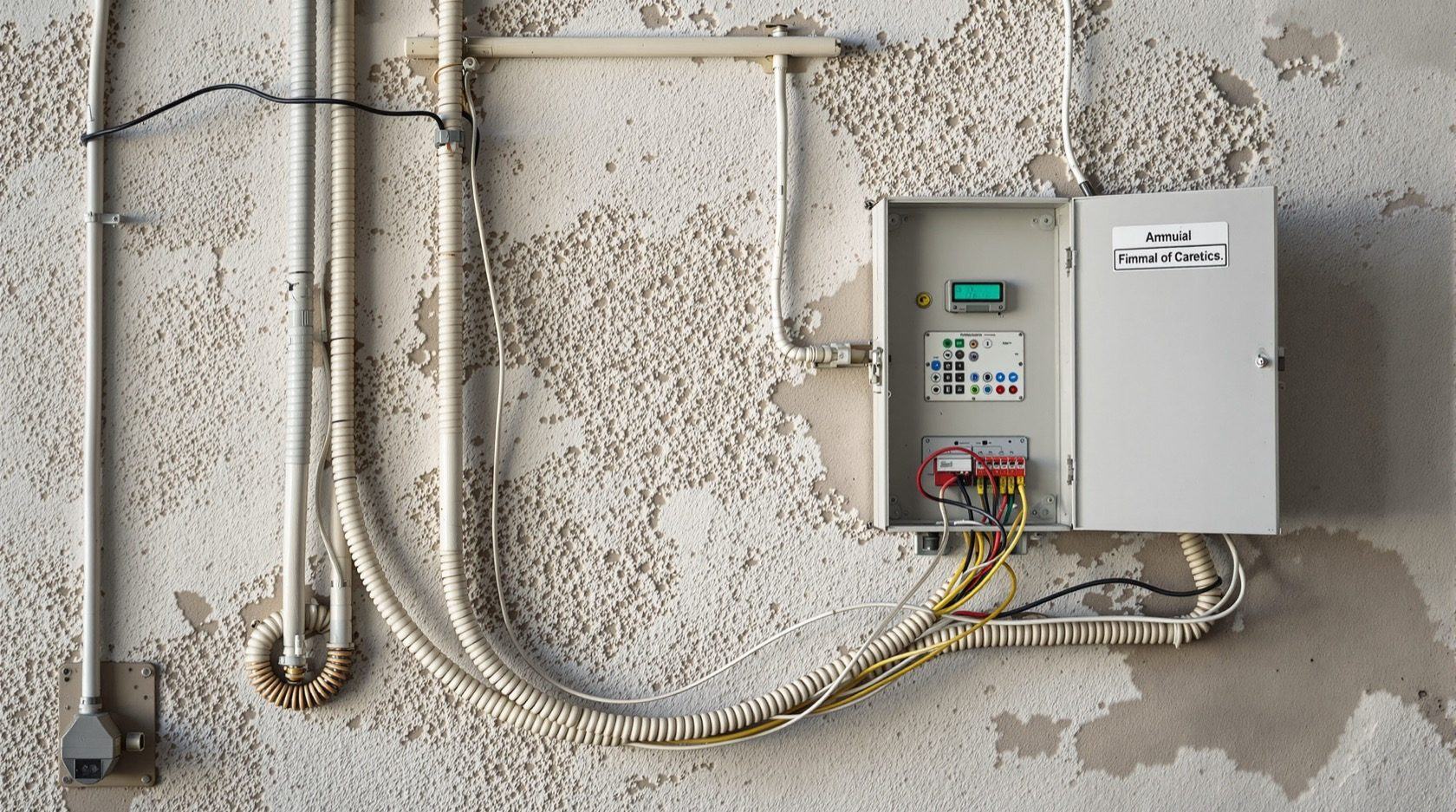
Wired Burglar Alarms in India (2026): The Reliability Benchmark
Why a hardwired alarm — every sensor on a cable back to the panel — is the set-and-forget benchmark for reliability, when it is the right call, and the honest trade-offs of running it in an Indian home.
Ask any old-school installer what the most reliable burglar alarm is, and the answer is almost always the same: the one with wires. Wired burglar alarms connect every sensor — each door contact, window reed, motion detector and glass-break sensor — by a physical cable back to a central control panel. There is no radio hop, no coin cell in each sensor waiting to die, and no question of whether the far bedroom is "in range." It is the quiet, boring, dependable benchmark that every other alarm technology is measured against.
That reliability comes at a cost, and it is an honest one: cable has to be run through the building. If you are building or gut-renovating, that is trivial and cheap — the wire disappears into the walls before the plaster goes on. If your home is already finished and lived-in, retrofitting a fully wired system means chasing walls or running surface conduit, which is disruptive and pushes many homeowners toward a wireless system instead. This guide helps you decide whether wired is the right call for your situation, and if so, how to plan it properly.
Scope, monitoring & safety. This guide helps you plan and choose a wired alarm and coordinate its install. The low-voltage cabling itself is a professional job, and anything touching the mains board belongs to a licensed electrician — see the electrical hub. Be clear-eyed about response: unlike the US or UK, professional central-station monitoring with automatic police dispatch is limited and nascent in India. Most Indian alarms — wired included — are self-monitored: they sound a siren and call, SMS or app-notify you, a neighbour or a guard. And even a wired panel needs a backup battery, because it runs on mains and would otherwise die the moment the power cuts. This is educational guidance, not legal advice, and it is strictly about detecting and deterring intrusion — never about defeating protection.
What "wired" actually means
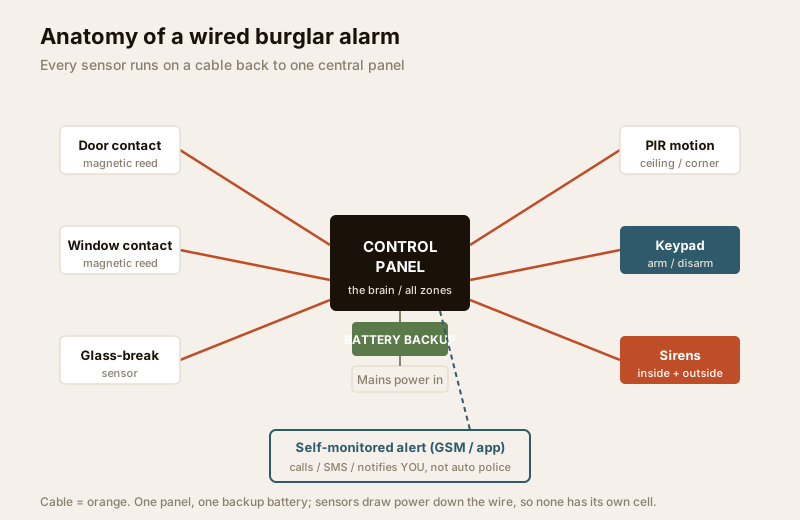
In a wired system, the control panel is the brain, usually tucked in a cupboard, utility area or near the meter. From it, a low-voltage cable (commonly a four- or six-core alarm cable) runs out to each device: the sensors that detect, the keypad you arm and disarm from, and the siren that sounds. When a sensor trips, it changes the electrical state of its loop, the panel notices instantly, and — if the system is armed — it raises the alarm.
Everything hangs off that one panel by a physical connection. That single fact is the source of both wired's strengths and its limitations.
The parts, briefly
You do not need to design the circuit — that is the installer's job — but knowing the pieces helps you scope a quote and place things well:
- Control panel — the hub every cable returns to; holds the logic, the zones and the backup battery.
- Keypad — mounted by the main entry; you arm and disarm here, and it shows which zone tripped.
- Detection sensors — magnetic door/window contacts, passive-infrared (PIR) motion detectors, and glass-break sensors, each wired back to the panel. (The individual sensor types get their own deep-dives in a later phase; this guide is about the wired system.)
- Sirens — an internal sounder to startle and an external one to alert neighbours and deter.
- Alerting — a GSM/SMS dialler or an internet module so the panel can reach you when you are away. In India this is almost always self-monitored: the panel calls or notifies you, not a guaranteed police control room.
- Battery backup — a sealed battery at the panel that carries the system through a power cut. On a wired system this is the one battery that matters, and it is non-negotiable.
Why wired is the reliability benchmark
Four things make a fully wired system the standard everything else is judged against.
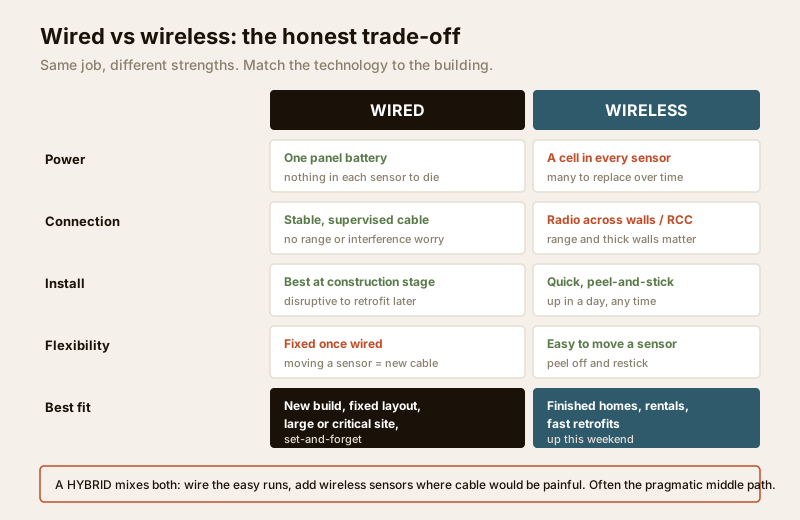
1. No per-sensor batteries to die. In a wireless system, every sensor has its own coin or lithium cell that lasts a couple of years and then must be replaced — and a home with fifteen sensors is fifteen little batteries drifting toward flat at different times. A wired sensor draws its power down the cable from the panel. There is nothing in the sensor to run out. You maintain one battery, at the panel, not fifteen scattered around the house.
2. No radio range or interference worries. Wireless sensors talk to the panel over radio, and radio has to cross walls, floors and the reinforced concrete common in Indian construction. Distance, thick walls and other 2.4 GHz devices can all weaken that link. A cable does not care about range or interference — the signal simply arrives. For a large house, a multi-storey villa, or a layout with a detached room or outbuilding, this matters a lot.
3. A stable, supervised connection. In a wired loop the panel can continuously watch the electrical state of the circuit. A cut or a fault in the wiring shows up as a fault condition rather than passing unnoticed, which is why wired systems are trusted on larger and more critical sites. The connection is simply more predictable — there is less to go intermittently wrong.
4. It suits a home being built or renovated. This is the decisive one for Indian construction. If the walls are open — a new build, or a renovation down to the brickwork — running alarm cable is quick, cheap and completely invisible once plastered. You get benchmark reliability with essentially none of the retrofit pain. Planning the wiring before the plaster goes on is the single biggest lever you have, and we come back to it below.
The honest trade-offs
A guide that only sold you the upside would not be worth reading. Wired has real costs, and for many homes they are the reason to look elsewhere.
- Retrofitting a finished home is disruptive. If the walls are already plastered and painted, getting cable to every sensor means either chasing channels into the walls (dust, patching, repainting) or running surface conduit (visible trunking along skirting and door frames). Neither is ruinous, but both are messy, take days, and cost real money in labour. This is the number-one reason a lived-in home often goes wireless instead.
- It is less flexible to change later. Once a sensor is wired into a wall, moving it — because you rearranged a room, added a door, or found a PIR is catching the ceiling fan — means new cable. Wireless sensors just peel off and restick.
- It needs professional cabling. You should not be pulling low-voltage looms through walls or terminating them at a panel yourself, and certainly not going near the mains. Wired installs are a professional job from the start, which raises the entry cost compared with a DIY wireless kit.
- It still needs backup power. Wired does not mean "immune to a power cut." The panel runs on mains; without a healthy backup battery it dies with the load-shedding. The difference from wireless is that it is one battery to look after, not many — but you must still look after it.
None of these makes wired wrong. They make it situational. The trick is matching the technology to the building and how settled the layout is.
When wired is the right call
Reach for a wired system — or at least design for one — when most of these are true:
| Signal | Why it points to wired |
|---|---|
| You are building or gut-renovating | Walls are open; cable is cheap and invisible. This is wired's home turf. |
| The layout is fixed | You are not going to move rooms or sensors, so lack of flexibility costs you nothing. |
| It is a large or multi-storey property | A villa, farmhouse or big house where radio range and thick RCC walls would challenge wireless. |
| It is a critical or high-value site | A shop, office or home where a supervised, hard-to-drop connection is worth the install effort. |
| You want set-and-forget | You would rather never think about a sensor battery again and maintain just one at the panel. |
| Aesthetics matter and walls are open | Nothing visible — no sensor pods with battery doors, no surface trunking. |
Conversely, if your home is finished and lived-in, you rent, you value the freedom to move sensors, or you simply want it up this weekend, a wireless system is usually the saner choice — and a hybrid system, which wires the easy runs and adds wireless sensors where cable would be painful, is often the pragmatic middle path. The burglar alarm system selector walks you through these questions for your own home, and the pillar guide sets the whole landscape in context.
Plan the wiring before the plaster: the India playbook
If there is one thing to take from this guide, it is this: the cheapest, cleanest wired alarm is the one you planned before the walls were closed. On an Indian site, the alarm cabling should be coordinated alongside the electrical first-fix, while the mason and electrician are already chasing walls for wiring — not bolted on as an afterthought once the plaster and paint are done.
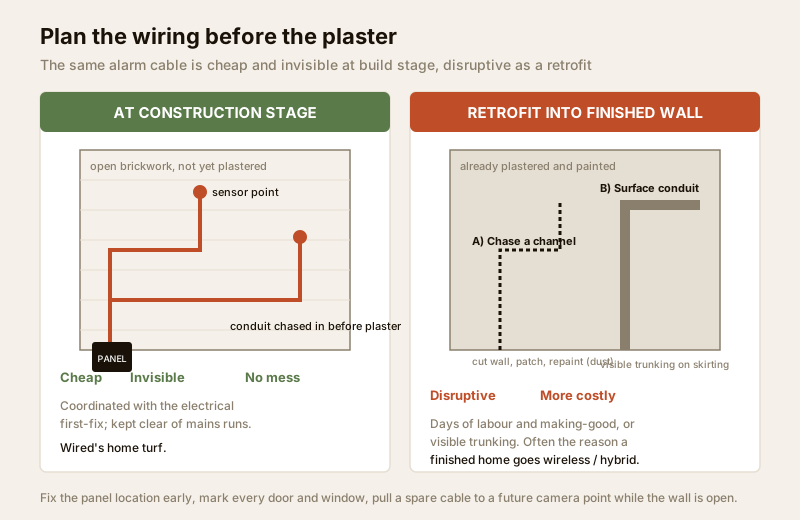
A sensible pre-plaster plan covers:
- Fix the panel location early. Somewhere central-ish, mains-reachable, secure and out of sight — a utility cupboard, store or near the meter — with the backup battery beside it. Every cable returns here, so its position drives the whole cable run.
- Mark every opening. A contact at each external door and accessible window, PIRs to cover halls, stairs and the main living space, and cable stubbed to each. Reference the perimeter alarm approach for thinking about detecting at the boundary and the openings.
- Coordinate with the electrician. Alarm cable is low-voltage and must be kept separate from mains runs to avoid interference and for safety — but the chasing happens at the same stage, so agree it with your electrician up front. The electrical hub covers the mains side; the alarm cabling is a specialist low-voltage task.
- Pull a couple of spares. A spare cable to a future camera point or an extra sensor position costs almost nothing while the wall is open and saves a chase-out later. Wired alarms and CCTV are natural companions on the same first-fix.
- Feed the keypad and sirens. Cable to the keypad by the front door, to an internal sounder, and to a weatherproof external siren box high on an outside wall.
Do this, and the finished-wall disruption that scares people away from wired simply never happens.
A note on cost, honestly
Wired system pricing in India varies widely with the number of zones, the panel, and — above all — the cabling labour, so treat the following as rough bands to sanity-check a quote, not fixed rates:
| Scenario | What drives the cost | Rough band |
|---|---|---|
| Wired at construction stage (small–mid home) | Cable is cheap; labour piggybacks the electrical first-fix | Lowest total — the cable itself is minor next to the panel and sensors |
| Retrofit into a finished home | Chasing/patching/repainting or surface conduit adds significant labour | Materially higher than the same kit wired at build stage |
| Panel, keypad, sensors, sirens (hardware) | Zone count, brand, GSM/app module | The bulk of a new-build quote |
| Ongoing | One panel battery every few years; occasional service | Low; no per-sensor battery churn |
The headline: at construction stage wired is often cheaper all-in than an equivalent wireless kit and far more reliable; as a retrofit into finished walls the labour flips the maths, and that is exactly when wireless or hybrid earn their place. Get an itemised quote and check the cabling labour line explicitly.
Where wired fits in a layered home
An alarm is one layer. It detects and alerts — it does not lock a door, record a face or answer a gate. A strong home pairs a wired alarm with good locks and access control, CCTV for the record, and a video door phone at the gate, each doing the job it is best at. Because a wired alarm is usually specified at construction stage, it is the perfect moment to plan all of these together on one first-fix. For the full picture of how the layers combine, see the layered security design guide and the burglar alarm sub-hub.
When to bring in a professional. You can and should do the deciding — assess your building, choose wired versus wireless or hybrid, place the sensors and panel on the plan, and scope the quote. Hand the low-voltage cabling, wall chasing, panel termination and commissioning to a competent alarm installer, and anything on the mains board to a licensed electrician (electrical hub). If you are building, get the alarm installer in at the first-fix stage alongside the electrician so the cable is run before plastering. And set expectations on monitoring honestly with whoever installs it: confirm whether it is self-monitored (it usually is) or on a professional monitoring contract, and never rely on guaranteed police dispatch.
Key takeaways
- Wired burglar alarms are the reliability benchmark — every sensor on a cable to one panel means no per-sensor batteries, no radio range or interference worries, and a stable supervised connection.
- Wired shines at construction or gut-renovation stage, when cable runs cheaply and invisibly into open walls; planning the wiring before plastering is the single biggest cost and neatness lever you have.
- The honest trade-off is retrofit pain — cabling a finished, lived-in home means chasing walls or surface conduit, which is disruptive and costly, and wired sensors are harder to move later.
- Pick wired for a new build, a fixed layout, a large or critical site, or set-and-forget peace of mind; pick wireless for a finished home or rental, or a hybrid for the middle path — the selector helps you choose.
- Even a wired panel needs a backup battery, because it runs on mains and would otherwise die in a power cut; and in India the alarm is almost always self-monitored (it alerts you), not wired to automatic police response.
References
- Manufacturer specifications — confirm panel zone capacity, supported sensor types, backup-battery capacity and standby time, and the recommended alarm cable (core count and gauge) on the maker's own datasheet before ordering or specifying a wired install.
- Digital Personal Data Protection Act, 2023 — where a wired panel adds app or GSM alerting, and especially where indoor motion sensors and any monitoring see private life, treat that data as personal: keep credentials private and do not grant a provider standing access without agreeing it in writing.
- National Building Code of India (SP 7), Bureau of Indian Standards, and local wiring practice for the mains and low-voltage separation aspects of an install; verify the current edition via the BIS catalogue: https://www.services.bis.gov.in/
This is an educational overview, not legal advice. Low-voltage alarm cabling, panel commissioning and any mains-connected work are qualified professional tasks — engage licensed installers and electricians, and verify any standard's current status via the BIS catalogue before relying on it.
Export this guide
Related Guides — Deep-dive reading
How to Choose a Burglar Alarm in India (2026): Sensors, Alerts and What Actually Matters
A homeowner's guide to selecting an intruder alarm that fits your flat, villa or shop and alerts you the way you want — matching the sensor mix, control panel and the big siren-versus-monitored decision to your real risk, and dodging the false-alarm traps that make people switch systems off.
SecuritySecurity Planning for New Homes in India: Build It In From Scratch
The cheapest, cleanest security you will ever buy is the security you design into a house while it is still being built. A build-stage playbook for Indian homes — CPTED site planning, structural and cabling provisions, and a checklist keyed to construction milestones.
SecuritySmart Home Security Systems in India: CCTV, Sensors, Alarms & AI
How to think in layers — perimeter, entry, interior — and build a system that actually protects an Indian home: AI cameras, video door phones, door and glass-break sensors, alarms, panic buttons, gate automation, monitoring and DPDP-aware privacy, with real brands and rupee costs.
Smart HomeRelated Tools — Try Free
Access-Control Battery-Backup Calculator
Size the standby battery so an access system keeps running through a power cut, with an egress life-safety note.
Battery BackupSecurity Backup Power Calculator
Size a UPS/inverter and battery to keep CCTV, NVR, router and alarm running through a power cut — load, Ah, VA and cost.
Backup PowerVideo Door Phone Type Selector
Answer a few questions about your building, cabling, budget and internet and get the right video door phone — analog / wired / wireless / IP, single-home or multi-apartment, monitor or app.
Door Phone Selector