
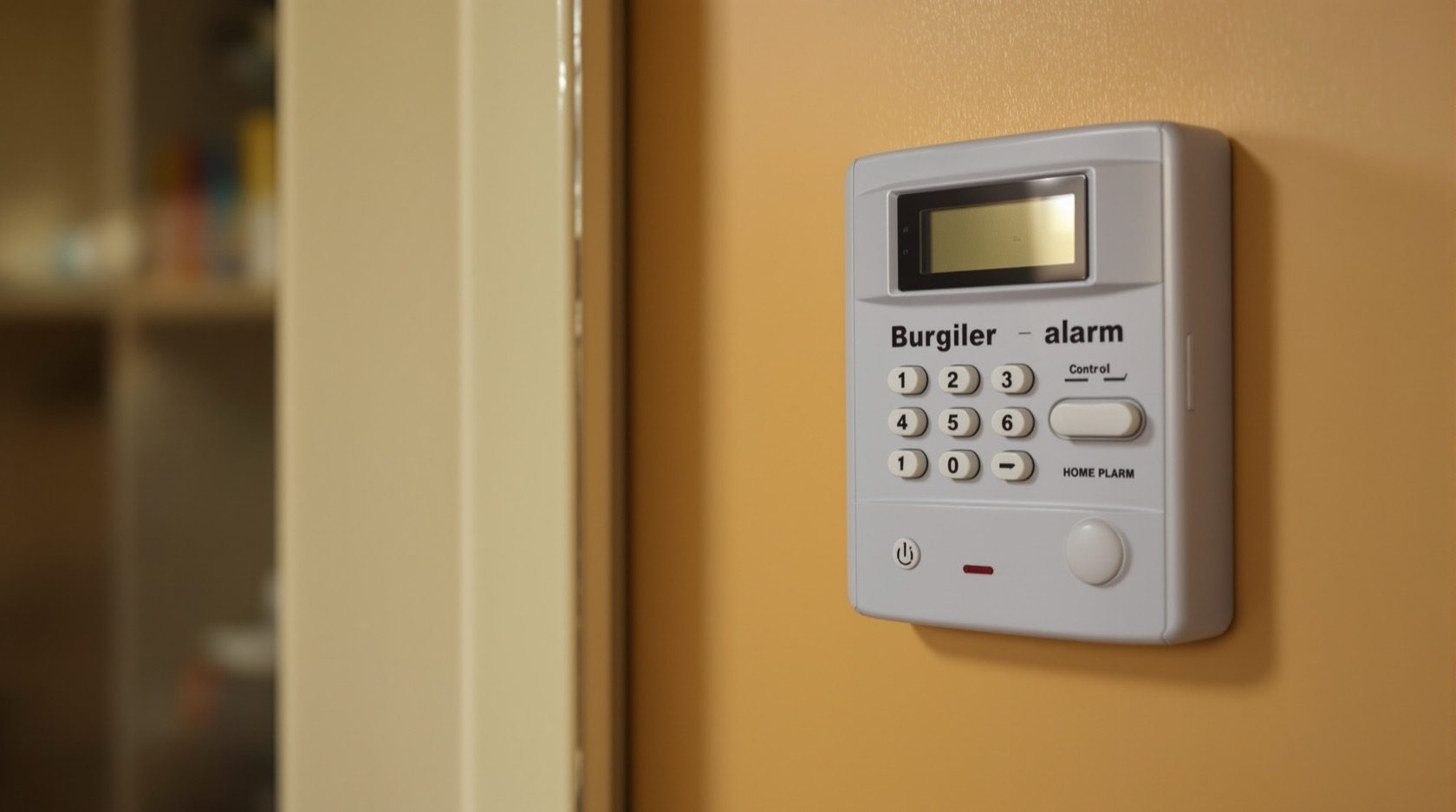
Complete Guide to Burglar Alarms in India (2026): How They Work and How to Choose
The map to a whole intrusion-alarm system: the control panel, the sensor family, arming modes, sirens and app alerts, why battery backup is non-negotiable, and how it layers with locks, CCTV and door phones.
A lock tries to keep an intruder out. A camera records what happened. A burglar alarm does the one thing neither of those does on its own: the moment someone crosses a boundary they should not, it knows — and it makes noise, lights up, and pings your phone while it is still happening. Detection and alert, in real time. That is the whole job, and it is why an alarm sits at the heart of a layered home-security plan rather than as an optional extra.
This is the map for Studio Matrx's Burglar & Intrusion Alarm library. It explains what an intrusion-alarm system actually is, the parts it is built from, the handful of decisions that shape which system is right for your home or shop, and — honestly — what an alarm in India can and cannot do for you. The deeper guides on each sensor, on wiring, on monitoring and on cost all hang off this page; read this first so the rest makes sense.
Scope, monitoring reality & safety. This guide helps you plan, choose and coordinate an alarm system. It is strictly about detection: how sensors sense an intrusion and how the system alerts you — never about defeating one. Two things to be clear-eyed about from the start. First, battery backup is not optional in India — a panel and sensors running only on mains die the instant the power cuts, so a system that cannot ride through a power cut is only half a system. Second, most Indian alarms are self-monitored: they alert you (and perhaps a neighbour or guard) by siren, phone call, SMS or app — automatic central-station monitoring with guaranteed police dispatch is limited and nascent here, so do not assume a squad car answers your siren. Mains wiring, cabling at height and any monitoring contract belong to licensed professionals. This is educational guidance, not legal advice.
What a burglar alarm actually is
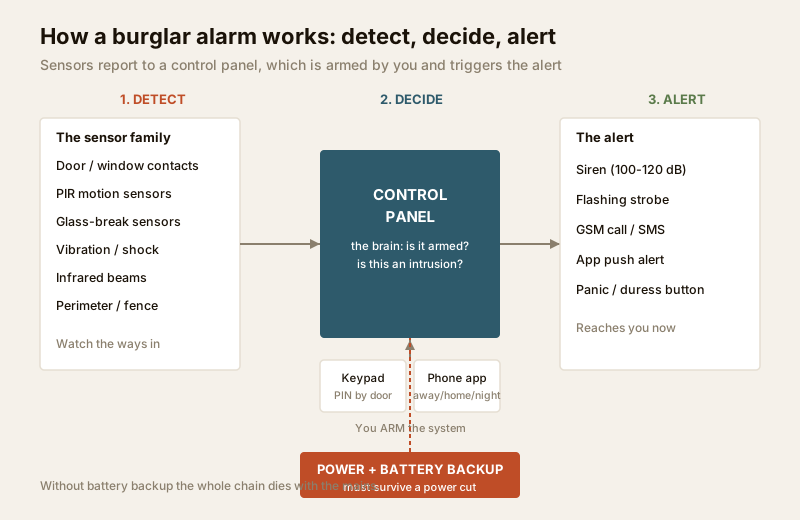
Strip away the brand names and every intrusion-alarm system is a single chain with three links. Get this chain and you understand every alarm ever sold.
- DETECT — sensors watch the ways into your home (doors, windows, walls, the yard, a room) and report the instant one is crossed.
- DECIDE — a central control panel receives those reports and, depending on whether the system is armed and how, decides whether this is an intrusion worth reacting to.
- ALERT — if it is, the panel triggers the response: a loud siren and strobe, and a notification out to you and anyone else on the list.
An alarm does not physically stop anybody — it has no lock, no bolt, no barrier. Its power is that it turns a silent, unseen entry into a loud, visible, known event within seconds, which cuts short the intruder's time and calm and gives you and your neighbours the chance to respond. Everything below is just detail on those three links, plus the power supply that keeps them all alive.
The parts, one by one
The control panel — the brain
The control panel (sometimes the "hub") is the box everything connects to. Sensors report to it; it decides; it fires the siren and sends the alerts. It also holds the system's state — armed or disarmed, which zones are active, whether a battery is low — and it is where the backup battery usually lives. In a wired system the panel is a metal box tucked in a cupboard or utility area; in a wireless system it is often a neat plastic hub near the router. Either way, treat it as the single most important component: if the panel is unpowered or unreachable, nothing else matters.
Arming: the keypad and the app
A burglar alarm is only useful when it can tell a normal evening at home from an intrusion. That is what arming does — you tell the system what state the house is in, and it applies the right rules. Arming happens at a wall keypad (a PIN pad by the door), on a phone app, with a key-fob, or on a schedule. The three modes almost every system offers:
| Arming mode | What is active | When you use it |
|---|---|---|
| Away | Everything — perimeter sensors and interior motion | You leave the house empty; the whole system watches |
| Home / Stay | Perimeter only (doors, windows) — interior motion off | You are inside for the evening or asleep, moving around, but want the doors and windows watched |
| Night | Perimeter plus motion only in unoccupied zones | Overnight — bedrooms free to move, downstairs and entries armed |
Home mode is the one that makes an alarm livable in a family house. Without it, you would trip your own motion sensors every time you walked to the kitchen at night; with it, the doors and windows stay armed while you move freely indoors. An entry/exit delay — a few seconds' grace to disarm after opening the front door, and to leave after arming — is what stops you setting off your own alarm coming home.
The sensor family — the "detect" layer
Sensors are where a system is won or lost, because they decide what the alarm can see. You do not need all of these; a good design picks the right few for your home. Each has its own deep-dive guide later in this library — here is the family and what each is for:
- Door and window contacts (magnetic reed switches) — two parts, one on the frame and one on the door or sash; when they separate, the panel knows that opening was breached. The workhorse of perimeter detection: cheap, reliable, and the first thing most systems use.
- Motion sensors (PIR) — a passive infrared sensor watches a room and reacts to a warm body moving across it. This is interior detection: it does not care how someone got in, only that something is now moving in a space that should be empty. Placement matters — a PIR has a blind cone directly below it and can be fooled by ceiling fans, direct sun or pets, so it is aimed and pet-tolerant models are chosen deliberately (more in its own guide).
- Glass-break sensors — listen for the specific frequency of shattering glass, useful for rooms with large windows or glazed doors where you want to catch a break-in before the intruder is even inside.
- Vibration / shock sensors — mounted on a door, window, safe or wall, they react to the impact of forcing or drilling.
- Beam sensors — an invisible infrared beam across a doorway, corridor or boundary line; when the beam is broken, the alarm triggers. Common across gates and long verandahs.
- Perimeter and fence sensors — detection pushed out to the boundary wall or fence line, so you are alerted before an intruder reaches the house. This is a whole approach of its own; see perimeter alarm systems and the perimeter vulnerability assessment.
The big design choice inside the sensor layer — perimeter detection (catch them at the boundary or the openings) versus interior detection (catch them once inside) — is really a question of how early you want to know, and most good systems use both. We come back to it below.
The alerting devices — the "alert" layer
Once the panel decides an intrusion is real, it has to make that fact impossible to ignore:
- Siren — a loud (typically 100–120 dB) sounder, indoor or weatherproof outdoor. Its job is twofold: rattle the intruder into leaving, and alert everyone within earshot. An outdoor siren also tells neighbours which house.
- Strobe — a bright flashing light paired with the siren, so the alarm is visible as well as audible — vital at night or for anyone hard of hearing, and it marks the house for a responder.
- GSM dialler — a module (often with its own SIM) that makes the alarm reach you when you are not home: it calls or SMSes pre-set numbers when triggered. Because it uses the mobile network rather than home Wi-Fi, it keeps working even if the broadband is down — which is why it is popular in India.
- App and push notifications — a modern hub pings your phone the instant it triggers, and lets you arm, disarm and check status from anywhere.
A panic or duress button — a keypad code or fob that raises the alarm on demand — belongs here too. It is a life-safety feature: it protects people, letting someone summon help quietly. Treat it as protective, and place it where it is reachable but not accidentally pressed.
Power and battery backup — the part people forget
This is the one section not to skim. In India, a burglar alarm without battery backup is a decoration. Power cuts are routine; if your panel, sensors, siren and dialler all run only on mains, then the moment the power goes — deliberately or by ordinary load-shedding — your alarm is blind and silent, exactly when a house is most vulnerable.
A properly designed system therefore has:
- A backup battery in the panel (a sealed rechargeable pack), sized to keep the whole system armed and alert-capable for hours through a cut. It charges from the mains and takes over automatically.
- Batteries in wireless sensors and sirens, with the panel reporting low-battery status so none dies unnoticed — a dead sensor is a hole in your detection you cannot see.
- A tamper and low-power alert so the system tells you when it is running on reserve or a battery needs changing, rather than failing silently.
Because the mains side touches your home's wiring, sizing a backup supply, adding an outlet for the panel, or any fixed electrical work is a licensed electrician's job — see the electrical hub. But the decision to demand real battery backup, and to test it, is yours, and it is the single most important reliability decision you will make.
The decisions that shape your system
With the parts understood, choosing a system comes down to a few axes. Each has its own guide; this section introduces them and points you onward. The burglar alarm system selector walks you through them interactively.
Wired vs wireless vs hybrid
How do the sensors talk to the panel — through cables, over radio, or both?
| Approach | Best for | Trade-offs |
|---|---|---|
| Wired | New builds, larger homes, where cabling can be run in the walls | Very reliable, no sensor batteries to change — but disruptive to retrofit into a finished home |
| Wireless | Retrofits, apartments, rented homes, where you cannot open walls | Quick, clean install, easy to expand — but every sensor needs a battery to mind, and cheaper radio kit can be less robust |
| Hybrid | Larger or growing systems | A wired backbone with wireless where cabling is hard — the best of both, at a bit more complexity |
The full trade-offs — reliability, retrofit disruption, battery upkeep, and where cheaper radio kit falls short — are in wired burglar alarms, wireless burglar alarms and hybrid alarm systems.
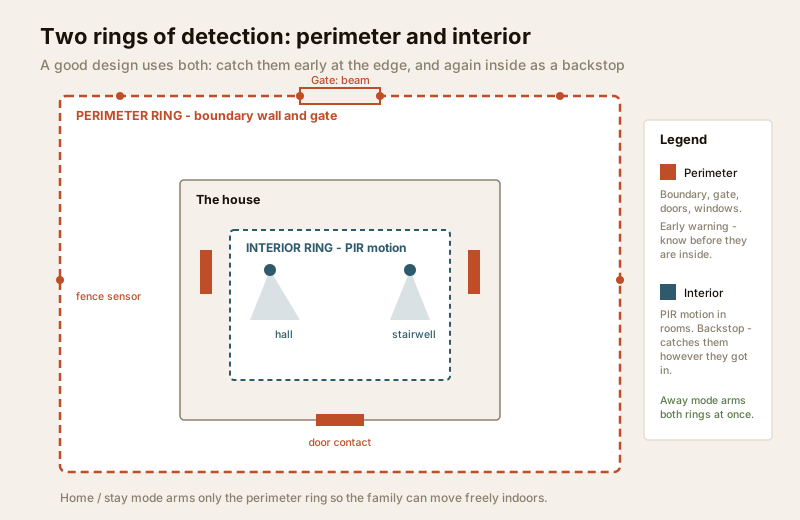
Perimeter vs interior detection
Do you want to catch an intruder at the boundary and the openings, or once they are inside?
- Perimeter detection watches the edges — the fence, the gate, the doors and windows. Its advantage is early warning: you know before the intruder is in your living space, and you can arm it while the family is home and awake. See perimeter alarm systems.
- Interior detection (mostly PIR motion) watches the spaces inside. Its advantage is that it does not care how someone entered — a smashed skylight, a forced back door — only that something is now moving where nothing should be. It is your catch-all backstop.
They are not either/or. A sound design uses perimeter sensors as the first line and interior motion as the backstop, which is exactly what "away" arming activates together.
Self-monitored vs professionally monitored — the honest India picture
When the alarm triggers, who responds? This is where India differs sharply from what you may have seen in American films, and it deserves plain speaking.
- Self-monitored — the alarm alerts you. The siren sounds, and the GSM dialler or app calls and messages you, and whoever else you have listed — a family member, a neighbour, a society guard. You then decide what to do: come home, call someone nearby, alert the guard, or call the police yourself. The vast majority of Indian home alarms work this way, and it is a perfectly sensible model — it just puts the response in your hands and your network's.
- Professionally monitored — a central station watches your system around the clock and acts on an alert. This is well established in the US and UK with links to police response; in India it is limited and nascent, offered by a handful of providers, usually in larger cities, and rarely with anything like automatic police dispatch. Where it exists it typically means a call-verification and a private response team or guard, not a squad car.
Do not buy or plan on the assumption that a siren summons the police. It usually does not — the guaranteed automatic-police-response model common abroad does not broadly exist here yet. And a false alarm sent to authorities wastes real resources and can carry consequences, so any monitoring or auto-dial setup should be configured carefully and verified before it dials out. Monitoring, diallers and response are covered in their own later guides; plan around the self-monitored reality and treat professional monitoring as a bonus where a reputable provider genuinely offers it.
Because indoor motion sensors and any app or monitoring service can see into your private life, remember that this is personal data under the Digital Personal Data Protection Act, 2023 — keep the app account private, and agree in writing what any monitoring provider may access.
How an alarm layers with your other security
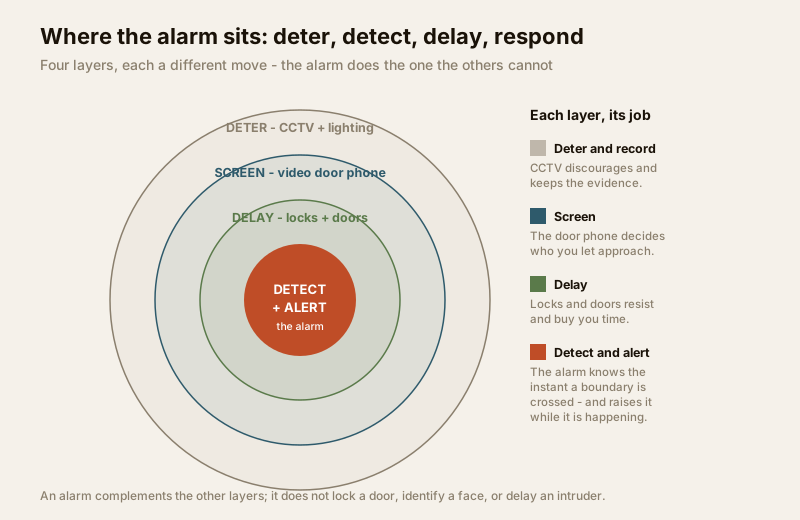
An alarm is one instrument in an ensemble, not a soloist. Good home security works in four moves — deter, detect, delay, respond — and each layer plays a different one:
| Layer | Its move | What it does that the others do not |
|---|---|---|
| Locks & doors | Delay | Physically resist and slow an intruder; buy time |
| CCTV | Deter & record | Visibly discourage, and give you evidence of what happened |
| Video door phone | Screen | Decide who you let approach the door in the first place |
| Burglar alarm | Detect & alert | Know the instant a boundary is crossed and raise the alarm while it happens |
The alarm is the layer that turns a break-in into a known, live event — but it does not lock a door, does not identify a face, and does not delay anyone. That is why it complements rather than replaces the others. Pair the alarm's real-time detection with the delay of good smart locks and access control, the evidence of CCTV, and the screening of a video door phone, and each covers the others' gaps. The layered-security design guide shows how to compose all four, and CCTV and alarms can even work together as intrusion-zone detection.
Matching a system to your home
The right alarm looks different for different Indian homes, and the setting drives most of the decisions:
- Apartment / flat — usually wireless (you cannot open walls), perimeter-light because there is one main door and a balcony, and heavy on the main-door contact plus a hall PIR. See the apartment security guide.
- Independent house / villa — the richest case: perimeter detection at the compound wall and gate, contacts on every ground-floor opening, interior motion, and an outdoor siren. See villa and independent-house security.
- Farmhouse / remote property — perimeter and beam sensors matter most because response is far away; battery backup and GSM alerting (rather than Wi-Fi) are critical.
- Shop / office — after-hours arming, shutter and safe vibration sensors, and often a panic button; monitoring where a reputable provider exists.
- Gated community / RWA — society-level perimeter plus per-home systems; coordinate at the association level per the gated-communities security guide.
India's conditions shape the sensor choices as much as the building does. Monsoon, dust and heat torment outdoor sensors and cause false alarms, so outdoor-rated hardware and sensible placement matter. Ceiling fans, curtains billowing in the breeze, and pets are the classic causes of indoor false triggers — which is why PIR aiming and pet-immune sensors exist. And a power cut must never take the system down, which brings us back to battery backup. For the bigger picture, the ultimate home-security guide, the building-security-systems guide and the smart-security-systems guide set the alarm in context, and the emergency-preparedness guide covers what to do when it does trigger.
When to bring in a professional. You can plan the system, choose the sensors, decide the arming modes and pick the setting-appropriate kit yourself — and the selector tool helps. Hand over anything that touches the mains supply, fixed cabling, work at height, outdoor siren mounting, or a professional monitoring contract to a licensed electrician or a reputable alarm provider — see the electrical hub. Insist on real battery backup and test it by simulating a power cut. And configure any auto-dialler carefully so it never sends a false alarm to authorities.
Key takeaways
- A burglar alarm is a three-link chain — detect, decide, alert. Sensors watch the ways in, a control panel decides whether an armed intrusion is real, and sirens, strobes, GSM diallers and app alerts raise the alarm in real time.
- Arming modes make an alarm livable. Away arms everything; home/stay arms only the perimeter so a family can move indoors; night arms unoccupied zones — with entry/exit delays so you never trip your own alarm.
- Battery backup is non-negotiable in India. A panel and sensors on mains alone die in a power cut; demand a sized backup battery, low-battery reporting on wireless sensors, and test it.
- Most Indian alarms are self-monitored — they alert you and your network, not the police; automatic central-station police response is limited and nascent here, and a false alarm to authorities carries consequences, so plan around self-monitoring.
- An alarm complements, never replaces, locks, CCTV and door phones — it does the detect-and-alert move the others cannot, and it is strongest as one layer in a deter-detect-delay-respond design.
References
- Digital Personal Data Protection Act, 2023 — indoor motion sensors and any alarm app or monitoring service capture personal data; keep the app account private and agree in writing what a monitoring provider may access.
- Manufacturer specifications and datasheets — verify sensor detection ranges, siren sound levels, backup-battery capacity and standby hours, GSM/SIM support and wireless-range figures on the maker's own datasheet before buying.
- National Building Code of India (SP 7), Bureau of Indian Standards, and local municipal bye-laws for the electrical and life-safety aspects of any fixed install; an alarm must never impede a fire-escape route. Verify the current edition via the BIS catalogue: https://www.services.bis.gov.in/
This is an educational overview, not legal advice. Mains-electrical work, fixed cabling, work at height and professional monitoring contracts are qualified professional tasks — engage licensed electricians and reputable providers, and verify any standard's current status via the BIS catalogue before relying on it.
Export this guide
Related Guides — Deep-dive reading
Security for People Living Alone in India (2026): Calm, Practical Habits When There Is No Second Person to Notice
Living alone is an ordinary and growing part of Indian life - the student in a new city, the working single, the elder whose children are abroad, the person after a separation. It does not call for fear. It calls for a few deliberate habits, because there is no second person in the home to notice trouble, raise the alarm, or catch an accident. This is calm self-reliance, layer by layer.
SecurityFalse Alarm Prevention for Burglar Alarms in India: Causes & Fixes (2026)
Why home alarms cry wolf — ceiling fans, pets, heat, insects, weak batteries, power blips and poor door alignment — and how correct placement, the right sensors and simple upkeep keep the system trusted and armed.
SecurityHow to Choose a Burglar Alarm in India (2026): Sensors, Alerts and What Actually Matters
A homeowner's guide to selecting an intruder alarm that fits your flat, villa or shop and alerts you the way you want — matching the sensor mix, control panel and the big siren-versus-monitored decision to your real risk, and dodging the false-alarm traps that make people switch systems off.
SecurityRelated Tools — Try Free
Burglar Alarm System Selector
Answer a few questions about your property, cabling, coverage, monitoring and power and get the right burglar alarm — wired / wireless / hybrid, self or professionally monitored — with the design non-negotiables.
Alarm SelectorVideo Door Phone Type Selector
Answer a few questions about your building, cabling, budget and internet and get the right video door phone — analog / wired / wireless / IP, single-home or multi-apartment, monitor or app.
Door Phone SelectorAccess-Control Battery-Backup Calculator
Size the standby battery so an access system keeps running through a power cut, with an egress life-safety note.
Battery Backup