
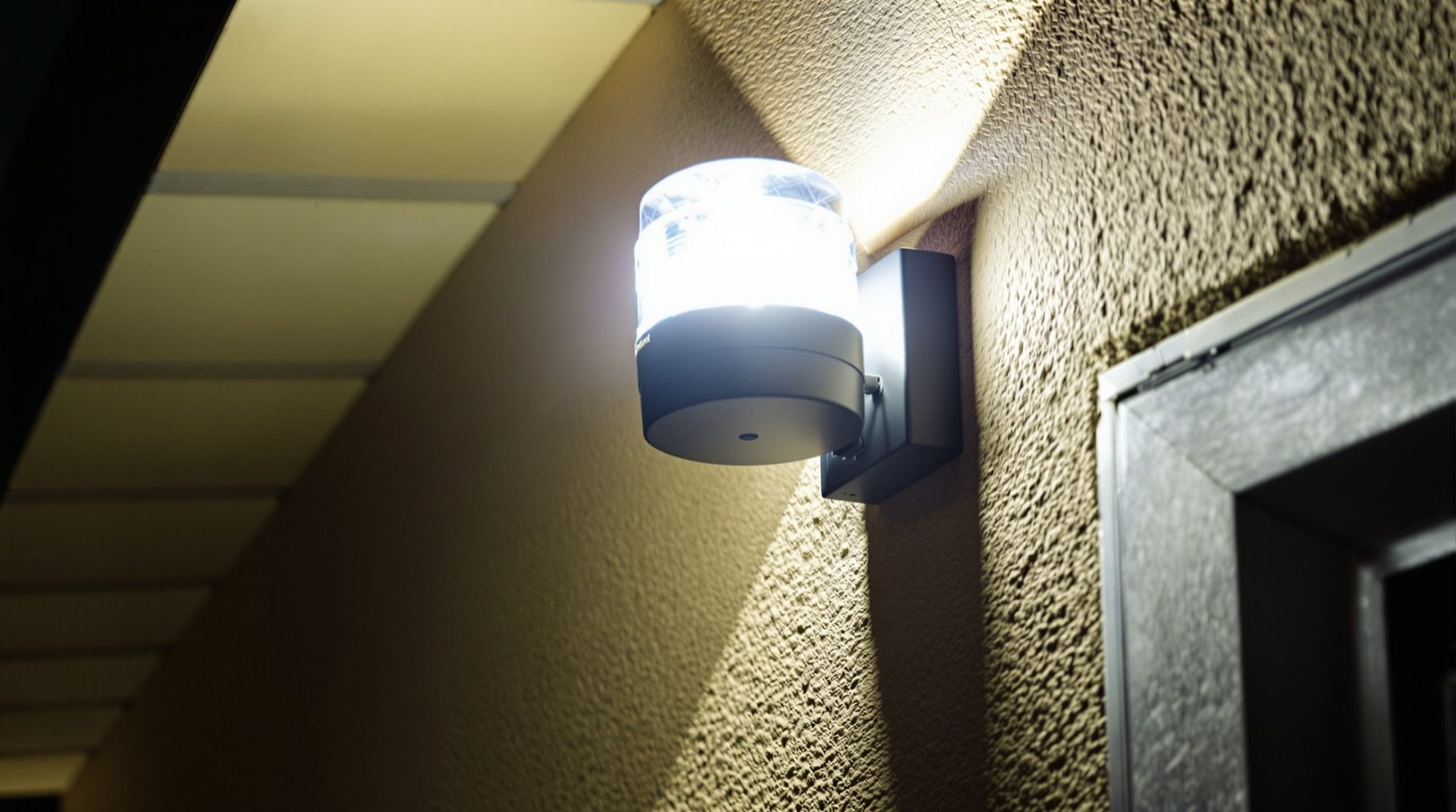
Strobe Alarms in India (2026): The Flashing Beacon That Shows Which House Needs Help
A bright flashing strobe works alongside or instead of a siren: it pinpoints which home is alarming at night, alerts the hearing-impaired, and gives a visible alert where loud sirens are restricted.
An alarm siren shouts that something is wrong. On a night street of a dozen identical row houses or a tower of forty flats, that is only half the message. The guard at the gate, the neighbour woken from sleep, the family member running back home, the responder you called — every one of them still has to answer the harder question: which house? A strobe alarm answers it. It is a bright, rapidly flashing beacon, usually mounted high on the outside wall, that turns "somewhere on this street" into "that house, right there," instantly, from a distance, even through rain.
This guide is part of Studio Matrx's burglar and intrusion alarm library and sits beside its natural partner, the audible siren guide. Where the siren is the voice of your alarm, the strobe is its pointing finger. Together they do what neither does alone: the siren gets attention, the strobe directs it. This is written for homeowners, families with an elderly or hard-of-hearing member, apartment residents bound by noise limits, and RWAs planning what actually happens when a sensor trips at 2 a.m.
Scope & the honest reality. A strobe is a signalling device — it summons and directs attention, it does not stop anyone. Like every alert, it is only as good as who actually responds: a guard who looks up, a neighbour who calls you, a family WhatsApp group that swings into action. Most Indian home alarms are self-monitored, so plan the flash and the response together — pair the strobe with an audible siren and a GSM/app alert path so a real person knows to look. Mains wiring for an outdoor beacon is a licensed electrician's job. A strobe must never sit where its mount or glare blocks a fire-escape route. This is educational guidance, not legal advice.
Siren tells you something; strobe tells you where
The single most useful thing a strobe does is spatial. Sound bounces off buildings, gets swallowed by traffic and rain, and on a dense street it is genuinely hard to tell which of five homes is sounding. Light does not have that problem. A flashing beacon is a fixed point in space — you can see it, point at it, and walk straight to it.
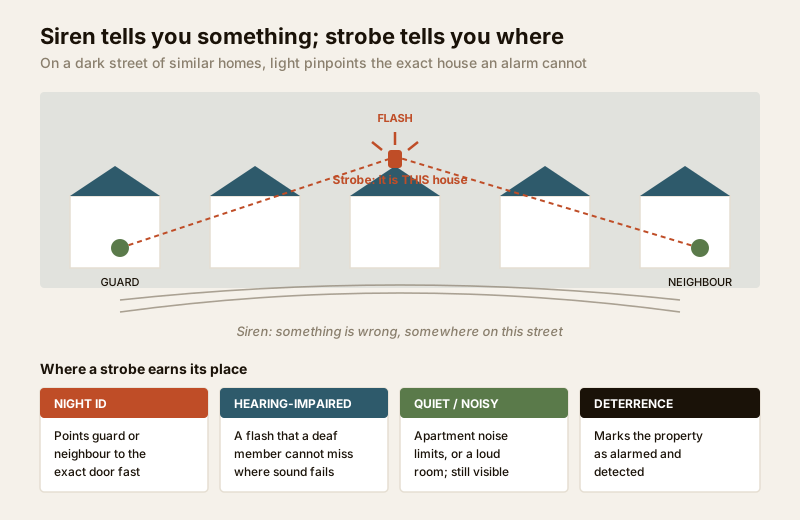
That single property unlocks four distinct jobs a strobe does, and understanding them tells you when you actually need one:
- Night identification. In a gated community or a row of similar houses, the guard or a neighbour hears an alarm but has to find it. A strobe on the facade points them to the exact door in seconds — the difference between help arriving and help wandering the lane.
- Alerting the hearing-impaired. For a deaf or hard-of-hearing family member, a siren simply does not exist. A bright indoor strobe is their alarm — a flash they cannot miss. This is not a nice-to-have; it is the only alert some people in the home will ever receive. It matters especially in a senior citizens' home.
- A visible alert where sound is restricted or useless. In an apartment with noise limits, at night when a long-sounding siren annoys neighbours, or in a genuinely loud environment (a workshop, a generator room, a street-facing shop), a strobe gives you a strong, unmissable alert without adding to the noise — or when noise would be drowned out anyway.
- Deterrence and marking. A flashing beacon on the wall is a public, undeniable "you have been detected." It tells an intruder the game is up and marks the property as alarmed — a visible signal that layers into your overall security design.
How a strobe alarm works
A strobe is deliberately simple, which is a large part of why it is reliable. It is a signalling lamp — historically a xenon flash tube, now increasingly a bank of high-brightness LEDs — that pulses rapidly and repeatedly when the alarm panel triggers it. There is no complex electronics to fail; it flashes until the panel tells it to stop.
- Trigger. The alarm panel (from a wired or wireless system) closes a circuit to the strobe when a door sensor, motion sensor, glass-break sensor or panic button activates.
- Flash. The beacon flashes at roughly 1 to 2 pulses a second — a rate chosen to grab peripheral vision and be visible from a long way off.
- Persistence. Crucially, a strobe can be set to keep flashing after the siren cuts off. Sirens are usually time-limited (community rules, battery, courtesy) to a few minutes; a strobe can flash on for far longer, so a guard doing rounds twenty minutes later still sees exactly which home tripped. This "silent-after, still-marking" behaviour is one of the strobe's quiet strengths.
- Power and backup. Like the rest of the alarm, the strobe should ride on the panel's battery backup so a power cut — a nightly reality in much of India — does not blind it. LED strobes draw very little, which makes them kind to a backup battery.
LED vs xenon, in plain terms
| LED strobe | Xenon strobe | |
|---|---|---|
| Look | Rapid crisp pulses / patterns | Sharp bright burst |
| Brightness | Very good; improving every year | Traditionally the brightest punch |
| Power draw | Very low (kind to backup battery) | Higher per flash |
| Lifespan | Very long, solid-state, no tube to age | Flash tube wears over years |
| Cost | Now the common, affordable default | Older / specialist units |
| Best for | Most homes and apartments today | Where maximum raw punch is wanted |
For almost every Indian home today, an LED strobe — or an LED siren-strobe combo — is the sensible default: bright enough, sips power on backup, and lasts.
The three types you will actually choose between
Strobes come in three broad forms, and most homes use a mix.
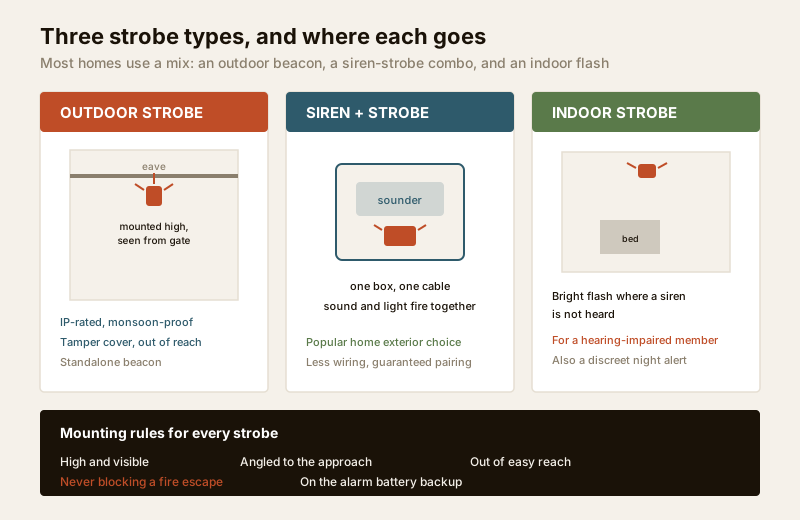
1. Outdoor weatherproof strobe. A standalone beacon fixed high on the facade, ideally visible from both the street and the society gate. In India this unit must be genuinely monsoon-proof — look for a stated IP rating (broadly, IP54 or better for splash and dust; higher for fully exposed positions) so driving rain and dust do not kill it in one season. Weatherproofing and sealing follow the same logic as any outdoor security fitting.
2. Combined siren-strobe unit. One weatherproof box holding both a sounder and a flashing beacon, driven by a single cable run. This is the most popular choice for a home exterior: sound and light in one fitting, less wiring, and the two are guaranteed to fire together. Many self-powered outdoor sounder boxes include a strobe for exactly this reason.
3. Indoor strobe. A smaller beacon inside the home. Its headline job is the hearing-impaired alert — a bright flash in the bedroom or living area for someone who will never hear the siren — but it also gives a discreet visible cue in a room, or a night-time alert that does not wake a whole building.
Choosing colour and brightness
- Colour. Most security strobes are red or amber/white. Red reads unambiguously as an alarm/emergency and cuts through visually; white/clear is the brightest and most attention-grabbing at distance. Choose for visibility from where your responder will be — the gate, the lane, the opposite tower.
- Brightness matters more than fashion. The point is to be seen from far off, through rain, past streetlights. A dim decorative flasher is not a security strobe. Favour a bright, purpose-made unit and mount it where nothing blocks the line of sight.
Mounting: high, visible, and out of reach
A strobe only works if the right people can see it and the wrong person cannot reach it.
| Rule | Why it matters |
|---|---|
| Mount high on the facade | Visible over walls, gates and parked vehicles; harder to tamper with |
| Face the approach | Aim it toward the street and the society gate — wherever your responder will be |
| Keep the sight-line clear | No trees, awnings, signboards or a neighbour's wall blocking the flash |
| Out of easy reach | High mounting also puts it beyond a casual reach from the ground |
| Weatherproof position | Tuck an outdoor unit under an eave where sensible, but not where the eave hides the flash |
| Never block an exit | The unit and its wiring must not obstruct a door, window or fire-escape route |
For a gated community, agree a consistent placement so guards learn where to look on every block — see the gated-communities security guide. For an apartment, coordinate an outdoor strobe with the RWA, since it sits on a shared facade; an indoor strobe you control freely.
Pair it, do not isolate it: strobe + siren + a real responder
A strobe on its own is a light with no plan. Its value appears only when it is wired into a response.
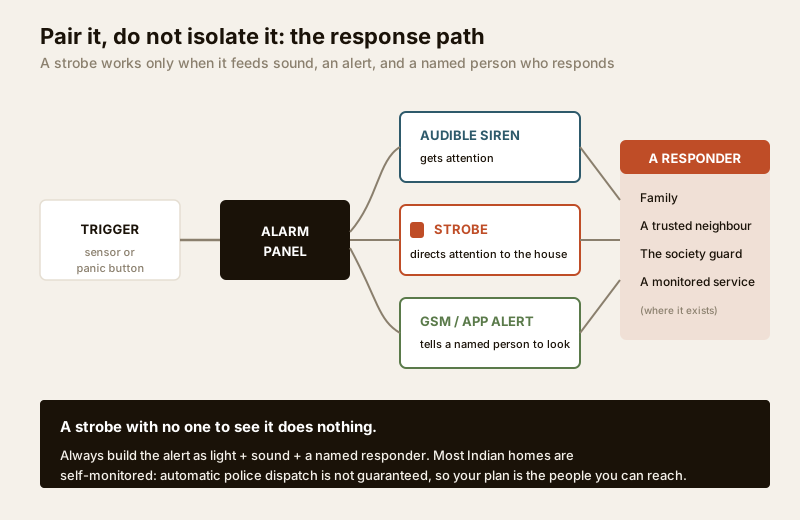
Build the alert as a set of parallel channels, each covering a gap in the others:
- The siren gets initial attention and can rattle an intruder — see audible sirens for sizing and self-powered outdoor units.
- The strobe directs that attention to the exact home and keeps marking it after the siren times out.
- A GSM/app alert reaches a named person — you, a neighbour, a family group — because a flash no one is present to see achieves nothing. This connectivity layer lives in your wireless system.
- A panic button lets a person deliberately fire the same siren-and-strobe to summon help.
Then decide who responds and write it down: the family, a trusted neighbour, the society guard on the call-list, or — where such a service genuinely exists — a monitored provider. In most Indian homes this is self-monitoring: automatic police dispatch is not guaranteed, so your plan is the people you can actually reach. The complete burglar-alarm guide and the emergency preparedness guide both walk through building that call-list.
Where a strobe earns its keep in India
- The night-identification problem. Dense rows of similar houses and tall towers make "which flat?" a real delay. A strobe is the cheapest fix for it, letting the guard or a neighbour find the alarming home at a glance.
- Apartment noise sensitivity. Where a long-sounding siren would breach community rules or courtesy, a strobe carries the alert visibly. Many residents run a brief siren plus a persistent strobe — enough sound to alert, then light to mark.
- Monsoon-proofing. An outdoor beacon lives in rain and dust for months a year. A stated IP rating and a sheltered-but-visible position are non-negotiable; a cheap non-rated flasher will not survive one Indian monsoon.
- A deaf or hard-of-hearing family member. For them the strobe is not an add-on — it is the alarm. Plan a bright indoor strobe (and, if you can, a vibrating alert) in the rooms they use, part of a wider children's-safety and family-safety plan for anyone who cannot rely on sound.
- Power cuts. The strobe must sit on the alarm's battery backup so a load-shedding evening does not switch off your only visible alert.
Sizing your strobe plan
| Home type | Sensible strobe plan |
|---|---|
| Small home / row house | One outdoor siren-strobe combo, mounted high toward the gate/lane |
| Villa / independent house | Outdoor combo on the main facade; consider a second beacon covering the rear |
| Apartment (noise-limited) | Brief siren + persistent outdoor strobe (RWA-coordinated) + indoor strobe |
| Home with a hearing-impaired member | All the above plus a dedicated bright indoor strobe in their rooms |
| Gated community | Consistent per-block strobe placement guards are trained to scan |
To match strobe, siren and connectivity to your specific home and budget, run the burglar-alarm system selector, then read the audible-siren guide for the sound half of the pairing.
When to bring in a professional. A homeowner can plan placement, pick colour and brightness, choose a combo unit and mount a low indoor strobe. Hand any mains-connected wiring, high-facade mounting, and integration with the alarm panel to a licensed electrician or your alarm installer — see the electrical hub. For an apartment or society, clear an outdoor strobe with the RWA before it goes on a shared facade, and agree the response plan — the guard's call-list — in writing. A beacon nobody is tasked to look at is decoration, not security.
Key takeaways
- A siren says something is wrong; a strobe says where — a flashing beacon lets a guard, neighbour or responder pinpoint the exact alarming home at night, which on a dense Indian street is the difference between help arriving and help searching.
- A strobe is essential for a hearing-impaired household member — a bright indoor flash is the only alarm some people will ever receive; plan it in the rooms they use.
- It shines where sound is restricted or useless — apartment noise limits, late nights, and loud environments all call for a strong visible alert; a strobe can also keep marking the house after the siren times out.
- Choose weatherproof and mount it right — an IP-rated monsoon-proof outdoor unit, high on the facade, facing the approach, on the alarm's battery backup, never blocking a fire exit.
- Pair it, never isolate it — a strobe only works wired to a siren, a GSM/app alert, and a named responder; a flash with no one tasked to see it does nothing.
References
- Manufacturer specifications — confirm the IP weatherproof rating, LED vs xenon type, flash rate, current draw and battery-backup behaviour on the maker's own datasheet before buying an outdoor or combined siren-strobe unit.
- Digital Personal Data Protection Act, 2023 — any alert log that records who triggered an alarm, when and where is personal data; keep it private and share it only with the responders who need it.
- National Building Code of India (SP 7), Bureau of Indian Standards, and local municipal bye-laws for the electrical and life-safety aspects of mounting and wiring an external beacon, and for the rule that no fitting may obstruct an egress route; verify the current edition via the BIS catalogue: https://www.services.bis.gov.in/
This is an educational overview, not legal advice. Mains wiring, high-facade mounting and integration with an alarm panel are qualified professional tasks — engage a licensed electrician or alarm installer, coordinate shared-facade fittings with your RWA, and verify any standard's current status via the BIS catalogue before relying on it.
Export this guide
Related Guides — Deep-dive reading
Panic Buttons for Indian Homes (2026): One Press for Help in Any Emergency
A panic button is one manual control that instantly raises the alarm and summons help — for an intrusion, a medical collapse, a fire, or a threat at the door. This guide covers the types, where to place them, and how to build the response plan that makes them actually work in India.
SecurityHow to Choose a Burglar Alarm in India (2026): Sensors, Alerts and What Actually Matters
A homeowner's guide to selecting an intruder alarm that fits your flat, villa or shop and alerts you the way you want — matching the sensor mix, control panel and the big siren-versus-monitored decision to your real risk, and dodging the false-alarm traps that make people switch systems off.
SecurityDuress Alarms in India (2026): The Silent Code That Summons Help While You Comply
A duress alarm lets you signal that you are being forced or threatened while appearing to switch the system off normally. This guide explains how a duress code works, how to set one up, and the honest India catch: it only helps if someone actually responds.
SecurityRelated Tools — Try Free
Burglar Alarm System Selector
Answer a few questions about your property, cabling, coverage, monitoring and power and get the right burglar alarm — wired / wireless / hybrid, self or professionally monitored — with the design non-negotiables.
Alarm SelectorChild & Elder Home-Safety Audit
Room-by-room safety audit for households with children or seniors — 10 categories, 70+ checkpoints tagged by audience.
Safety AuditApartment Video Door System Planner
Enter flats, entrances, floors and guard desk for a first-pass building intercom plan — door stations, indoor monitors, guard station, the right architecture and an indicative cost band.
Building Planner