
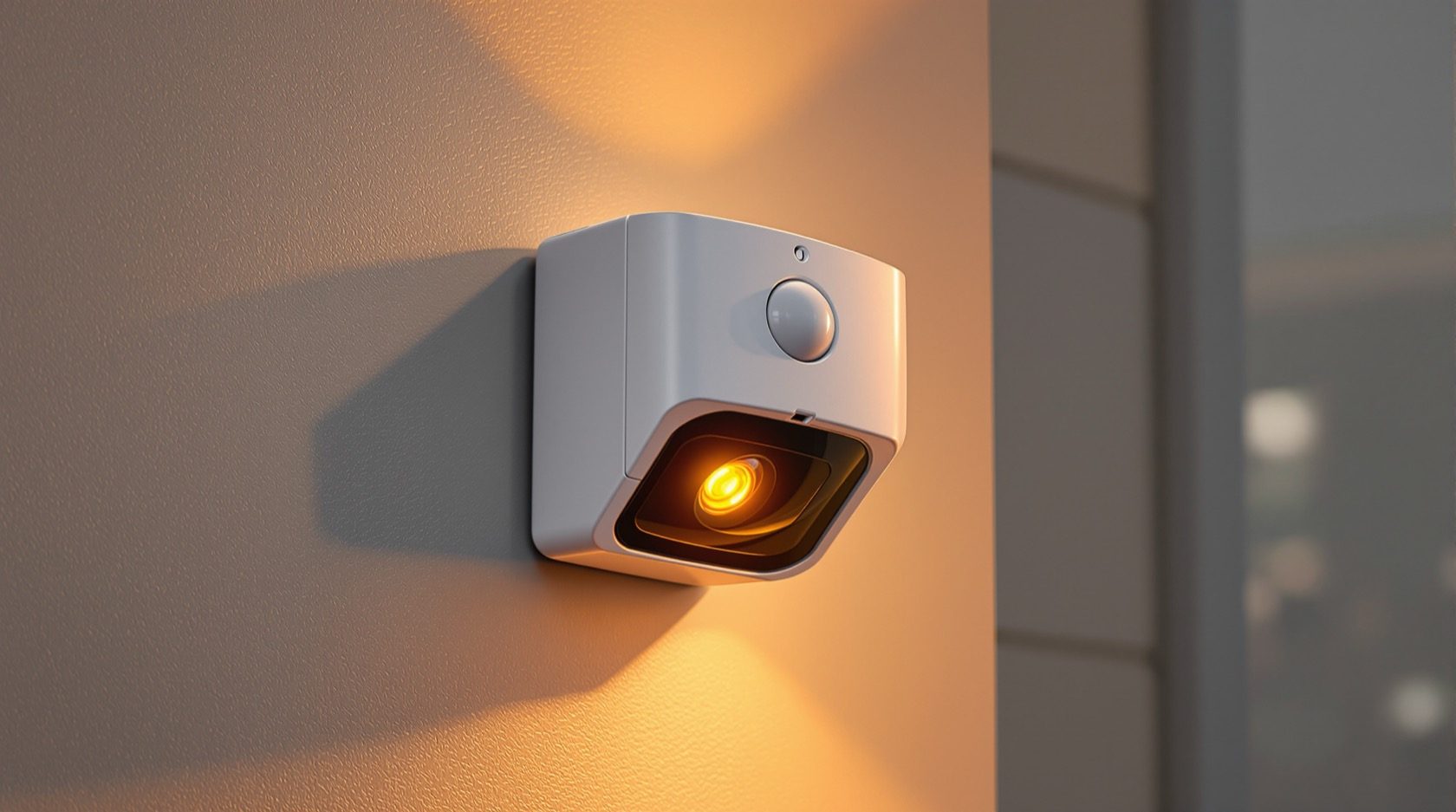
Dual-Technology Sensors in India (2026): PIR + Microwave, Fewer False Alarms
How dual-technology motion sensors combine a PIR and a microwave detector in one unit and only trigger when BOTH agree, cutting the false alarms that make Indian homeowners give up and stop arming the system.
Ask anyone who has lived with a cheap motion alarm in India why it is switched off, and the answer is almost always the same: it kept crying wolf. The ceiling fan, the air conditioner kicking in, a shaft of afternoon sun crossing the floor, a moth near the lens — each one set off the siren until the household simply stopped arming it. A disarmed alarm protects nobody. This is the exact problem dual-technology sensors were built to solve.
A dual-technology sensor (often shortened to "dual-tech") puts two completely different motion detectors inside one housing — a passive infrared (PIR) element and a microwave radar element — and wires them so the alarm only fires when both agree that a person is moving. Because each technology is fooled by different things, demanding that both confirm the same event throws out almost all the nuisance triggers while still catching a real intruder. This guide, part of Studio Matrx's burglar and intrusion alarm hub, explains how that works, the honest trade-off it carries, and where in an Indian home the extra cost genuinely pays for itself.
Scope & safety. This guide helps you choose and place the right detector so your alarm stays armed and trustworthy. It is strictly about how detection works and where to mount a sensor — never about defeating one. Deciding sensor type and position is well within a homeowner's remit; running mains power to a panel, or fixing anything at height, is a licensed electrician's job — see the electrical hub. Where a sensor "sees" indoors touches privacy, so mind what rooms you cover under the Digital Personal Data Protection Act, 2023. This is educational guidance, not legal advice.
The two halves, and why each needs the other
To understand dual-tech, you first have to see that its two detectors have opposite blind spots. Studio Matrx covers each in its own guide — this one is about what happens when you fuse them.
- PIR sensors are passive: they watch for a moving pattern of body heat crossing the room. They are cheap, sip power, and are the default in almost every Indian alarm. Their weakness is heat and light — a rush of hot air from an AC or heater, a ceiling fan stirring warm air, or a patch of sunlight sweeping the floor can all look, to a PIR, like a warm body moving.
- Microwave sensors are active: they bounce a low-power radio signal around the room and watch for the frequency shift a moving object causes (the Doppler effect). They ignore heat and light entirely — a fan or the sun means nothing to them. Their weakness is the opposite: radio waves pass through thin partitions and glass, so a microwave unit can "see" someone walking in the corridor outside, or a tree swaying beyond the window, and count that as motion inside.
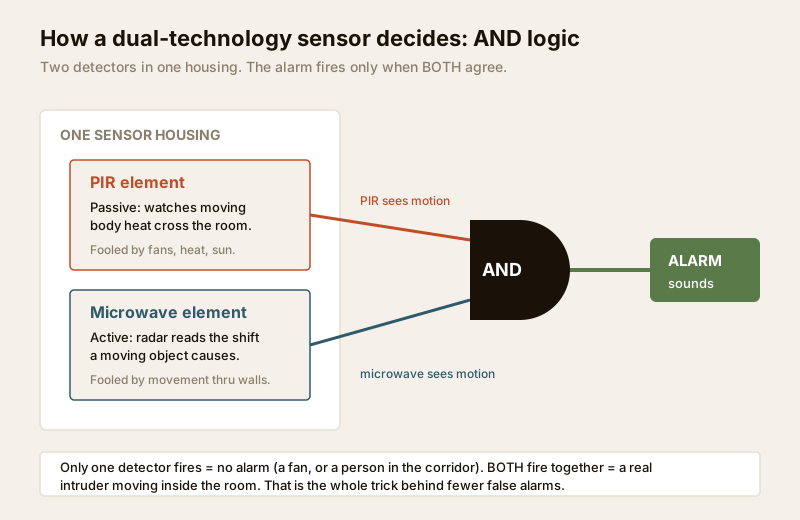
Line those two up and the pattern is obvious: each technology's weakness is the other's strength. A fan fools the PIR but not the microwave. A person in the corridor fools the microwave but not the PIR. Neither nuisance trips both. Only a genuine intruder — a warm body actually moving inside the room — satisfies both detectors at once.
The AND rule in one sentence
A dual-tech sensor uses AND logic: PIR detects motion AND microwave detects motion, at the same moment, in the same spot, before it declares an alarm. A basic single-technology sensor uses, in effect, OR logic — any one trigger is enough — which is exactly why cheap PIRs are so twitchy. Swapping "any one" for "both must agree" is the whole trick, and it is why dual-tech is sometimes sold as an "anti-false-alarm" or "dual-verification" detector.
Why this dramatically cuts false alarms
False alarms are not a cosmetic annoyance; they are the single biggest reason home alarms fail in practice. Every false trip trains the household to distrust the system, and a distrusted system gets left disarmed. Genuine false-alarm prevention is therefore a security feature in its own right, not a luxury — and in Indian conditions the usual culprits are relentless.
| Everyday trigger | Fools a lone PIR? | Fools a lone microwave? | Fools dual-tech (needs BOTH)? |
|---|---|---|---|
| Ceiling fan stirring warm air | Yes | No | No |
| AC or heater blowing a heat plume | Yes | No | No |
| Afternoon sun sweeping the floor | Yes | No | No |
| A moth or insect on the lens | Yes | No | No |
| Person walking in the corridor outside | No | Yes | No |
| A tree or curtain swaying past the window | No | Yes | No |
| Movement in the flat next door, through a wall | No | Yes | No |
| A real intruder moving inside the room | Yes | Yes | Yes — alarm |
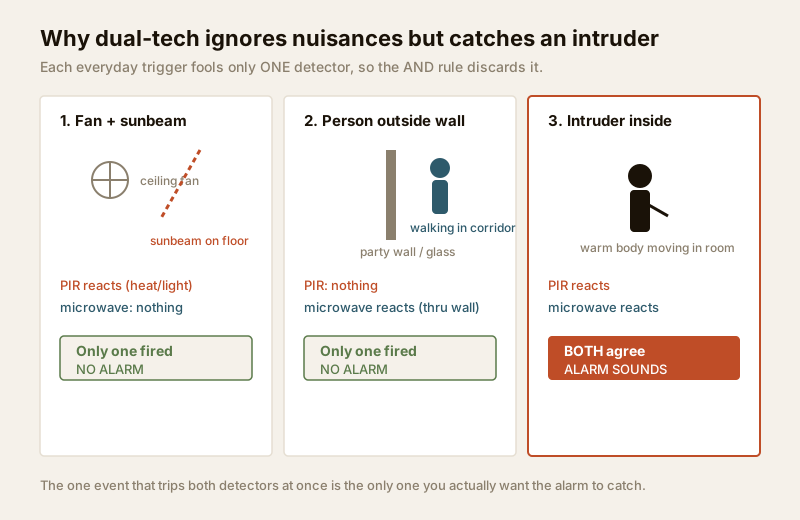
Read the bottom row against all the others: every nuisance trips only one of the two detectors, so the AND rule quietly discards it, while the one event you actually care about — a warm body genuinely moving inside the protected space — is the only thing that lights up both. In an Indian home full of fans, AC drafts, 45°C summer heat and bright sun, that is the difference between an alarm the family trusts and one they mute. The pillar guide, the complete guide to burglar alarms in India, makes the same point at system level: reliability is what keeps a system armed.
The honest trade-off: AND logic can trim sensitivity
Here is the part a straight guide must state plainly rather than gloss over. Because a dual-tech sensor insists that both detectors confirm, it is, by design, slightly less eager to trigger than a lone PIR. In the rare case where a genuine intruder moves in a way that satisfies one detector strongly but the other only weakly — a very slow, deliberate creep, or movement right at the far edge of the sensor's range where one technology has faded — the AND rule can hold back an alarm that a single sensitive PIR might have raised.
This is a real design trade-off, not a flaw to hide: you are trading a sliver of raw sensitivity for a large gain in trustworthiness. In practice it rarely matters, because:
- Good dual-tech units have tunable sensitivity on each channel, so an installer can dial in enough reach for the room without inviting false trips.
- Layered design covers the gap. A dual-tech unit is one layer; door and window contact sensors on the entry points and a perimeter layer catch an intruder before they are even inside the room, so the motion sensor is a backstop, not the sole line. Studio Matrx's layered security design guide explains why no single detector should carry the whole load.
- The alternative — a hyper-sensitive lone PIR that trips on every fan and sunbeam — gets disarmed, and a disarmed sensor has zero sensitivity. A slightly-less-eager sensor that stays armed beats a twitchy one that lives switched off.
So the correct framing is: dual-tech buys reliability at a small, tunable cost in bleeding-edge sensitivity, and for the rooms where it belongs that is a trade well worth making.
When dual-technology is worth the extra cost
Dual-tech sensors cost more than a plain PIR — both to buy and, because microwave draws more current, in power and battery terms. That premium is not always justified. A small, still bedroom with no fan running while you are out, no window onto a busy corridor, and stable temperature will do perfectly well on an ordinary PIR. Spend the dual-tech money where false alarms are actually likely.
| Reach for dual-tech when the space has... | Why a lone PIR struggles there |
|---|---|
| A large open room or hall | Long sight-lines pick up distant fans, drafts and sun; more surface for nuisance heat |
| A window with direct sun, a busy road or corridor outside | Sun sweeps fool PIR; movement beyond glass fools microwave — one detector alone false-trips |
| A running ceiling fan or AC while armed | Warm-air plumes are the classic PIR false trigger in Indian homes |
| A garage, warehouse, godown or workshop | Big volumes, temperature swings, vehicles and machinery drafts |
| Heat sources — a kitchen edge, a boiler, west-facing walls at 45°C | Hot surfaces cut PIR contrast and mimic a warm body |
| A history of the cheap PIR crying wolf | The clearest signal of all: if it keeps false-tripping, upgrade that spot |
The rule of thumb: use plain PIRs in calm, small, shaded rooms, and spend on dual-tech at the few problem spots — the big living room, the sunroom, the garage, the hall with the fan on. You do not need dual-tech everywhere; you need it where the false alarms are. Feed your room list into the burglar alarm system selector to see where the upgrade earns its keep, and read the whole-home view in the ultimate guide to home security in India.
How dual-tech compares to its two halves
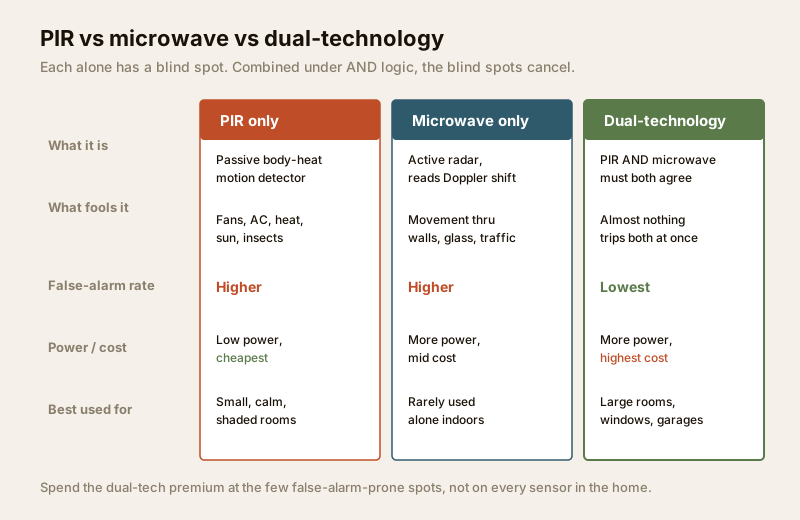
The comparison makes the buying logic concrete. On its own, each technology has a glaring blind spot; combined under AND logic, the blind spots cancel and you get the lowest false-alarm rate of the three — which is precisely what you are paying the premium for. For the broader motion-sensor family, including pet-friendly designs that avoid triggering on animals, see the motion-sensor umbrella guide.
Placing a dual-technology sensor well
The cleverest sensor is only as good as its mounting. Dual-tech does not change the basic placement rules, but two of them matter more because the microwave half sees through thin barriers.
- Corner-mount, high. Put the unit in a room corner at roughly 2.1–2.3 m so its fan-shaped coverage looks across the room and catches a person crossing the field, which both detectors read best.
- Aim away from the boundary the microwave can pierce. Because the radio half sees through plasterboard partitions and glass, point the sensor so its main beam looks into your room and away from a shared wall, an external window onto a busy corridor, or the street. This keeps the microwave from picking up the neighbour's movement or passing traffic. It is a placement consideration, nothing more.
- Keep large metal and moving machinery out of the direct beam. Big metal shutters and running equipment can reflect or agitate the microwave signal; angle around them.
- Do not point a PIR-bearing sensor straight at a heat source or sunlit window. Even though the microwave half will veto a lone heat trip, good practice keeps the AC vent, heater and direct sun out of the PIR's face so the sensor stays calm and responsive.
- Mind privacy. A motion sensor only reports "movement / no movement," not images — but choose which indoor spaces you cover thoughtfully, in the spirit of the DPDP Act, 2023.
Dual-tech units come in both wired and wireless forms and drop straight into a hybrid system; wireless battery units will need their cells changed a little more often than a plain PIR because the microwave radar draws more power. For an apartment, cross-check the shared-wall guidance in the apartment security guide; for a bungalow, the villa and independent-house guide covers the bigger halls and garages where dual-tech shines.
When to bring in a professional. You can and should decide which rooms get dual-tech and roughly where each unit goes. Bring in a licensed installer or electrician for mains-powered panels, cabling in walls, mounting at height, and for tuning each channel's sensitivity and range so the sensor is reliable without being twitchy — see the electrical hub and the building security systems guide. A good installer will walk-test the room with you so you can watch the sensor confirm a real crossing while ignoring the fan.
Key takeaways
- Dual-technology sensors pair a PIR and a microwave detector in one unit and fire only when BOTH agree — an AND rule that discards almost every single-cause false alarm.
- Each technology's weakness is the other's strength: a fan, heater, AC or sunbeam fools only the PIR; a person in the corridor or a tree beyond the glass fools only the microwave; neither alone trips a dual-tech unit.
- Fewer false alarms means the system stays armed — and an armed alarm is the only kind that protects anyone; reliability is the real product you are buying.
- The honest trade-off is a small, tunable dip in raw sensitivity to a very slow or far-edge movement — covered by adjustable channels and by layering with door, window and perimeter sensors.
- Spend the premium where false alarms are likely — large rooms, windows onto sun or a busy corridor, spaces with fans or AC running, garages and warehouses — and keep plain PIRs in small, calm, shaded rooms.
References
- Manufacturer datasheets for dual-technology (PIR + microwave) detectors — Honeywell, Bosch, Hikvision and Texecom publish coverage patterns, AND-logic behaviour, sensitivity/range tuning and current draw; verify the specific model's figures on the maker's own datasheet before ordering.
- Digital Personal Data Protection Act, 2023 — indoor motion detection reports movement, not images, but choosing which rooms to monitor is a privacy decision; handle it in that spirit.
- National Building Code of India (SP 7), Bureau of Indian Standards, and local bye-laws for any mains-connected or at-height installation work; verify the current edition via the BIS catalogue: https://www.services.bis.gov.in/
This is an educational overview, not legal advice. Mains wiring, panel connection and work at height are qualified professional tasks — engage a licensed installer or electrician, and verify any standard's current status via the BIS catalogue before relying on it.
Export this guide
Related Guides — Deep-dive reading
PIR vs Microwave Sensor (2026): Which Motion Sensor for Indian Homes?
A neutral head-to-head between passive-infrared (PIR) and microwave (radar) motion sensors for intruder detection in an Indian home — how each detects, where each false-triggers, how they cover a room, and why their opposite weaknesses make dual-technology the honest best-of-both.
SecurityGlass-Break Sensors in India (2026): Catching a Smashed Pane Before Entry
How acoustic glass-break sensors listen for the twin sound of breaking glass, why they cover what door and window contacts miss, and how to place one sensor to protect a whole room of windows in an Indian home or shop.
SecuritySmart Sensors for Home Security in India (2026): Choosing and Deploying a Connected Set
What makes a sensor smart rather than a plain alarm contact, the full family from door and motion to smoke and water, the wireless-battery catch that quietly creates blind spots, placement to tame false alarms, and using sensors for automation without weakening the security they exist for.
SecurityRelated Tools — Try Free
Burglar Alarm System Selector
Answer a few questions about your property, cabling, coverage, monitoring and power and get the right burglar alarm — wired / wireless / hybrid, self or professionally monitored — with the design non-negotiables.
Alarm SelectorCCTV Mounting Height & Angle Calculator
Height, target distance and lens angle to the downward tilt, the blind dead-zone below and where coverage begins and ends.
Height & AngleCross-Ventilation Analyzer
Estimate airflow and air changes per hour (ACH) from room size, window areas, layout, and local wind — with NBC 2016 Part 8 compliance check.
Ventilation Calculator