
Apartment Security in India: The Resident's Security Guide
Securing a flat is a shared job. This guide draws the line between what you control from your own front door inward and what the society, RWA or facility manager runs outside it — the flat-specific threats, the checklist by zone, and how to raise security at the AGM. India-grounded, renter-aware.
Securing a flat is unlike securing a house, and the difference trips up most people. In an independent home you own every layer of defence, from the compound wall to the bedroom safe. In an apartment you own only a slice of the whole — and the slice you own begins, quite precisely, at your own front door. Everything outside it belongs to somebody else: the society, the residents' welfare association (RWA), or the facility management company they hire.
That split is the single most important idea in this guide. Get it right and your money and effort land where they actually work. Get it wrong — buy a fortress door but ignore a broken gate, or complain about the guards while your own lock is a cheap surface latch — and you have spent effort on the wrong side of the line.
Scope & safety. This guide helps you plan, decide and coordinate as a resident. Fire detection and alarm systems, electronic access control and electric locks, mains electrical work, and structural elements (grilles, gates) are life-safety-critical: specify them, then have a licensed professional design, install and certify them — and never let any security fitting block a fire escape or corridor egress. Common-area systems are the society's to install; this is not a substitute for a site assessment.
The split that defines flat security
Think of your building as two zones with a hand-off line running through your front door. Outside the line is the society-controlled shell; inside it is your resident-controlled flat.
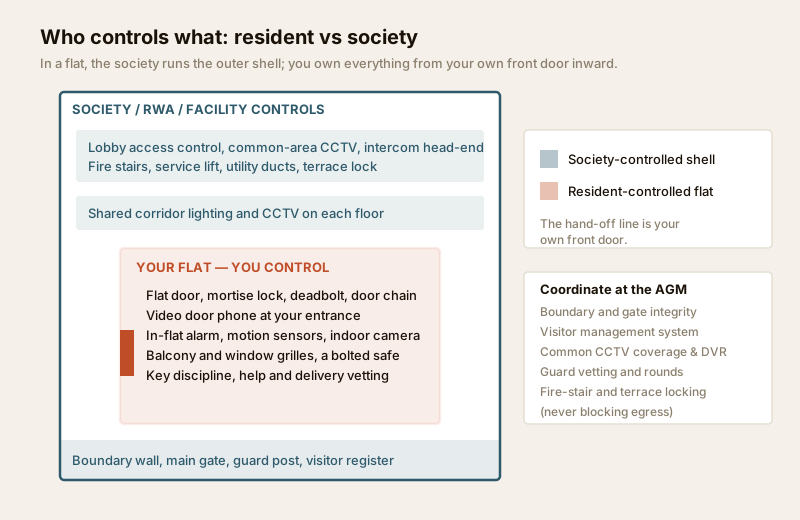
The society (or the RWA and its facility manager) runs the outer layers: the boundary wall and main gate, the guard post and visitor register, lobby access control, the intercom head-end, common-area CCTV, corridor and stairwell lighting, and the locking of terraces, service stairs and utility ducts. You cannot buy your way out of a weak shell — but you can push to fix it, which the second half of this guide covers.
You run everything from your own front door inward: the door itself and its locks, a video door phone at your entrance, in-flat alarm and sensors, balcony and window grilles, a bolted safe, and the daily discipline of keys, help and deliveries. This is where your budget has real, immediate effect — and where a renter can act without touching a single common wall.
| Element | Resident controls | Society / RWA controls |
|---|---|---|
| Boundary wall, main gate | — | Yes |
| Guard post, visitor register | Report issues | Yes |
| Lobby / building access control | — | Yes |
| Common-area & corridor CCTV | Request coverage | Yes |
| Fire stairs, service lift, terrace lock | Flag if open | Yes |
| Your flat's front door & locks | Yes | — |
| Video door phone at your door | Yes | — |
| In-flat alarm, motion sensors | Yes | — |
| Balcony & window grilles | Yes (with bye-law approval) | — |
| Bolted safe, key discipline | Yes | — |
The practical rule: secure your own slice completely before spending energy on the shell, then work the shell through the society. A perfect gate cannot save an unlocked flat door, and a perfect flat door still benefits from a gate that turns strangers away.
Apartment-specific threats
A flat faces a different threat pattern from a house. The compound wall and the burglar-through-the-window story matter less; the ways an intruder moves through a shared building matter more.
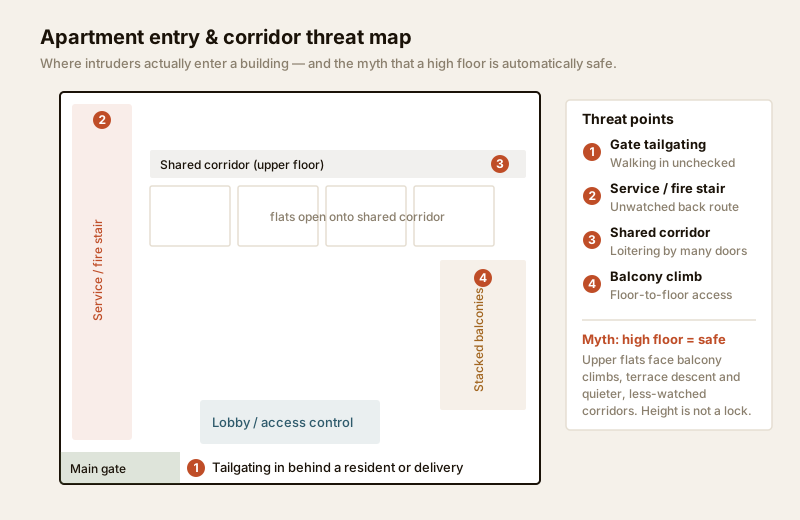
- Tailgating into the building. The commonest apartment breach is not a forced gate — it is a stranger walking in a step behind a resident, a delivery rider or a cab, past a guard who assumes they belong. No lock on your flat helps if the building lets anyone in.
- Service and fire-stair access. Buildings watch the lobby and lifts but rarely the service stair, the fire stair or the utility/plumbing duct. These are quiet, unwatched vertical routes between floors and are a favourite way to reach an upper corridor unseen.
- Shared corridors. Your front door opens onto a semi-public passage that many people legitimately use. A person loitering there is far less conspicuous than someone lurking outside a house, which is why corridor CCTV and a solid door matter together.
- Balcony climbs between floors. Stacked balconies, grille projections, split-AC frames and drainpipes turn the outside of the building into a ladder. An intruder can move one or two floors up or down to an unlatched balcony door.
- The "high floor = safe" myth. Many buyers assume an upper flat is safe because it is high. It is not automatically so: upper floors face balcony climbs, descent from the terrace, and corridors that are quieter and less watched than the busy ground level. Height is a mild deterrent, not a lock.
- Deliveries and domestic help. The steady flow of maids, cooks, drivers, couriers and repair staff is normal apartment life — and also the main way keys, codes and routines leak. Vetting and access discipline, not suspicion, are the answer.
Securing your slice: the resident's flat
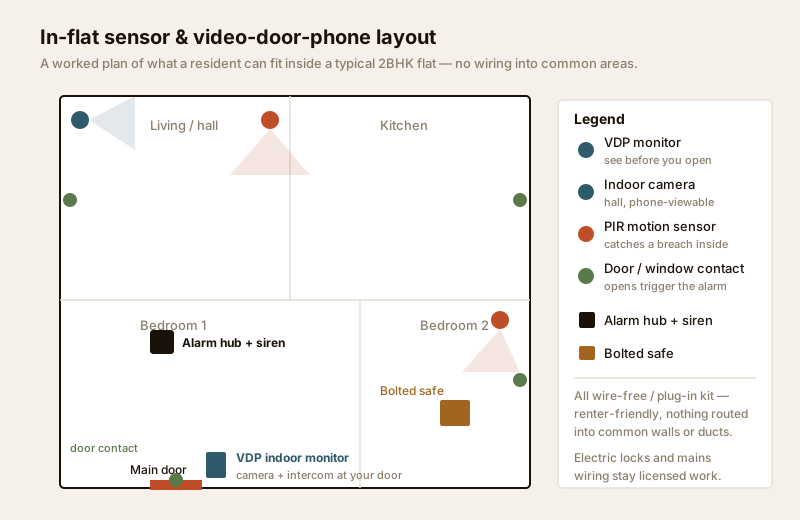
This is where you have full control, and where a well-chosen, mostly wire-free kit closes the real gaps. The layout below shows what fits inside a typical 2BHK without touching any common area.
Your front door is the priority. It is the one barrier entirely yours. Fit a solid door leaf in a well-anchored frame, a good mortise lock plus a deadbolt, a door chain or guard, and a wide-angle door viewer. Rekey or replace the lock the day you move in — you never know how many copies of the old key exist.
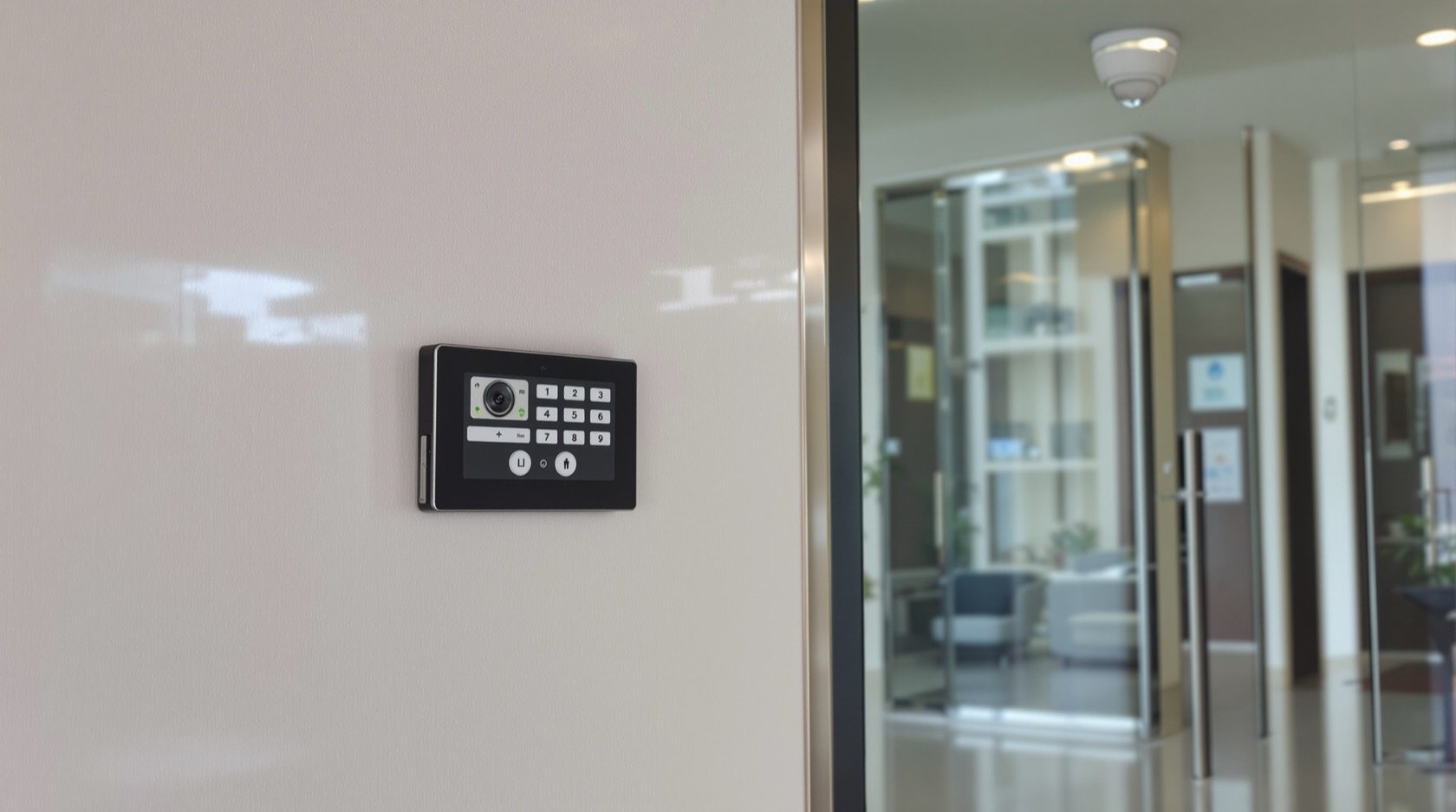
A video door phone (VDP) is the highest-value apartment upgrade. It lets you see and speak to whoever is at your door before opening it, which directly defeats the "open to a stranger" failure that causes so many break-ins. Many societies also run a gate-to-flat intercom; a VDP at your own door adds the second, closer check.
In-flat detection need not be elaborate. Door and window contacts, one or two PIR motion sensors covering the hall, an alarm hub with a siren, and phone alerts give you a complete self-contained system. Modern wireless kits are renter-friendly — nothing is chased into walls or routed into common ducts.
Balcony and window security. Grilles on accessible windows and low or climb-reachable balconies are worth fitting, but they intersect with two things: your society's bye-laws on external appearance, and fire safety. Always design at least one grille as an internally-openable escape route, and get written society approval before altering the facade.
A bolted safe for jewellery, cash and documents is the innermost layer — so that even a successful intruder leaves with little.
| In-flat measure | What it does | Indicative cost (Rs) | Renter-friendly? |
|---|---|---|---|
| Rekey / upgrade main-door lock | Removes unknown key copies | 1,500 - 6,000 | Yes (ask owner) |
| Deadbolt + door chain + viewer | Hardens the one door you own | 1,500 - 5,000 | Mostly |
| Video door phone | See before you open | 3,000 - 12,000 | Yes (wireless) |
| Wireless alarm + contacts + PIR | Detects an in-flat breach | 4,000 - 15,000 | Yes |
| Indoor hall camera (phone-viewable) | Records / alerts on intrusion | 2,000 - 6,000 | Yes |
| Window / balcony grilles | Delays a facade climb | 400 - 900 per sq ft | No (owner + bye-law) |
| Bolted burglary safe | Protects valuables | 6,000 - 25,000 | Small free-standing only |
For a fuller treatment of the systems themselves, see the ultimate guide to home security in India and the building security systems guide; to score your own gaps first, run the home security risk scorecard.
Coordinating the shell: working with your society
You cannot fix the gate alone, but as a member of the society you have a legitimate voice in how the shell is run. The trick is to raise it constructively, with specifics, at the right forum.
Start informally, then escalate. Flag a broken gate latch or a dark stairwell to the facility manager or secretary first. If shared issues persist, they belong on the AGM agenda — the annual general meeting is where the society votes budget and policy, so a written, costed proposal there carries far more weight than a corridor complaint.
Practical shell items worth pushing for:
- Visitor management — a proper register or app-based gate system that logs and verifies every visitor, delivery and domestic worker, with resident approval before entry. This is the single biggest lever against tailgating.
- Gate and boundary discipline — guards who actually stop and check, a gate that closes, and no gaps in the boundary or unlit setbacks behind it.
- Common-area CCTV — coverage of the gate, lobby, lifts, each corridor, the service and fire stairs, and the basement, feeding a recorder with enough retention, and a clear policy on who can view footage. Society CCTV in common areas is governed by your bye-laws and local rules — propose it as policy, not a private camera.
- Guard vetting and rounds — verified, trained guards, sensible shift rounds, and a working relationship with the local police station.
- Terrace, duct and service-stair locking — closing the quiet vertical routes, without ever blocking a fire escape.
To argue coverage concretely at the AGM, the CCTV camera coverage calculator and the access control system designer let you show how many cameras or readers a given lobby and corridor layout actually needs. Any shared electronic access control, electric locks or fire-linked alarms are the society's to install through licensed professionals — and must comply with the National Building Code fire and life-safety provisions and local bye-laws, never compromising egress.
Renting a flat: non-permanent measures
Renters can secure a flat well without drilling a single hole. Focus on everything reversible:
- Insist the lock is rekeyed before you move in — a reasonable request to any landlord, and cheap.
- Wireless, plug-in kit — a battery or plug-in video door phone, stick-on door and window contacts, a wireless alarm hub, and a Wi-Fi indoor camera all come away cleanly when you leave.
- A small free-standing or in-cupboard safe rather than a bolted-down one.
- Portable door reinforcers — a door chain, a jammer or a travel door-stop alarm add delay without permanent fitting.
- Discipline over hardware — nightly lock-up, never propping the flat door, and vetting help matter more than any gadget and cost nothing.
For grilles or a bolted safe, ask the owner in writing; many agree, and some share the cost. The security upgrades for existing homes guide sequences reversible upgrades for maximum effect per rupee.
When to bring in a professional
Plan, choose and coordinate these yourself — but do not design, wire or certify them:
- Any shared/common fire detection and alarm — life-safety-critical society infrastructure; must be designed and commissioned by licensed professionals per the National Building Code fire and life-safety provisions and local bye-laws.
- Electronic access control and electric locks at lobbies and gates — poorly installed electric locks can trap people in a fire; the society must use a licensed installer, and egress must always win.
- Mains electrical work for cameras, gate motors and alarms — use a licensed electrician (see the electrical guide).
- Structural grille and gate fabrication — must be anchored properly and remain fire-escapable; use a competent fabricator working to a proper detail, and check structural safety principles.
Your job as a resident is to secure your own flat, assess the building's gaps, and put costed, code-aware proposals to the society. The professionals make the shared systems safe and compliant.
Key takeaways
- The hand-off line is your front door. You own everything inward; the society owns the shell. Secure your slice completely first.
- Apartment threats are movement threats — tailgating, service and fire stairs, shared corridors and balcony climbs. A high floor is not automatically safe.
- A strong door plus a video door phone is the highest-value resident upgrade; add wireless in-flat detection and a safe.
- Renters can secure a flat fully with reversible, wire-free kit and good discipline — no drilling required.
- Fix the shell through the society — raise visitor management, CCTV and boundary discipline as costed AGM proposals, and route life-safety work to licensed professionals.
Where to go next
- The master guide: Ultimate Guide to Home Security in India.
- The systems in depth: Building Security Systems Guide.
- Other building types: Security for Gated Communities and Security for Villas & Independent Houses.
- Upgrade a rented or existing flat: Security Upgrades for Existing Homes.
- Assess first: Home Security Risk Scorecard, or browse all guides.
References
- National Building Code of India (SP 7), Bureau of Indian Standards — fire and life-safety provisions relevant to alarms, egress, corridors and escape from grilled openings; verify the current edition via the BIS catalogue.
- Your housing society bye-laws and the model co-operative society / apartment ownership rules for your state — govern common-area CCTV, facade alterations (grilles), guard arrangements and AGM procedure.
- Local municipal building bye-laws and the local police station's RWA guidance on visitor logs, verified staff and neighbourhood coordination.
This is an educational overview for planning and decision-making. Fire detection and alarm, electronic access control, mains electrical work and structural elements are qualified professional work — engage licensed professionals for design, installation and certification, and verify any standard's current status via the BIS catalogue before relying on it.
Export this guide
Related Guides — Deep-dive reading
Staircase and Corridor Security Lighting in India (2026): Even Light, No Dark Half-Landings, Never Switched Off Mid-Flight
How to light the shared stairs, lobbies, corridors and passages of an apartment building so they are safe to move through and never a place someone can wait unseen, without ever compromising the code emergency lighting on the escape stair.
SecurityLift Lobby Security in India (2026): The Control Point Where Public Becomes Private
The lobby is where an outsider is screened, a visitor is verified before the inner door, and access to the lifts and stairs is granted or denied. This guide shows how to design the entrance lobby and the upper lift lobbies so the guard sees who enters, a waiting resident feels safe, and egress always wins.
SecuritySecurity for People Living Alone in India (2026): Calm, Practical Habits When There Is No Second Person to Notice
Living alone is an ordinary and growing part of Indian life - the student in a new city, the working single, the elder whose children are abroad, the person after a separation. It does not call for fear. It calls for a few deliberate habits, because there is no second person in the home to notice trouble, raise the alarm, or catch an accident. This is calm self-reliance, layer by layer.
SecurityRelated Tools — Try Free
Apartment Video Door System Planner
Enter flats, entrances, floors and guard desk for a first-pass building intercom plan — door stations, indoor monitors, guard station, the right architecture and an indicative cost band.
Building PlannerHome Security Risk Scorecard
Score your home across six security layers — perimeter, entry points, lighting, detection, alarm and habits — and get a prioritised action plan.
Security ScorecardVideo Door Phone Type Selector
Answer a few questions about your building, cabling, budget and internet and get the right video door phone — analog / wired / wireless / IP, single-home or multi-apartment, monitor or app.
Door Phone Selector