
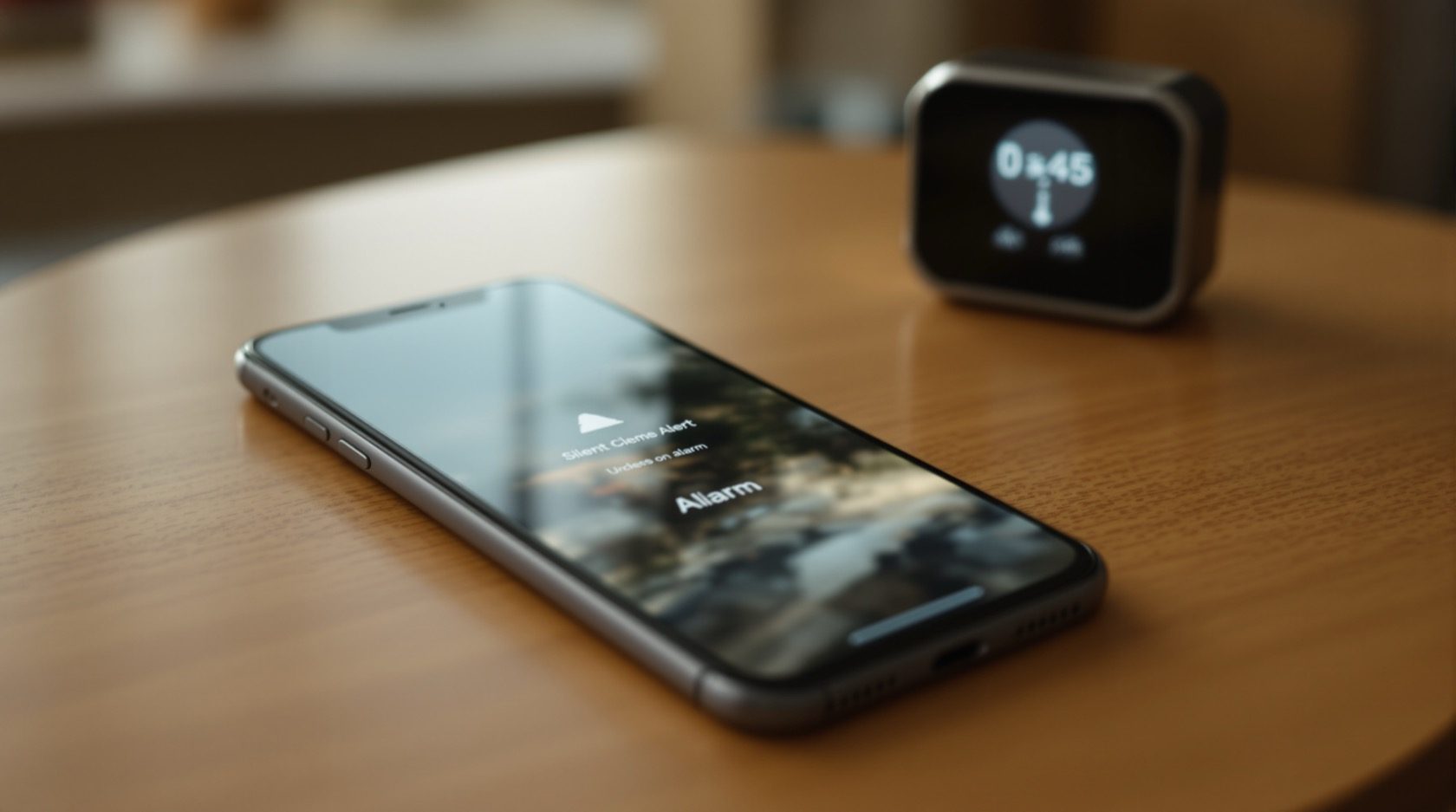
Silent Alarms for Indian Homes and Shops (2026): Alert Help Without a Siren
How a silent alarm summons help with no audible warning, when silent beats a siren for a hold-up or personal threat, and why it does nothing at all without a real responder.
A siren is the loud, obvious face of home security: something trips, the box on the wall screams, and the intruder runs. But there are moments when the last thing you want is noise. If someone is standing in front of you demanding the cash, or you are cornered and frightened, a blaring siren can turn a robbery into a violent one. For those moments there is a quieter tool.
Silent alarms trigger an alert with no siren at all. Press the button, enter the code, or tap the app, and the system says nothing in the room, yet somewhere a phone rings, an SMS arrives, or a monitoring station lights up. The intruder or attacker has no idea that help has been called. This guide, part of the Studio Matrx burglar and intrusion alarm hub, explains how a silent alarm works, when silent is the right choice and when a siren is, and the one thing that decides whether a silent alarm is protection or false comfort: who actually responds.
Scope & the honest truth up front. A silent alarm is only as good as the person who answers it. It makes no noise, so nobody nearby is alerted by the device itself — the entire value depends on a monitored service or a reliable human (a guard, a family member, a neighbour) actually seeing the alert and acting. A silent alarm wired to no one does nothing. Worse than nothing, in fact, because it gives you false comfort while an emergency goes unanswered. This guide is written strictly to help you summon help and protect people; it is educational guidance, not legal advice.
What a silent alarm actually is
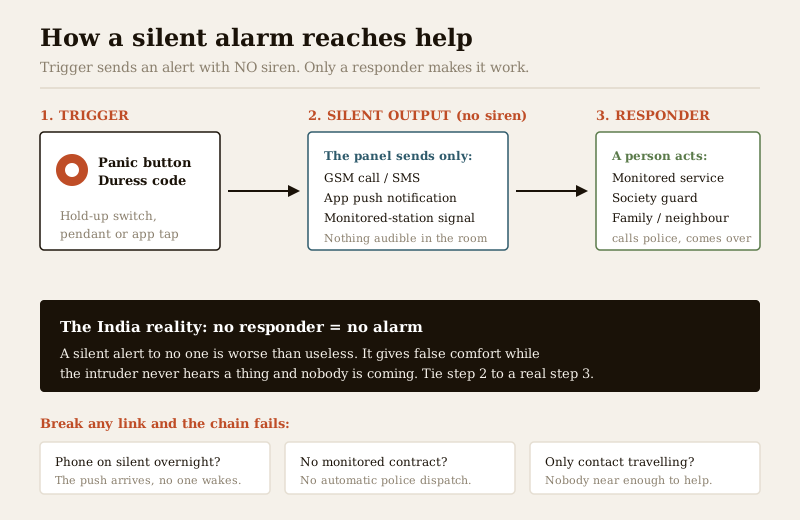
A silent alarm is any trigger that raises an alert without producing an audible output. The trigger can be a fixed panic button under a desk, a shop hold-up switch by the till, a wearable pendant for an elderly parent, a duress code typed into the keypad, or a tap in a phone app. What makes it "silent" is not the trigger but the output: instead of driving a siren and strobe, the panel sends only a quiet signal outward.
That quiet signal is usually one of three things:
- A GSM call or SMS to one or more numbers you have saved — the panel dials or texts a family member, a neighbour, or the shop owner.
- An app push notification to your phone and any trusted contacts on the same system.
- A signal to a monitored station (where you pay for a monitoring service), whose operators then act on your behalf.
None of these makes a sound where the emergency is happening. The person who triggered it looks calm; the attacker sees nothing. That is the entire point.
Silent is about the output, not the danger
It helps to separate two ideas that people mix up. A motion sensor or door sensor tripping in an empty house is a break-in event — there is nobody to threaten, and you usually want noise. A person pressing a button because someone is standing over them is a hold-up or personal-threat event — here noise can make things far more dangerous. Silent output is the natural match for the second kind of event, where a human is present and at risk.
When silent is the right choice
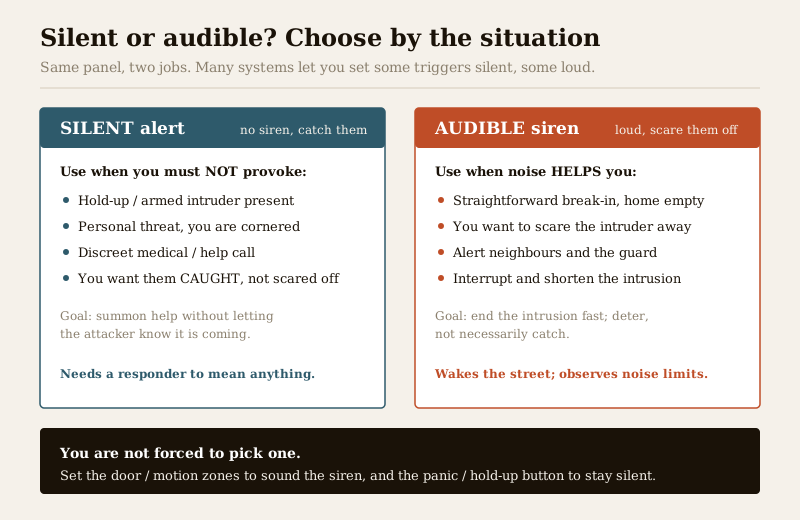
Silent alarms shine in a narrow but important set of situations. Choose silent when provoking the person in front of you is the greater danger, or when you simply need to call for help discreetly.
| Situation | Why silent, not a siren |
|---|---|
| Hold-up at a shop or home | A robber demanding cash may turn violent if a siren goes off. A silent alert lets staff comply, stay safe, and still bring help — and gives a better chance of the person being caught rather than just scared off. |
| Personal threat, you are cornered | If an intruder is already with you, you want help coming quietly, not an alarm that tells them you have called it and provokes a reaction. |
| Discreet medical or help call | An elderly parent who has fallen, or anyone who needs help without alarming the whole street, can summon a family member quietly with a pendant. |
| You want the person caught | A siren scares an intruder into fleeing. Silence can let a monitored responder or the police arrive while the person is still there. |
The common thread is a person is present and at risk, and either noise would make it worse or discretion is what is called for. Compare this with the opposite case, covered in the audible sirens guide: a straightforward break-in of an empty home, where you want the siren and strobe to scare the intruder off, cut the intrusion short, and wake the neighbours and the guard.
You do not have to choose only one
The good news is that silent and audible are not an either-or decision for the whole house. Most modern alarm panels let you assign the behaviour per trigger:
- The door, window and motion zones can be set to sound the siren loudly — the break-in case, where noise helps.
- The panic button and hold-up switch can be set to stay completely silent — the personal-threat case, where noise hurts.
So a single system can scare off a burglar who breaks in while the house is empty, and quietly summon help if someone is threatened while the family is home. When you plan the system with your installer, decide the silent-versus-audible behaviour zone by zone, and write it down. The burglar alarm system selector can help you match a configuration to your home or shop.
The India reality: a silent alarm to no one does nothing
This is the part that too many sellers skip, and it is the most important thing in this guide. A silent alarm has no siren, so the device itself alerts nobody nearby. Everything depends on the alert reaching a person who then acts. In most of India there is no automatic police dispatch when your panel triggers; systems here are overwhelmingly self-monitored, meaning the alert goes to you, a trusted contact, a neighbour, or the society guard via a GSM call, SMS or app push, and a human has to take it from there.
That makes the response plan the whole point. A silent alarm without a responder is not a quiet safety net — it is a button that does nothing while giving you the dangerous illusion that it does. Every link in the chain has to actually work:
- If the alert is an app push and the only phone it reaches is on silent overnight, the alert arrives and nobody wakes.
- If there is no monitored contract, no control room is watching, so nobody is coming unless a person you named picks up and acts.
- If your only named contact is travelling or far away, the alert lands with someone who cannot physically help.
Building a response plan that is actually real
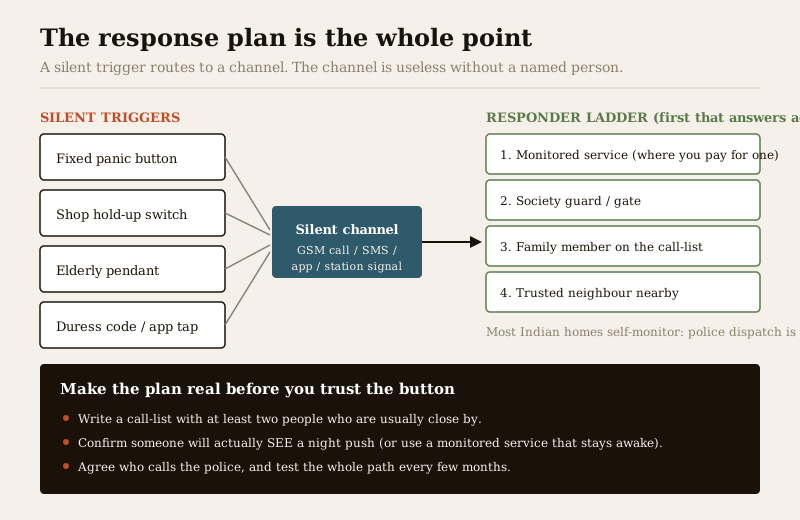
Before you trust a silent button, build the plan that gives it meaning. For an Indian home, shop or society, that means:
| Element | What "real" looks like |
|---|---|
| A named call-list | At least two people who are usually close by, not one contact who is often away. Save them in the panel and keep the list current. |
| A responder who is awake | Either a paid monitored service whose control room stays awake, or an arrangement where a night alert reliably reaches someone who will see it — a loud custom ringtone that overrides silent mode, a second phone, a guard's number. |
| A clear "who calls police" rule | Everyone on the list should know who dials 112 / the local station and what to say. Do not assume it is automatic. |
| A tested path | Trigger a test every few months, end to end, and confirm the call, SMS or push actually arrives and a person responds. An untested silent alarm is a guess. |
For shops, the hold-up button under the till should reach the owner and ideally a monitoring service; for an elderly parent, the pendant should reach a family member who can get there or send a neighbour. In a gated community, the society guard and gate are often the fastest real responders, so wire them into the plan. Treat the response plan with the same seriousness as your wider emergency preparedness plan — the alarm is only the first second of it.
Silent alarms alongside panic and duress
Silent output is the shared trait of a small family of person-protecting tools, and they work best together:
- A panic button is the fixed or portable trigger you press deliberately — set it silent for a hold-up, or audible if you would rather also raise a scene.
- A duress alarm lets you disarm the system with a special code that looks normal but silently signals that you are being forced — silent by its very nature, because its whole value is that the person forcing you cannot tell.
- An audible siren and strobe are the loud counterparts for the empty-house break-in.
A well-planned system uses each for its right job: sirens to scare off burglars, silent panic and duress to protect people who are present and at risk. For the bigger picture of how these layers fit together, see the layered security design guide and the master burglar alarms pillar.
Practical points for Indian homes and shops
A few realities shape how well a silent alarm works here:
- Power cuts. The panel and its GSM link need battery backup, or a silent alarm dies with the evening load-shedding. Ask your installer to size the backup so the panic path stays alive through an outage.
- Network dependence. A GSM or app alert needs signal. In a poor-coverage pocket, a silent alarm may not get its message out — test it where the button actually is, not just at the panel.
- Privacy of alert data. Who pressed a button, when, and where is personal information under the Digital Personal Data Protection Act, 2023. Keep the app account, passwords and contact list private, and do not hand standing access to anyone you do not trust.
- Never impede escape. A silent alarm summons help; it is not a substitute for getting to safety. It must never sit where it blocks or delays a fire-escape route.
When to bring in a professional. Deciding which triggers are silent and which are audible, siting a discreet hold-up button, and setting up a monitored service or a reliable call-list are planning jobs you should do deliberately, ideally with a reputable installer. Any mains-powered siren, strobe or panel wiring is a licensed electrician's job — see the electrical hub. Above all, make the responder side real before you rely on the button: a professionally installed silent alarm that reaches no one is still a silent alarm that does nothing.
Key takeaways
- A silent alarm alerts help with no siren — the trigger sends only a GSM call or SMS, an app push, or a monitored-station signal, so the intruder or attacker never knows help has been called.
- Choose silent for a hold-up, personal threat, or discreet medical call — where noise could provoke danger or you want the person caught rather than scared off; choose an audible siren for a straightforward break-in you want to scare away.
- You can have both — most panels let you set door and motion zones to sound the siren while the panic button and duress code stay silent.
- A silent alarm is only as good as who responds — Indian systems are mostly self-monitored with no automatic police dispatch, so a named call-list, an awake responder, and a tested path are what turn the button into real protection.
- A silent alarm to no one is worse than useless — it gives false comfort; build and test the response plan before you trust it, and keep alert data private under the DPDP Act, 2023.
References
- Digital Personal Data Protection Act, 2023 — alert records (who triggered an alarm, when and where) are personal data; keep app accounts, passwords and contact lists private and limit who can access them.
- Manufacturer specifications — verify silent-output options, GSM/app notification behaviour, per-zone silent-versus-audible configuration, and battery-backup runtime on the maker's own datasheet before buying.
- National Building Code of India (SP 7), Bureau of Indian Standards, and local bye-laws for any mains-powered alarm wiring and for keeping devices clear of egress routes; verify the current edition via the BIS catalogue: https://www.services.bis.gov.in/
This is an educational overview, not legal advice. Mains wiring, siren and panel installation, and any monitored-service contracting are qualified professional or provider tasks — and no alarm protects anyone unless a real responder answers it. Verify any standard's current status via the BIS catalogue before relying on it.
Export this guide
Related Guides — Deep-dive reading
Duress Alarms in India (2026): The Silent Code That Summons Help While You Comply
A duress alarm lets you signal that you are being forced or threatened while appearing to switch the system off normally. This guide explains how a duress code works, how to set one up, and the honest India catch: it only helps if someone actually responds.
SecurityPanic Buttons for Indian Homes (2026): One Press for Help in Any Emergency
A panic button is one manual control that instantly raises the alarm and summons help — for an intrusion, a medical collapse, a fire, or a threat at the door. This guide covers the types, where to place them, and how to build the response plan that makes them actually work in India.
SecurityHow to Choose a Burglar Alarm in India (2026): Sensors, Alerts and What Actually Matters
A homeowner's guide to selecting an intruder alarm that fits your flat, villa or shop and alerts you the way you want — matching the sensor mix, control panel and the big siren-versus-monitored decision to your real risk, and dodging the false-alarm traps that make people switch systems off.
SecurityRelated Tools — Try Free
Burglar Alarm System Selector
Answer a few questions about your property, cabling, coverage, monitoring and power and get the right burglar alarm — wired / wireless / hybrid, self or professionally monitored — with the design non-negotiables.
Alarm SelectorAccess-Control Battery-Backup Calculator
Size the standby battery so an access system keeps running through a power cut, with an egress life-safety note.
Battery BackupChild & Elder Home-Safety Audit
Room-by-room safety audit for households with children or seniors — 10 categories, 70+ checkpoints tagged by audience.
Safety Audit