
Audible Sirens for Home Alarms in India (2026): Loud Enough to Scare and Alert
How the loud siren does the real work in a self-monitored Indian alarm: it scares an intruder off and rallies the neighbours and guard, when to use indoor, outdoor and self-powered sirens, and how to place them.
When a sensor in a home alarm trips, something has to actually happen. In a lot of the world that "something" is a monitoring station dispatching the police. In most Indian homes it is simpler and louder: the alarm makes a great deal of noise. Audible sirens are the response most self-monitored Indian systems really have, and their job is twofold. First, scare the intruder into breaking off and leaving. Second, tell every human within earshot that something is wrong, so a neighbour, a family member or the society guard can react.
This guide is part of Studio Matrx's burglar-alarm library and sits under the complete guide to burglar alarms in India. It covers the kinds of siren, how loud is loud enough (and why louder is not always allowed), where to mount them, and why the siren is only half a plan on its own.
Scope & safety. A siren is only as good as who actually hears it and responds. Automatic police dispatch is not guaranteed in India, so a loud siren with no one to answer it just annoys the street. Tie every siren to a real response plan: a guard, a written call-list of neighbours and family, and GSM or app alerts to the owner. Mains-powered siren and strobe wiring is a licensed electrician's job, a siren must never block or confuse a fire-escape route, and who-was-alerted data is personal under the Digital Personal Data Protection Act, 2023. This is educational guidance, not legal advice.
Why the siren matters more in India
A burglar alarm is a chain: a sensor detects, a panel decides, and an output responds. In markets with reliable central-station monitoring, the output can be quiet, because the response is a dispatched patrol. In India most homes run self-monitored systems, where the alarm calls the owner over GSM, pings an app, or simply sounds off. There is no guaranteed uniformed response coming. So the audible siren carries the weight of the whole system.
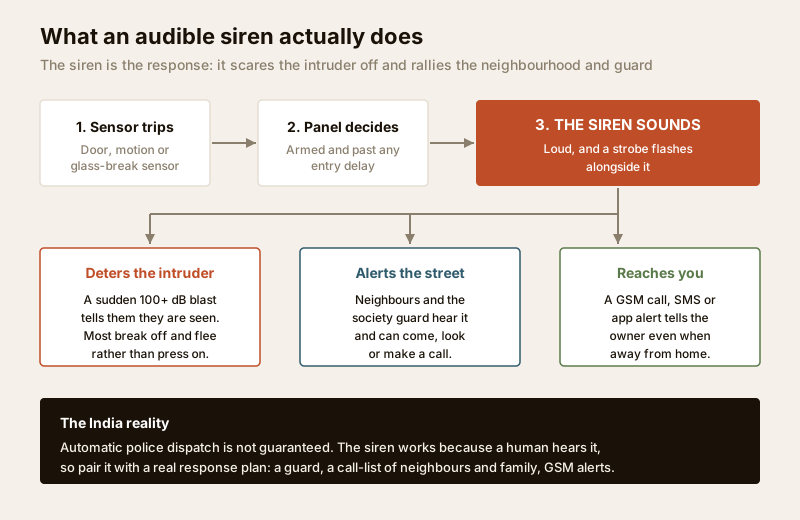
That changes what you want from it. The siren is not just a nuisance noise. It is doing three useful jobs at once:
- Deterrence. A sudden, painful blast of sound tells an intruder they have been detected. Burglary is opportunistic; most intruders want to be in and out unseen. A siren removes the "unseen" and, for the majority, ends the attempt then and there.
- Neighbourhood alerting. In a dense Indian street, colony or apartment block, a loud outdoor siren reaches dozens of people and the society guard. Those are your real first responders. The siren converts a private break-in into a public event.
- Waking and warning the household. An indoor sounder wakes sleeping residents so they can get to safety, call for help and account for family members.
The three kinds of siren
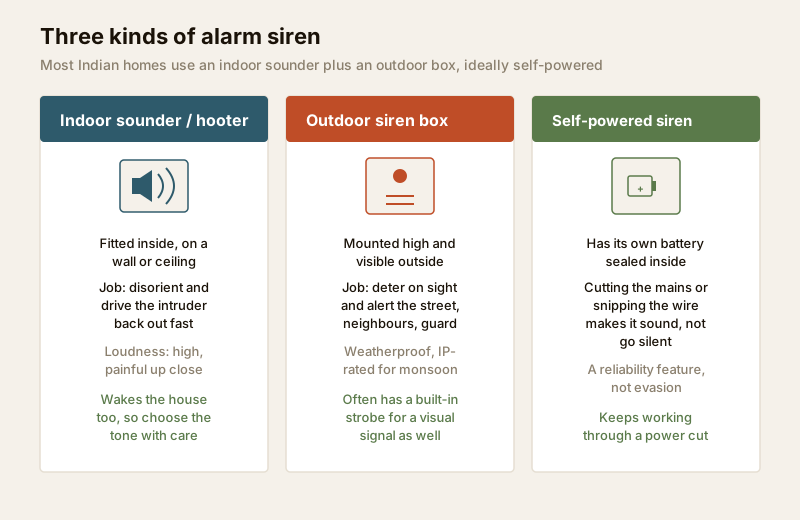
Not every siren is the same device doing the same job. A well-built home system usually has two, and ideally the outdoor one is self-powered.
Indoor sounder or hooter
An indoor sounder sits inside the home, on a wall or ceiling, usually near the main entry or in a central hallway. Its job is to be unbearable at close range: a sharp, disorienting blast that makes an intruder want to be somewhere else, and that wakes the household. Because it also fills the home with sound, choose a placement and tone that alerts your family without being needlessly punishing to a child or an elderly resident. These pair naturally with your entry sensors, such as door and window contacts and interior motion sensors.
Outdoor weatherproof siren box
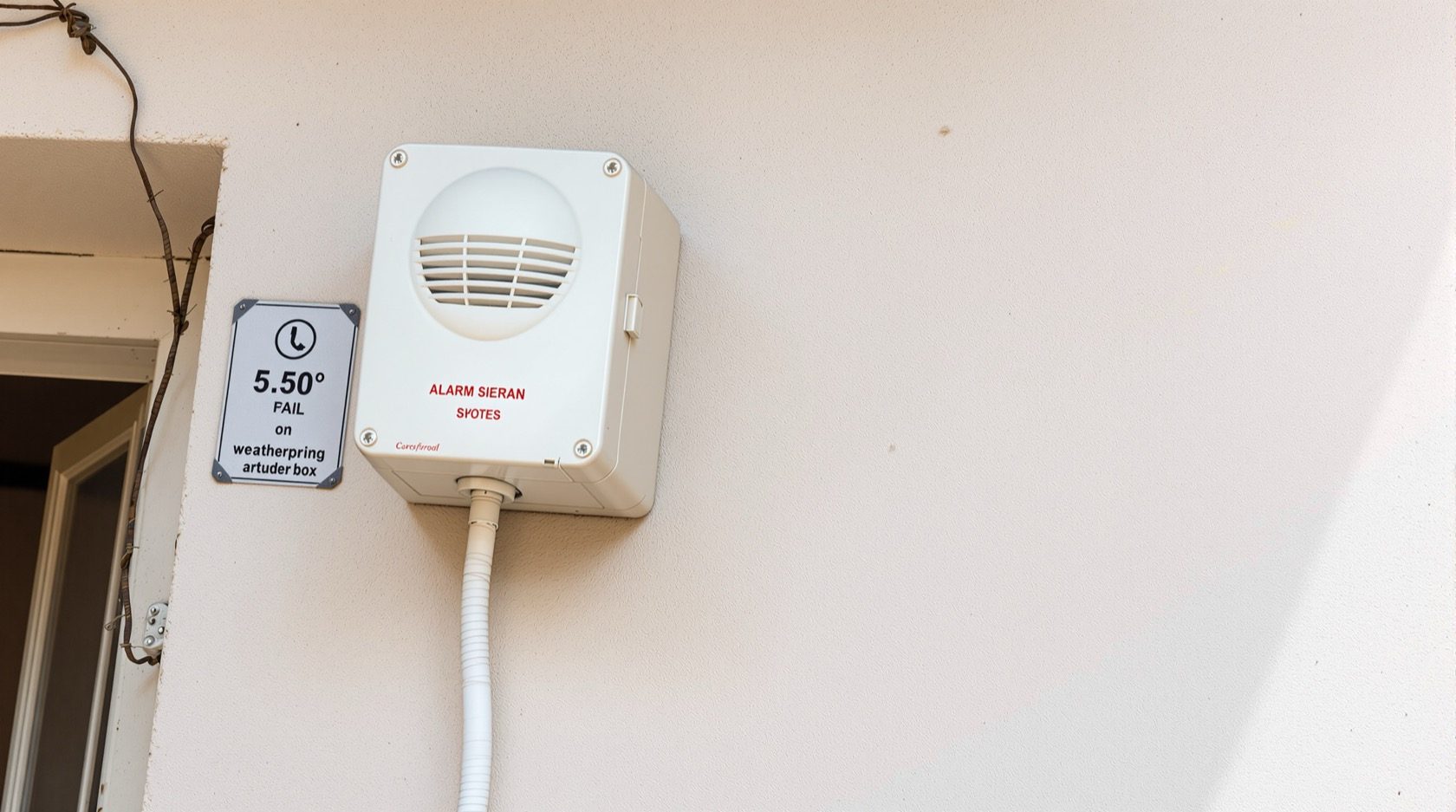
The outdoor siren is the public one. It is a sealed box mounted high on an external wall, usually with a bright strobe built in. It has two audiences: the intruder, who sees a visible alarm box and thinks twice before starting; and the street, which hears it and comes to look. Because it lives outside in Indian weather, it must be genuinely weatherproof — an adequate IP rating, sealed cable entry, and mounted so rain runs off rather than pooling on it. A cheap indoor buzzer screwed to an outer wall will die in the first monsoon.
Self-powered (self-actuating) siren
This is the reliability upgrade, and it matters. A self-powered siren has its own rechargeable battery sealed inside the box. It normally runs off the panel, but if the mains fails, or if someone cuts the power or snips the cable feeding it, the siren detects the loss and sounds on its own battery. The point is dependability, not trickery: the one thing you never want is a siren that a power cut, a tripped MCB or a severed wire can silence. On an outdoor box especially, a self-actuating design means the loudest, most visible part of your system cannot be quietly switched off.
| Siren type | Where it goes | Main job | Key India note |
|---|---|---|---|
| Indoor sounder / hooter | Inside, central or near entry | Disorient the intruder, wake the household | Choose a tone that warns without distressing children or elders |
| Outdoor siren box | High on an outer wall, visible | Deter on sight, alert street and guard | Must be weatherproof and monsoon-sealed |
| Self-powered siren | Usually the outdoor box | All of the above, and cannot be silenced by cutting power | Own battery keeps it sounding through a power cut or a cut wire |
| Dual (indoor + outdoor) | Both of the above | Layered: disorient inside, alert outside | The setup most Indian homes should aim for |
How loud, and how loud is allowed
Siren loudness is quoted in decibels (dB), usually measured at one metre. Household alarm sirens typically fall somewhere around 100 to 120 dB at that distance — genuinely loud, on the order of a power tool or a live concert up close. That is deliberate: it needs to be uncomfortable enough to move an intruder and audible enough to carry down the street.
But louder is not automatically better, and it is not always permitted.
- Apartments and shared walls. In a flat, an indoor sounder aimed at deterrence can be distressing for neighbours through party walls, and a rooftop or balcony outdoor siren can carry across the whole block. Many housing societies and RWAs set their own rules on external sirens; check before you fit one, and see the apartment security guide.
- Noise limits. Indian ambient-noise norms set day and night limits for residential areas, and night-time (broadly the late hours) is stricter. A permanently over-loud or frequently false-triggering siren can become a genuine nuisance-law problem, not just an annoyance. The goal is loud enough to do its job at your boundary, not loud enough to rattle windows three houses away.
- Duration cut-off. A good panel sounds the siren for a set time — often a few minutes — and then stops, so a genuine trigger gets full volume but a fault does not scream all night. This single setting prevents most "the alarm went off for an hour and nobody was home" complaints.
The practical answer for most homes: a strong indoor sounder plus a boundary-audible outdoor box, with a sensible timed cut-off, rather than the single loudest siren you can buy.
Placement: high, visible, and hard to silence
Where you put a siren changes how well it works, and this is where a lot of DIY installs go wrong.
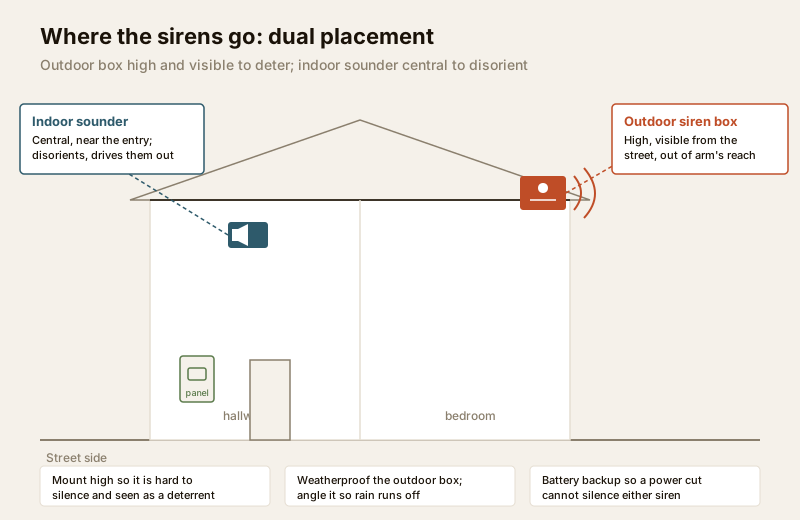
The outdoor siren goes high and stays visible. Mount it near the top of an external wall, under the eave for some rain shelter, on the face most visible from the street or gate. High placement does three things: it carries the sound further, it puts the box out of easy arm's reach so it cannot be quickly ripped off or muffled, and its very visibility is a deterrent before anything happens. The eave gives it some protection from direct monsoon rain; angle it so water runs off.
The indoor sounder goes central. Put it where its sound fills the living space and reaches the bedrooms — a central hallway or landing is ideal — and near the likely entry point so an intruder meets the noise immediately. It should never be tucked inside a cupboard or behind furniture that soaks up the sound.
Dual sirens, working together. The strongest setup is both: the indoor sounder to disorient and drive the intruder out, the outdoor box to alert the neighbourhood and flash its strobe. They complement each other, and if one is defeated the other still sounds.
The siren is half a plan: pair it up
On its own a siren is a blunt instrument. What makes it effective in India is what it is connected to.
- Pair it with alerts. A GSM dialler or app notification means that when the siren sounds, you know — even if you are at work or travelling. The siren handles the people on the spot; the alert handles you.
- Pair it with a strobe. Sound alone fails in two cases: a very noisy street, and a hearing-impaired resident. A strobe adds a bright, unmissable visual flash that points the neighbourhood and guard straight to the right house at night. Sound plus light is far more effective than either alone.
- Understand the opposite, too. A siren is the loud response; a silent alarm is the deliberately quiet one, used where you want help summoned without alerting the intruder that they have been detected, such as a hold-up. Most homes want the loud siren; some situations call for the silent path, and a well-planned system can offer both. If protecting people directly is the priority, look at panic buttons.
- Pick the right hardware. If you are still choosing a system, the burglar-alarm selector helps match siren type, connectivity and sensors to your home.
Honest limitations, and how to plan around them
A siren is useful, not magic. Three honest caveats, each with a fix.
False alarms annoy the neighbourhood. A siren that cries wolf trains your neighbours and guard to ignore it, which quietly destroys the whole point. The fix is not a quieter siren; it is fewer false triggers. Tune sensor sensitivity so pets, ceiling fans and passing headlights do not set things off, split the home into zones so a single faulty sensor does not sound the whole system, and use an entry delay so you can disarm on your own way in. Detailed false-alarm reduction and zoning are their own topic, but the principle is simple: earn the neighbourhood's trust by only sounding when it matters.
The monsoon attacks the outdoor siren. An external box faces driving rain, humidity and heat every year. Insist on a properly weatherproof, IP-rated unit, sealed cable entry, mounting under an eave, and a post-monsoon check that it still sounds. A dead outdoor siren discovered the night you need it is a common and avoidable failure.
A power cut can silence a mains-only siren. Indian homes lose power routinely, and an intruder can cut it deliberately. The answer is battery backup at both the panel and the siren. A self-powered siren carries its own battery so it keeps sounding regardless; the panel should have a backup battery too so the whole chain survives load-shedding. Treat "does it still work with the mains off?" as a basic acceptance test.
When to bring in a professional. Plan the siren strategy and placement yourself, but hand the wiring to a licensed electrician — mains-powered sirens and strobes, cable routing, sealed outdoor entries and integration with the panel are qualified work; see the electrical hub. For an apartment or gated community, clear external sirens with the RWA and set them within society and local noise norms first. If you want a monitored response rather than a purely self-monitored siren, contract a reputable provider and confirm in writing who responds and how fast.
Key takeaways
- In a self-monitored Indian home the siren is the response — its job is to scare the intruder off and rally the neighbours and society guard, because automatic police dispatch is not guaranteed.
- Use two sirens — a central indoor sounder to disorient and drive the intruder out, and a high, visible, weatherproof outdoor box to deter and alert the street.
- Prefer a self-powered outdoor siren with its own battery, so cutting the mains, tripping an MCB or snipping the wire makes it sound rather than go silent.
- Loud enough, not loudest — respect apartment rules and residential noise limits, and set a timed cut-off so a fault does not scream all night.
- A siren is half a plan — pair it with GSM or app alerts and a strobe, tune sensitivity and zone the system to avoid false alarms, and keep the outdoor box monsoon-proof.
References
- Manufacturer specifications — verify a siren's decibel rating at one metre, its IP weather rating, and whether it is a self-powered (self-actuating) design with battery backup on the maker's own datasheet before buying.
- Central Pollution Control Board / Noise Pollution (Regulation and Control) Rules, India — residential day and night ambient-noise limits that a permanently loud or frequently false-triggering external siren must respect.
- Digital Personal Data Protection Act, 2023 — records of who triggered an alarm and when are personal data; keep alert logs and any monitoring-service access controlled and agreed in writing.
- National Building Code of India (SP 7), Bureau of Indian Standards, for the electrical and life-safety aspects of any mains siren or strobe wiring and for keeping alarm devices clear of fire-escape routes; verify the current edition via the BIS catalogue: https://www.services.bis.gov.in/
This is an educational overview, not legal advice. Mains siren and strobe wiring is qualified electrical work — engage a licensed electrician, clear external sirens with your RWA and local noise norms, and verify any standard's current status via the BIS catalogue before relying on it.
Export this guide
Related Guides — Deep-dive reading
Alarm Siren Not Working (2026): Why It Triggers but Stays Silent in India
Your burglar alarm detects and the panel reacts, but the siren does not sound, or sounds weak and thin. A calm, ordered diagnostic for Indian homes: the settings, power, backup battery, wiring and hardware faults that leave an alarm that cannot be heard, what you can safely check yourself, and when to call your installer.
SecurityHow to Choose a Burglar Alarm in India (2026): Sensors, Alerts and What Actually Matters
A homeowner's guide to selecting an intruder alarm that fits your flat, villa or shop and alerts you the way you want — matching the sensor mix, control panel and the big siren-versus-monitored decision to your real risk, and dodging the false-alarm traps that make people switch systems off.
SecurityStrobe Alarms in India (2026): The Flashing Beacon That Shows Which House Needs Help
A bright flashing strobe works alongside or instead of a siren: it pinpoints which home is alarming at night, alerts the hearing-impaired, and gives a visible alert where loud sirens are restricted.
SecurityRelated Tools — Try Free
Access-Control Battery-Backup Calculator
Size the standby battery so an access system keeps running through a power cut, with an egress life-safety note.
Battery BackupBurglar Alarm System Selector
Answer a few questions about your property, cabling, coverage, monitoring and power and get the right burglar alarm — wired / wireless / hybrid, self or professionally monitored — with the design non-negotiables.
Alarm SelectorElectrical Safety & Load Audit
Home electrical audit — 10 categories, 65+ checkpoints across earthing, RCCB, MCB, wiring, switchboards, appliance circuits, DG/inverter backup.
Safety Audit