
Ideas, trends & design stories.
Tips on interior design, AI in home styling, and inspiration for Indian homes.
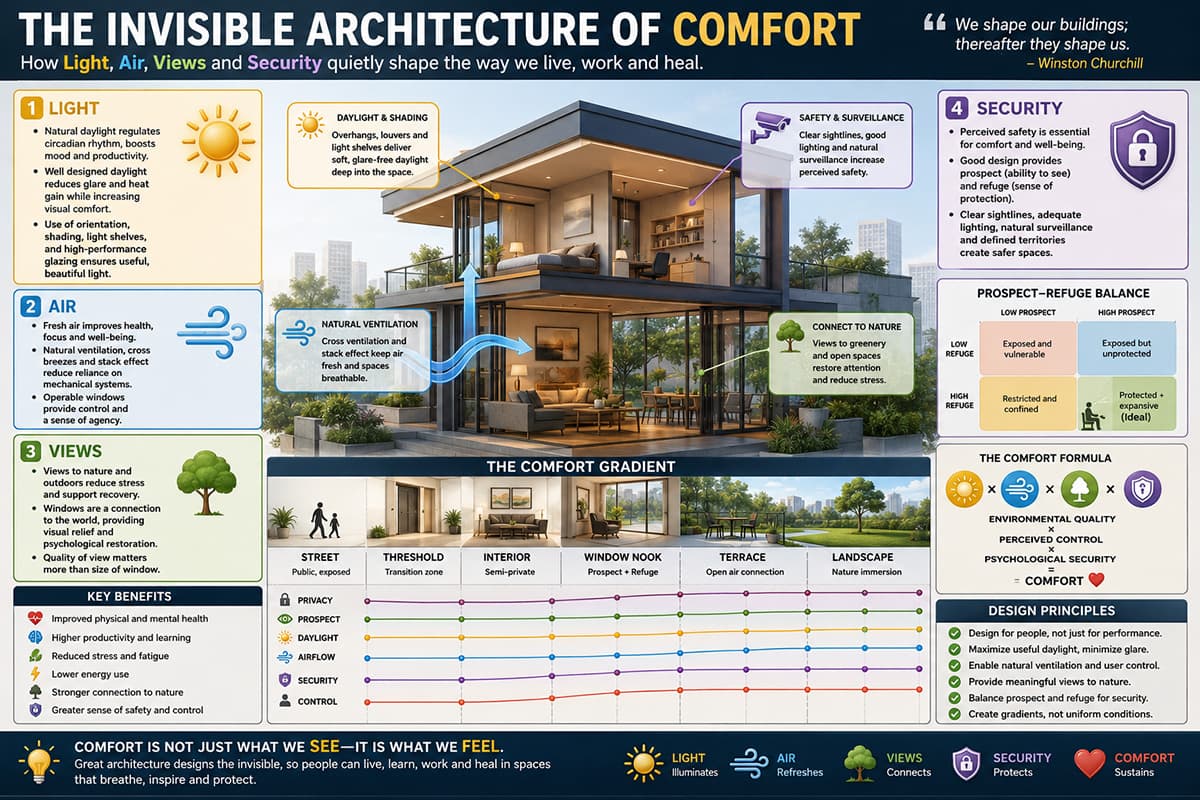
 02
02How Daylight Through Windows Influences Circadian Rhythms
Discover how daylight entering through windows influences human circadian rhythms, sleep, alertness and wellbeing—and how architects can optimise orientation, glazing, shading, window geometry and interior planning to create healthier, biologically responsive buildings.
 03
03How Natural Ventilation Improves Cognitive Performance at Home
Natural ventilation does more than cool a home. Thoughtfully designed airflow can improve indoor air quality, regulate temperature and create conditions that support concentration, alertness and cognitive performance. Discover how windows, cross-ventilation, stack effect and hybrid strategies can transform the home into a healthier environment for thinking and working.
 04
04Window View Quality Assessment Tool
Discover how window views influence psychological well-being, stress restoration, visual comfort, and connection with nature. This architectural guide introduces a practical Window View Quality Assessment Tool to evaluate nature, sky, visual depth, privacy, clarity, and restorative potential.
 05
05Designing Windows That Reduce Stress and Improve Mental Wellbeing
Discover how evidence-based window design enhances mental wellbeing by improving daylight access, outdoor views, ventilation, and circadian health. Learn how architects can reduce stress, boost productivity, and create healthier, biophilic buildings through scientifically informed window design strategies.
 06
06Can Better Windows Improve Your Mood?
Discover how thoughtfully designed windows enhance mood, sleep, productivity, and overall well-being through natural daylight and views. Explore the latest scientific evidence linking architecture, circadian biology, and environmental psychology to healthier, happier buildings and learn how architects can design spaces that truly improve quality of life.
 07
07Design Psychology of Calm Spaces: How Architecture Shapes Peace, Well-Being, and Emotional Balance
Discover how design psychology influences human emotions and well-being. Learn how natural light, biophilic design, spatial proportions, acoustics, materials, air quality, and visual simplicity work together to create calm, restorative spaces that reduce stress and enhance everyday living.