Studio Matrx Monthly · Volume 1 · Issue 5 · October 2026
Loading…
Tips on interior design, AI in home styling, and inspiration for Indian homes.
 02
02Discover how the front door shapes our psychological sense of home. From thresholds, prospect and refuge to privacy, territoriality, nature and personal identity, this article explores the environmental psychology and architectural science behind designing entrances that transform a dwelling into a place of belonging.
 03
03An entry door is more than a physical barrier. For children, it can define the psychological boundary between the uncertainty of the outside world and the safety of home. Discover how thoughtful entrance design can strengthen security, control, privacy, identity and belonging through child-sensitive architecture.
 04
04Explore how doors, thresholds, porches, privacy, and visual openness shape the psychology of a home. Discover why some houses instantly feel warm and welcoming while others feel defensive—and how architects can design entrances that balance hospitality, security, privacy, and social connection.
 05
05Discover how evidence-based window design enhances mental wellbeing by improving daylight access, outdoor views, ventilation, and circadian health. Learn how architects can reduce stress, boost productivity, and create healthier, biophilic buildings through scientifically informed window design strategies.
 06
06Discover how thoughtfully designed windows shape childhood memories by connecting children with nature, daylight, neighbourhood life, and changing seasons. Explore the emotional, psychological, and architectural importance of window views in fostering imagination, well-being, place attachment, and lifelong emotional connections to home.
 07
07Discover how thoughtfully designed windows enhance mood, sleep, productivity, and overall well-being through natural daylight and views. Explore the latest scientific evidence linking architecture, circadian biology, and environmental psychology to healthier, happier buildings and learn how architects can design spaces that truly improve quality of life.
 08
08People judge a home within seconds of arrival. Discover how entrance architecture, door design, lighting, colour psychology, biophilic elements, and CPTED principles shape first impressions, influence perceptions of safety and hospitality, and enhance both architectural appeal and property value.
 09
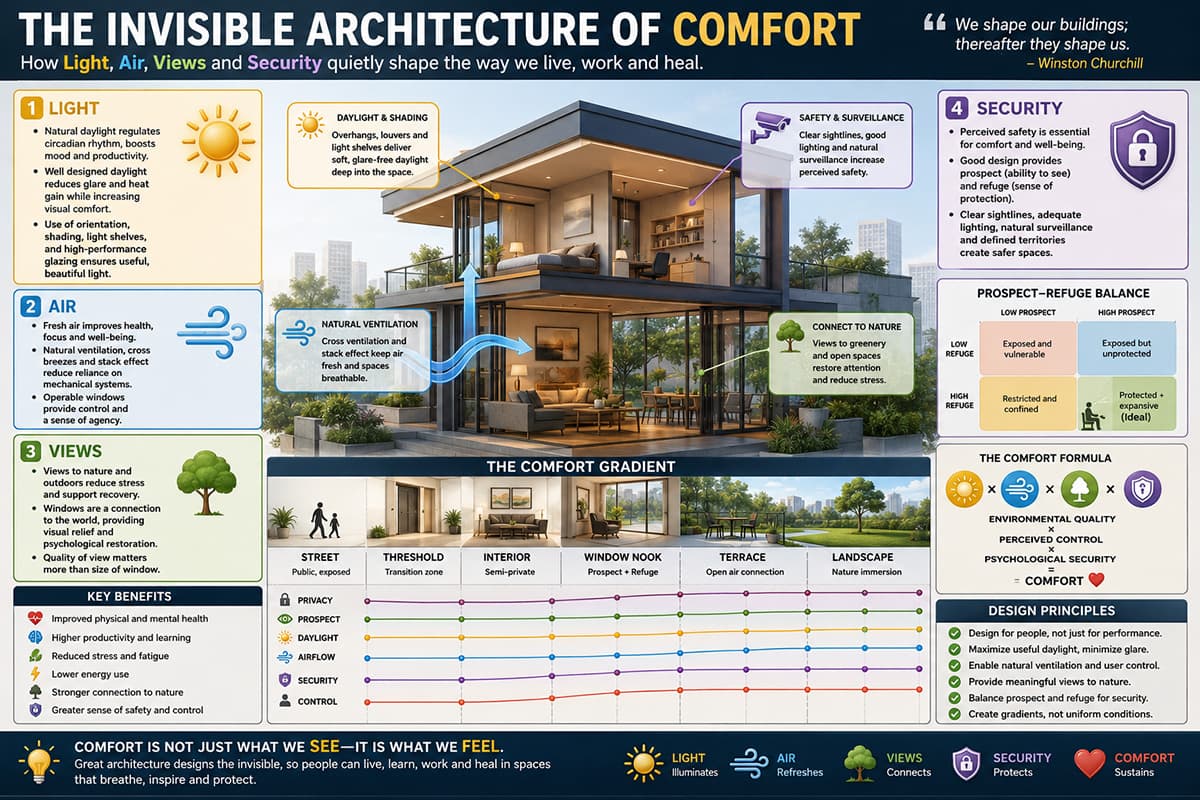
09The invisible architecture of everyday life explores how light, sound, movement, memory, nature, and spatial design quietly shape human behaviour, wellbeing, and community. Discover why the greatest architecture is often unseen yet profoundly influences how we live, work, interact, and experience the built environment.
 10
10Architecture is far more than the design of buildings—it shapes human experiences, behaviour, culture, wellbeing, sustainability, and the future of cities. Discover how architecture influences every aspect of life through the integration of art, science, technology, psychology, and environmental responsibility.