

The Complete Building Materials Buying Guide (India) (2026)
The capstone of the Building Materials hub - a stage-by-stage buying process (estimate, specify, shortlist, compare, verify, store) plus how to buy well in every material category, the mistakes that cost the most, and a smart-buyer checklist that routes to every deep guide and calculator.
Choosing the right material is only half the job. The other half is buying it well - the right quantity, to the right specification, from the right supplier, verified on delivery and stored so it survives until the wall goes up. This is the capstone of the Studio Matrx Building Materials hub. Where the other guides tell you what to specify, this one tells you how to procure it without overpaying, under-ordering, or taking delivery of off-spec stock you cannot send back. It ties the whole hub together for the moment you are actually spending money, and routes every category to its deep guide and every estimate to its calculator.
The single most important habit in this whole guide is this: buy to a written specification and standard, not to the lowest number on a WhatsApp quote. A cheaper price on a lower grade is not a saving - it is a different product. If you start from the complete building materials guide and its how to choose building materials companion, you arrive here already knowing what you want; this guide gets it onto site correctly.
Scope and safety: This is a "specify and select" buying guide, not a construction manual. Every cost is indicative and moves with city, grade, brand and market - always get current local quotes. What grade of concrete, which steel section, how walls carry load, and how much of anything a slab actually needs are decisions for your structural engineer and contractor. Standards are named generally (IS / BIS codes, NBC SP 7:2026, GRIHA / IGBC / LEED); we never invent clause numbers. Mixing, structural design and execution belong to qualified professionals.
The buying process, stage by stage
Good procurement is a sequence, not a single transaction. Each of the six stages below protects you from a specific and expensive failure downstream. Skip a stage and the cost of the skip usually lands on site, at the worst possible moment.
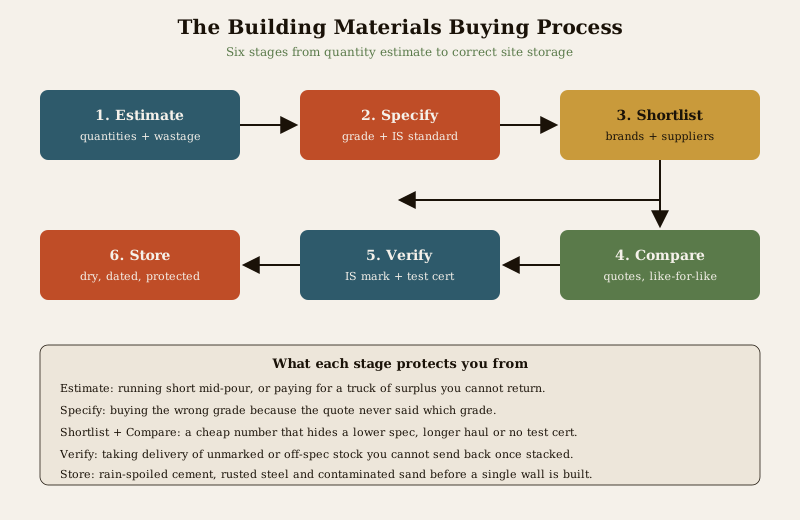
Stage 1 - estimate quantities (with wastage). Before you can buy, you need a defensible quantity. Under-order and a pour stalls; over-order and you pay to store or scrap surplus you cannot return. Size each order with the hub calculators - the cement bag calculator, sand quantity calculator, aggregate quantity calculator, concrete volume calculator, brick and block quantity calculator and plaster quantity calculator - then add a realistic wastage margin. Treat every calculator output as a purchasing estimate that your contractor confirms against site conditions.
Stage 2 - specify grade and standard. Turn "cement" into "PPC conforming to its IS standard, from a marked bag" and "steel" into "Fe500D TMT with a mill test certificate". The concrete mix ratio calculator helps you understand what a nominal mix implies, but the grade decision itself follows your engineer. A written spec is what makes the next three stages possible.
Stage 3 - shortlist brands and suppliers. Prefer suppliers who stock the exact spec, close to site (shorter haul is cheaper, faster and lower-carbon), and who can produce test certificates. Two or three credible suppliers is enough for a real comparison.
Stage 4 - compare quotes like-for-like. This is where most money is won or lost. Only compare quotes that name the same grade, standard, brand tier and delivery terms. A quote that omits the grade is not cheaper - it is incomplete. Put every figure on the same all-in basis (material plus transport plus taxes plus unloading) before you rank them.
Stage 5 - verify on delivery. Check the IS / BIS mark, the grade stamp, the manufacturing date, and the batch or mill test certificate against your purchase order before the truck is unloaded. Rejecting off-spec stock at the gate is easy; rejecting it after it is stacked and part-used is not.
Stage 6 - store correctly. Cement spoils in damp, steel rusts in the open, sand gets contaminated on bare ground, and boards warp when stacked flat and wet. Plan dry, dated, off-ground, weather-protected storage before delivery, and use older stock first.
How to buy well, category by category
Every family has its own handful of things that separate a good buy from a bad one. The map below is your at-a-glance version; the notes that follow route each category to its deep guide.
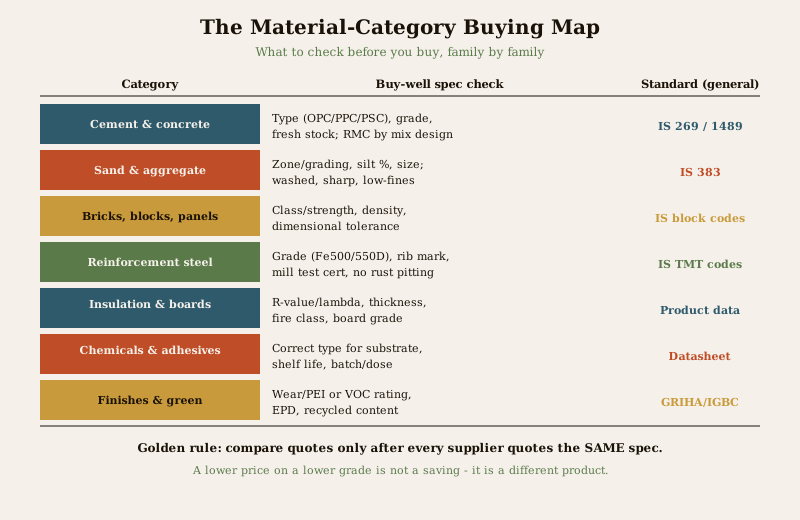
Cement and concrete. Buy the right type for the job - OPC, PPC or PSC - as fresh stock (cement loses strength as it ages and absorbs moisture), from IS-marked bags. For anything beyond small works, ordering ready-mix concrete by mix design removes site-batching variability. Start at types of cement to pick the type, and lean on the concrete mix ratio calculator to understand proportions - but let your engineer set the grade.
Sand and aggregate. Buy washed, sharp, correctly graded material with low silt and fines. The big live decision is M-sand vs river sand; the sand for construction guide covers grading zones and silt limits, and construction aggregates covers stone size and shape. IS 383 governs both - insist on it in the quote.
Bricks, blocks and panels. Buy to class or strength, density and dimensional tolerance, not by appearance. Compare walling options - AAC blocks vs red bricks and fly-ash bricks vs clay bricks - and for faster, drier walling read precast and AAC wall panels. Remember AAC needs the correct block adhesive, not ordinary mortar.
Reinforcement steel. Buy the grade your engineer specifies (Fe500 / Fe550D and so on), with the rib mark and a mill test certificate, free of deep rust pitting. Understand why grade and detailing matter in why reinforcement steel matters and the TMT steel complete guide. Grade and quantity are engineering calls - do not substitute on price.
Insulation and boards. Buy insulation on R-value (or lambda) and thickness for your climate, checking fire class - size it with the insulation R-value calculator and start from the building insulation materials guide. For dry-construction boards, match the grade to the location: gypsum boards for interior partitions and ceilings, cement boards and fibre-cement for wet and exterior areas, and calcium silicate boards where fire rating matters.
Chemicals, adhesives and sealants. These are the family most often bought wrong, because the right product is substrate-specific and time-sensitive. Buy the correct type for the job, check shelf life, and follow the dose. The construction chemicals guide is the anchor; go deeper into tile adhesives, construction adhesives, sealants, concrete admixtures and epoxy and tile grouts.
Finishes and green options. For flooring and wall finishes, buy on wear rating and durability, not just colour - browse the flooring hub, wall finishes hub and the wider materials and finishes library. For lower-impact choices, the green building materials guide and low-carbon construction materials show where the real gains are; quantify them with the embodied carbon calculator and the green material scorecard.
The standards and marks to insist on
Buying to standard is what makes a quote comparable and a delivery verifiable. You do not need to memorise clause numbers - you need to insist that the product carries the mark, and that the paperwork matches. The material standards and certifications guide explains which certificates and declarations actually carry weight, and understanding IS codes grounds the standards side.
| Category | Standard named generally | On delivery, look for |
|---|---|---|
| Cement | IS 269 / IS 1489 cover cement types | IS mark, type, manufacturing date on the bag |
| Sand and aggregate | IS 383 governs aggregates | Grading zone, low silt, washed sample |
| Reinforcement steel | IS codes for TMT bars | Grade rib mark, mill test certificate |
| Bricks and blocks | IS codes for bricks and blocks | Class or strength, dimensional tolerance |
| Ready-mix concrete | Codes for concrete production | Mix design, batch slip, cube-test arrangement |
| Green and fire performance | NBC (SP 7:2026), GRIHA / IGBC | EPD, third-party certificate, fire class |
The buying mistakes that cost the most
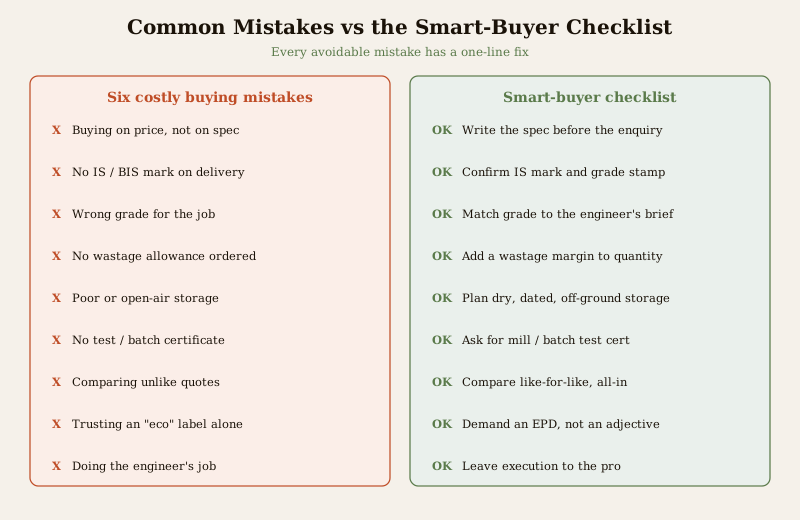
Almost every expensive procurement error is one of a short list, and every one has a one-line fix. The panel below pairs the mistakes with the smart-buyer response; the table names the real cost.
| Common mistake | What it actually costs | The fix |
|---|---|---|
| Buying on price, not spec | A lower grade masquerading as a bargain | Write the spec first; quote to it |
| No IS / BIS mark on delivery | Unverifiable, possibly off-spec stock | Reject unmarked material at the gate |
| Wrong grade for the job | Weak concrete, failing walls, rework | Buy the grade your engineer specifies |
| No wastage allowance | Stalled pours or a second premium order | Add a wastage margin to the estimate |
| Poor storage | Spoiled cement, rusted steel, dirty sand | Dry, dated, off-ground, covered storage |
| No test / batch certificate | No recourse if the material fails | Demand mill / batch certificates up front |
The smart-buyer checklist
Run this before you release a purchase order, whatever the material.
- Have a written specification - type, grade and standard - before you send the enquiry.
- Estimate the quantity with the hub calculators and add a wastage margin.
- Shortlist two to three suppliers who stock the exact spec, close to site, with certificates.
- Compare only like-for-like quotes on an all-in basis (material, transport, taxes, unloading).
- On delivery, check the IS mark, grade stamp, manufacturing date and test certificate against the order.
- Plan dry, dated, off-ground, weather-protected storage before the truck arrives, and use older stock first.
- For green claims, demand an EPD or third-party certificate - never accept "eco" as a word.
- Leave grade selection, structural design, mixing and execution to your engineer and contractor.
For the wider material landscape this sits inside - the pillar hubs for cement, concrete, steel and brick - start from the construction materials hub, and for the whole family map, the complete building materials guide.
Key takeaways
- Buying well is a six-stage process: estimate, specify, shortlist, compare, verify, store - skip a stage and the cost lands on site.
- Buy to a written spec and standard, never to the lowest number; a cheaper price on a lower grade is a different product.
- Estimate quantities with the hub calculators and always add a wastage margin.
- Compare only like-for-like quotes on an all-in basis, and verify the IS mark and test certificate on delivery.
- Store dry, dated and off-ground; poor storage ruins good material before it is used.
- Costs are indicative - get local quotes - and leave grade, structural design, mixing and execution to your engineer and contractor.
References
1. Bureau of Indian Standards. IS 269 and IS 1489: Ordinary and Blended Portland Cement - Specifications. BIS, New Delhi.
2. Bureau of Indian Standards. IS 383: Coarse and Fine Aggregate for Concrete - Specification. BIS, New Delhi.
3. Bureau of Indian Standards. National Building Code of India (SP 7:2026). BIS, New Delhi.
4. GRIHA, IGBC and LEED rating frameworks and Environmental Product Declarations (EPDs) - verify each product claim against its certificate.
5. Studio Matrx guides: complete building materials guide, how to choose building materials, material standards and certifications, types of cement, ready-mix concrete, sand for construction and green building materials.
Export this guide
Related Guides — Deep-dive reading
Construction Aggregates in India: Sizes, Quality & Selection (2026)
What coarse aggregate actually does in concrete, how to pick the right nominal size (10mm, 20mm, 40mm), and the field and lab checks that separate strong stone from a bad load - a specify-and-select guide for Indian homes.
Building MaterialsBuilding Material Standards and Certifications in India: BIS, ISI, NBC and Green Labels Explained (2026)
How to know a building material is genuine and fit for purpose. A plain-language guide to the BIS / IS ecosystem and the ISI mark, the international standards you will see on datasheets, the NBC (SP 7:2026) umbrella code, and the sustainability certifications - GRIHA, IGBC, LEED, GreenPro - that tell you a product is genuinely green.
Building MaterialsHow to Choose Building Materials in India: A Step-by-Step Decision Guide (2026)
A practical, climate-first and budget-first process for selecting the right wall, floor, and roof materials for an Indian home - and knowing capital cost from whole-life cost.
Building MaterialsRelated Tools — Try Free
Material Decision Framework (M-Score)
Score 30+ Indian construction materials across cost, durability, climate fit, maintenance, and sustainability.
MaterialsConcrete Mix Ratio Calculator
The nominal mix breakdown for a concrete grade - cement:sand:aggregate ratio with bags, sand, aggregate and water.
Material CalculatorHome Building & Interior Cost Calculator — 20 Cities
Construction + interior costs for 20 Indian cities across kitchen, wardrobes, flooring, painting, ceiling.
Cost Calculator