
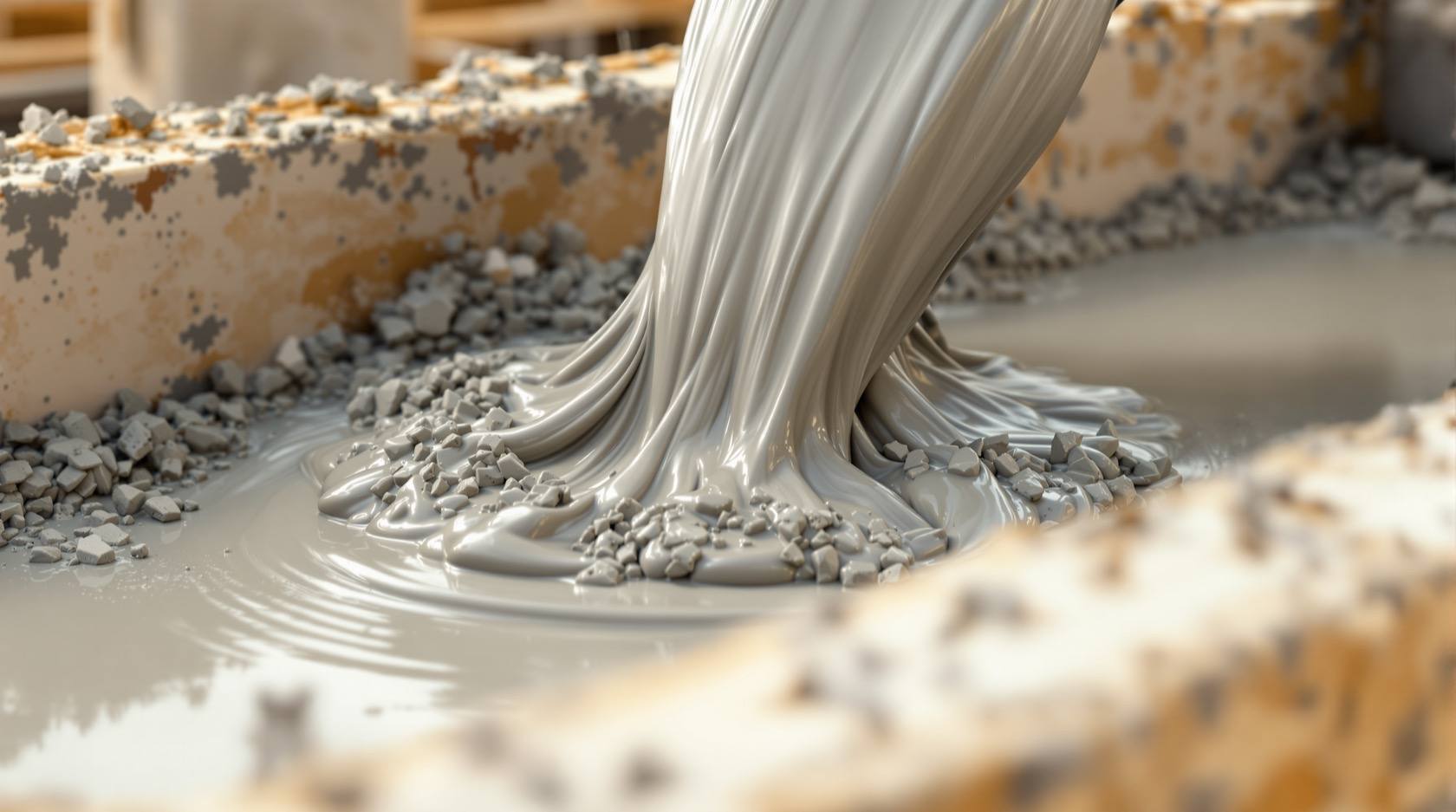
Concrete Admixtures Guide India: Types, Uses and Dosage (2026)
A homeowner and site-owner's plain-language guide to concrete admixtures - what these small doses actually do, the main types from superplasticisers to retarders and accelerators, when each one earns its place, and why dosing and mix design belong to a qualified engineer or the RMC plant.
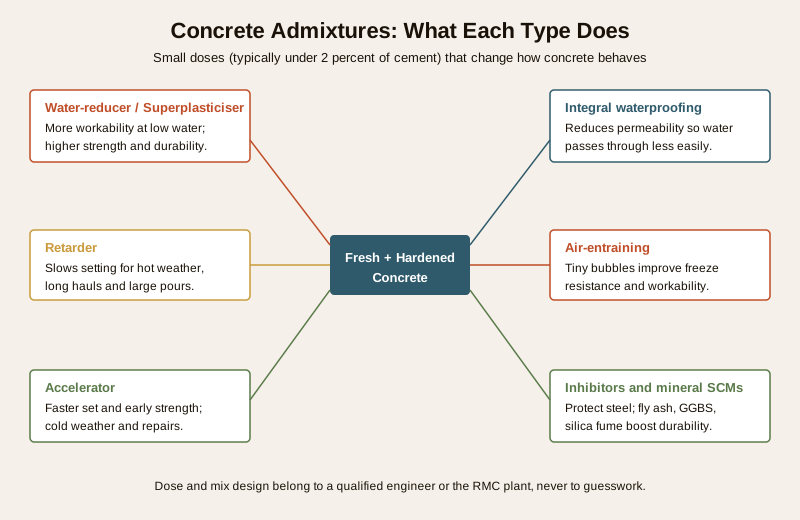
Somewhere between the cement, sand, stone and water that make ordinary concrete sits a fifth ingredient that most homeowners never see and rarely hear named: the admixture. It arrives as a drum of liquid or a bag of powder, gets added in tiny quantities - often less than two percent of the cement weight - and yet it can decide whether a slab pumps smoothly to the third floor, whether a large pour stays workable through a long summer afternoon, or whether a repair sets hard enough to use by morning. Admixtures are the quiet chemistry of modern concrete. This guide explains what they are, the main families and what each one does, and how to specify the right one - while being honest that the dose itself is an engineering decision, not a DIY one.
The stance here is to help you select and specify. Choosing which admixture a pour needs, fixing the dosage, and approving the overall mix design are decisions for a qualified structural engineer or the ready-mix plant. A homeowner should never self-dose structural concrete. What follows gives you the vocabulary to understand what your engineer or supplier is proposing and to ask sensible questions.
Scope and how to read this. This is a selection and specification guide, not a mixing manual. Admixture choice, dosage, trial batching and the concrete mix design are safety-critical decisions that belong to your structural engineer, contractor or RMC supplier. Any percentages, doses or costs here are indicative planning aids for 2026 - always follow the product datasheet and your engineer's instructions, and get written quotes locally. Admixtures are governed in India by the Bureau of Indian Standards code for concrete admixtures (IS 9103 covers chemical admixtures generally) and used within the broader concrete practice code (IS 456).
What an admixture actually is
An admixture is any material other than cement, water and aggregate that is added to concrete, in small controlled amounts, to change a specific property of the fresh or hardened mix. That is the whole idea in one sentence: a small dose, a targeted change. Chemical admixtures are liquids or powders added at the mixer; mineral admixtures - which we come to at the end - are fine powders that partly replace cement.
Two things make admixtures worth understanding even as a non-engineer. First, they are dose-sensitive: the right amount helps, and more is not better - an overdose can do real harm, from a mix that will not set to one that bleeds and segregates. Second, they must be compatible with the specific cement being used; the same admixture can behave differently with a fly-ash blended cement than with plain OPC, which is exactly why a trial batch matters. If you want the ingredients behind the concrete itself, our guides on types of cement in India and understanding concrete strength set the scene, and admixtures sit within the wider family of construction chemicals.
The workhorse: water-reducers and superplasticisers
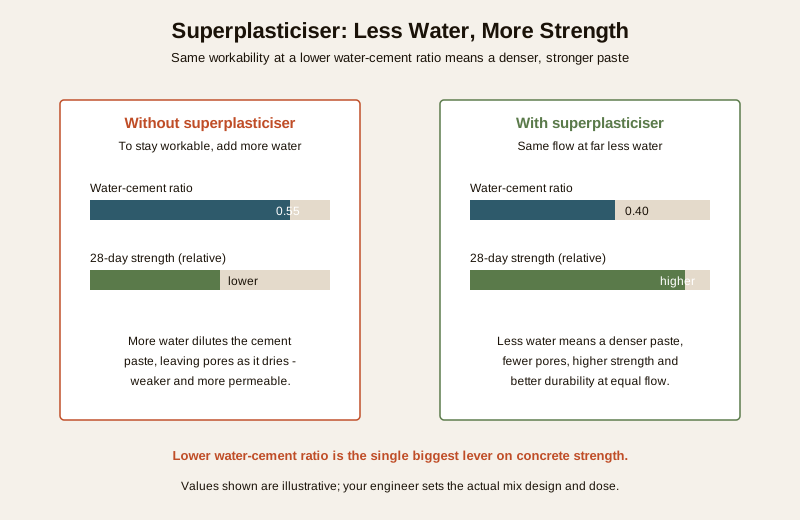
If you learn only one admixture family, make it this one. Water-reducers, and their far more powerful cousins the superplasticisers, let concrete stay fluid and easy to place while using much less water. That matters because water is the enemy of strength: the more water you add beyond what the cement needs to react, the more pores it leaves behind as it dries, and the weaker and more permeable the concrete becomes. The single biggest lever on concrete strength is the water-cement ratio, and a superplasticiser is what lets you push that ratio down without ending up with an unworkable, gravelly mix.
This is why superplasticisers are the backbone of ready-mix and pumped concrete. A modern high-rise slab pumped through a pipe needs concrete that flows like thick cream yet still hardens to a high grade - impossible with water alone, routine with a superplasticiser at a low water-cement ratio. For any high-strength or highly-workable requirement, this is the admixture doing the heavy lifting. The trade-off to know about is slump loss: some superplasticisers keep concrete flowing for only a limited window, so timing and re-dosing at site are things your RMC supplier plans for.
Retarders: buying time
A retarder slows down the chemical reaction that stiffens concrete, giving you more working time before it sets. In India this is often exactly what a summer pour needs. High ambient temperatures make concrete set faster, which is a problem when you are pouring a large slab that must be placed and compacted as one continuous piece, or when the transit mixer faces a long haul through traffic. A retarder keeps the concrete workable long enough to finish the job without a cold joint. Large monolithic pours - a raft foundation, a big podium slab - lean on retarders for the same reason. The caution is symmetrical: an overdose can delay setting far longer than intended and depress early strength, so the dose is calibrated to the actual haul distance, weather and pour size.
Accelerators: speeding up
An accelerator does the opposite - it speeds up setting and early strength gain. Its two classic uses are cold-weather concreting, where low temperatures otherwise slow the reaction to a crawl, and repairs or precast work where you need to strike formwork or put the element into service quickly. There is one caution that matters enormously for anything with steel in it: many traditional accelerators are chloride-based, and chlorides corrode reinforcement steel. For reinforced concrete (RCC) - which is almost all structural concrete in a home - a chloride-free (non-chloride) accelerator must be specified. This is precisely the kind of detail that makes admixture selection an engineer's call rather than a hardware-shop purchase, because rusting reinforcement is one of the main reasons concrete structures deteriorate. Our guide on why reinforcement steel matters explains the stakes.
Integral waterproofing and permeability reducers
Some admixtures are added to make concrete itself less permeable to water - useful for water tanks, basement rafts and walls, and wet-area slabs. These integral waterproofing or permeability-reducing admixtures work by densifying the paste or blocking capillary pores so water passes through less easily. The honest framing is important: they reduce permeability, they do not turn concrete into a waterproof membrane. For a below-ground or water-retaining structure you still need proper design, good compaction, disciplined curing and, usually, a separate applied waterproofing system. The admixture is one layer of defence, not the whole strategy - our guide on waterproofing chemicals explained covers the membranes and coatings that do the rest of the work.
Air-entraining agents and corrosion inhibitors
Air-entraining admixtures deliberately create billions of microscopic air bubbles through the concrete. This is standard practice where concrete faces freeze-thaw cycles - relevant in Himalayan and high-altitude India - because the tiny voids give freezing water somewhere to expand into instead of cracking the concrete. Entrained air also improves workability, though it trades away a little strength, so the dose is kept to specification. Corrosion inhibitors are a related durability play: added to protect the embedded steel in aggressive environments such as coastal or chloride-rich exposure, they slow the onset of reinforcement corrosion. Both are durability specifications rather than everyday-workability tools, and both belong in the mix design your engineer prepares for the exposure your site actually faces.
Mineral admixtures: fly ash, GGBS and silica fume
Alongside the chemical admixtures sit the mineral admixtures, also called supplementary cementitious materials (SCMs). These are fine powders - fly ash from power stations, GGBS (ground granulated blast-furnace slag) from steelmaking, and silica fume - that partially replace cement in the mix. They are not dosed by the drop like chemicals; they are a meaningful fraction of the binder. Their pay-off is durability and sustainability: they refine the pore structure, improve long-term strength and resistance to chemical attack, cut the heat generated in large pours, and reduce the carbon footprint by using less clinker. Many blended cements sold in India already contain fly ash or slag, which is why they overlap with the types of cement story. For a homeowner aiming at a greener, more durable structure, asking your engineer about SCM content is a sensible, legitimate question.
The selection table
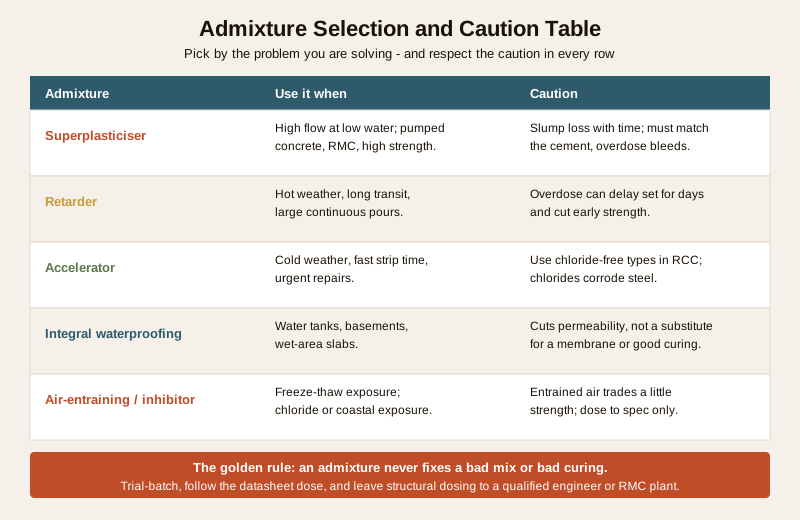
The table below turns the families above into a quick reference. Read it as a way to understand a proposal, not as a shopping list to act on yourself.
| Admixture | What it does | When to use it | Key caution |
|---|---|---|---|
| Superplasticiser / water-reducer | High workability at low water; raises strength and durability | Pumped concrete, RMC, high-strength slabs and columns | Slump loss over time; must suit the cement; overdose bleeds and segregates |
| Retarder | Slows setting, extends working time | Hot weather, long transit hauls, large continuous pours | Overdose can delay set for days and cut early strength |
| Accelerator | Speeds setting and early strength gain | Cold weather, fast formwork removal, urgent repairs | Use only chloride-free types in RCC - chlorides corrode steel |
| Integral waterproofing | Reduces permeability of the concrete itself | Water tanks, basements, wet-area slabs | Cuts permeability, not a substitute for a membrane and good curing |
| Air-entraining | Adds microscopic air voids | Freeze-thaw exposure, improved workability | Trades a little strength; dose strictly to specification |
| Corrosion inhibitor | Protects embedded reinforcement steel | Coastal, chloride-rich or aggressive exposure | A durability aid, not a fix for poor cover or bad concrete |
| Mineral admixtures (fly ash, GGBS, silica fume) | Partly replace cement; refine pores, boost durability and sustainability | Mass concrete, durable or greener structures | Change setting and early-strength behaviour; part of the mix design |
Dosage discipline and the honest limits
Two truths sit underneath everything above. The first is dosage discipline: admixtures are effective in small, precise amounts, and overdosing is not a way to get more of a good thing - it commonly backfires, causing excessive retardation, bleeding, segregation, or a mix that never reaches strength. The dose is set by trial batch against the actual cement and aggregates, following the product datasheet, and it is checked at the plant or the mixer, not eyeballed. The second is compatibility: an admixture is chosen for a particular cement, and swapping the cement can change how it behaves, which is another reason the whole mix design is a package that an engineer or the RMC plant owns.
And the most honest point of all: an admixture cannot rescue a fundamentally bad mix or bad curing. If the proportions are wrong, the aggregates are dirty, or the concrete is left to dry out instead of being cured, no drop of chemistry will save it. Admixtures optimise good concrete; they do not substitute for it. If you are ordering ready-mix concrete, the admixtures are already dialled into the design mix on your delivery slip - and you can sanity-check the volume you need with our concrete mix ratio calculator before the truck arrives. Where all of this sits in the bigger material picture is laid out in our complete building materials guide.
Key takeaways
- An admixture is a small, dose-sensitive addition - chemical or mineral - that targets one property of fresh or hardened concrete; more is not better and an overdose can do real harm.
- Superplasticisers are the workhorse: they give high workability at a low water-cement ratio, which is the single biggest lever on strength and durability, and they make pumped and ready-mix concrete possible.
- Retarders buy working time for hot weather, long hauls and big pours; accelerators speed set for cold weather and repairs, but must be chloride-free in reinforced concrete.
- Integral waterproofing reduces permeability but is not a membrane; air-entraining and corrosion inhibitors are durability specifications for freeze-thaw and aggressive exposures.
- Mineral admixtures (fly ash, GGBS, silica fume) partly replace cement and are the durability-and-sustainability play, overlapping with blended cements.
- Admixture choice, dosage, compatibility and the overall mix design belong to a qualified structural engineer or the RMC plant - a homeowner should never self-dose structural concrete, and no admixture fixes a bad mix or bad curing.
References
- Bureau of Indian Standards - the standard for concrete admixtures (chemical admixtures, IS 9103) and IS 456 for plain and reinforced concrete practice, named generally; consult the current editions.
- National Building Code of India (SP 7:2026) - general guidance on materials and construction practice.
- Studio Matrx guide: construction chemicals guide for India.
- Studio Matrx guide: ready mix concrete (RMC) in India.
- Studio Matrx guide: understanding concrete strength in India.
- Studio Matrx tool: concrete mix ratio calculator.
- Indicative doses, percentages and costs reflect 2026 conditions and vary by product, cement and exposure - always follow the datasheet and obtain local engineering advice.
Export this guide
Related Guides — Deep-dive reading
GGBS, Fly Ash and SCMs in Concrete India: The Low-Carbon Mix (2026)
A plain-language guide to GGBS, fly ash, silica fume and other supplementary cementitious materials (SCMs) - the industrial by-products that replace part of the cement in concrete, cut its carbon, and boost durability - and why the replacement percentage and mix design belong to a qualified engineer or the RMC plant.
Building MaterialsConstruction Aggregates in India: Sizes, Quality & Selection (2026)
What coarse aggregate actually does in concrete, how to pick the right nominal size (10mm, 20mm, 40mm), and the field and lab checks that separate strong stone from a bad load - a specify-and-select guide for Indian homes.
Building MaterialsLow-Carbon Construction Materials in India: Cutting Embodied Carbon (2026)
What embodied carbon is in plain terms, why cement and steel dominate it, and the practical levers to cut it in Indian building - blended cement and SCMs, material efficiency, lower-carbon walling, local sourcing, durability, timber and bamboo, and recycled content. A specify-and-select guide.
Building MaterialsRelated Tools — Try Free
Material Decision Framework (M-Score)
Score 30+ Indian construction materials across cost, durability, climate fit, maintenance, and sustainability.
MaterialsConcrete Mix Ratio Calculator
The nominal mix breakdown for a concrete grade - cement:sand:aggregate ratio with bags, sand, aggregate and water.
Material CalculatorMaterial Comparison Sheet
India's interior material cheatsheet — plywood, finishes, hardware, countertops, paints, waterproofing.
Reference Guide