
Construction Adhesives in India: PVA, Contact, Epoxy, PU & MS-Polymer Explained (2026)
A buyer's guide to the bonding adhesives beyond tile adhesive - white wood glue, synthetic-resin carpentry glue, contact adhesive for laminates, cyanoacrylate, epoxy, PU and flexible MS-polymer hybrids - with a big selector table telling you what bonds what, where it fits, and how to use it safely.
Once the tiles are set and the joints are sealed, almost everything else in a finished home is held together by an adhesive of some kind - the plywood carcass of your wardrobe, the laminate on its shutters, the skirting glued to the wall, the beading around a mirror, the loose chair joint you re-glued last monsoon. Yet most people buy adhesives by brand habit ("get Fevicol") rather than by chemistry, and end up using a wood glue where only an epoxy will hold, or a rigid glue on a joint that needs to flex.
This guide decodes the construction and interiors adhesives actually sold in India - the ones beyond tile adhesive, which is a world of its own. The aim is to help you choose and specify the right adhesive for a material and a job, understand its cure and strength, and handle it safely. The bonding itself - carpentry, laminate pressing, structural or load-bearing joints, chemical anchoring - is skilled work, and we say plainly where it belongs to a trained carpenter or engineer.
Scope and safety: This is a selection guide. Cure times, strengths and prices are indicative only - they vary with brand, temperature, humidity and surface, so read the product datasheet and get local quotes. Many solvent and contact adhesives are flammable and give off strong fumes - use them only with real ventilation and away from any flame or spark. Structural bonding, chemical anchoring of bolts, and any load-bearing or safety-critical joint are engineering decisions - hand them to a qualified structural engineer or a trained applicator, not a DIY tube.
How adhesives are grouped - by chemistry
Every adhesive on the shelf belongs to one of a handful of chemical families, and the family tells you almost everything: what it sticks to, how it cures, how strong and how flexible the bond is, and how careful you must be with fumes. Get the family right and the brand barely matters.
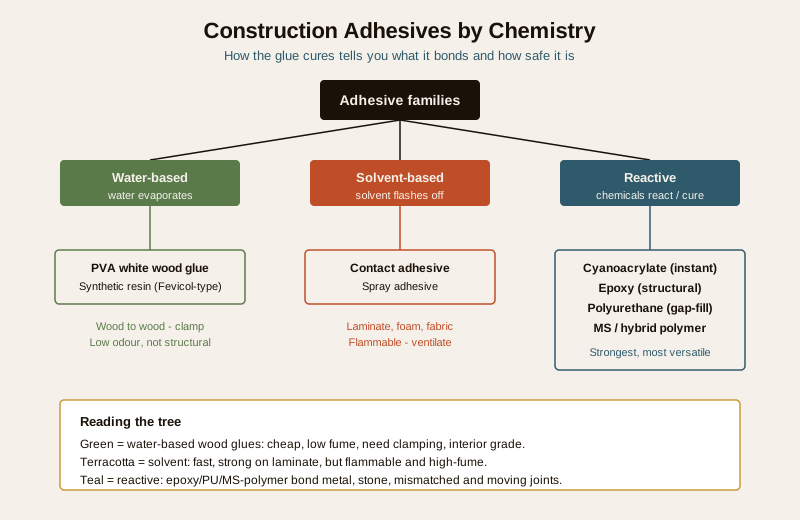
The big divide is how the glue turns from liquid to solid (its cure):
- Water-based (PVA, synthetic resin) - the water soaks into the wood and evaporates, leaving the resin. Low odour, easy clean-up, but no good on non-porous or wet surfaces.
- Solvent-based (contact adhesive) - a solvent flashes off, leaving a rubbery film. Fast and strong on laminates, but flammable and high-fume.
- Reactive (cyanoacrylate, epoxy, PU, MS-polymer) - two chemicals react, or the glue reacts with moisture in the air, forming a new solid. These are the strongest and the most versatile across materials.
Wood glues - PVA and synthetic resin
For joining wood to wood, two water-based glues dominate the Indian market.
PVA (polyvinyl acetate) - white wood glue. The familiar white glue that dries clear. It grabs porous timber well, is cheap, low-odour and cleans up with water while wet. Standard PVA is interior-grade and not water-resistant; "waterproof" or D3/D4-rated cross-linking PVAs exist for damp areas. PVA needs the joint clamped under pressure while it sets, and it creeps slightly under sustained load, so it is a joinery glue, not a structural one.
Synthetic-resin adhesive - the Fevicol-type. In India, "Fevicol" has become shorthand for the thick, creamy synthetic-resin wood adhesive carpenters use for everything from plywood lamination to furniture joints. Chemically these are usually modified PVA or urea-formaldehyde-based resins; they offer higher solids, stronger grab and better gap-filling than thin white glue, which is why cabinetmakers rely on them. Like PVA they need clamping and time, and interior grades are not for permanently wet locations.
Both are the everyday backbone of carpentry - but pressing a laminate or building a sound cabinet is a skilled carpenter's job: the strength is in surface preparation, even spreading, clamping pressure and cure time, not the glue alone. For the boards these glues join, see our neighbours on gypsum boards and cement boards and fibre-cement.
Contact adhesive - for laminates and rubber
Contact adhesive (rubber or neoprene, solvent-based) is how high-pressure laminate ("Sunmica"-type) gets bonded to plywood, and how rubber, leather and foam are stuck to boards. Its trick: you coat both surfaces, let them go touch-dry, then press them together - and they grip instantly, with no clamping. That instant grab is also its trap - once the two coated faces meet, there is no repositioning, so laminate work is exacting and best left to a carpenter.
Contact adhesives are the most safety-sensitive family here. The solvents are highly flammable and the fumes are strong - they must be used with cross-ventilation, never near a flame, pilot light, cigarette or electrical spark, and never in a closed room. Water-based ("low-VOC" or "green") contact adhesives now exist and are far kinder to breathe, though they flash off more slowly.
Cyanoacrylate - instant glue
Cyanoacrylate ("CA", super glue) cures in seconds when it meets the trace moisture on a surface. It gives a fast, rigid, strong bond on small, well-fitting parts - a snapped trim, a mitre corner, a ceramic chip - and works across many materials. Its limits: it is brittle, hates gap-filling and impact, does poorly on flexible or oily surfaces, and bonds skin instantly, so keep it off fingers and eyes. Think of it as a spot-fix, not a structural glue.
Epoxy - the structural two-part
Epoxy is two parts - resin and hardener - mixed just before use. Once cured it is rigid, extremely strong, gap-filling and resistant to water, heat and many chemicals, and it bonds an unusually wide range of materials: metal, stone, ceramic, glass, most plastics and wood. This is the family behind metal repairs, stone and marble bonding, and the chemical anchoring of bolts and rebar into concrete.
That anchoring and any structural or load-bearing epoxy joint is exactly where you stop and call a professional. The holding power depends on correct mix ratio, hole cleaning, embedment depth and edge distances - a mis-mixed or mis-placed anchor can fail under load. Specify the grade with your engineer and have it applied by a trained applicator; treat consumer two-part epoxy as for small non-structural repairs only. Epoxy sits alongside the broader family of site chemicals in our construction chemicals guide, and the cement-based cousins in epoxy grouts and tile grouts.
Polyurethane (PU) - gap-filling and foam
PU adhesives cure by reacting with moisture in the air and the surface, and they foam slightly as they cure - which lets them fill gaps and bond imperfect, mismatched surfaces. They give tough, somewhat flexible, water-resistant bonds on wood, stone, concrete, metal and many plastics, and the expanding PU foam version fills cavities and seals gaps around frames. Downsides: the foaming can push parts apart if unclamped, uncured PU is hard to clean off skin, and it needs care with ventilation. PU foam insulation is covered separately in PU and PIR foam insulation.
MS-polymer and hybrids - flexible, paintable, low-fume
Modified-silane (MS) polymer, also sold as "hybrid polymer", is the modern all-rounder that blurs the line between sealant and adhesive. It bonds a huge range of materials - metal, glass, stone, wood, most plastics, concrete - stays permanently flexible, resists water and UV, is paintable, and is low-odour, solvent-free and isocyanate-free, so it is the kindest of the strong adhesives to breathe. It is the go-to where a joint must bond and move - a panel on a facade, a threshold, a joint that expands and contracts. For pure gap-filling and weather joints, see the sealants guide; MS-polymer is where sealant and adhesive meet.
Spray adhesives and grab adhesives
Two more you will meet on site:
- Spray adhesives - aerosol contact-type glues for thin, light, large-area bonding: fabric, foam, felt, paper, insulation facings, upholstery backing. Fast and even, but light-duty, and the same flammable, high-fume, ventilate-well cautions as contact adhesive apply.
- Grab adhesives ("liquid nails" type) - thick construction adhesives in a cartridge and caulking gun, used to stick skirting, beading, decorative panels, MDF trims, plaster cornices and boards straight to a wall with a bead - often replacing nails and screws. High initial grab holds the piece while it cures. They are for non-structural fixing of trims and panels, not for hanging heavy loads.
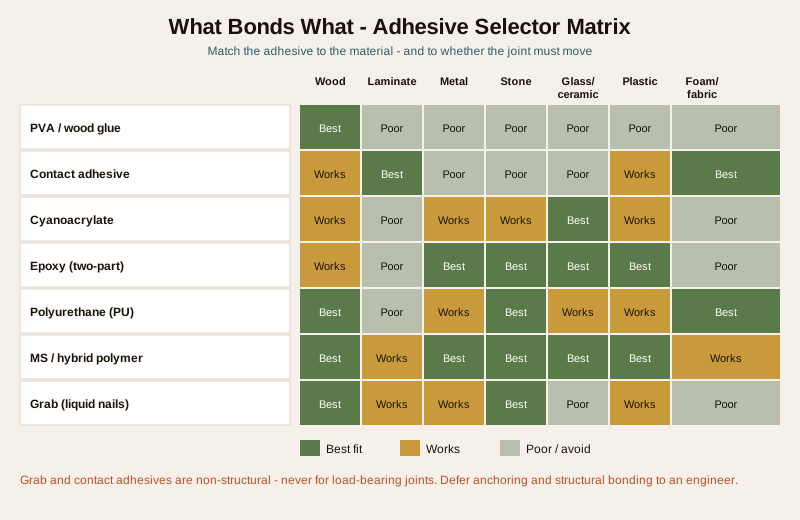
The adhesive selector - what to use where
The table below is the heart of this guide. Treat strengths and cure times as indicative and confirm on the product datasheet for the exact grade you buy.
| Adhesive | Chemistry | Bonds best | Where it is used | Cure / strength |
|---|---|---|---|---|
| PVA white glue | Water-based | Wood to wood (porous) | General joinery, craft, interior furniture | Sets in minutes, full in ~24 h; moderate, not structural |
| Synthetic resin (Fevicol-type) | Water-based resin | Wood, plywood, veneer | Carpentry, ply lamination, cabinet joints | Clamp several hours; strong wood bond, interior grade |
| Contact adhesive | Solvent (neoprene) | Laminate, rubber, leather, foam to board | Laminate ("Sunmica") pressing, upholstery | Touch-dry then instant bond; strong, no reposition |
| Cyanoacrylate (CA) | Reactive (moisture) | Small tight-fitting parts, many materials | Spot repairs, trim, mitres, ceramics | Seconds; strong but brittle, poor gap-fill |
| Epoxy (two-part) | Reactive (mix) | Metal, stone, glass, ceramic, plastic, wood | Metal/stone bonding, anchoring, repairs | Minutes to hours by grade; very high, rigid, structural (defer) |
| Polyurethane (PU) | Reactive (moisture) | Mismatched, uneven, damp surfaces | Gap-filling bonds, frames, foam sealing | Hours; tough, water-resistant, slightly flexible |
| MS / hybrid polymer | Reactive (moisture) | Almost everything; movement joints | Panels, thresholds, bond-and-seal, facades | Hours; flexible, paintable, weatherproof, low-fume |
| Spray adhesive | Solvent aerosol | Fabric, foam, felt, paper, facings | Upholstery, insulation facing, large thin areas | Fast; light-duty, flammable |
| Grab adhesive (liquid nails) | Solvent or hybrid | Panels, skirting, beading, trims to wall | Non-structural trim and panel fixing | High initial grab, full in ~24-48 h; strong, non-structural |
The single rule that saves the most mistakes: match the adhesive to both the material AND the movement. Rigid glues (CA, epoxy) on a joint that flexes will crack; flexible MS-polymer on a joint that must not move is overkill. Water-based glues on non-porous surfaces will not hold at all.
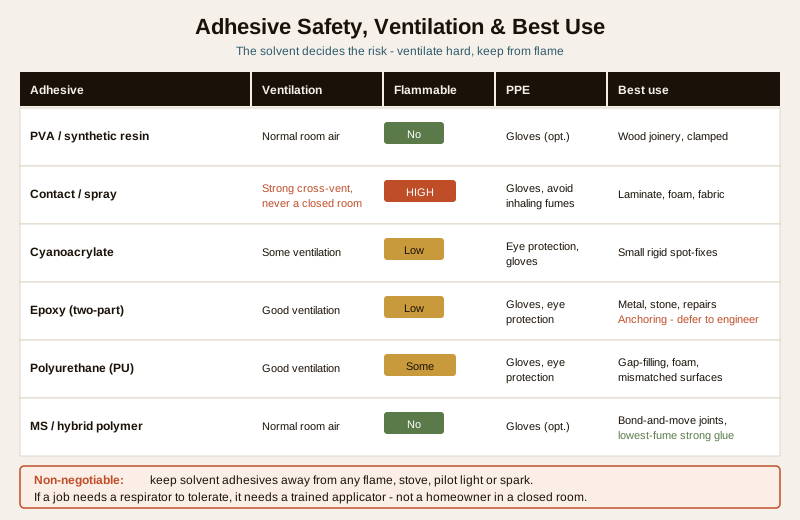
Safety, ventilation and PPE
Adhesives range from harmless to genuinely hazardous, and the difference is mostly the solvent. Read the label, and treat the strong-smelling ones with respect.
| Adhesive | Ventilation | Flammable? | PPE | Watch out for |
|---|---|---|---|---|
| PVA / synthetic resin | Normal room air | No | Optional gloves | Low risk; keep from freezing |
| Contact / spray adhesive | Strong cross-ventilation, never a closed room | Yes - high | Gloves, avoid inhaling | Fumes, flame, sparks, pilot lights |
| Cyanoacrylate | Some ventilation | Low | Eye protection, gloves | Bonds skin and eyes instantly |
| Epoxy | Good ventilation | Low | Gloves, eye protection | Skin sensitiser; mix ratio matters |
| Polyurethane / PU foam | Good ventilation | Some | Gloves, eye protection | Very hard to clean off skin; expands |
| MS / hybrid polymer | Normal room air | No | Optional gloves | Lowest-fume of the strong glues |
Non-negotiables: keep contact, spray and other solvent adhesives away from any open flame, cigarette, gas stove, pilot light or electrical spark; use them with windows open and, ideally, a fan drawing air out; store tins sealed, cool and away from heat; and keep all adhesives out of children's reach. Cyanoacrylate deserves special care around eyes and fingers. If a job needs a respirator to be tolerable, it needs a trained applicator, not a homeowner in a closed room.
Choosing well and buying honestly
A few habits get you the right result:
- Buy for the material and the movement, not by brand reflex. Use the selector table above.
- Check the shelf life and freshness - cyanoacrylate, PU and MS-polymer cartridges cure in the tube once opened or aged; a hardened cartridge is dead money.
- Match interior vs water-resistant grades - standard PVA and interior resins fail in permanently damp spots; specify D3/D4 or PU/MS-polymer there.
- Prepare the surface - clean, dry, dust-free and correctly keyed surfaces matter more than the glue's grade. This is most of why carpentry and laminate work is skilled labour.
- Defer the load-bearing calls - structural bonding, chemical anchoring and any joint whose failure is a safety issue go to a qualified engineer and a trained applicator.
When you want to see where adhesives sit in the wider chemistry of a site, the construction chemicals guide is the anchor; for setting tiles specifically, use tile adhesives and the tile adhesive calculator; and for weather and movement joints, sealants. All of it rolls up to the complete building materials guide and the materials and finishes library.
Key takeaways
- Adhesives sort by chemistry - water-based wood glues (PVA, synthetic resin), solvent contact adhesive, and reactive cyanoacrylate, epoxy, PU and MS-polymer - and the family tells you what it bonds and how safe it is.
- Wood to wood - PVA or synthetic-resin (Fevicol-type), clamped; laminate - contact adhesive; small rigid repairs - cyanoacrylate; metal, stone, structural - epoxy; gaps and mismatched surfaces - PU; bond-and-move, paintable - MS-polymer.
- Grab ("liquid nails") adhesives fix skirting, beading and panels without nails - but only for non-structural trims.
- Contact and spray adhesives are flammable and high-fume - ventilate hard, keep from any flame or spark; MS-polymer is the lowest-fume strong adhesive.
- Carpentry and laminate work is skilled, and structural bonding and chemical anchoring belong to a qualified engineer and trained applicator - the glue is only as good as the surface prep and application.
References
- Bureau of Indian Standards - standards covering synthetic-resin and adhesive wood-bonding and construction adhesives; consult the current editions for classes, water-resistance ratings and test requirements.
- National Building Code of India (SP 7:2026) - materials and finishing practice provisions.
- Manufacturer product datasheets and safety data sheets (SDS) - the authoritative source for cure time, coverage, working temperature and handling for the exact grade you buy.
- Studio Matrx guides: construction chemicals, tile adhesives, sealants, epoxy grouts and tile grouts and the complete building materials guide.
Export this guide
Related Guides — Deep-dive reading
Epoxy Grout vs Cement Grout for Tiles in India: Which to Specify (2026)
A plain-English guide to tile grouts for Indian homes: what grout does, how cementitious grout compares with epoxy grout on cost, stain and water resistance, hygiene and durability, and exactly where each one belongs - kitchens, bathrooms, pools, dry rooms and more.
Building MaterialsFire-Resistant Building Materials in India: A Specify-and-Select Guide (2026)
The difference between how a material reacts to fire and how long a rated assembly resists it, then the materials that deliver passive fire protection - non-combustible structure, mineral wool, fire-rated boards, intumescent coatings, spray fireproofing and fire-stopping - with a material-to-role selection table.
Building MaterialsSealants Guide India: Silicone, PU, Acrylic & MS-Polymer Explained (2026)
How to choose the right sealant for every joint in an Indian home - silicone, polyurethane, acrylic, MS-polymer and butyl - with a plain selector table for location, paintability and movement, plus the joint-design basics that make a seal actually last.
Building MaterialsRelated Tools — Try Free
Healing View Impact Calculator
Evidence-Based Design dashboard quantifying the recovery impact of nature view + daylight factor on analgesic use, length of stay, and HCAHPS patient-experience uplift. Calibrated against Ulrich 1984 (Science), Park & Mattson 2008, and the CHD EBD evidence base.
EBD CalculatorCross-Ventilation Analyzer
Estimate airflow and air changes per hour (ACH) from room size, window areas, layout, and local wind — with NBC 2016 Part 8 compliance check.
Ventilation CalculatorGrout Quantity Calculator
Estimate grout in kg and cost by tile size, joint width and thickness — cement or epoxy grout.
Flooring Calculator