
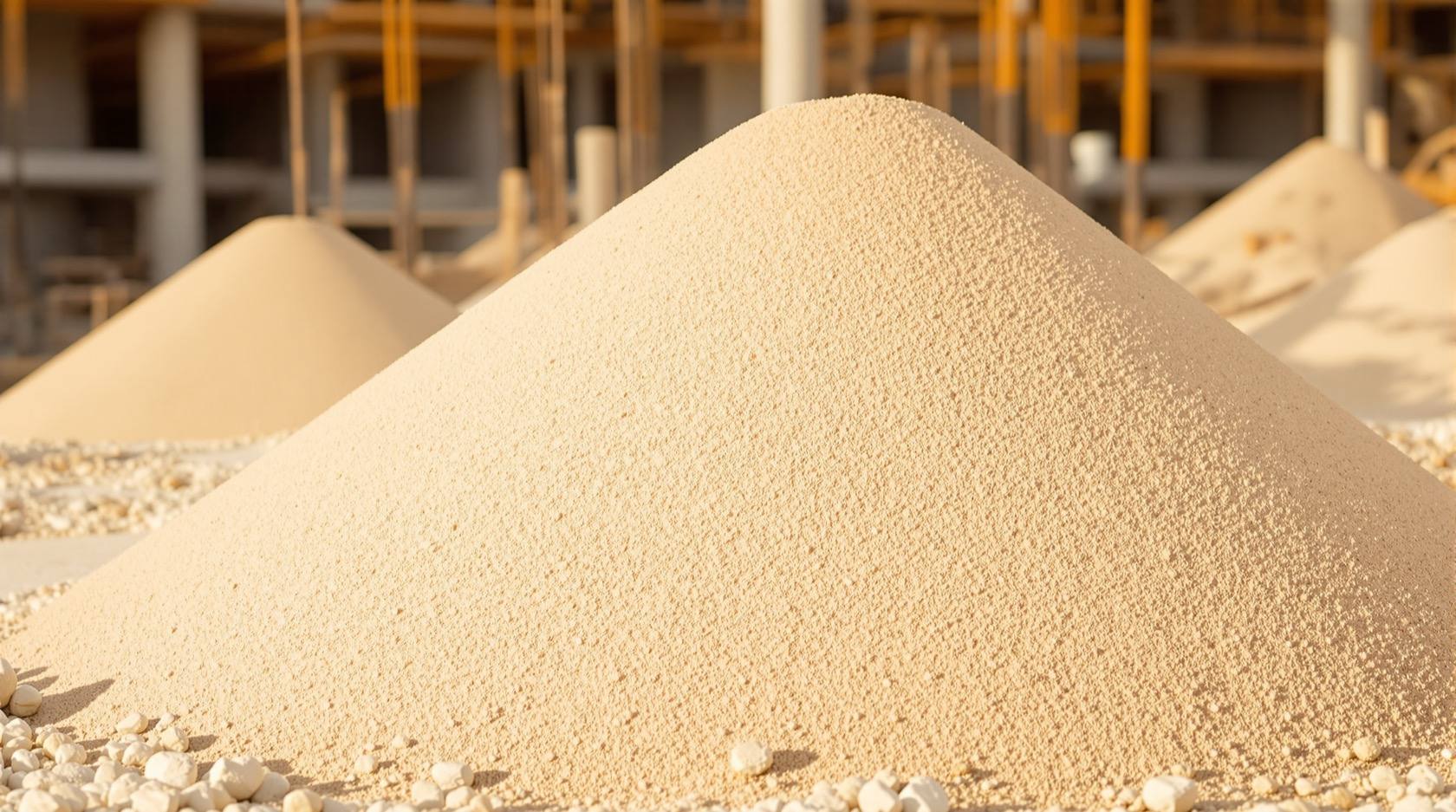
Sand for Construction in India: Types, Quality and How to Choose (2026)
A homeowner-and-builder guide to the fine aggregate that fills every concrete, mortar and plaster mix - river sand, M-sand, pit and crushed stone sand, the grading zones and silt limits that decide quality, why river-sand mining is restricted, and which sand to specify for which job.
Sand is the quiet workhorse of every building. It is in the concrete of your slab, the mortar between your bricks and the plaster on your walls, and yet it is the material most people never think about until a wall cracks or a floor dusts. In construction language sand is the "fine aggregate" - the small particles that pack in between cement paste and the larger stones ("coarse aggregate") to make a dense, strong, workable mix. Get the sand right and the mix behaves; get it wrong - too dirty, too fine, too salty - and no amount of good cement will save it.
This guide helps you choose and specify the right sand: what the different types are, the properties that actually matter, why river sand has become hard to get legally in much of India, and where each sand belongs. It sits under the complete building materials guide and pairs with the head-to-head M-sand vs river sand comparison, the wider construction aggregates guide and types of cement in India.
Scope and how to read this. This is a specify-and-select guide. Prices are indicative - always get two or three local quotes, because sand rates swing hard by region, season and legal supply. The mix ratios, water-cement ratio, structural design and any load-bearing decision belong to a qualified contractor or structural engineer, and quality testing should follow the relevant IS methods (the IS 383 family governs fine aggregate). Nothing here replaces a site-specific mix design or a lab test report.
What sand does in a mix
To choose sand well you first have to know what it is for. In concrete, mortar and plaster the cement paste is the glue and the aggregate is the skeleton. Coarse aggregate (the 10 mm to 20 mm stones) gives bulk and strength; sand fills the gaps between those stones and around them, so the paste is not asked to bridge large voids on its own.
Three things follow from that role:
- It controls density and strength. Well-graded sand - a good spread of particle sizes - packs tightly and leaves few voids, so the hardened mix is denser and stronger. A single-size or gap-graded sand leaves holes that weaken it.
- It controls workability and water demand. Rounded, well-graded sand flows and finishes easily with less water. Very fine or very angular sand has a huge surface area and drinks water, and more water means a weaker mix. This is why plaster and concrete want different sands.
- It controls finish. Wall plaster needs a finer, smoother sand to trowel to a flat face; structural concrete wants a coarser sand for strength. One sand rarely does both jobs well.
Because sand is roughly a quarter to a third of a typical concrete mix by volume, its quality is not a detail - it is a strength factor, as understanding concrete strength explains.
The main types of construction sand
India uses several sands, and the names get muddled on site. Here is the practical map.
| Sand type | What it is | Typical best use |
|---|---|---|
| River sand | Naturally rounded grains dredged from riverbeds | Plaster and fine finishing (where legally available) |
| Manufactured sand (M-sand) | Hard rock crushed and graded in a factory | Concrete and RCC - the modern default |
| Crushed stone sand | Crushed rock fines, close cousin of M-sand | Concrete and general mortar |
| Pit sand (coarse sand) | Angular sand dug from inland pits | Masonry mortar and below-ground work |
| Plastering sand (P-sand) | A finer manufactured or screened fraction | Wall plaster and thin mortar joints |
| Sea sand | Beach or offshore sand, salty | Generally avoided - needs washing and testing first |
River sand was the traditional favourite because its rounded grains make a workable, smooth mix - lovely for plaster. But dredging it damages riverbeds, and mining it is now restricted or seasonally banned across many Indian states, which is exactly why the industry has moved on.
Manufactured sand (M-sand) is made by crushing hard rock to sand size and grading it in a controlled plant. It is consistent, legal, dust-controlled and now the standard fine aggregate for concrete. Its cousin crushed stone sand is the same idea with slightly coarser control.
Pit sand is angular and grippy - good in masonry mortar - but often carries clay and iron oxide, so it usually needs washing. Plastering sand / P-sand is a finer fraction (often manufactured) tuned for a smooth plaster face. Sea sand carries salt (chloride) that corrodes reinforcement steel and should be treated as off-limits unless it is thoroughly washed and lab-tested first.
The properties that actually matter
When a supplier says "good sand", ask what they mean. These are the properties that decide fitness.
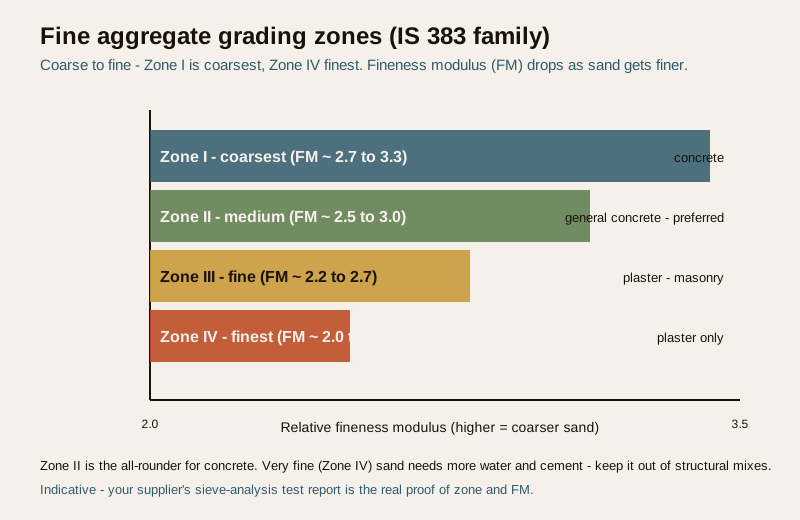
Grading and zones. Grading is the spread of particle sizes, measured by passing the sand through a stack of IS sieves. The IS 383 family sorts fine aggregate into four grading zones - Zone I (coarsest) through Zone IV (finest). Zone II is the all-rounder for general concrete; the finer zones suit plaster. A well-graded sand across a zone packs densely; a gap-graded one does not.
Fineness modulus (FM). This is a single number that sums up how coarse or fine a sand is - higher FM means coarser. Concrete sand typically sits higher (roughly 2.6 to 3.2); plaster sand sits lower. FM lets you compare two sands at a glance, though it does not by itself prove good grading.
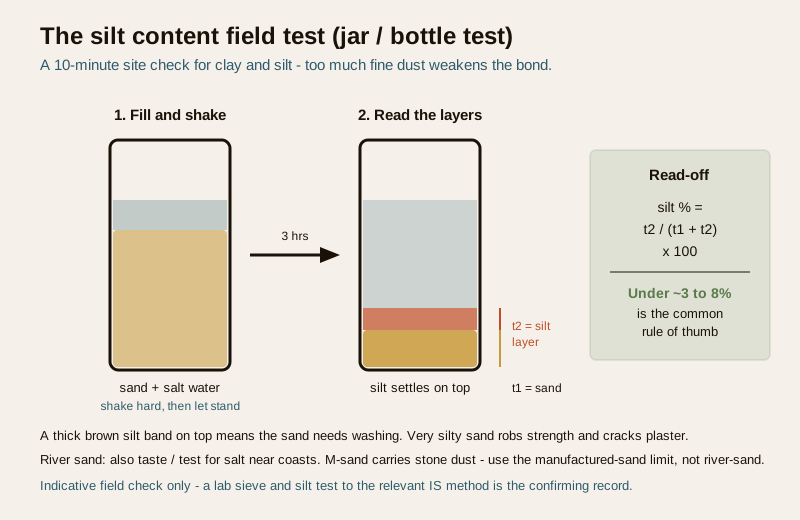
Silt and clay content. Silt and clay are ultra-fine dust that coats the grains and stops cement bonding to them, and clay swells and shrinks so it cracks plaster. Excess silt is the single most common defect in Indian sand. The jar test below is the field check; a lab test to the relevant IS method is the record.
Salt and chloride. Relevant for river sand near coasts and for any sea sand. Chloride attacks the reinforcement steel inside concrete - the reason why reinforcement steel matters - so salty sand near the sea must be washed and tested before it goes near RCC.
Moisture and bulking. Damp sand "bulks" - a film of water pushes the grains apart, so damp sand takes up more volume than the same weight of dry sand, sometimes 20 to 30 percent more. If you batch concrete by volume without allowing for bulking, you can badly under-dose the sand and get a weak mix. This is one reason batching by weight, or a bulking correction, matters - your engineer accounts for it in the mix design.
| Property | Why it matters | Field or lab check |
|---|---|---|
| Grading / zone | Dense packing, strength, workability | Sieve analysis (IS 383 family) |
| Fineness modulus | Coarse-vs-fine at a glance | Calculated from sieve test |
| Silt and clay | Weak bond, plaster cracking | Jar test on site; lab silt test |
| Salt / chloride | Corrodes reinforcement steel | Lab chloride test; avoid sea sand |
| Moisture / bulking | Volume error, weak batching | Bulking test before volume batching |
| Organic matter | Delays and weakens setting | Colour / organic-impurity test |
Two field checks you can do yourself
You cannot run a lab on site, but two quick checks catch most bad sand before it is unloaded.
The silt jar test. Half-fill a clear glass jar with sand, top up with water (a pinch of salt helps the silt settle), shake hard and leave it to stand for about three hours. The heavy sand settles first and the fine silt forms a distinct layer on top. Read the two layer thicknesses and work out the silt as a percentage of the total - a low single-digit figure is the common rule of thumb for river sand, with a separate, more generous limit for the stone dust in M-sand. A thick brown band means the sand needs washing.
The bulking check. Fill a container with damp sand, note the level, then flood it with water and tap it down; the level drops as the water films collapse. The drop tells you roughly how much the sand was bulked, so you know how much extra to add if you must batch by volume. On any structural job, though, let the contractor batch by weight and handle bulking in the mix design rather than eyeballing it.
Indicative price - and why it swings
Sand is one of the more volatile line items in an Indian build. Legal river sand, where available at all, is usually the most expensive and least predictable, because supply is throttled by mining permits and seasonal bans. M-sand is generally cheaper, steadier and available year-round, which is a large part of its appeal.
Rates are quoted per unit (a "unit" is a local volume measure, often around 100 cubic feet) or per tonne, and they vary widely by city, distance from the quarry or river, and the season. Treat any number you read online as a starting point only and get two or three current local quotes - and confirm the sand comes with a legal source and, ideally, a test report. For estimating how much you need, use the sand quantity calculator and, for wall work, the plaster quantity calculator.
Why river sand is restricted - and M-sand won
River sand mining scars riverbeds, lowers water tables, damages bridge foundations and destroys aquatic habitat. In response, many Indian states have restricted or seasonally banned river-sand extraction and tightened enforcement. The result is that legal river sand is scarce, dearer and often adulterated, while illegal sand carries real legal risk for a project.
Manufactured sand solved the problem. Crushing hard rock in a plant gives a consistent, legal, well-graded fine aggregate with controllable dust - and it reuses quarry material rather than dredging rivers. For concrete and RCC it is now the mainstream choice, which is why a modern specification usually reads "M-sand" by default. The full trade-off - workability, water demand, plaster finish and cost - is laid out in the M-sand vs river sand guide; this section is only the headline.
Which sand for which job
The single most useful habit is to match the sand to the task rather than buying one heap for everything.
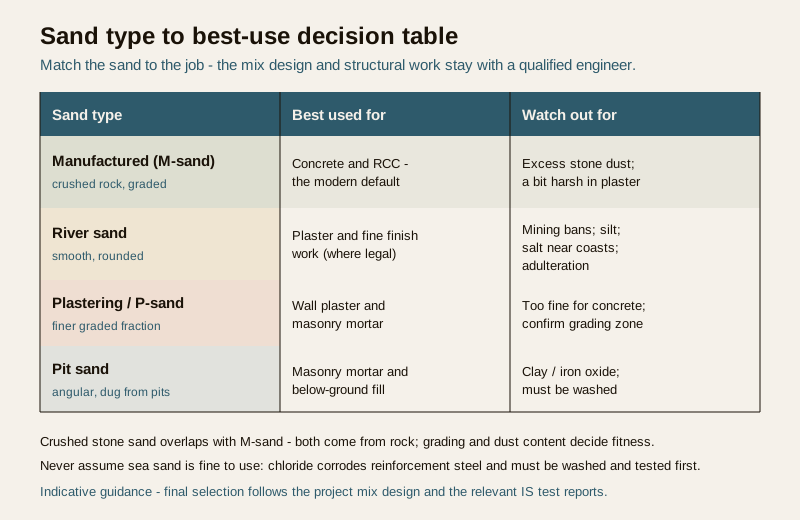
- Structural concrete and RCC - specify M-sand or crushed stone sand, well-graded (around Zone II), low dust. This is where ready-mix concrete shines, because the plant controls the sand for you.
- Masonry mortar (brick or block laying) - a coarser sand, pit sand or M-sand, grips well; keep silt and clay down.
- Wall plaster - a finer, smoother sand (river sand where legal, or P-sand) for a flat, crack-free face; too coarse a sand tears the finish, too fine a sand cracks it.
- Below-ground and fill - less fussy, but still keep out clay and organic muck.
For the coarse stones that pair with this sand, see the construction aggregates guide; for how the cement binds it all, types of cement in India and the construction materials hub.
Key takeaways
- Sand is the fine aggregate that fills the gaps in concrete, mortar and plaster - it controls density, strength, workability and finish, and it is a quarter to a third of a concrete mix.
- M-sand (manufactured sand) is the modern default for concrete and RCC because river-sand mining is restricted or banned across much of India; M-sand is legal, consistent and dust-controlled.
- The properties that decide quality are grading / zone (IS 383 family), fineness modulus, silt and clay content, salt / chloride, and moisture / bulking.
- Run the silt jar test and a bulking check on site before you accept a load; a thick silt band means the sand needs washing.
- Match the sand to the job: M-sand for concrete, coarse sand for masonry mortar, fine sand for plaster - one heap rarely does all three well.
- Sand prices swing hard by region, season and legal supply - get two or three local quotes and confirm a legal source.
- The mix design, water-cement ratio and all structural decisions belong to your contractor or structural engineer; this guide helps you specify and check, not batch.
References
- IS 383 (family), Bureau of Indian Standards - specification for coarse and fine aggregate for concrete, including grading zones and quality limits for fine aggregate.
- IS codes on methods of test for aggregate - sieve analysis, silt content, bulking and deleterious-material tests (relevant IS methods).
- IS codes on plain and reinforced concrete and concrete mix proportioning - the role of fine aggregate in mix design (relevant IS codes).
- National Building Code of India, NBC (SP 7:2026), Bureau of Indian Standards - materials and construction practice provisions.
- State mining / minor-mineral regulations and river-sand extraction rules - legal availability of river sand varies by state and season; confirm the current local position.
All prices, grading figures and test thresholds here are indicative selection aids only; confirm quality against the relevant IS test methods and current standards, and have a qualified contractor or structural engineer design, batch and sign off the actual concrete, mortar and plaster mixes.
Export this guide
Related Guides — Deep-dive reading
Construction Aggregates in India: Sizes, Quality & Selection (2026)
What coarse aggregate actually does in concrete, how to pick the right nominal size (10mm, 20mm, 40mm), and the field and lab checks that separate strong stone from a bad load - a specify-and-select guide for Indian homes.
Building MaterialsM-Sand vs River Sand in India: A Head-to-Head Comparison for Concrete and Plaster (2026)
Manufactured sand or natural river sand? This guide sets the two side by side across grain shape, grading, water demand, strength, cracking risk, legality, cost and sustainability, then tells you honestly where each one wins and how many sites use both.
Building MaterialsCompressed Stabilised Earth Blocks (CSEB): A Specify-and-Select Guide for India (2026)
What CSEB is - local soil plus a small percentage of cement or lime, compressed in a press and cured, never kiln-fired - its low-carbon and thermal-mass strengths, its real limits around soil, quality control and water, and how it compares with fired clay brick and fly-ash brick. A specify-and-select guide.
Building MaterialsRelated Tools — Try Free
Sand Quantity Calculator
The sand (fine aggregate) a concrete, mortar or plaster volume needs, in cubic metres, cubic feet and tonnes.
Material CalculatorStamp Duty Calculator — All Indian States
Stamp duty + registration charges for all 28 states and 8 UTs — gender concessions, urban/rural variants, metro cess built in.
Stamp DutyRenovation vs New Build Calculator
Compare renovating vs building new interiors city-wise across 13 work scopes with GST and per-sqft rates.
Cost Comparison