
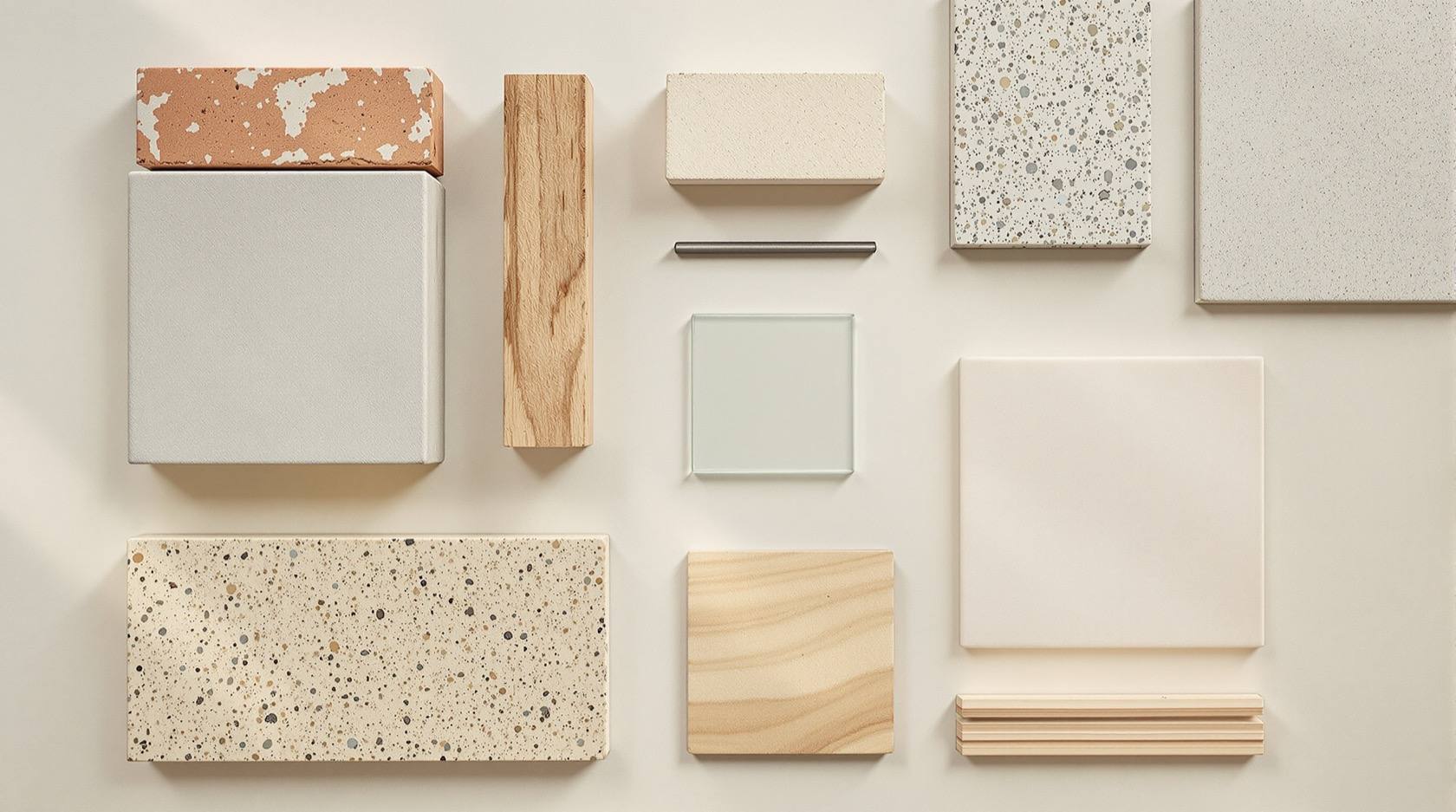
Building Materials in India: The Complete Guide (2026)
The anchor map of the Building Materials hub - what building materials are, how to classify them, and an eight-criteria framework to select and specify the right one for every layer of an Indian home.
Every home is an assembly of choices. Sand, cement, steel, brick, block, stone, tile, glass, paint, membrane - each is a "building material", and each was selected (or defaulted into) at some point on your drawings. This guide is the anchor of the Studio Matrx Building Materials hub. It gives you the big picture: what building materials are, how professionals classify them, the framework used to select and specify them, and a map to every deeper guide in the hub so you can drill into any family with confidence.
Scope note: This is a "specify and select" guide, not a build manual. Costs are indicative and move with market, city and grade - always get local quotes. Structural design, mix ratios in practice, waterproofing and fireproofing application, and load-bearing decisions belong to a qualified contractor or structural engineer. We name Indian standards generally (IS / BIS codes, NBC SP 7:2026, GRIHA / IGBC / LEED); we never invent clause numbers.
What is a building material?
A building material is any substance used to construct or finish a building. That covers three overlapping stories: the substance itself (its chemistry and physics), the product form it is sold in (a bag of cement, a run of TMT bar, a box of tiles), and the function it performs in the finished building (carrying load, keeping water out, looking good). A useful mental model is that a house is a stack of layers, and each layer calls for a material family selected for that job. Get the layer-to-family mapping right and the rest is detailing.
How building materials are classified
There is no single "correct" taxonomy - professionals slice the same catalogue three ways, and each slice answers a different question.
By structural role. "Structural" materials carry or resist load - the foundation, the concrete-and-steel frame, load-bearing masonry, the roof structure. "Non-structural" materials enclose, divide and finish - partitions, cladding, flooring, ceilings, paint. The distinction matters because a mistake in a structural material is a safety event, while a mistake in a finish is a cosmetic or comfort one. See our structural safety guide for how concrete and steel actually behave under load.
By origin. "Natural" materials are used close to as-found - stone, sand, timber, clay, laterite. "Manufactured" materials are processed into a standard product - cement, fired brick, steel, float glass, ceramic tile. "Engineered" materials are designed to a performance spec - autoclaved aerated concrete (AAC), ready-mix concrete (RMC), plywood, high-pressure laminate (HPL), fibre-cement board. Engineered products trade a higher price for tighter tolerances and predictable behaviour.
By function. This is the classification a homeowner actually plans around: foundation, masonry, structure, roofing, flooring, walls, ceilings, doors and windows, glazing, insulation, waterproofing, acoustics, fire protection, finishes, construction chemicals, and eco / green materials. The whole hub is organised on this axis.
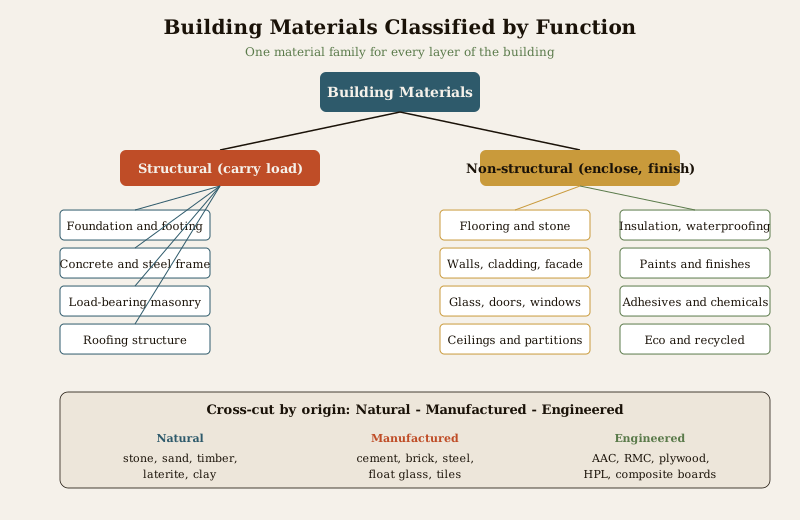
The table below anchors the function families to the standards that govern them and the hub guide that goes deep on each.
| Family | Typical materials | Governing standard (general) | Go deeper |
|---|---|---|---|
| Sand and aggregate | River sand, M-sand, 20 mm / 10 mm stone | IS 383 governs aggregates | Sand guide |
| Cement and concrete | OPC, PPC, PSC, RMC | IS 269 / IS 1489 cover cement types | Types of cement |
| Reinforcement | TMT bars, mesh | IS codes for reinforcement steel | TMT steel guide |
| Masonry | Clay brick, fly-ash brick, AAC block | IS codes for bricks and blocks | AAC vs red brick |
| Flooring and stone | Tile, granite, marble, wood | IS codes for flooring and stone | Flooring hub |
| Envelope | Cladding, ACP, HPL, glass | NBC SP 7:2026, glazing IS codes | Facades hub |
The selection framework: eight criteria
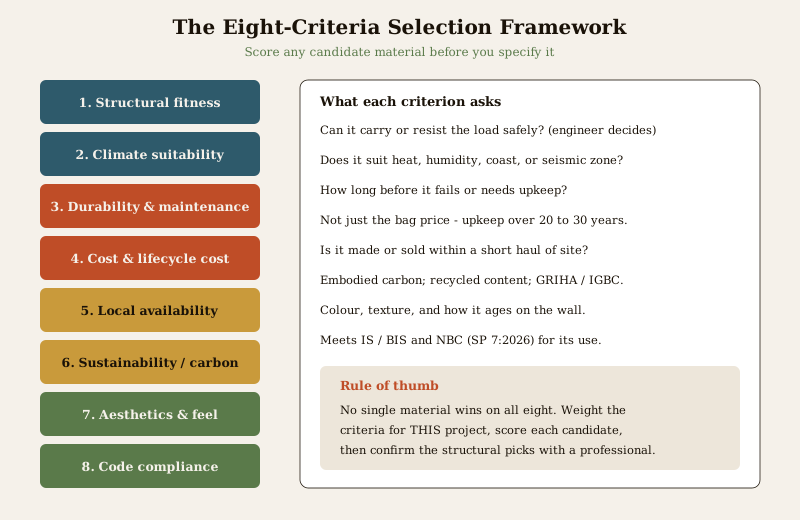
The single most useful habit in material selection is to stop asking "what is cheapest?" and start scoring each candidate against eight criteria. No material wins on all eight; the art is weighting them for your project.
1. Structural fitness. Can it safely carry or resist the load it will see? For anything structural, this is not a homeowner decision - your engineer confirms grade and section.
2. Climate suitability. Coastal salt air, monsoon humidity, desert heat swing and seismic zone each rule some materials in and others out. A material that is perfect in Bengaluru can fail on the Chennai coast.
3. Durability and maintenance. How long before it fails or needs upkeep, and how painful is that upkeep? A low-maintenance material earns back a price premium quietly over decades.
4. Cost and lifecycle cost. The bag price is the smallest number that matters. Add installation, upkeep, and replacement across 20 to 30 years to get the true cost. Our how to choose building materials guide walks this calculation.
5. Availability. A material made or stocked within a short haul of site is cheaper, faster and lower-carbon than one trucked across the country. Local availability quietly decides most Indian specifications.
6. Sustainability and embodied carbon. The carbon spent making and moving a material, its recycled content, and its recyclability at end of life. Rating systems like GRIHA, IGBC and LEED reward low-impact choices - see sustainable and green buildings.
7. Aesthetics and feel. Colour, texture, and how a surface ages. This is where finishes earn their place.
8. Code compliance. Does it meet the relevant IS / BIS standard and NBC (SP 7:2026) for its intended use, including fire and structural provisions? Non-compliance is not negotiable.
| Criterion | Ask yourself | Who decides |
|---|---|---|
| Structural fitness | Grade, section, load path | Structural engineer |
| Climate suitability | Heat, humidity, coast, seismic zone | You + architect |
| Durability | Service life, failure mode | You + supplier data |
| Lifecycle cost | 20 to 30 year total, not bag price | You |
| Availability | Local stock and lead time | You + contractor |
| Sustainability | Embodied carbon, recycled content | You + green consultant |
| Aesthetics | Colour, texture, ageing | You + designer |
| Code compliance | IS / BIS + NBC SP 7:2026 | Architect + engineer |
The map of the hub: from foundation to finish
Read the building as a stack and specify it bottom-up. Each layer below links to the family that serves it.
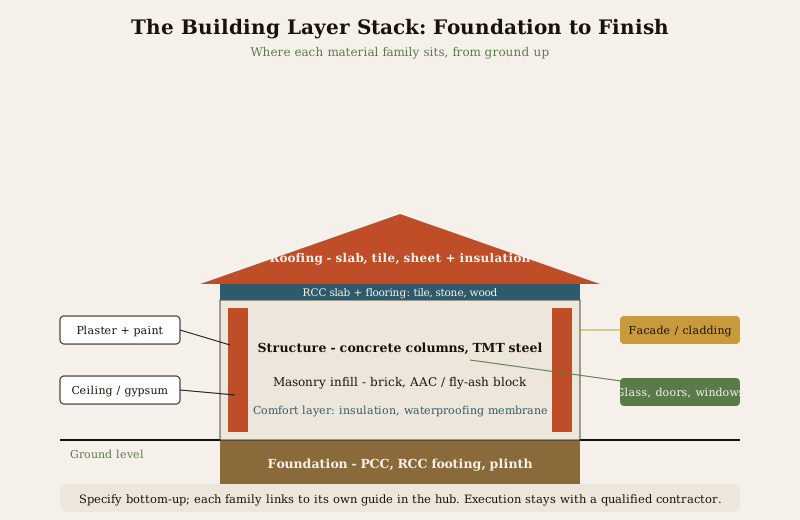
The foundations chain. This is the load-carrying backbone and the most standards-heavy part of the build. It runs sand and aggregate into cement and concrete, reinforced with steel, and rising as brick or block masonry. Start at the construction materials hub for the cement-concrete-steel-brick-AAC pillar, and use ready-mix concrete when site batching is not practical. For sand specifically, M-sand vs river sand is the decision most sites now face.
The surfaces. Once the shell stands, flooring and stone define how the home feels underfoot. The flooring hub covers tile, stone, wood and composite, while the broader materials and finishes library collects the surface catalogue.
The envelope. The skin that keeps weather out and comfort in: walls and wall finishes, facades and cladding, roofing, glass and glazing, and the doors and windows set into them. Envelope choices dominate a home's energy bill and its street presence.
The comfort layers. Hidden but decisive: insulation, waterproofing, acoustic and fire materials. These rarely show, yet they decide whether a room is quiet, dry, cool and safe. Waterproofing in particular is where indifferent material choice turns into a decade of leaks.
Finishes and chemistry. Paints, putties, textures, adhesives, sealants and boards - the last visible layer plus the construction chemicals that bind and protect everything beneath. Choose these for durability and low toxicity, not just colour.
The lighter footprint. Eco, green and recycled materials cut across every layer - fly-ash and AAC blocks, recycled aggregate, low-carbon cement blends, rapidly renewable finishes. The green buildings guide shows how these accumulate into a rating.
From selection to quantity
Once a material is specified, the next question is how much - and that is where estimating tools earn their keep. Size your order with the sand quantity calculator, aggregate quantity calculator, cement bag calculator, concrete volume calculator and brick and block quantity calculator. Treat their output as a purchasing estimate, then let your contractor confirm allowances for wastage and site conditions.
Key takeaways
- A building material has three faces - substance, product, and function - and a home is a stack of layers, each calling for one material family.
- Classify three ways: by structural role (safety-critical vs finish), by origin (natural, manufactured, engineered), and by function (the axis the hub is built on).
- Score every candidate on eight criteria - structural fitness, climate, durability, lifecycle cost, availability, sustainability, aesthetics, code compliance - and weight them for your project.
- Lifecycle cost beats bag price; local availability quietly decides most Indian specifications.
- Specify bottom-up, family by family, using the hub map - and defer structural design, mix ratios, and waterproofing execution to a qualified contractor or engineer.
References
1. Bureau of Indian Standards. IS 383: Coarse and Fine Aggregate for Concrete - Specification. BIS, New Delhi.
2. Bureau of Indian Standards. IS 269 and IS 1489: Ordinary and Blended Portland Cement - Specifications. BIS, New Delhi.
3. Bureau of Indian Standards. National Building Code of India (SP 7:2026). BIS, New Delhi.
4. Duggal, S.K. Building Materials, 4th edition. New Age International, New Delhi, 2017.
5. Varghese, P.C. Building Materials, 2nd edition. PHI Learning, New Delhi, 2012.
6. Indian Green Building Council (IGBC) and GRIHA Council. Green building rating frameworks. India.
Export this guide
Related Guides — Deep-dive reading
Green Building Materials Guide (India): Low-Carbon, Healthy & Sustainable Choices (2026)
What actually makes a building material green - low embodied carbon and energy, recycled and renewable content, local sourcing, durability, recyclability, low VOC and water efficiency - mapped honestly across the whole Indian building, with the lifecycle nuance no label can give you.
Building MaterialsHow to Choose Building Materials in India: A Step-by-Step Decision Guide (2026)
A practical, climate-first and budget-first process for selecting the right wall, floor, and roof materials for an Indian home - and knowing capital cost from whole-life cost.
Building MaterialsEmbodied Carbon in Construction: Cutting the Carbon Locked Into Your Indian Home
The CO2 baked into your cement, steel and bricks is paid up front and can never be undone. Here is where it hides in an Indian home, and the low-cost choices that cut it by roughly a quarter.
SustainabilityRelated Tools — Try Free
Cross-Ventilation Analyzer
Estimate airflow and air changes per hour (ACH) from room size, window areas, layout, and local wind — with NBC 2016 Part 8 compliance check.
Ventilation CalculatorMaterial Decision Framework (M-Score)
Score 30+ Indian construction materials across cost, durability, climate fit, maintenance, and sustainability.
MaterialsWindow Maintenance Cost Calculator
Estimate annual window upkeep by frame material — yearly, per-window and 5-year cost.
Window Calculator