
Green Building Materials Guide (India): Low-Carbon, Healthy & Sustainable Choices (2026)
What actually makes a building material green - low embodied carbon and energy, recycled and renewable content, local sourcing, durability, recyclability, low VOC and water efficiency - mapped honestly across the whole Indian building, with the lifecycle nuance no label can give you.
Construction is one of the largest sources of carbon emissions and resource use on earth, and India is building faster than almost anywhere. Cement and steel alone account for a huge share of a building's carbon before anyone switches on a light, and the concrete-and-glass boxes we favour then run up enormous cooling loads for decades. "Green building materials" are the response: materials chosen to lower that burden across their whole life - from the mine and the kiln, through the wall, to the demolition skip. This guide helps you choose and specify them honestly, and routes you to the deeper guide for each option.
The single most important idea here is that green is a lifecycle property, not a label. A material is not green because a brochure says so. It is green if, across extraction, manufacture, transport, use and end-of-life, it does less harm than the thing it replaces - and that depends on your climate, your sourcing and your detailing. This guide is deliberately allergic to greenwash.
Scope and safety: This is a selection guide, not a construction manual. Embodied-carbon figures, costs and performance here are indicative and move with product, source, transport distance and region - always get current EPDs, data sheets and local quotes. Mix designs, structural decisions, load-bearing walling, waterproofing and the actual build are execution matters for a qualified contractor, structural engineer and, on a rated project, a green-building consultant. Standards are named generally; verify current editions and every green claim against a third-party certificate.
What actually makes a material "green"
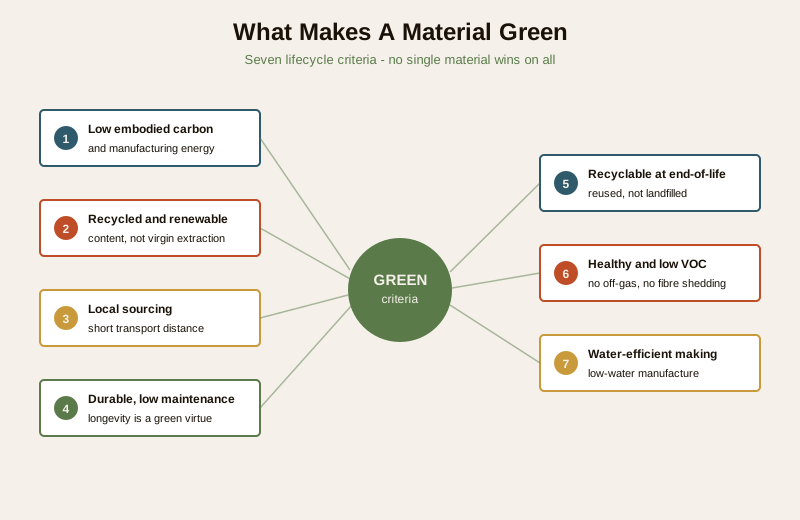
Strip away the marketing and a genuinely green material scores well on a handful of measurable criteria. No single material wins on all of them, so "green" is always a weighted judgement for your project.
- Low embodied carbon and energy - the greenhouse gas and energy locked into making, moving and installing it. Cement clinker, primary aluminium and virgin steel are carbon-heavy; earth, fly ash, GGBS and bamboo are light.
- Recycled and renewable content - waste-derived (fly ash, slag, recycled aggregate) or rapidly renewable (bamboo, cork, agro-fibre) feedstock beats virgin extraction.
- Local sourcing - a "sustainable" material trucked 1,500 km can lose its advantage to transport carbon. Local earth, stone, lime, bamboo and fly ash keep the footprint honest.
- Durability and low maintenance - a material that lasts 60 years beats a "greener" one you replace three times. Longevity is a green virtue.
- Recyclability and reuse at end-of-life - can it be crushed, recovered or composted, or does it become landfill?
- Healthy and low-VOC - no off-gassing, no fibre-shedding, no toxic content; this is where materials meet indoor air quality.
- Water efficiency in manufacture - some processes are extremely water-hungry; lower-water production is a real, if less-discussed, green criterion.
Why it matters especially in India
Two forces make material choice unusually high-stakes here. First, volume: India adds building stock at a scale that turns even small per-unit savings into national numbers, and our construction leans heavily on carbon-intensive cement and fired-clay brick. Second, climate: across most of India the dominant energy cost over a building's life is cooling. Materials that raise thermal mass sensibly, insulate the envelope, and keep roofs cool cut air-conditioning loads for decades - so a greener envelope pays back in both carbon and running cost. Choosing a reflective cool roof or natural insulation is as much a green-materials decision as picking the cement. For the wider rationale, the sustainability and green buildings hub sets the context this guide sits inside.
Embodied carbon: the number that reframes everything
Embodied carbon is the emissions tied up in a building's materials - as opposed to operational carbon, which is what it emits in use. As buildings get more energy-efficient to run, embodied carbon becomes the larger, and harder, half of the problem, because it is spent up front and cannot be recovered later. Cement and steel dominate a typical Indian structure's embodied carbon, which is why the highest-leverage green moves are usually in the structure, not the finishes.
You do not need a full life-cycle assessment to make good early decisions - a rough embodied-carbon comparison of your main options is enough to steer the big choices. Put numbers on it with our embodied carbon calculator, and score competing materials against the green criteria with the green material scorecard. For the deeper treatment of the lowest-carbon structural options, see low-carbon construction materials.
The rating systems, at a high level
Three frameworks certify how green a whole building is, and all of them reward good material choices - low embodied carbon, recycled and regional content, and healthy low-VOC products earn credits under each.
- GRIHA - India's own national green rating, well-suited to Indian climate and practice.
- IGBC - the Indian Green Building Council's family of ratings, widely used commercially.
- LEED - the international benchmark, common on corporate and premium projects.
Alongside these sits ECBC, the Energy Conservation Building Code, which sets envelope and efficiency requirements that push you toward better-insulating, lower-load materials. You do not need to chase a plaque to benefit - the credit checklists are a free, sensible menu of green material moves. To specify to them credibly you need traceable product data; material standards and certifications explains which certificates and declarations actually carry weight, and understanding IS codes grounds the standards side.
Mapping green options across the building
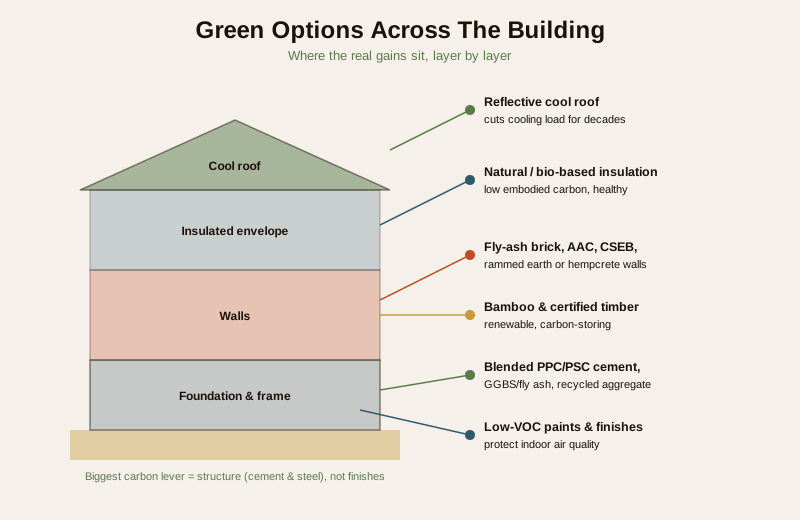
Green material thinking applies layer by layer, from foundation to roof. Here is the honest map of where the real gains are, with the deeper guide for each.
Cement replacement (the biggest lever). Ordinary Portland cement is clinker-heavy and carbon-heavy. Blended cements - PPC (fly-ash blended) and PSC (slag blended) - and site-batched GGBS and fly ash as supplementary cementitious materials cut clinker, and therefore carbon, substantially while often improving durability. This is the single most effective green move in most Indian projects. Start with types of cement, then GGBS and SCMs in concrete and, for a clinker-free frontier, geopolymer concrete.
Alternative walling. Fired-clay brick carries the carbon of the kiln; the greener family includes AAC blocks (light, insulating), fly-ash bricks (waste-derived), CSEB (compressed stabilised earth blocks, minimally fired), rammed earth, and hempcrete (a carbon-storing bio-composite). Each suits different climates, structures and budgets. Compare AAC blocks vs red bricks and fly-ash bricks vs clay bricks, and read up on CSEB, rammed earth construction and hempcrete.
Recycled aggregates and materials. Construction and demolition waste, recycled aggregate, reclaimed steel and reused components divert waste and displace virgin extraction. The caveats - quality, contamination and standards - matter, and are covered in recycled building materials.
Natural insulation and cool roofs. Bio-based insulants and reflective roofs attack the cooling load directly; see natural insulation materials and the cool roof guide.
Sustainable wood and bamboo. Fast-renewing bamboo, certified sustainable timber and engineered wood from responsible sources store carbon and renew far faster than they are used - a genuinely green structural and finish material where sourcing is traceable.
Low-VOC finishes. Paints, adhesives and sealants that off-gas little or no volatile organic compounds protect indoor air; this is where green materials meet the healthy homes agenda.
Green material families at a glance
Treat this as an orientation table - relative, indicative, and always to be confirmed against current product data and local sourcing. The honest headline: every option trades something.
| Green family | Green virtue | Main use | Watch-outs | Deeper guide |
|---|---|---|---|---|
| Blended cement (PPC/PSC) and GGBS/fly ash | Cuts clinker and embodied carbon | Concrete, mortar | Slower early strength; mix design is a pro decision | GGBS and SCMs |
| AAC blocks | Light, insulating, less kiln-fired | Non-load-bearing walls | Needs correct block adhesive and detailing | AAC vs red bricks |
| Fly-ash brick / CSEB | Waste-derived or minimally fired | Walling | Quality and stabiliser dose vary; source carefully | CSEB, fly-ash vs clay |
| Rammed earth / hempcrete | Very low carbon, local, breathable | Walls, infill | Skilled labour, climate limits, weather protection | Rammed earth, hempcrete |
| Recycled aggregate and materials | Diverts waste, avoids virgin extraction | Concrete, fill | Quality control and standards compliance | Recycled building materials |
| Natural insulation | Low embodied carbon, healthy | Envelope, roof | Fire and pest treatment, availability | Natural insulation |
| Bamboo / certified timber | Renewable, carbon-storing | Structure, finish | Traceable sourcing, treatment against pests | (see sustainability hub) |
| Low-VOC finishes | Healthier indoor air | Paint, adhesive, sealant | Verify VOC claims against certificates | Healthy homes |
Green versus conventional: the honest trade-off
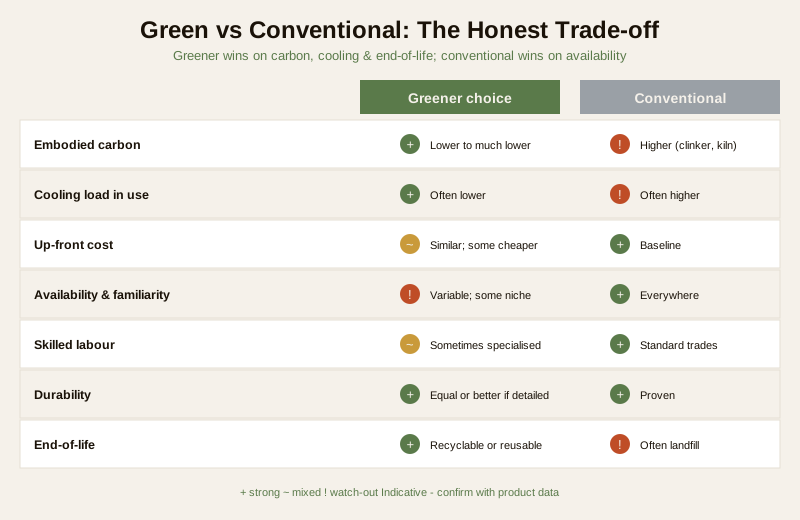
The reason greener choices are not universal is that they carry real trade-offs - usually in early strength, availability, skilled labour or up-front familiarity. Being clear-eyed about this is what separates specification from greenwash.
| Aspect | Greener choice | Conventional default |
|---|---|---|
| Embodied carbon | Lower to much lower | Higher (clinker, kiln, virgin steel) |
| Cooling load in use | Often lower (insulating, cool) | Often higher (dense, dark, uninsulated) |
| Up-front cost | Similar to higher; some (fly ash) cheaper | Baseline |
| Availability and familiarity | Variable; some niche | Everywhere, well understood |
| Skilled labour | Sometimes specialised | Standard trades |
| Durability | Equal or better if detailed well | Proven |
| End-of-life | Often recyclable or reusable | Frequently landfill |
How to specify green without greenwashing
Green material selection done well is undramatic and evidence-led. A practical sequence:
1. Start with the structure. The biggest carbon is in cement and steel, so blended cement, SCMs and efficient structural design outweigh any number of green finishes.
2. Right-size, do not over-build. The greenest material is the one you did not use; lean structural design beats material swaps.
3. Source local. Prefer materials that travel short distances; local earth, fly ash, stone, lime and bamboo keep transport carbon honest.
4. Demand evidence. Ask for EPDs, third-party certificates and test data - never accept "eco" as a claim. Weigh options with the green material scorecard.
5. Value durability and health. A long-lived, low-VOC material is greener than a short-lived "sustainable" one.
6. Leave execution to professionals. Mix designs, structural walling, waterproofing and the build itself belong to a qualified contractor and engineer.
For the full material landscape this guide sits within - cement, steel, brick, aggregate and finishes together - start from the complete building materials guide.
Key takeaways
- Green is a lifecycle property, not a label - judged across extraction, manufacture, transport, use and end-of-life, and weighted for your climate and sourcing.
- The seven criteria: low embodied carbon and energy, recycled and renewable content, local sourcing, durability, recyclability, low VOC/health, and water-efficient manufacture - no material wins on all.
- In India the two big stakes are construction volume and cooling load, so both embodied and operational carbon matter.
- The highest-leverage move is in the structure - blended cement, GGBS/fly ash and lean design beat any number of green finishes.
- GRIHA, IGBC, LEED and ECBC reward these choices; use them as a free checklist, and quantify with the embodied carbon calculator.
- Specify with evidence, not adjectives - demand EPDs and certificates, and leave execution to qualified professionals.
References
- Bureau of Indian Standards - cement, concrete, aggregate, brick and building-material standards; consult current editions and verify each product's designation on its data sheet.
- National Building Code of India (SP 7:2026) - materials, energy and thermal-performance provisions.
- Energy Conservation Building Code (ECBC) - envelope and efficiency requirements steering lower-load materials.
- GRIHA, IGBC and LEED rating frameworks - credits for low embodied carbon, recycled and regional content and healthy low-VOC materials.
- Studio Matrx guides: low-carbon construction materials, GGBS and SCMs, geopolymer concrete, CSEB, rammed earth, hempcrete, recycled building materials, material standards and certifications and the sustainability and green buildings hub.
Export this guide
Related Guides — Deep-dive reading
Embodied Carbon in Construction: Cutting the Carbon Locked Into Your Indian Home
The CO2 baked into your cement, steel and bricks is paid up front and can never be undone. Here is where it hides in an Indian home, and the low-cost choices that cut it by roughly a quarter.
SustainabilityLow-Carbon Construction Materials in India: Cutting Embodied Carbon (2026)
What embodied carbon is in plain terms, why cement and steel dominate it, and the practical levers to cut it in Indian building - blended cement and SCMs, material efficiency, lower-carbon walling, local sourcing, durability, timber and bamboo, and recycled content. A specify-and-select guide.
Building MaterialsCompressed Stabilised Earth Blocks (CSEB): A Specify-and-Select Guide for India (2026)
What CSEB is - local soil plus a small percentage of cement or lime, compressed in a press and cured, never kiln-fired - its low-carbon and thermal-mass strengths, its real limits around soil, quality control and water, and how it compares with fired clay brick and fly-ash brick. A specify-and-select guide.
Building MaterialsRelated Tools — Try Free
Material Decision Framework (M-Score)
Score 30+ Indian construction materials across cost, durability, climate fit, maintenance, and sustainability.
MaterialsWindow Material Comparison Tool
Compare uPVC, aluminium, wood, steel and composite windows on cost, life, upkeep and insulation.
CompareCross-Ventilation Analyzer
Estimate airflow and air changes per hour (ACH) from room size, window areas, layout, and local wind — with NBC 2016 Part 8 compliance check.
Ventilation Calculator