

Construction Chemicals Guide (India): Admixtures, Adhesives, Sealants, Grouts & More (2026)
The anchor guide to construction chemicals for Indian homes - what these small-dose products do, the main families from concrete admixtures to adhesives, sealants, grouts, waterproofing and curing compounds, and how to buy and use them safely.
Some of the most important materials in a building weigh almost nothing on the delivery challan. A litre of superplasticiser, a bag of tile adhesive, a cartridge of sealant - these "construction chemicals" are added in small doses, yet they decide whether concrete flows into a congested column without honeycombing, whether a vitrified tile stays stuck to a wall for twenty years, and whether a bathroom joint stays watertight through a decade of monsoons. They are the quiet performance layer of modern construction, and getting them right (or wrong) shows up long after the visible finishes.
This is the anchor guide to the whole subject. It explains what construction chemicals are and why such tiny quantities matter, maps the main families you will actually meet on an Indian site, gives a comparison table of what each one does and where it goes, and sets out how to buy and use them safely - by the datasheet, at the right dose, with the right people applying them. Each family then has its own detailed guide, linked as we go.
Scope and safety: This is a selection and specification guide, not an application manual. Dosages, coverage and cost figures here are indicative only - they move with brand, grade, temperature and site conditions, so always follow the manufacturer's technical datasheet (TDS) and get local quotes. Structural admixture dosing, waterproofing systems, spray-applied products and any repair to a structural member belong to a qualified contractor, applicator or structural engineer - never treat these as DIY. Nothing here replaces the IS codes, the product datasheet or a licensed professional.
What "construction chemicals" actually means
The term covers any manufactured chemical product added to a construction material or surface to change how it behaves - during mixing, placing, curing, bonding, sealing or protecting. Three ideas explain why such small doses have such a large effect:
- They work at the interface or the microstructure. A plasticiser coats cement grains so they slide past each other; a bonding agent creates a sticky film between old and new concrete; a sealant bridges a moving joint. The action happens where it matters, so a little goes a long way.
- They are dosed by ratio, not by bulk. Admixtures are added as a percentage of cement weight - often well under 1 to 2 percent. That is exactly why dosage discipline matters: doubling a dose "to be safe" can wreck the very property you wanted.
- They are formulated, not raw. These are engineered blends with a defined shelf life and storage needs. An expired or badly stored product may quietly under-perform, which is why the datasheet and the manufacturing date are part of the specification.
For the wider material picture - cement, concrete, sand and aggregates that these chemicals modify - see the complete building materials guide and the construction materials hub.
The main families, mapped
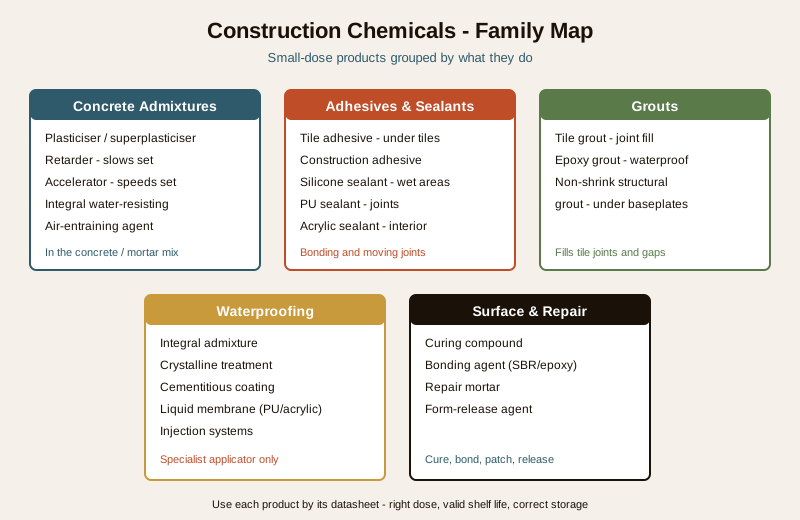
Almost everything sold as a construction chemical falls into one of a handful of families. The table below is the heart of this guide: what each family does, where it is used, and the typical form you buy it in.
| Family | What it does | Where it is used | Typical form |
|---|---|---|---|
| Concrete admixtures | Modify fresh or hardening concrete - workability, set time, water resistance | Inside the concrete/mortar mix | Liquid (mostly), some powders |
| Tile adhesives | Bond tiles to walls and floors without traditional cement-sand | Under vitrified, ceramic and stone tiles | Cement-based powder (mix with water) |
| Construction adhesives | Bond boards, trims, panels, fixtures | Joinery, cladding, false ceiling, fixtures | Cartridge, tube, tin |
| Sealants | Seal moving joints against water and air | Windows, expansion joints, wet-area corners | Cartridge (gun-applied) |
| Grouts | Fill gaps - tile joints or under baseplates | Between tiles; under machine/column bases | Powder (tile), pre-bagged (structural) |
| Waterproofing chemicals | Block or resist water ingress | Roofs, wet areas, basements, tanks | Liquid, coating, integral admixture |
| Curing compounds | Seal in moisture so concrete cures properly | Freshly finished slabs and screeds | Spray-applied liquid |
| Bonding agents | Glue new concrete/plaster to old | Repairs, plaster over dense surfaces | Liquid (SBR/acrylic), epoxy |
| Repair mortars | Rebuild spalled or damaged concrete | Patch repairs, cover restoration | Pre-bagged powder |
| Form-release agents | Stop concrete sticking to shuttering | Formwork faces before pouring | Oil/emulsion liquid |
Concrete admixtures
Admixtures are added to the concrete or mortar mix to change how it behaves fresh or as it sets. The common types:
- Plasticisers and superplasticisers (water reducers). These let concrete flow well with less water, which is the single biggest lever on strength and durability - lower water-cement ratio means denser, stronger concrete. Superplasticisers are essential for pumped and ready-mix concrete. See the concrete admixtures guide and how it connects to concrete strength and choosing a concrete grade.
- Retarders slow the set - useful in hot weather or long pours so concrete does not stiffen before it is placed.
- Accelerators speed the set and early strength gain - useful in cold conditions or fast-track work.
- Integral (water-resisting) admixtures reduce permeability from within the mix, part of a waterproofing strategy rather than a substitute for it.
- Air-entraining agents create tiny stable air bubbles that improve freeze-thaw resistance (more relevant in hill stations than the plains).
Admixture dosing changes the behaviour of a structural material, so the dose and compatibility with the cement must be set by the mix designer or ready-mix concrete supplier - not guessed on site. BIS covers them generally under IS 9103 (admixtures for concrete). You can sanity-check a nominal mix with the concrete mix ratio calculator, but confirm the real design with your engineer.
Adhesives - tile and construction
- Tile adhesives have largely replaced the old cement-sand bed for fixing tiles. A thin-bed polymer-modified adhesive grips better, allows thinner beds, and is essential for large-format vitrified tiles and for tile-on-tile. They come in graded types for different substrates and tile sizes, covered generally by IS 15477. See the tile adhesives guide and size your quantity with the tile adhesive calculator.
- Construction adhesives are gun- or trowel-applied glues for bonding boards, trims, skirting, cladding panels and fixtures - the modern alternative to nails and screws in many joinery and dry-construction jobs. See the construction adhesives guide, which pairs with boards like cement and fibre-cement boards, gypsum boards and calcium silicate boards.
Sealants
Sealants fill and seal moving joints - the gaps that must stay watertight and airtight while the two sides expand, contract or vibrate. The three common chemistries:
| Sealant | Best for | Notes |
|---|---|---|
| Silicone | Glass, sanitary, wet areas, glazing | Excellent flexibility and water resistance; most types not paintable |
| Polyurethane (PU) | Structural and floor joints, high movement | Tough, abrasion-resistant, paintable; needs correct priming |
| Acrylic | Interior gap-filling, low-movement cracks | Cheapest, paintable, but least flexible and weatherable |
The rule with sealants is to match the chemistry to the joint's movement and exposure, and to prepare the joint (clean, dry, correct depth, backer rod where needed). See the sealants guide; for the glazing joints they seal, the glass and glazing hub and windows hub give context.
Grouts
"Grout" covers two very different products that share a name:
- Tile grout fills the joints between tiles. Cement-based grout is standard; epoxy grout is a two-part product that is waterproof, stain-resistant and far more durable in wet and heavy-use areas - the reason it is specified for bathrooms, kitchens and pools despite the higher cost and fussier application. See epoxy grouts and tile grouts.
- Non-shrink structural grout is a flowable, high-strength cementitious grout poured under machine baseplates, column bases and bearing plates, where it must fill completely without shrinking. This is a structural application - specify to the engineer's requirement and leave placement to the contractor.
Waterproofing chemicals
Waterproofing is a whole discipline of its own, so this guide only situates it: the chemical products range from integral admixtures (added to the concrete), to crystalline treatments, cementitious coatings, liquid-applied membranes (acrylic, PU), and injection systems. The right choice depends on the surface, the water pressure and whether it is positive or negative side.
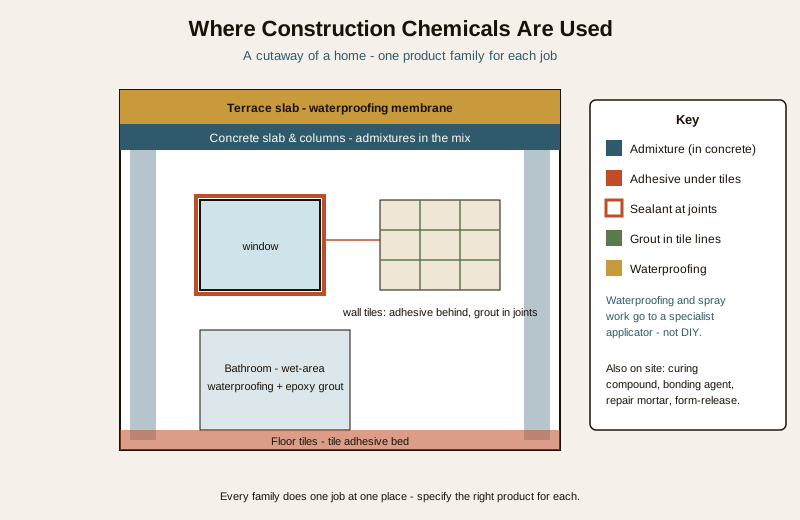
Because a waterproofing failure is expensive and hard to reverse, system selection and application belong to a specialist waterproofing applicator, not a general mason and never a DIY afternoon. This guide deliberately does not duplicate that content - go to the dedicated waterproofing guide and waterproofing chemicals explained for the full picture, and the roofing hub for roof systems above.
Curing, bonding, repair and release
The supporting cast that rounds out a site's chemical shelf:
- Curing compounds are sprayed onto fresh concrete to seal in moisture so it hydrates and gains strength properly, instead of drying out and cracking - valuable where water curing is hard to sustain.
- Bonding agents (SBR, acrylic or epoxy) create a sticky bridge so new concrete or plaster grips an old, dense or smooth surface. Essential for patch repairs and plaster over RCC.
- Repair mortars are pre-bagged, polymer-modified mortars for rebuilding spalled or damaged concrete - but structural repair (cover restoration, corroded reinforcement steel) must be diagnosed and specified by an engineer. See the structural safety hub.
- Form-release agents are oils or emulsions wiped on shuttering so the concrete releases cleanly with a good face finish.
How to buy and use them safely
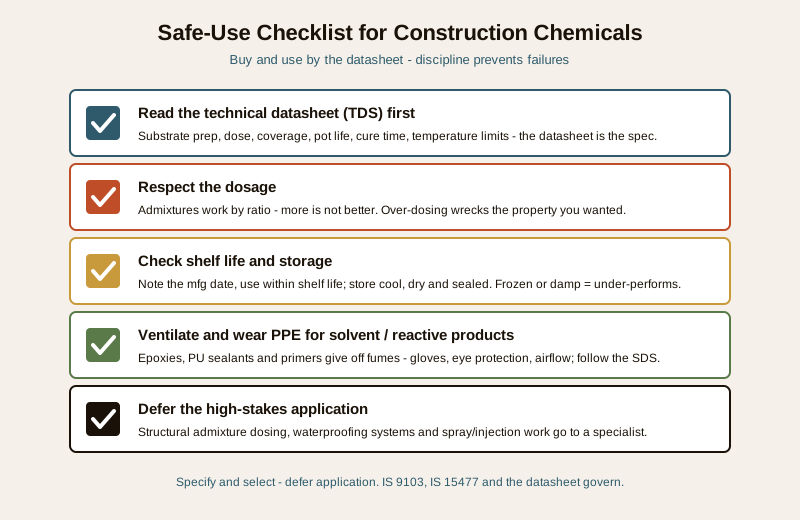
Construction chemicals reward discipline and punish shortcuts. A short, non-negotiable routine:
- Read the technical datasheet (TDS) first. Every product has one. It states the substrate prep, dose or coverage, mixing ratio, pot life, curing time, temperature limits and compatibility. The datasheet is the specification - buy and use to it, not to a mason's habit.
- Respect the dosage. Admixtures work by ratio; more is not better. Over-dosing a superplasticiser can cause segregation or excessive retardation; the correct dose comes from a trial or the mix design.
- Check shelf life and storage. Note the manufacturing date and use within the stated shelf life. Store cool, dry and sealed; liquids that have frozen or separated, and powders that have absorbed moisture, may under-perform.
- Ventilate and wear PPE for solvent and reactive products. Epoxies, PU sealants, some primers and solvent-based coatings give off fumes and can irritate skin and eyes. Use gloves, eye protection and good ventilation, and follow the safety data sheet.
- Confirm compatibility. Adhesive, grout and sealant must suit the tile, substrate and each other; an admixture must suit the cement. Mixing incompatible systems is a common, avoidable failure.
- Defer the high-stakes work. Structural admixture dosing, all waterproofing systems, spray-applied and injection products, and any structural repair go to a qualified applicator or engineer. Specify and supervise - do not self-apply.
| Buying / use step | What to check | Who owns it |
|---|---|---|
| Product selection | Right family and grade for the job and substrate | You + specifier/engineer |
| Datasheet (TDS) | Prep, dose, coverage, pot life, cure, temperature | Everyone - read before buying |
| Dosage / mix | Exact ratio; trial where structural | Mix designer / applicator |
| Shelf life & storage | Mfg date, within shelf life, stored correctly | Site store / you |
| Safety (PPE, ventilation) | Solvent/reactive products, SDS followed | Applicator + supervisor |
| Application | Structural, waterproofing, spray = specialist | Qualified contractor only |
Standards and codes
Construction chemicals in India are governed generally by BIS product standards - IS 9103 for admixtures for concrete, IS 15477 for adhesives for tiles, alongside the relevant standards for sealants, grouts and waterproofing products, and international references such as the ASTM and EN series that many datasheets cite. Structural use of admixtures ties back to the concrete codes, and building-level fire and materials provisions sit in the National Building Code (SP 7:2026). Standards and editions are revised periodically and product formulations differ by brand, so treat the manufacturer's current datasheet as the operative document and verify the exact IS or ASTM designation there rather than relying on memory.
Key takeaways
- Construction chemicals are small-dose, engineered products that transform how concrete, tiles, joints and surfaces perform - tiny quantities, large consequences.
- The main families are concrete admixtures, tile and construction adhesives, sealants, tile/epoxy and structural grouts, waterproofing chemicals, plus curing compounds, bonding agents, repair mortars and form-release agents.
- Match the product to the job: workability and strength (admixtures), bonding (adhesives), moving joints (sealants), gaps and joints (grouts), and water ingress (waterproofing).
- Use by the datasheet: right dose, valid shelf life, correct storage, and PPE plus ventilation for solvent and reactive products.
- Specify and select; defer application - structural admixture dosing, waterproofing systems and spray/injection work belong to a qualified applicator or engineer.
References
- Bureau of Indian Standards - IS 9103 (admixtures for concrete), IS 15477 (adhesives for tiles) and the relevant standards for sealants, grouts and waterproofing products; consult the current editions.
- ASTM and EN series - international standards frequently cited on manufacturer datasheets for admixtures, sealants and adhesives.
- National Building Code of India (SP 7:2026) - fire and materials provisions at building level.
- Manufacturer technical datasheets (TDS) and safety data sheets (SDS) - the operative documents for dose, coverage, storage and safe handling.
- Studio Matrx guides: concrete admixtures, tile adhesives, construction adhesives, sealants, epoxy and tile grouts, waterproofing, waterproofing chemicals explained, wall finishes and the complete building materials guide.
Export this guide
Related Guides — Deep-dive reading
Epoxy Grout vs Cement Grout for Tiles in India: Which to Specify (2026)
A plain-English guide to tile grouts for Indian homes: what grout does, how cementitious grout compares with epoxy grout on cost, stain and water resistance, hygiene and durability, and exactly where each one belongs - kitchens, bathrooms, pools, dry rooms and more.
Building MaterialsSealants Guide India: Silicone, PU, Acrylic & MS-Polymer Explained (2026)
How to choose the right sealant for every joint in an Indian home - silicone, polyurethane, acrylic, MS-polymer and butyl - with a plain selector table for location, paintability and movement, plus the joint-design basics that make a seal actually last.
Building MaterialsFire-Resistant Building Materials in India: A Specify-and-Select Guide (2026)
The difference between how a material reacts to fire and how long a rated assembly resists it, then the materials that deliver passive fire protection - non-combustible structure, mineral wool, fire-rated boards, intumescent coatings, spray fireproofing and fire-stopping - with a material-to-role selection table.
Building MaterialsRelated Tools — Try Free
Bathroom Waterproofing Calculator
Work out waterproofing material (kg/L) and cost for a bathroom by area, wall band, system type and coats — cementitious, acrylic, PU or SBR.
Bathroom CalculatorFalse Ceiling Cost Estimator
Live ₹/sqft across 8 ceiling types — POP, gypsum, designer, metal, PVC, wooden — with cove and spot lighting for 20 Indian cities.
Cost CalculatorBathroom Sealant Calculator
How many tubes of silicone sealant a bathroom needs and the cost — by joints to seal, lengths and bead size, with an anti-fungal note.
Bathroom Calculator