
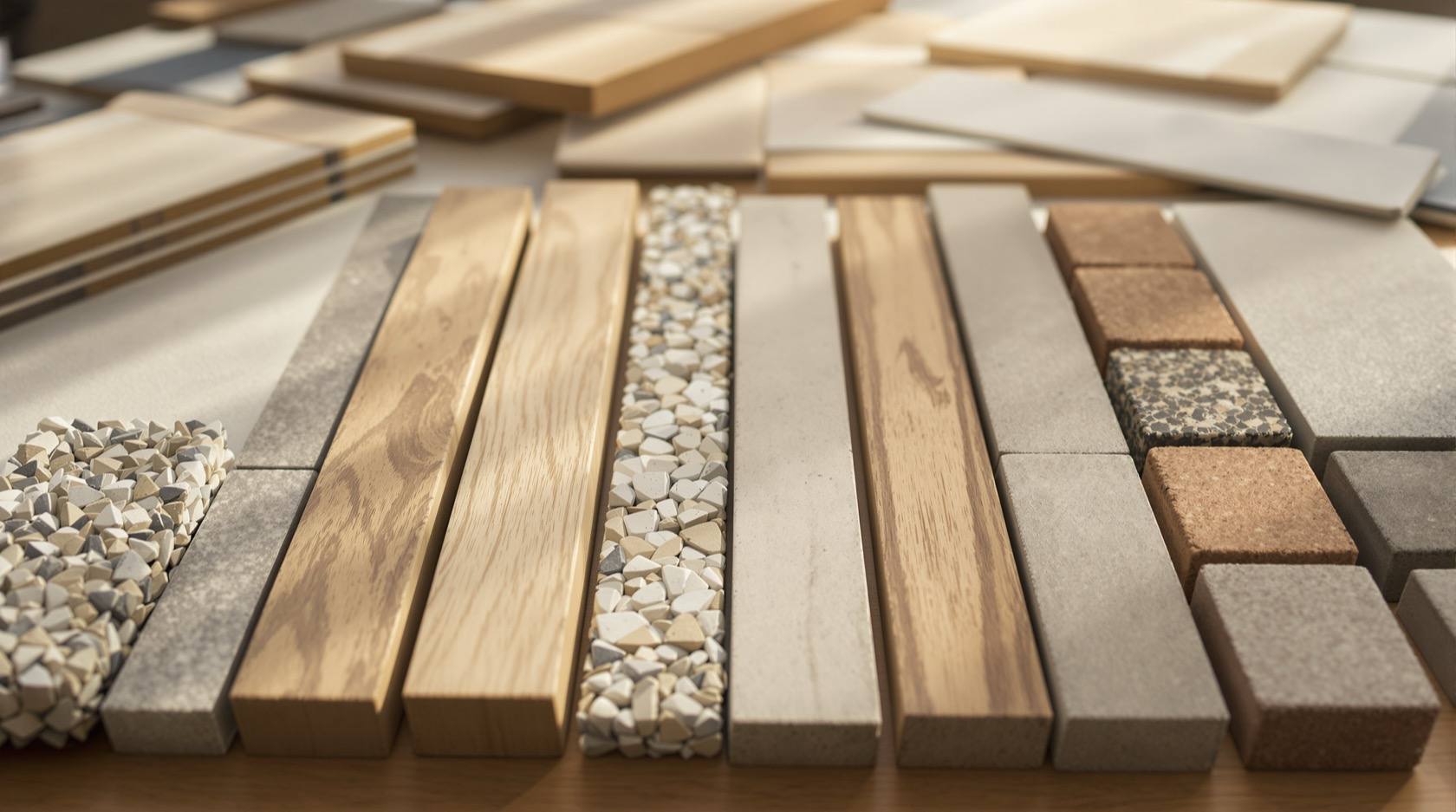
How to Choose Building Materials in India: A Step-by-Step Decision Guide (2026)
A practical, climate-first and budget-first process for selecting the right wall, floor, and roof materials for an Indian home - and knowing capital cost from whole-life cost.
Most material mistakes on an Indian home are not bad luck - they are a good product used in the wrong place. Vitrified tile that turns a Kerala verandah into a skating rink in the monsoon. A bright, cheap distemper that has to be repainted every second year. Ordinary mild steel too close to the Chennai coast. The material was fine. The decision was not.
This guide gives you a repeatable process for choosing building materials for a home in India, so the decision is made on purpose rather than by whoever quotes lowest on the day. It is written to help you specify and select. The actual mixing, structural design, waterproofing application, and installation belong to a qualified contractor or structural engineer - so treat every figure here as a starting point for their advice, not a substitute for it.
Scope note: costs, spans, and grades below are indicative for 2026 and vary widely by city, brand, and site. Get local quotes and have load-bearing, structural, and waterproofing decisions signed off by a qualified engineer or contractor before you buy or build. Standards are named generally, not as clause numbers.
For the full catalogue of what each material is and does, keep the pillar open alongside this: the complete building materials guide for India. This guide is the decision layer that sits on top of it.
The eight-step selection process
Good selection is an order of operations. Skip a step - especially cost or standards - and you pay for it later. Follow the same eight steps for a wall block, a floor finish, or a roof.
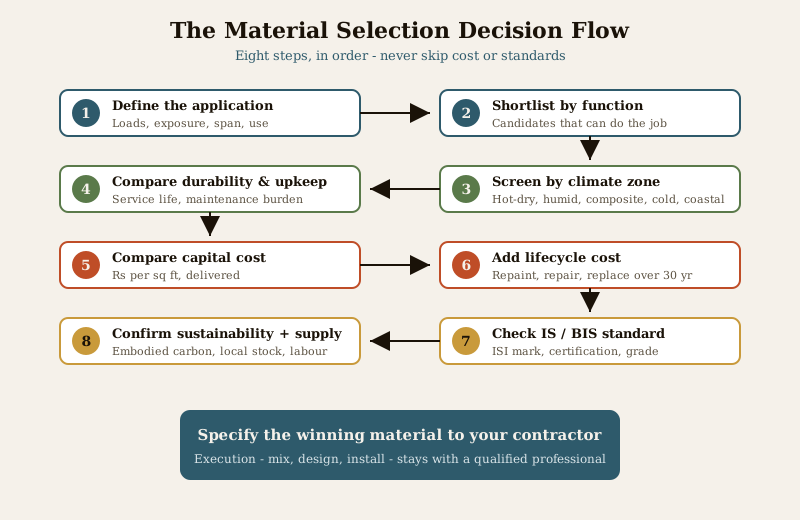
1. Define the application and its demands. What is this material doing - carrying load, keeping rain out, taking foot traffic, or just looking good? Note the loads, the exposure (sun, rain, salt, abrasion), the span, and the fire or moisture risk. A material is only "good" relative to a job.
2. Shortlist by function. List every candidate that can physically do that job. For an external wall that might be clay brick, fly ash brick, AAC block, or concrete block. Do not filter on price yet.
3. Screen by climate zone. Cross off anything that fights your climate. This is the single highest-value filter in India and gets its own section below.
4. Compare durability and maintenance. How long does it last in your conditions, and what upkeep does that life demand - repaint, reseal, repoint, replace?
5. Compare capital cost. The delivered first cost, in Rs per unit or per sq ft, including wastage.
6. Add lifecycle cost. The 20 to 30 year cost of owning it: repaints, repairs, and eventual replacement. This is where cheap often turns expensive.
7. Check the IS or BIS standard and certification. Confirm the product is made to the relevant Indian Standard, carries the ISI mark where applicable, and comes in the grade you specified.
8. Confirm sustainability, supply, and skilled labour. Weigh embodied carbon, then make sure the material is actually available locally and that masons near you know how to lay it well.
Only after all eight do you specify the winner to your contractor. The tools linked below - the concrete volume calculator, brick and block quantity calculator, and plaster quantity calculator - then turn that choice into quantities and a budget.
Step 3 in depth: screen by climate zone
India is not one climate, so there is no national "best" material. The National Building Code (NBC, SP 7:2026) recognises five broad zones, and each rewards a different choice. Screening by zone before you compare price is what separates a comfortable, low-maintenance home from a lifetime of repairs.
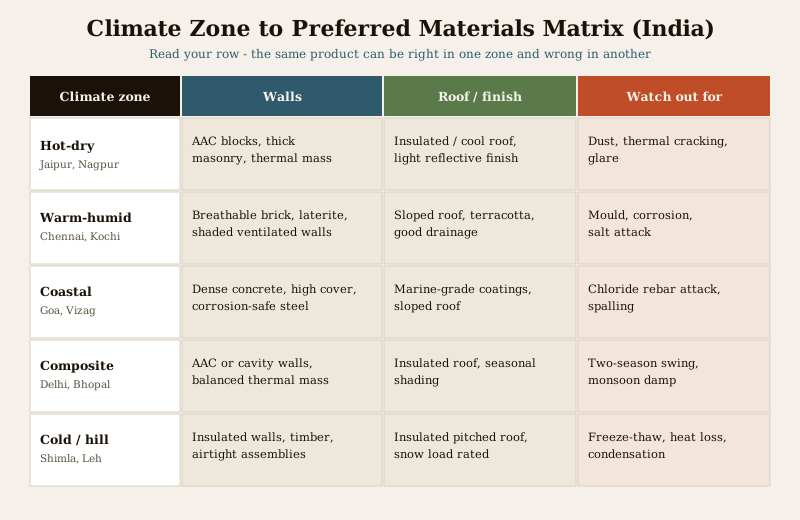
| Climate zone | Example cities | Wall priority | Roof / finish priority | The real enemy |
|---|---|---|---|---|
| Hot-dry | Jaipur, Nagpur, Bikaner | Thermal mass or insulation - AAC block, thick masonry | Insulated or cool reflective roof | Heat gain, dust, glare |
| Warm-humid | Chennai, Kochi, Kolkata | Breathable, shaded, ventilated walls | Sloped roof, terracotta, drainage | Mould, damp, decay |
| Coastal | Goa, Visakhapatnam | Dense concrete, high cover to steel | Marine-grade coatings | Salt and chloride corrosion |
| Composite | Delhi, Bhopal, Lucknow | Balanced mass plus insulation, AAC | Insulated roof, seasonal shading | Two-season swing, monsoon damp |
| Cold / hill | Shimla, Leh, Gangtok | Insulation, timber, airtight assembly | Insulated pitched, snow-rated roof | Heat loss, freeze-thaw |
The pattern to internalise: in hot zones you manage heat, on the coast you fight corrosion and salt, in humid zones you fight moisture and mould, and in the hills you flip the logic and chase insulation and airtightness. The sustainability and green buildings guide and the structural safety guide go deeper on how climate drives both comfort and safety - coastal corrosion, in particular, is a structural issue, not a cosmetic one.
Worked decision: choosing a wall block
Say you are building the external walls of a two-storey house in composite-climate Bhopal, non-load-bearing infill within an RCC frame. Run the process.
| Option | Capital cost | Thermal comfort | Weight on structure | Best fit |
|---|---|---|---|---|
| Clay red brick | Low to moderate | Moderate mass | Heavy | Traditional, widely skilled labour |
| Fly ash brick | Low | Moderate | Heavy | Budget builds, straight walls |
| AAC block | Moderate | High (insulating) | Light | Hot / composite comfort, upper floors |
| Concrete block | Moderate | Low (needs insulation) | Heavy | Strength-led, where mass is wanted |
For a hot composite climate with an RCC frame that benefits from lighter infill, AAC blocks usually win on comfort and reduced structural load, with a slightly higher first cost that pays back in lower cooling bills. To compare the two most common contenders head to head, read AAC blocks vs red bricks in India and fly ash bricks vs clay bricks in India. Whatever you pick, the mortar, concrete, and steel behind it come from the same chain - see types of cement in India and ready-mix concrete in India - and the construction materials hub collects the whole cement to concrete to steel to brick story.
Worked decision: choosing a floor finish
Same house, the ground-floor living area. The demands: heavy foot traffic, easy cleaning, and a surface that will not become dangerously slippery when tracked-in monsoon water hits it.
- Vitrified tile - low cost, hard, easy to clean, but choose an anti-skid matt finish for wet zones, never high-gloss at an entrance.
- Natural stone (granite, Kota, Kadappa) - durable and repairable, moderate cost, good for high-traffic and semi-outdoor areas.
- Engineered or laminate wood - warm and premium, but a poor match for damp ground floors and coastal humidity.
- Cement or IPS finish - very low cost, robust, increasingly used as a finished surface.
Here durability and slip resistance outrank looks, so an anti-skid vitrified tile or a honed natural stone leads. The flooring hub compares every option by room and budget, and the wider materials and finishes library covers surfaces, cladding, and finishes across the home.
Worked decision: choosing a roof
For the roof, the application defines almost everything. A flat RCC roof suits most urban plots and doubles as a terrace, but in high-rainfall warm-humid and hill zones a sloped roof sheds water and snow far better. Across every zone in India, an uninsulated roof is the largest single source of heat gain, so a cool or insulated roof is one of the highest-return material decisions you can make - and the roofing hub walks through the material-by-material trade-offs. As with walls, leave the structural design of the roof slab or truss to your engineer; your job is to specify the right material for the climate.
Capital cost is not the same as owning cost
The most expensive habit in Indian home-building is choosing on first cost alone. Every material has two prices: what you pay to buy it (capital cost) and what you pay to keep it working over its life (lifecycle or whole-life cost). They often rank in opposite order.
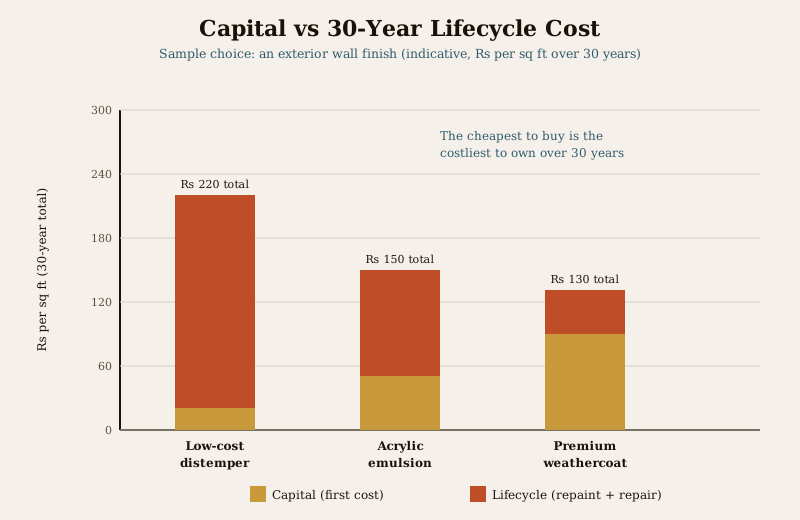
Take an exterior wall finish. A cheap distemper costs very little to apply but needs repainting every two to three years, so over 30 years its total cost is the highest of the three. A premium elastomeric weathercoat costs several times more per sq ft up front, yet lasts far longer between coats, so its 30-year total lands lowest. The acrylic emulsion sits in between. The lesson generalises: anti-corrosive steel detailing on the coast, a good waterproofing system, or an insulated roof all cost more today and save more over the life of the house. For anything involving water ingress, get the system designed and applied by a specialist - see the waterproofing guide - because a lifecycle saving vanishes the moment a leak starts.
Step 7: standards and certification
A material is only as good as its compliance. Buy to the relevant Indian Standard and insist on the grade you specified. In general terms: IS 383 governs aggregates, IS 269 and IS 1489 cover common cement types, and TMT reinforcement, structural steel, bricks, and blocks each have their own IS codes - your engineer will name the exact ones for your design. Look for the ISI mark where it applies, ask for test certificates on cement and steel, and never accept an unbranded substitution on structural items. The understanding concrete strength guide and why reinforcement steel matters in India explain why grade discipline is a safety issue, not paperwork.
Common material-selection mistakes
| Mistake | Why it hurts | Do this instead |
|---|---|---|
| Choosing on first cost alone | Cheap material, expensive lifetime of repairs | Compare capital plus 20 to 30 year lifecycle cost |
| Ignoring the climate zone | Right product, wrong climate - damp, corrosion, heat | Screen by zone before comparing price |
| Glossy tile in wet or entry zones | Dangerously slippery in the monsoon | Specify anti-skid matt finish for wet areas |
| Ordinary steel near the coast | Chloride corrosion, spalling, structural risk | Specify corrosion protection and high cover |
| Skipping the ISI mark or grade | Weak, non-compliant, unsafe material | Buy to IS spec, keep test certificates |
| Picking a material no local mason can lay | Poor workmanship undoes a good product | Confirm skilled labour and local supply |
| Forgetting embodied carbon | Higher footprint, missed green rating points | Prefer fly ash, AAC, local low-carbon options |
Key takeaways
- Follow the same eight-step order every time: application, function shortlist, climate screen, durability, capital cost, lifecycle cost, standards, then sustainability and supply.
- Climate zone is India's highest-value filter - the same product can be right in Jaipur and wrong in Kochi.
- Compare whole-life cost, not just first cost; the cheapest material to buy is often the most expensive to own.
- Buy to the relevant IS or BIS standard, insist on the ISI mark and the specified grade, and keep test certificates.
- Confirm local availability and skilled labour before you commit - a great material laid badly is a bad material.
- Specify and select yourself, but leave mix design, structural, and waterproofing execution to a qualified contractor or engineer.
References
- National Building Code of India (SP 7:2026), Bureau of Indian Standards: https://www.bis.gov.in/
- Bureau of Indian Standards, product standards and ISI certification: https://www.bis.gov.in/
- Eco-Niwas Samhita and climate-zone framework, Bureau of Energy Efficiency: https://www.beeindia.gov.in/en/programmes/eco-niwas-samhita-ens
- GRIHA Council, green rating and low-carbon material guidance: https://www.grihaindia.org/
- Indian Green Building Council (IGBC), sustainable material criteria: https://igbc.in/
Export this guide
Related Guides — Deep-dive reading
How to Choose Flooring for an Indian Home: A Step-by-Step Framework (2026)
A decision framework to pick the right floor for any room — weighing traffic, water, comfort, budget, maintenance, look, climate, durability and resale, with the key natural-stone vs tile vs wood vs resilient trade-offs.
Flooring & SurfacesDesigning a Naturally Energy-Efficient Indian Home
Comfort first, gadgets last — passive design, orientation, insulation, ventilation and the climate wisdom that cuts Indian energy bills
SustainabilityFlooring & Finishes Specification for Indian Architects
Performance Criteria, IS Codes, and Detailing for Residential Floors and Wall Finishes
Materials & FinishesRelated Tools — Try Free
Monsoon-Readiness Checklist
Pre-rain home audit across 9 categories — terrace, drains, waterproofing, electrical, HVAC, pest, vehicles, documents.
Seasonal AuditMaterial Decision Framework (M-Score)
Score 30+ Indian construction materials across cost, durability, climate fit, maintenance, and sustainability.
MaterialsCross-Ventilation Analyzer
Estimate airflow and air changes per hour (ACH) from room size, window areas, layout, and local wind — with NBC 2016 Part 8 compliance check.
Ventilation Calculator