
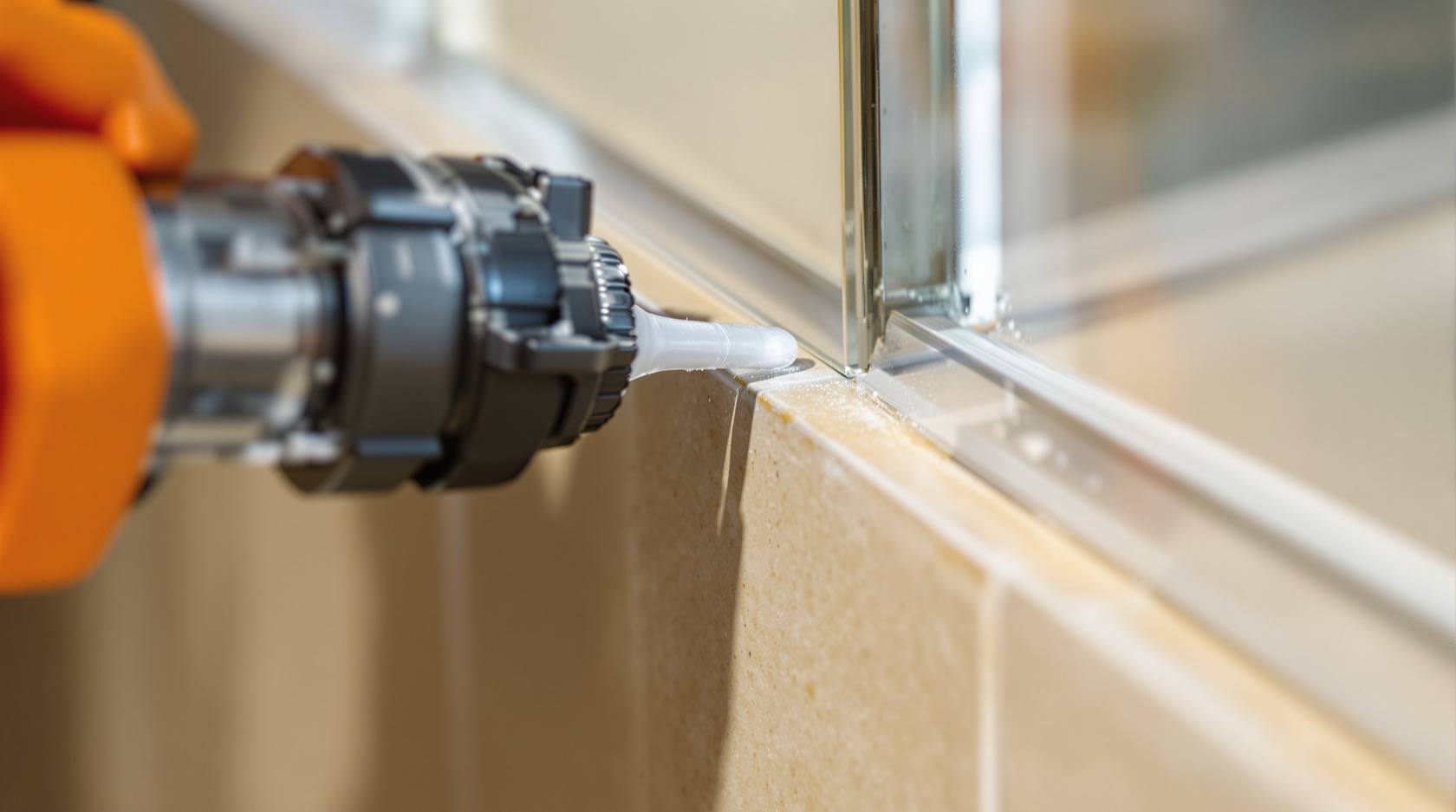
Sealants Guide India: Silicone, PU, Acrylic & MS-Polymer Explained (2026)
How to choose the right sealant for every joint in an Indian home - silicone, polyurethane, acrylic, MS-polymer and butyl - with a plain selector table for location, paintability and movement, plus the joint-design basics that make a seal actually last.
Almost every building leaks or cracks at a joint - the line where two materials meet and move independently. Tile meets bathtub, window frame meets wall, glass meets aluminium, skirting meets floor. A sealant is the flexible material that fills that gap, keeps water and air out, and stretches or squeezes as the two sides move with heat, humidity and settlement. Pick the wrong one and you get black mould in the shower, a window that whistles in the monsoon, or a bead that cracks off within a season.
This guide helps you choose and specify the correct sealant for each joint in an Indian home, and understand the one distinction people get wrong most often: sealants versus adhesives. It is not an application manual for facades or structural glazing - that work belongs to specialists.
Scope and safety: This is a selection guide. Prices, coverage and cure times are indicative only - they vary with brand, grade, pack size and climate, so get local quotes. Structural glazing, curtain-wall and expansion-joint sealing, and any fire-rated or load-bearing seal are engineered decisions - hand them to a qualified facade contractor, glazier or structural engineer. Acetoxy silicone releases acetic acid (vinegar) fumes while curing: ventilate the space and follow the safety data sheet.
Sealant versus adhesive - the difference that matters
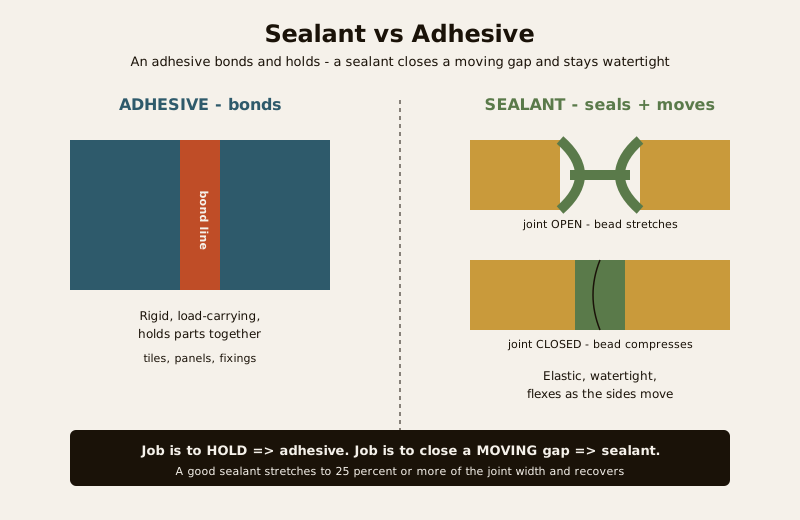
An adhesive is built to bond - to hold two surfaces together and carry load, like a tile stuck to a wall or a panel glued to a substrate. A sealant is built to seal and move - to close a gap against water and air while the two sides shift back and forth without the seal tearing. Adhesives are strong and stiff; sealants are weaker but elastic, designed to stretch to 25 percent or more of the joint width and recover.
Many modern products blur the line - MS-polymer and some polyurethanes both bond and seal - but the design intent is different. If your job is to hold something in place, reach for our construction adhesives guide; if the job is to close a moving gap, you want a sealant. For sticking tiles specifically, the right product is a cementitious tile adhesive, covered in the tile adhesives guide, not a tube of sealant. All three sit inside the broader family of site chemistry explained in the construction chemicals guide.
The main sealant types and where each wins
Silicone - the wet-area and glass champion
Silicone is the most common household sealant: waterproof, flexible, UV-stable and long-lasting. It comes in two cure chemistries that you must not confuse.
- Acetoxy-cure silicone smells of vinegar as it cures, sets fast and grips well on non-porous surfaces - glass, glazed tile, ceramic, enamel. It can corrode metals and stain marble, granite and other porous stone, so keep it off natural stone and reactive metals.
- Neutral-cure silicone is low-odour, cures a little slower and is safe on stone, metal, concrete and most substrates. It is the more versatile choice and the one to use around natural stone, aluminium and mirrors.
For kitchens and bathrooms, buy a sanitary silicone grade - it carries a fungicide/biocide to resist the black mould that colonises shower and sink joints. Silicone also dominates glass and glazing work: sealing glazed windows, shower enclosures, glass partitions and aquarium-grade joints. Its big limitation is that silicone is not paintable - paint will not stick to it, so it must be the final finish, colour-matched from the tube. See the glass and glazing hub for how sealed glazing systems fit together.
Polyurethane (PU) - the tough, paintable workhorse
Polyurethane sealant is stronger and more abrasion-resistant than silicone, bonds aggressively to concrete, masonry, wood and metal, and - crucially - takes paint. It handles real movement, which makes it the go-to for movement joints, expansion joints, facade joints, floor joints and perimeter sealing where the bead will be walked on, painted over or exposed to mechanical wear. PU is less UV-stable than silicone over decades and needs correct priming on some substrates. Expansion-joint and facade sealing with PU is specialist work - specify it, but let a facade contractor execute it.
Acrylic - the paintable interior gap-filler
Acrylic (often sold as "painter's caulk" or decorator's acrylic) is water-based, low-odour, cheap and fully paintable - you can skim it and paint over within an hour. It suits low-movement interior gaps: filling the line around door and window frames, skirting boards, architraves and cornices before painting. Its weaknesses are that it has limited flexibility and poor water resistance, so it is wrong for wet areas or joints that move much. Use it where the gap is cosmetic and dry.
MS-polymer (hybrid) - the do-almost-everything option
Modified-silane (MS) polymer, also called hybrid polymer, is the newest family and the most forgiving. It is paintable like acrylic, high-movement and elastic like silicone, bonds like PU, is low-odour, isocyanate-free and can even be applied to slightly damp surfaces. It works on nearly every substrate without primer. The trade-offs are higher cost and, for permanently submerged or pure-glass glazing joints, silicone still edges it. When you are unsure which sealant to buy for a mixed job, MS-polymer is the safest single choice.
Butyl and others
Butyl is a sticky, semi-cured sealant used mainly for concealed, non-movement seals - bedding roof flashings, sealing lap joints in metal roofing and gutters, and glazing tape. It stays permanently tacky, is not paintable and is not for visible finished joints. You will also meet bituminous and polysulphide sealants in specialised waterproofing and civil work - part of the wider toolkit in the waterproofing guide.
The sealant selector - which one, where
This table is the heart of the decision. Match your joint to the row, then confirm the exact grade and cure type on the product label.
| Sealant | Best joint / location | Paintable? | Movement capability | Notes |
|---|---|---|---|---|
| Silicone (neutral) | Glass, glazing, stone, metal, mirrors, general weatherproofing | No | High | Safe on stone and metal; low odour |
| Silicone (acetoxy) | Glass, glazed tile, ceramic, enamel - non-porous only | No | High | Vinegar fumes; avoid stone and bare metal |
| Sanitary silicone | Bathrooms, kitchens, showers, sinks - wet areas | No | High | Anti-fungal biocide grade |
| Polyurethane (PU) | Movement and expansion joints, facades, floors, perimeter | Yes | High | Tough, paintable; facade work is specialist |
| Acrylic | Interior gaps around frames, skirting, cornices before painting | Yes | Low | Cheap; poor water resistance - keep dry |
| MS-polymer (hybrid) | Almost anything, mixed substrates, damp surfaces | Yes | High | Versatile, low-odour, higher cost |
| Butyl | Concealed roof flashing, gutters, lap joints, glazing tape | No | Low | Stays tacky; not a finished bead |
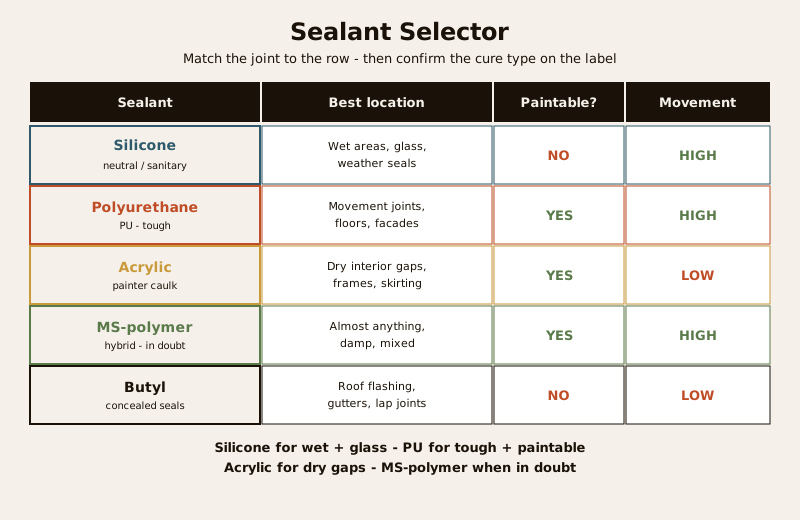
A quick way to remember it: silicone for wet and glass, PU for tough and paintable, acrylic for dry decorative gaps, MS-polymer when in doubt. For the black joints between floor and wall tiles, remember that a coloured grout - not a sealant - fills the tile-to-tile lines; see epoxy and tile grouts for that distinction.
Getting the joint right - application basics
A sealant fails far more often from a bad joint than from a bad product. The principles below are worth knowing even when a contractor does the work.
- Clean and dry the surfaces. Remove old sealant, dust, grease and loose material. Most sealants need a sound, dry substrate (MS-polymer tolerates slight damp; acrylic and PU do not like wet).
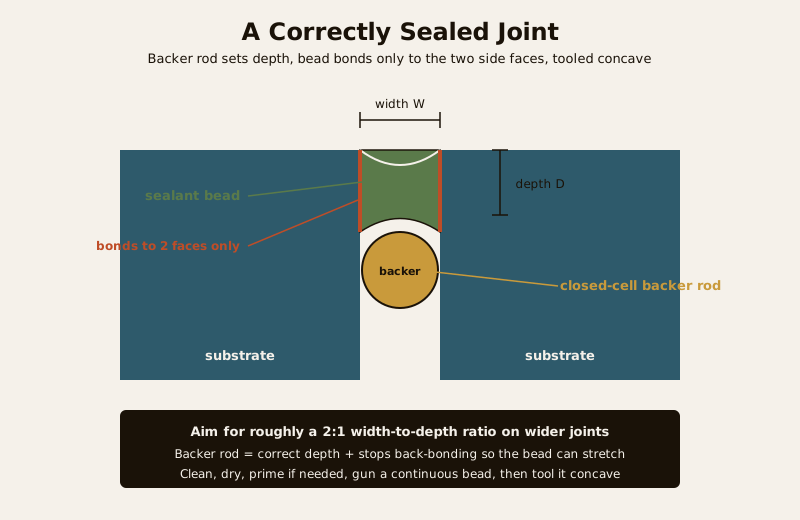
- Design the joint depth-to-width. A bead that is too thin or bonded on three sides will tear. The rule of thumb is roughly a 2:1 width-to-depth ratio for wider joints, so the sealant can flex; deep joints get a backer rod to control depth.
- Use a backer rod for deep or wide joints. A closed-cell foam rod pushed into the gap sets the depth and, critically, prevents the sealant sticking to the back - so it bonds only to the two moving faces and can stretch freely (called two-sided adhesion). Where a rod will not fit, a bond-breaker tape does the same job.
- Prime if the label says so. Porous surfaces (concrete, some woods) often need a primer for PU or silicone to grip. MS-polymer and acrylic usually do not.
- Mask, gun and tool the bead. Run masking tape along both edges, gun a continuous bead, then tool it (smooth it with a spatula or wetted finger) to press it into contact and form a slight concave face. Pull the tape before it skins.
Facade joints, structural glazing beads, fire-rated seals and building expansion joints follow engineered joint designs and movement calculations - specify the sealant class, but leave the design and execution to a facade contractor or structural engineer.
Cost, standards and sustainability
Sealants are sold by the tube or cartridge (commonly around 280 to 300 ml) or in larger sausage packs for gun use. Indicative retail ranges in India are roughly: acrylic the cheapest, silicone and PU in the middle, and MS-polymer the priciest per tube. Treat these as relative - always get current local quotes.
| Sealant | Relative cost | Typical service life at a good joint | Best value when |
|---|---|---|---|
| Acrylic | Lowest | Short to medium | Dry interior gaps you will paint |
| Silicone / sanitary silicone | Medium | Long | Wet areas, glass, weather seals |
| Polyurethane (PU) | Medium | Long | Tough, painted, load-exposed joints |
| MS-polymer | Highest | Long | Mixed substrates, damp, one-tube-does-all |
On standards, sealants and their test methods are covered by general BIS and international standards families (for example IS specifications for construction sealants, and ISO classifications that rate a sealant's movement capability). Named generally here - confirm the exact designation and movement class printed on the product data sheet rather than relying on memory. For sustainability and indoor air, prefer low-VOC grades: water-based acrylics and many MS-polymers are lower-emission than solvent-based products, which matters in sealed interiors - see healthy homes on indoor air quality.
Safety notes worth repeating
- Acetoxy silicone fumes. The vinegar smell is acetic acid - irritating in a closed bathroom. Ventilate, open windows, and avoid it near reactive metals and natural stone.
- Solvent-based PU can carry isocyanates and strong solvents - follow the safety data sheet, wear gloves, ventilate.
- Skin and eyes. Uncured sealant is a skin and eye irritant; keep it off skin and wash before it cures.
- Do not seal what should drain. Never seal weep holes in windows or drainage gaps - blocking them traps water inside the assembly and causes leaks. When in doubt about where water is meant to escape, check with the window supplier or the waterproofing chemicals explainer.
Key takeaways
- A sealant seals and moves, an adhesive bonds - choose by whether the job is closing a moving gap or holding parts together.
- Silicone owns wet areas and glass (use a sanitary anti-fungal grade in bathrooms; neutral-cure near stone and metal, acetoxy only on non-porous surfaces); it is not paintable.
- PU is the tough, paintable choice for movement joints, floors and facades; acrylic is the cheap, paintable filler for dry interior gaps only; MS-polymer is the versatile all-rounder when in doubt.
- The joint design - clean dry surfaces, correct depth-to-width, a backer rod for deep gaps, priming and tooling - matters as much as the product.
- Ventilate for acetoxy fumes, never seal drainage gaps, and leave facade, structural-glazing and expansion-joint sealing to specialists.
References
- Bureau of Indian Standards - IS specifications for building and construction sealants; consult the current editions for classification, movement capability and test methods.
- ISO sealant classification standards - for movement class and durability ratings (verify the exact designation on the product data sheet).
- National Building Code of India (SP 7:2026) - materials and construction practice provisions.
- Studio Matrx guides: construction chemicals guide, construction adhesives, tile adhesives, epoxy and tile grouts, waterproofing guide and the complete building materials guide.
Export this guide
Related Guides — Deep-dive reading
Epoxy Grout vs Cement Grout for Tiles in India: Which to Specify (2026)
A plain-English guide to tile grouts for Indian homes: what grout does, how cementitious grout compares with epoxy grout on cost, stain and water resistance, hygiene and durability, and exactly where each one belongs - kitchens, bathrooms, pools, dry rooms and more.
Building MaterialsMoisture-Resistant Building Materials in India: The Right Material for Every Wet Zone (2026)
Moisture is the biggest enemy of Indian buildings - monsoon, rising damp, condensation, leaks and coastal humidity. This guide separates waterproofing (a system) from choosing inherently moisture-tolerant materials, then names the right material for bathrooms, exteriors, roofs, basements and finishes - with a zone-by-zone selector table. A specify-and-select guide.
Building MaterialsConstruction Adhesives in India: PVA, Contact, Epoxy, PU & MS-Polymer Explained (2026)
A buyer's guide to the bonding adhesives beyond tile adhesive - white wood glue, synthetic-resin carpentry glue, contact adhesive for laminates, cyanoacrylate, epoxy, PU and flexible MS-polymer hybrids - with a big selector table telling you what bonds what, where it fits, and how to use it safely.
Building MaterialsRelated Tools — Try Free
Bathroom Sealant Calculator
How many tubes of silicone sealant a bathroom needs and the cost — by joints to seal, lengths and bead size, with an anti-fungal note.
Bathroom CalculatorMaterial Decision Framework (M-Score)
Score 30+ Indian construction materials across cost, durability, climate fit, maintenance, and sustainability.
MaterialsPainting Prep & Quality Checklist
Painting audit — 10 categories, 65+ checkpoints across surface prep, putty, primer, emulsion coats, enamel, external, ceilings, defects, final QC.
Painting QC