
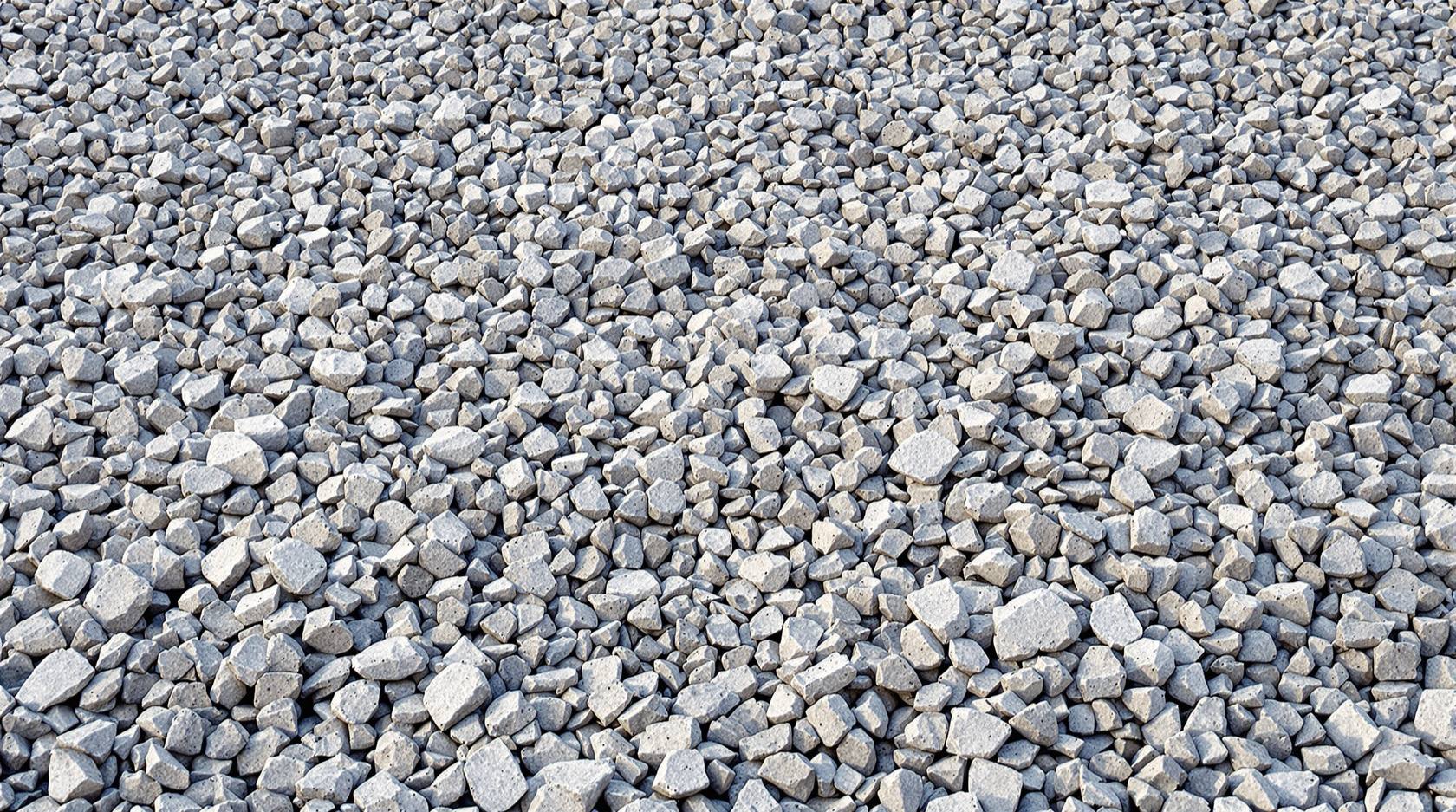
Construction Aggregates in India: Sizes, Quality & Selection (2026)
What coarse aggregate actually does in concrete, how to pick the right nominal size (10mm, 20mm, 40mm), and the field and lab checks that separate strong stone from a bad load - a specify-and-select guide for Indian homes.
Concrete looks like one grey material, but it is really a manufactured stone: cement paste glues together a skeleton of sand and crushed rock. That rock skeleton - the coarse aggregate, called "jelly" or "gitti" on most Indian sites - is the part almost nobody specifies and everybody should. Aggregate makes up roughly 60 to 75 percent of the volume of a concrete mix, so the stone you accept off the tipper largely decides whether the concrete is strong, economical and durable, or weak, thirsty and cracked.
This guide is the aggregate chapter of the Studio Matrx Building Materials hub. It sits alongside the sand guide and M-sand vs river sand: sand is the fine aggregate, the stone here is the coarse aggregate, and together with cement and water they make concrete. The aim is to help you specify and select good aggregate and reject a bad load - not to design the mix.
Scope and how to read this. This is a specify-and-select guide. It helps you understand aggregate, ask for the right size and quality, and spot an obviously bad load at delivery. It is not a mix-design manual. The concrete grade, the water-cement ratio, the exact nominal maximum size for a given member, and every load-bearing decision belong to a qualified structural engineer working to IS 383 (aggregates), IS 456 (concrete) and the NBC (SP 7:2026). All prices are indicative for planning - get local quotes. Never treat this as a licence to change what an engineer has specified.
What aggregate is and what it does
Aggregate is the inert granular stone in concrete and mortar. It is split by particle size into two families:
- Fine aggregate - sand, natural or manufactured, passing a 4.75mm sieve. It fills the gaps between the coarse stones. This is covered in the sand guide.
- Coarse aggregate - crushed stone or gravel retained on a 4.75mm sieve, typically 10mm to 40mm. This is the load-carrying skeleton and the subject of this guide.
Because aggregate is far cheaper than cement and does not shrink or move much once set, using as much good aggregate as the mix allows makes concrete both stronger and more economical. The cement paste is the expensive, shrink-prone part; the aggregate is the stable bulk. A well-graded stone that packs tightly leaves fewer voids for paste to fill, which is why grading matters so much for both cost and strength. For how that strength is actually built, see understanding concrete strength.
Coarse aggregate types you will be offered
| Type | What it is | Typical use in India |
|---|---|---|
| Crushed stone ("jelly", "gitti") | Angular chips from a quarry crusher - granite, basalt, trap | The default for structural RCC; strong, angular, grips paste |
| Natural gravel / shingle | Rounded river or pit stone | Cheaper where available; smoother, workable, but weaker bond |
| Recycled concrete aggregate (RCA) | Crushed from demolished concrete | Sub-base, PCC, non-structural fill; rising for sustainability |
| Rubble / boulder soling | Large 40mm-plus broken stone | Under floors and foundations as a compacted base layer |
Crushed angular stone is the workhorse for reinforced concrete because its rough faces lock into the cement paste. Rounded gravel flows and finishes more easily but bonds less well, so engineers usually reserve it for lower-strength or plain concrete. Recycled concrete aggregate is a genuine sustainability win for non-structural work - it diverts demolition waste from landfill - and is encouraged under green-rating systems like GRIHA and IGBC; structural use of RCA needs specific engineering approval.
The three sizes: 10mm, 20mm, 40mm
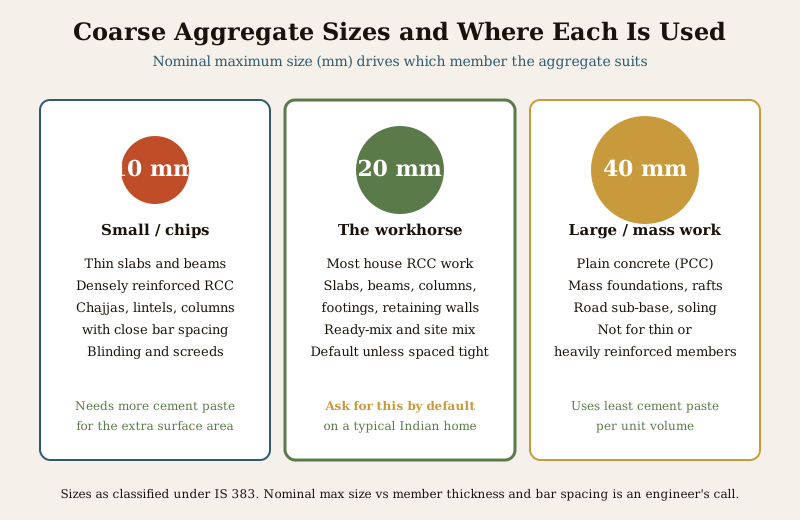
Indian sites sell coarse aggregate by nominal maximum size - the sieve the bulk of the stone just passes through. Three sizes cover almost all house building.
| Nominal size | Character | Where it is used |
|---|---|---|
| 10mm | Small chips | Thin slabs, chajjas, lintels, columns and beams with closely spaced reinforcement; screeds and blinding |
| 20mm | The all-rounder | Most house RCC - slabs, beams, columns, footings, retaining walls; the default for site mix and ready-mix |
| 40mm | Large stone | Plain concrete (PCC), mass foundations and rafts, road sub-base and soling - not for thin or heavily reinforced members |
The logic is simple. The stone has to flow between the reinforcement bars and around them without leaving hollow "honeycomb" pockets. Where bars are packed tight, you drop to 10mm so the stone can travel. Where the member is thick and lightly reinforced, larger 40mm stone works and uses less cement paste per cubic metre, which is cheaper. On a typical Indian home slab or column, 20mm is what you ask for by default, often blended with some 10mm to fill the grading. The exact nominal size against member thickness, cover and bar spacing is set by IS 456 rules and is your engineer's call - defer it, do not guess it.
Which brings up the most common site confusion: bigger stone is not stronger concrete. Strength comes from the mix design and the paste; larger aggregate simply saves cement in mass work. Pick size for the member, not for the belief that "large equals solid".
The properties that actually matter
When you or your engineer judge aggregate quality, these are the properties that decide whether the concrete performs. All are governed generally by IS 383.
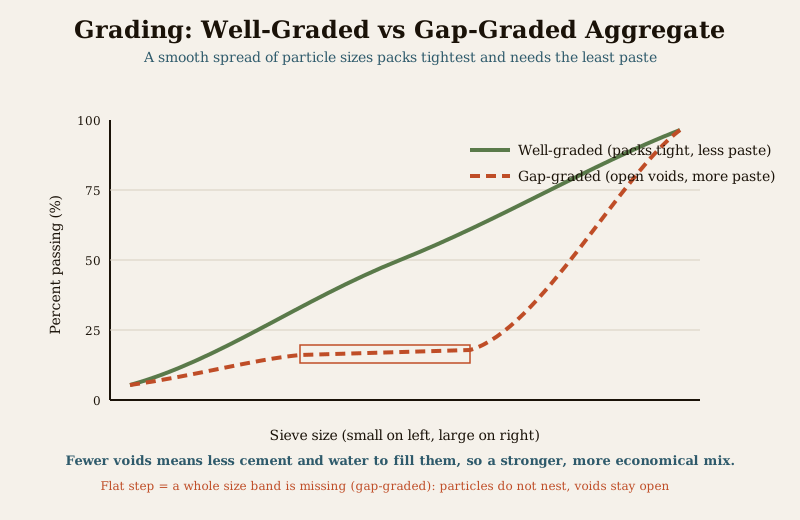
Grading and nominal maximum size. A well-graded aggregate has a smooth spread of particle sizes so small stones nest between large ones, leaving few voids. A gap-graded stone is missing a whole size band, so the particles cannot pack and the open voids have to be filled with extra, expensive paste. Grading is checked by sieve analysis in a lab.
Shape and angularity. Angular, roughly cubical chips interlock and bond best. Flat "flaky" pieces and long "elongated" slivers are weak, waste paste and reduce strength - they are measured as the flakiness index and elongation index.
Crushing and impact value. These lab tests measure how much the stone resists being crushed or hammered. A low crushing value and low impact value mean hard, strong rock suitable for structural concrete; soft stone with high values is rejected.
Water absorption. Dense, hard stone absorbs little water. Porous, soft stone soaks up mixing water and quietly changes the water-cement ratio, weakening the concrete - which is why absorption is measured and controlled.
Cleanliness and silt. Clay, silt, dust coatings, leaves and organic muck stop the paste bonding to the stone. Clean aggregate leaves your hand dust-free when you rub it; a muddy load must be washed or refused.
Alkali reactivity. Some rock reacts chemically with cement alkalis over years (alkali-silica reaction), expanding and cracking the concrete from within. Where reactive aggregate is suspected, testing and low-alkali cement are the engineer's tools - this is a select-and-verify decision, never a site improvisation.
Field checks at delivery - and the lab tests behind them
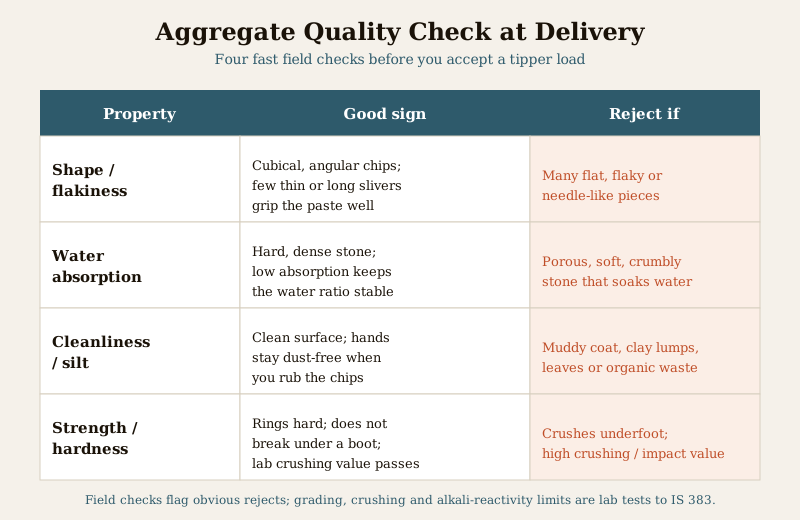
You can catch an obviously bad load in five minutes at the gate, before it is tipped and paid for. The deeper properties still need a lab, but these fast checks screen out the worst.
| Check | Do this at the gate | Reject if |
|---|---|---|
| Cleanliness | Rub a handful of chips; look for mud coat | Hands come away muddy; clay lumps, leaves, organic waste present |
| Shape | Eyeball the pile for flat and needle pieces | Many flaky, elongated slivers rather than cubical chips |
| Strength | Step hard on a few stones; strike with a hammer | Chips crush or crumble underfoot |
| Absorption | Splash water on dry chips; watch soaking | Stone soaks water fast; looks soft, porous or chalky |
| Size mix | Check it looks like the size you ordered | Dominated by dust and undersized, or oversized boulders |
If a load fails at the gate, refuse it - washing muddy stone or sending back soft rock is far cheaper than concrete that honeycombs or cracks. For anything structural, insist that the supplier or your engineer provides sieve-analysis, crushing-value and flakiness test results to IS 383. Field checks flag rejects; they do not certify a load.
Indicative price and quantity
Coarse aggregate is usually sold by volume (per cubic foot or "brass", where 1 brass is 100 cubic feet) or by weight (per tonne). As an indicative, planning-only figure across Indian metros in 2026, expect roughly Rs 40 to Rs 75 per cubic foot for 20mm crushed stone delivered, with wide swings by region, quarry distance, diesel cost and monsoon supply. Recycled aggregate is typically cheaper; clean washed stone costs more. Always get two or three local quotes - transport often costs more than the stone.
To estimate how much stone a slab or footing needs, use the Studio Matrx aggregate quantity calculator, and pair it with the concrete volume calculator to size the whole pour. These give planning quantities; your engineer confirms the mix.
How aggregate fits the wider concrete decision
Aggregate is one lever among several. The concrete grade you need - M20, M25 and up - is chosen first, and it drives the cement, sand and aggregate proportions together. Read choosing the right concrete grade to see where your slab or column sits, and if you are buying pre-mixed concrete, the ready-mix concrete guide explains how the plant already controls aggregate grading and moisture for you - one reason RMC is more consistent than a hand-turned site mix.
Key takeaways
- Coarse aggregate is 60 to 75 percent of concrete by volume - the cheap, stable skeleton that carries load; specify it, do not just accept whatever arrives.
- Ask for 20mm as the default for house RCC, 10mm where reinforcement is closely spaced, and 40mm only for plain or mass concrete.
- Bigger stone is not stronger concrete - size is chosen for the member and bar spacing, and that call belongs to your engineer.
- Prize angular, clean, hard, low-absorption, well-graded stone; reject flaky, muddy, soft or porous loads.
- Do quick field checks at the gate, but insist on IS 383 lab results (grading, crushing value, flakiness, absorption, alkali reactivity) for structural work.
- Treat all prices as indicative - get local quotes, and leave mix design and structural decisions to a qualified engineer.
References
- Bureau of Indian Standards - IS 383 (coarse and fine aggregate for concrete) and IS 456 (plain and reinforced concrete), named generally for scope, not clause-cited.
- National Building Code of India, NBC (SP 7:2026), Bureau of Indian Standards.
- Green-rating context on recycled aggregate: GRIHA, IGBC and LEED material-reuse criteria.
- Studio Matrx Building Materials hub and companion guides on sand, cement, concrete strength and concrete grade.
Export this guide
Related Guides — Deep-dive reading
Construction Quality Control for Homeowners
How to make sure your house is actually built well, stage by stage, without an engineering degree — concrete, steel, cover and curing, the cardinal site sins to refuse, and the simple checks anyone can do.
Structural SafetyThe Complete Building Materials Buying Guide (India) (2026)
The capstone of the Building Materials hub - a stage-by-stage buying process (estimate, specify, shortlist, compare, verify, store) plus how to buy well in every material category, the mistakes that cost the most, and a smart-buyer checklist that routes to every deep guide and calculator.
Building MaterialsM-Sand vs River Sand in India: A Head-to-Head Comparison for Concrete and Plaster (2026)
Manufactured sand or natural river sand? This guide sets the two side by side across grain shape, grading, water demand, strength, cracking risk, legality, cost and sustainability, then tells you honestly where each one wins and how many sites use both.
Building MaterialsRelated Tools — Try Free
Green Building Water Score Calculator
Score a building's water efficiency 0–100 from treated-water reuse, rainwater harvesting, low-flow fixtures and metering, with an IGBC/GRIHA-style rating and your biggest improvement lever.
SustainabilityMaterial Decision Framework (M-Score)
Score 30+ Indian construction materials across cost, durability, climate fit, maintenance, and sustainability.
MaterialsAggregate Quantity Calculator
The coarse aggregate (jelly / crushed stone) a concrete volume needs, in cubic metres, cubic feet and tonnes, by nominal grade.
Material Calculator