
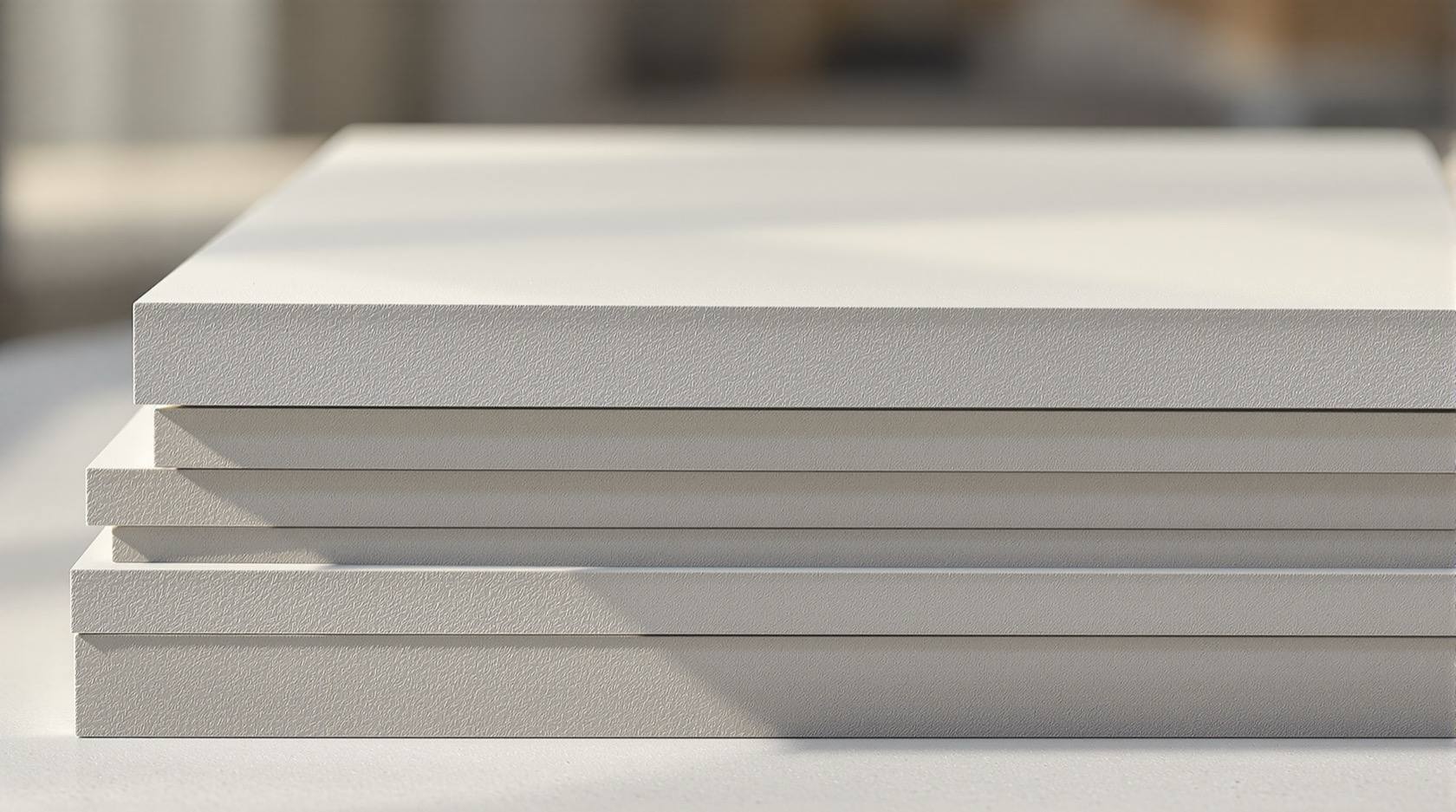
Cement Board & Fibre-Cement Board in India: Wet-Area, Fire & Cladding Guide (2026)
What fibre-cement and cement boards are, why they beat gypsum in wet areas and on facades, the main products - fibre-cement board, cement particle board, HD board and tile backer board - how they compare with gypsum and calcium silicate, indicative cost and safe cutting. A specify-and-select guide.
Ask a site engineer what to line a bathroom wall with, clad a facade, or build a fire-rated partition, and gypsum board is quietly ruled out - it drinks water and softens. The sheet that keeps turning up instead is the cement board: a flat, grey, remarkably tough panel made of cement bound with fibres. It shrugs off water, will not feed termites or rot, holds its shape in the sun, and helps a wall resist fire. Where ordinary plasterboard would sag and crumble, a cement board simply carries on.
This guide helps you choose and specify cement and fibre-cement boards: what they are, the strengths that earn their keep, the main products on the market, where each one fits, how they stack up against gypsum board and calcium silicate board, indicative cost and how to cut them safely. It does not tell you to fix them yourself - board-work belongs with a trained drywall contractor.
Scope and safety: This is a selection guide. Densities, thicknesses and prices here are indicative only - they move with brand, grade, region and freight, so always get local quotes and the manufacturer's tested data sheet. Fire-rated assemblies, wet-area waterproofing detailing, facade fixing and structural framing are engineering decisions - hand them to a qualified architect, structural engineer or facade consultant. Cutting cement board releases silica dust: leave cutting and fixing to a trained drywall contractor using the right PPE. Nothing here replaces the IS codes, the manufacturer's data sheet or a licensed professional.
What a cement board actually is
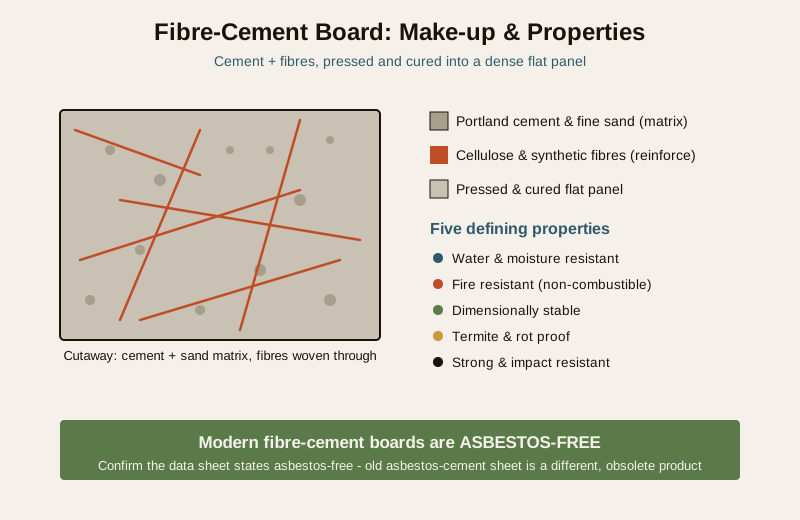
A cement board is a flat sheet made by pressing and curing a mix of Portland cement, fine sand or fillers, and reinforcing fibres. The fibres - cellulose (wood pulp) in a fibre-cement board, or a blend of cellulose and synthetic fibres, and mineral or wood strands in a cement particle board - hold the brittle cement together, letting a thin panel bend a little and resist cracking. The result is a board that behaves far more like a slice of dense mortar than like paper-faced plaster.
One point matters above all for Indian buyers: modern fibre-cement and cement boards are asbestos-free. The old asbestos-cement sheets that gave the category a bad name are a different, obsolete product. Reputable current boards use cellulose and synthetic fibres, and the manufacturer's data sheet should state "asbestos-free" plainly - always confirm it does.
Because the binder is cement, these boards inherit cement's virtues. For the raw material itself, see how cement works and types of cement; for the wider material landscape, start with the complete building materials guide.
The five strengths that define cement board
You do not specify cement board because it is cheap or light - gypsum wins on both. You specify it for a specific bundle of properties:
- Water and moisture resistant. The cement matrix does not soften, swell or disintegrate when wet, so the board survives bathrooms, kitchens, balconies, utility areas and full outdoor exposure. This is its single biggest reason to exist.
- Fire resistant. Being mineral and non-combustible at its core, cement board contributes to the fire rating of a wall or ceiling rather than fuelling a fire, and gives off little smoke.
- Dimensionally stable. It barely moves with heat and humidity, so it does not buckle on a sun-baked facade or a damp wall the way a moisture-sensitive sheet would.
- Termite and rot proof. There is no food value in cement for insects or fungus, so the board will not be eaten, rotted or hollowed out over the building's life.
- Strong and impact resistant. Dense and rigid, it takes knocks, holds fixings and, in higher grades, carries load - which is why it appears in flooring and cladding, not just linings.
No single board leads on everything. Cement board's promise is that it is tough where it counts - wet, hot and exposed - which is exactly where paper-faced gypsum gives up.
The main products you can specify
"Cement board" is a family, not one item. The common members in India are:
- Fibre-cement board. The general-purpose flat sheet - cement plus cellulose/synthetic fibres. Used for wall and ceiling linings, dry-lining, partitions, soffits and cladding substrates.
- Cement particle board (CBPB). Cement bound with wood particles or strands, pressed into a denser, heavier board with good screw-holding and some structural capacity - favoured for flooring, mezzanine decks and load-sharing linings.
- High-density (HD) board. A denser, stronger grade of fibre-cement for facades, external cladding, walkways and areas needing extra impact and weather resistance.
- Cement backer board (tile backer). A board made specifically as a stable, water-tolerant substrate for tiling in wet areas - the correct base under bathroom and kitchen tiles instead of moisture-sensitive plasterboard.
- Cement fibreboard for cladding / facade panels. Pre-finished or through-coloured fibre-cement panels used as the visible skin on ventilated facades and rainscreens.
Where these boards actually go to work is best read as a map of situations:
| Application | Why cement board fits | Suggested product |
|---|---|---|
| Bathroom / kitchen wet walls | Water-tolerant substrate under tiles | Cement backer board |
| Balconies, utility, WC areas | Handles splashing and damp | Fibre-cement / backer board |
| External cladding & facades | Weatherproof, stable, non-combustible | HD board / facade panel |
| Drywall partitions in wet zones | Water-safe alternative to gypsum | Fibre-cement board |
| Mezzanine & dry-area flooring | Dense, strong, screw-holding | Cement particle board |
| Soffits & external ceilings | Rot-proof, stable outdoors | Fibre-cement board |
| Dry-area lining (plaster substitute) | Fast dry-wall finish, no wet plaster | Fibre-cement board |
For the finished skin on a building it pairs with the building facades hub and the wider wall finishes hub; as a tile substrate it works alongside tile adhesives.
Cement board vs gypsum board vs calcium silicate
The three flat-sheet lining boards look similar on a pallet but are built for different jobs. Choosing the wrong one - gypsum in a shower, say - is a common and expensive mistake.
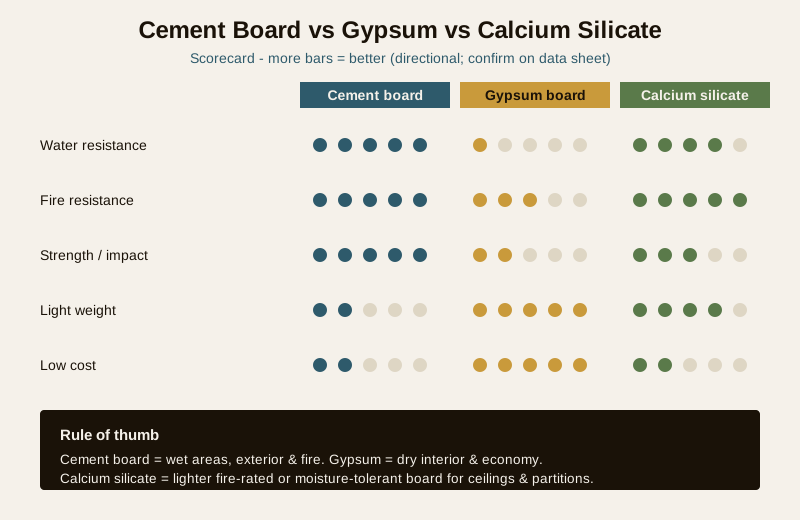
| Property | Cement board | Gypsum board | Calcium silicate board |
|---|---|---|---|
| Core material | Cement + fibres | Gypsum + paper facing | Calcium silicate + fibres |
| Water / moisture | Excellent (wet areas, exterior) | Poor (dry only; MR grade limited) | Good (moisture-tolerant) |
| Fire resistance | Very good (non-combustible) | Good (fire grade available) | Very good (non-combustible) |
| Strength / impact | High | Low to moderate | Moderate |
| Weight | Heavy | Light | Light to moderate |
| Where it belongs | Wet areas, exterior, fire, flooring | Dry interior walls & ceilings | Fire-rated, moist interior, ceilings |
| Relative cost | Higher | Lowest | Higher |
The rule of thumb writes itself: cement board for wet, exterior and fire; gypsum board for dry interior and economy; calcium silicate where you want a lighter fire-rated or moisture-tolerant board for ceilings and partitions. For the two neighbours in full, see gypsum boards and calcium silicate boards; for the plaster-versus-board decision, read gypsum plaster vs cement plaster. Cement board and calcium silicate also both appear behind false ceilings where damp or fire is a concern.
Where cement board wins - a use map
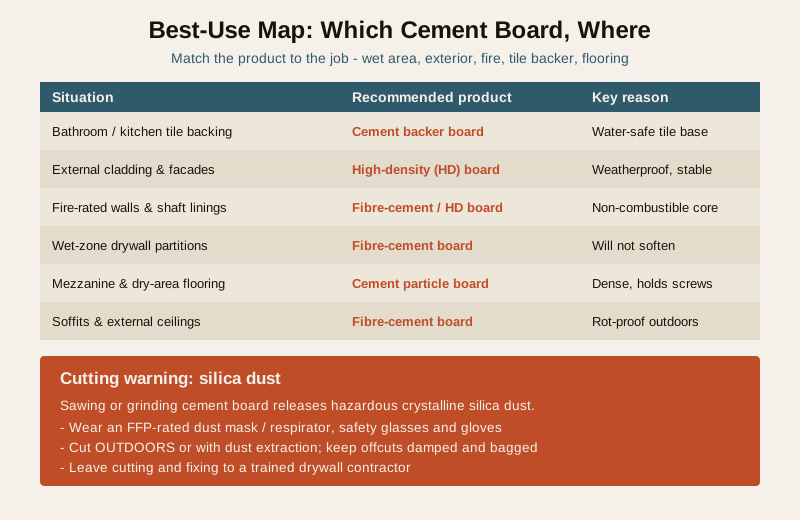
Cement board earns its place wherever water, weather, fire or impact would defeat a lighter board:
| Where to use it | Why cement board | Typical product |
|---|---|---|
| Tile backing in bathrooms & kitchens | Stable, water-safe base under tiles | Cement backer board |
| Drywall partitions in wet / semi-open areas | Will not soften like gypsum | Fibre-cement board |
| External cladding & rainscreen facades | Weatherproof, stable, fire-safe | HD / facade board |
| Fire-rated walls & shaft linings | Non-combustible core adds to rating | Fibre-cement / HD board |
| Mezzanine & light-duty flooring | Dense, strong, holds screws | Cement particle board |
| Soffits & external ceilings | Rot-proof and dimensionally stable | Fibre-cement board |
| Dry-area walls (plaster substitute) | Fast, dry, no curing time | Fibre-cement board |
For wet areas, the board is only half the system - the waterproofing and tiling detail matters just as much, so read it with the waterproofing guide and waterproofing chemicals explained. On facades, cladding fixing and cavity detailing are specialist work covered by the building facades hub. To estimate the adhesive for a backer-board-and-tile job, use the tile adhesive calculator.
Cutting and installation - defer to a drywall contractor
Cement board is a material you specify and buy with confidence - and hand to a professional to fit. The care is all at the cutting and fixing stage:
- Cutting releases crystalline silica dust. Because the board is cement and sand, sawing, grinding or drilling it throws up fine silica dust that is hazardous to breathe over time. This is the single most important handling point.
- Cut outdoors or with dust extraction, using a scoring knife or a fibre-cement blade, ideally with a dust-collecting saw. Keep offcuts damped down and bagged.
- PPE is non-negotiable: an FFP-rated dust mask or respirator, safety glasses and gloves, plus good ventilation.
- Fix with the right fasteners and framing. Boards are screwed to steel studs or treated timber at the maker's specified centres, with joints treated to the tested detail - especially in wet-area and fire-rated systems, where the junction detailing is as important as the board.
- Leave the work to a trained drywall contractor. Correct board selection, framing, joint treatment and - in bathrooms - the waterproofing behind the tiles are specialist skills. A wet-area or fire-rated assembly only performs if every joint and penetration is built to the tested system.
Cost - what to expect
Cement board costs more than gypsum board and sits in a similar bracket to calcium silicate. As an indicative guide only, general fibre-cement boards commonly fall in the range of roughly Rs 40 to Rs 110 per sq ft depending on thickness and grade, with high-density facade boards and pre-finished cladding panels running higher. Treat these as ballpark - thickness, density, finish, brand and freight all move the number, so get current local quotes.
Set the higher cost against what it buys: a single board that survives water, resists fire, stays flat outdoors, feeds no termites and rots for the life of the building. In a bathroom, on a facade or in a fire-rated shaft, there is often no cheaper board that meets the requirement.
Standards and certification
Fibre-cement and cement boards in India are broadly covered by the relevant Bureau of Indian Standards (BIS) specifications for fibre-cement flat sheets and cement bonded particle boards (named generally here - IS 14862 and related standards govern fibre-cement flat sheets; consult the current editions). Fire classification, moisture behaviour, density and any structural rating should always come from the manufacturer's tested data sheet for the specific product, not from generic tables, and the sheet should confirm the board is asbestos-free. Fire and life-safety provisions sit within the National Building Code of India (SP 7:2026). Green-building frameworks such as GRIHA, IGBC and LEED may award credit for durability, recycled content or low-VOC finishes. Standards and editions are revised periodically - verify against the current data sheet rather than relying on memory.
Key takeaways
- Cement board (fibre-cement board) is cement reinforced with cellulose and synthetic fibres - and modern boards are asbestos-free; always confirm on the data sheet.
- Its stand-out strengths are being water and moisture resistant, fire resistant, dimensionally stable, termite and rot proof, and strong - exactly where paper-faced gypsum fails.
- The family includes fibre-cement board, cement particle board, high-density board, cement backer (tile) board and facade panels; pick the product to the job - backer board under wet-area tiles, HD board for facades, particle board for flooring.
- Choose cement board for wet areas, exteriors and fire; gypsum for dry interior and economy; calcium silicate for a lighter fire-rated or moisture-tolerant board.
- It costs more than gypsum - and because cutting releases silica dust, cut outdoors with a mask and leave fixing to a drywall contractor.
References
- Bureau of Indian Standards - IS 14862 and related standards for fibre-cement flat sheets and cement bonded particle boards; consult the current editions for classification, density and marking requirements.
- National Building Code of India (SP 7:2026) - fire and life-safety provisions relevant to board linings and cladding in building assemblies.
- Manufacturer technical data sheets - the authoritative source for a specific product's tested thickness, density, fire classification, moisture behaviour and asbestos-free confirmation.
- Studio Matrx guides: complete building materials guide, gypsum boards, calcium silicate boards and the building facades hub.
Export this guide
Related Guides — Deep-dive reading
Calcium Silicate Boards in India: Fire-Rated Partition, Ceiling & Cladding Guide (2026)
What a calcium silicate board is, why it leads on fire resistance and damp tolerance, where it beats gypsum and cement boards, how to tell it apart from fibre-cement, plus indicative cost and safe cutting - a specify-and-select guide.
Building MaterialsGypsum Board (Drywall / Plasterboard) Guide for India: Types, Systems & Selection (2026)
What gypsum board is, why it dominates Indian false ceilings and drywall partitions, the grades - regular, moisture-resistant, fire-resistant, acoustic - the metal-framed drywall system, and how it compares to cement board, calcium silicate and traditional plaster. A specify-and-select guide.
Building MaterialsMoisture-Resistant Building Materials in India: The Right Material for Every Wet Zone (2026)
Moisture is the biggest enemy of Indian buildings - monsoon, rising damp, condensation, leaks and coastal humidity. This guide separates waterproofing (a system) from choosing inherently moisture-tolerant materials, then names the right material for bathrooms, exteriors, roofs, basements and finishes - with a zone-by-zone selector table. A specify-and-select guide.
Building MaterialsRelated Tools — Try Free
Home Building & Interior Cost Calculator — 20 Cities
Construction + interior costs for 20 Indian cities across kitchen, wardrobes, flooring, painting, ceiling.
Cost CalculatorFalse Ceiling Cost Estimator
Live ₹/sqft across 8 ceiling types — POP, gypsum, designer, metal, PVC, wooden — with cove and spot lighting for 20 Indian cities.
Cost CalculatorAcoustic Privacy (STC) Visualizer
Indian healthcare acoustic visualizer — compare wall assemblies and noise sources, see received SPL after STC attenuation, and check FGI 2018 / IS 1950 / NABH speech-privacy compliance with live dual-canvas waveform.
Acoustic Tool