
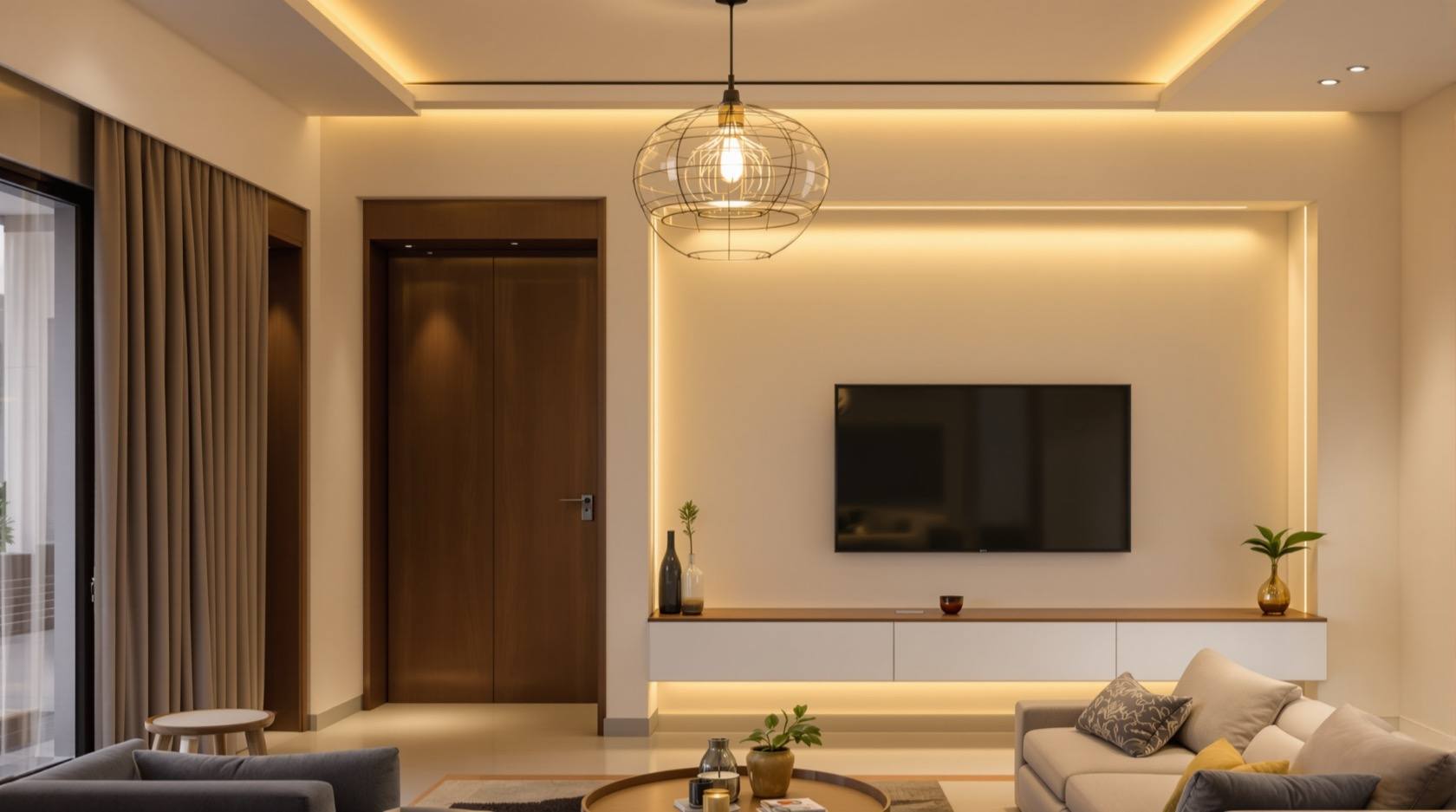
Lighting Cost Guide India: What a Home Lighting Scheme Really Costs (2026)
An honest, indicative-bands look at what it actually costs to light an Indian home — fixtures, wiring and points, drivers, controls, installation and the false ceiling that carries them, plus running cost, replacement and where to spend versus save. All bands, never firm totals — get local quotes.
Ask three people what it costs to light a home and you will get three very different answers — because "lighting" is not one number. It is fixtures plus wiring plus drivers plus controls plus the labour to install them, riding on a false ceiling you may be paying for anyway, and then running quietly on your electricity bill for the next fifteen years. Most people budget only the visible bulbs and get ambushed by the rest. This guide breaks the whole cost open so you can plan it, phase it and brief a contractor without sticker shock.
Every rupee figure here is an indicative band, not a quote. Lighting prices swing wildly by city, brand, finish and how many points you run — a downlight can be a couple of hundred rupees or several thousand, a chandelier anything at all. Use these bands to understand the shape of the cost and where it hides, then get local quotes and run your own numbers through the lighting cost calculator. For the design decisions behind the money, this sits under the complete guide to lighting pillar and beside the lighting buying guide and the homeowner's guide to lighting.
Scope & how to read this. This is a design-and-budget planning guide, not a price list — every band is relative and indicative to help you understand where money goes, not to quote your job. Actual prices depend on your city, brand, finish and point count, so get local quotes and confirm against them. Wiring, circuits, points, dimmer install and load are a licensed electrician's scope — electrical work is safety-critical; this guide helps you understand and budget his labour, never do it yourself. Deep LED-buying technicals live in the Electrical hub and automation in the Smart Home hub.
The six things you are actually paying for
A lighting scheme is not a shopping list of bulbs. It is six cost components stacked together, and the ones people forget are usually the biggest. Understand the stack and no quote will surprise you.
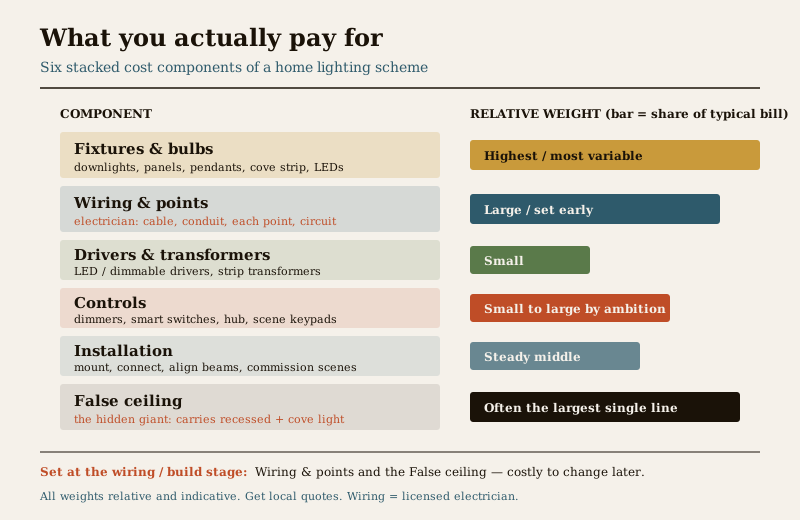
| Cost component | What it covers | Relative weight | Who owns it |
|---|---|---|---|
| Fixtures & bulbs | Downlights, panels, pendants, cove strip, lamps, LEDs | Highest and most variable | You choose; a good design shortlists |
| Wiring & points | Cable, conduit, each light point, switch, circuit | Large, set early | Licensed electrician |
| Drivers & transformers | LED drivers, dimmable drivers, strip transformers | Small but easy to miss | Electrician + fixture spec |
| Controls | Switches, dimmers, smart switches, hub, scene keypads | Small to large by ambition | Electrician installs; you spec |
| Installation | Labour to mount, connect, align and commission | Steady middle | Electrician / fitter |
| False ceiling | The gypsum/POP ceiling that carries recessed + cove | Often the hidden giant | Ceiling contractor |
Two of these — wiring/points and the false ceiling — are decided at the construction or renovation stage, long before you buy a single fixture, and are painful and expensive to change later. That timing is the single most important cost fact in this guide.
Fixtures & bulbs — the widest band
Fixtures are where cost varies most, because "a light" spans a hundred-rupee bulb and a hundred-thousand-rupee chandelier. Grouped by relative band:
- Cheap and cheerful. Recessed downlights and flat LED panels are the commodity workhorses — bought by the dozen, they are the lowest per-fixture cost and the filler of most schemes.
- Mid band. Track and spotlights, wall lights and sconces, and decent portable lamps — more per piece, fewer of them.
- Cove strip + profile. Cove and indirect lighting looks cheap (the strip is inexpensive) but the real cost is the aluminium profile, a good dimmable driver, and the false ceiling that hides it — budget the system, not the reel.
- Statement & dear. Pendants, chandeliers and designer/luxury pieces are open-ended — one dining pendant can cost more than every downlight in the flat combined.
- Smart fixtures. Smart bulbs and connected fixtures carry a premium over plain LED; whether it is worth it is the smart lighting question.
The honest rule: buy few things well and many things cheaply. A room needs one or two pieces that carry the mood and a handful of quiet, well-priced downlights around them.
Wiring & points — the electrician's scope, set early
This is the cost most homeowners never see itemised, because it is folded into the electrical contract. Every light point — the wire, conduit, switch position and its share of a circuit — has a labour-and-cable cost, and it is decided at the wiring stage when the walls and ceiling are open.
More points, more circuits, more dimmer positions and more switch legs all mean more cost — but they are also what makes a layered scheme with separate ambient, task and accent control possible. The trap is under-providing: adding a light point after the plaster is done means chasing walls, re-doing finishes, and paying two or three times what it would have cost at the wiring stage. Decide the point count generously while the walls are open. All of this is a licensed electrician's job — you specify what you want lit and controlled; he designs the circuits, sizes the load and does the safety-critical work.
Drivers, controls and installation
- Drivers & transformers. Most LED fixtures need a driver; dimmable and smart fixtures need a dimmable driver, which costs more and must be matched to the dimmer. Cove strip needs a transformer sized to its length. Small line items that quietly add up, and a classic source of "why won't it dim smoothly" problems when mismatched.
- Controls. A plain switch is cheap; a good dimmer is more; smart switches and a hub, or scene keypads, are more again. This is the component whose cost scales entirely with ambition — see modular switches and sockets for the plate side.
- Installation. The labour to mount, wire, align beams and commission scenes is a steady middle-of-the-bill cost — higher for aligned accent tracks and cove runs, lower for a row of panels.
The false ceiling — the hidden giant
A gypsum or POP false ceiling is what makes recessed downlights and hidden cove light possible — and it is frequently the largest single line in a "lighting" makeover, dwarfing the fixtures. If you are already building the ceiling for other reasons, the marginal lighting cost is modest; if you are building it only to hide lights, count its full cost against your lighting budget honestly. This is why surface fixtures and pendants can be far cheaper overall than a recessed scheme.
What it runs — and what it costs to keep running
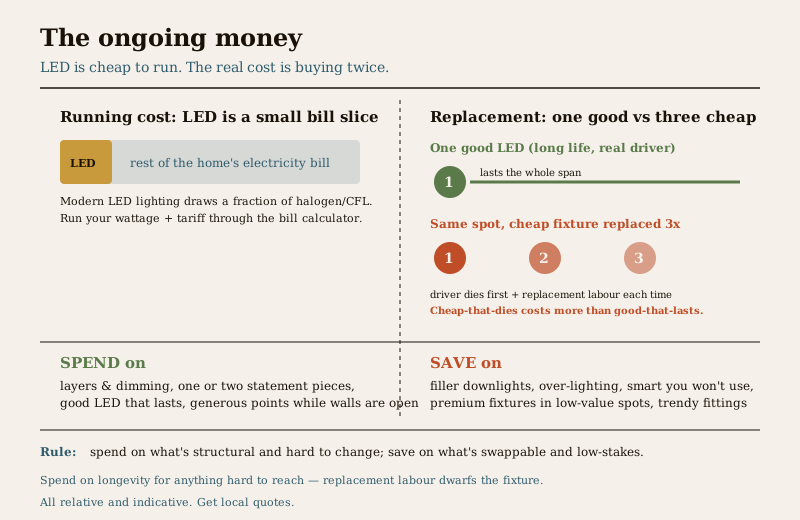
The purchase is only half the money. Lighting has two ongoing costs: the electricity it burns and the replacement of fixtures over time.
- Running cost (electricity). Here is the good news: LED lighting is genuinely cheap to run. A modern LED home draws a fraction of what the same rooms did on halogen or CFL, and lighting is usually a small slice of the total bill. The energy-efficient lighting guide covers how to keep it that way; put your own wattages and tariff through the lighting electricity bill calculator to see the real monthly figure, and the LED savings calculator to compare against old lamps.
- Replacement & lifecycle. LEDs last years, but not forever, and how a fixture is built decides the replacement cost. A fixture with a replaceable lamp or module is cheap to service; an integrated LED fixture (LED sealed in) must be replaced whole when it fails — and the usual first thing to fail is not the LED but the driver. Buy fixtures where the driver is accessible and the brand will still exist in five years; a cheap sealed downlight that dies in eighteen months is dearer than a good one that lasts a decade. This is the whole argument of the lighting maintenance guide.
The lifecycle truth: a good LED that lasts beats a cheap one you replace three times — in money, not just hassle. Spend on longevity for anything hard to reach (high ceilings, cove runs) where the replacement labour dwarfs the fixture.
Indicative bands by scheme tier
You cannot put a firm total on lighting a home — too many variables. But you can think in tiers. For a given home size (1, 2 or 3 BHK), a lighting scheme lands in a basic, good or premium band depending on how many layers, how much dimming, and how many statement pieces you include. These are relative bands to plan with, never quotes.
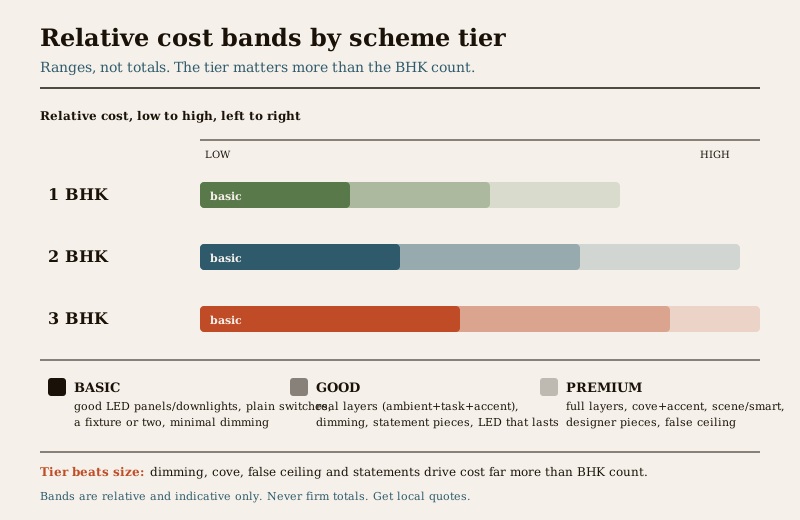
| Tier | What you get | Relative band | Best for |
|---|---|---|---|
| Basic | Good LED panels/downlights, plain switches, one or two decent fixtures, minimal dimming | Lowest | Rentals, tight budgets, getting it functional and pleasant |
| Good | Proper layers (ambient + task + accent), dimming on key rooms, a real statement piece or two, quality LED that lasts | Middle | Most owned homes — the sweet spot |
| Premium | Full layered scheme, cove + accent, scene/mood control or smart, designer statements, false ceiling | Highest, open-ended | Luxury interiors, designer schemes |
A bigger home is not linearly dearer — the jump from "good" to "premium" is driven far more by dimming, cove, false ceiling and statement pieces than by the number of BHKs. Two identical 2 BHK flats can differ several-fold in lighting cost purely on scheme tier.
Where to spend, and where to save
The single most useful budgeting move is deciding, before you shop, which components deserve your money and which should be quietly economised. Get this right and a modest budget looks expensive; get it wrong and a large budget looks cheap.
| Spend here | Save here |
|---|---|
| The layers and dimming — separate control of ambient, task and accent is what makes a home feel designed | Filler downlights in corridors, utility, store — commodity, buy value |
| One or two statement pieces (dining pendant, living chandelier) that carry each room's mood | Over-lighting — fewer, better-placed lights beat many cheap ones |
| Good LED that lasts — longevity and a real driver, especially anything hard to reach | Smart everything — smart only where you will actually use scenes; plain elsewhere |
| Dimmable drivers + a good dimmer on the rooms you relax in | Premium fixtures in low-value spots — no chandelier in the store room |
| The wiring/points generosity while walls are open — cheap now, ruinous later | Trendy fittings that date — the fixture outlives the fashion |
The through-line: spend on the things that are structural and hard to change (points, layers, dimming, longevity) and save on the things that are swappable and low-stakes (filler fixtures, gadgetry you will not use). This is the same logic as the common lighting mistakes guide, read as a budget.
Hidden costs and how to avoid them
The gap between a lighting quote and the final bill is almost always these:
- Dimmable drivers. Wanting to dim a fixture bought with a plain non-dimmable driver means replacing the driver — decide dimming before you buy. See controls and dimming.
- Smart add-ons. Hub, smart switches, app setup and the occasional fixture swap — smart is a real line item, not a free feature. Weigh it in choosing smart lighting.
- GST and delivery. Fixture bands are usually pre-tax; add GST and any delivery/handling on heavy or fragile pieces.
- Points added late. The classic — realising you want a light where there is no wire. After plaster this means chasing walls and re-finishing, at several times the wiring-stage cost.
- The false ceiling you forgot to count. If a scheme needs a ceiling to work, that ceiling is part of the lighting cost.
- Beam alignment and commissioning. Accent tracks and scene setups need someone to aim and program them — small, real labour.
Phasing and how it is quoted
You do not have to do it all at once. A sensible phasing order protects the expensive-to-change parts and defers the rest:
1. At wiring stage (do not defer): all points, circuits, dimmer positions, driver provisions — while walls are open. This is the one thing you cannot cheaply add later.
2. At finishing: false ceiling, cove channels, the fixtures you have chosen, essential controls.
3. Later, additively: statement pieces, portable lamps, smart upgrades, extra scenes — all swappable without opening walls.
Get the infrastructure right up front and you can grow the scheme over years. As for how it is quoted: fixtures are usually per-piece; wiring is often per point (each light + switch position); false ceiling is per square foot; controls and drivers are per piece; installation is either bundled into the electrical contract or charged as labour. Ask for the quote itemised this way so you can compare like with like and see where the money actually is — a lump-sum "lighting: Rs X" quote hides everything this guide just opened up.
The cost of getting it wrong
The most expensive lighting mistake is not an overpriced chandelier — it is redoing work after the wiring is closed. Under-provide points, skip dimmer wiring, or discover mid-project that the layout does not support the scheme, and you are chasing finished walls, re-plastering, re-painting and paying premium labour to undo settled work. That retrofit routinely costs several times what generosity at the wiring stage would have. The cheapest lighting money you will ever spend is the extra points and dimmer legs you run before the plaster goes on. Plan the scheme with the residential lighting design guide first, then wire for it.
How it connects
- Start at the complete guide to lighting pillar, then plan the scheme this budget pays for with the layered lighting guide and residential lighting design guide.
- Shop against your budget with the lighting buying guide and the homeowner's guide to lighting; keep running cost low with the energy-efficient lighting guide.
- Understand the ongoing money: LED vs CFL for running cost, the lighting maintenance guide for replacement, and controls and dimming for the dimmable-driver line.
- Budget the ceiling that carries recessed and cove light with the false ceiling guide.
- Run the numbers: the lighting cost calculator for the scheme, the lighting electricity bill calculator for the monthly run, and the LED savings calculator to compare against old lamps.
Key takeaways
- Lighting is six stacked costs — fixtures, wiring/points, drivers, controls, installation and the false ceiling — not just the visible bulbs; the forgotten ones (points, ceiling) are usually the biggest.
- Wiring and points are a licensed electrician's scope, set at the construction stage — decide the point count generously while walls are open, because adding later costs several times more.
- Think in tiers, not totals — a basic/good/premium band for a 1/2/3 BHK, driven far more by dimming, cove and statement pieces than by home size. All bands are indicative; get local quotes.
- Spend on layers, dimming, one or two statement pieces, and good LED that lasts; save on filler downlights, over-lighting and smart features you will not use.
- Running cost is low — LED is cheap to run; the real ongoing money is replacement, so buy fixtures with accessible drivers and a brand that will last.
- Watch the hidden costs — dimmable drivers, smart add-ons, GST, late-added points and the false ceiling — and get quotes itemised so you can see where the money is.
- The costliest mistake is redoing work after wiring closes — plan the scheme first, then wire generously for it.
References
- National Building Code of India, NBC (SP 7:2026), Bureau of Indian Standards — general illumination and lighting provisions (named generally).
- IS 3646 — code of practice for interior illumination and recommended lux levels (named generally, for planning the scheme the budget pays for).
- IS 16107 / IEC 60598 — LED luminaire performance and safety standards (named generally; relevant to fixture quality and lifespan).
- Energy Conservation Building Code (ECBC) and BEE star ratings — lighting power density and efficient-lamp benchmarks (running-cost context, named generally).
- A licensed electrician / electrical contractor — wiring, points, circuits, load and dimmer installation (safety-critical scope, not covered here).
- Local fixture, false-ceiling and electrical quotes — the only reliable source of actual prices; all bands here are indicative planning aids only.
All rupee bands, tiers and relative weights in this guide are indicative planning aids only, not quotes — actual prices vary widely by city, brand, finish and point count, so get local quotes and confirm against them. Wiring, circuits, points, load and dimmer installation are safety-critical work for a licensed electrician; this guide helps you budget and brief that work, never do it yourself.
Export this guide
Related Guides — Deep-dive reading
Lighting Controls & Dimming Design: Zones, Scenes & Switches (2026)
How to plan lighting control so an Indian home's light is flexible — split each room's layers onto separate switches, choose dimmers that actually work with LEDs, add two-way switching where you need it, and layer scenes on top. The design decisions you must settle before the electrician wires.
LightingThe Homeowner's Guide to Lighting Your Home: Start to Finish (2026)
The warm, plain-English capstone for the whole Lighting hub - how to light an Indian home from empty to done, in the order things actually happen, with the one rule that saves you the most money: decide the whole scheme before the electrician wires.
LightingThe Design Decisions With the Biggest Cost Consequences
A cost-leverage map of Indian home interiors — the handful of decisions that swing your total budget the most, so you spend your attention where a single choice has an outsized rupee impact.
Cost & MoneyRelated Tools — Try Free
False Ceiling Cost Estimator
Live ₹/sqft across 8 ceiling types — POP, gypsum, designer, metal, PVC, wooden — with cove and spot lighting for 20 Indian cities.
Cost CalculatorHome Building & Interior Cost Calculator — 20 Cities
Construction + interior costs for 20 Indian cities across kitchen, wardrobes, flooring, painting, ceiling.
Cost CalculatorModular Kitchen Budget Calculator
Live breakdown by running feet, countertop area, material tier and city — with wastage, design fee, GST.
Kitchen Calculator