
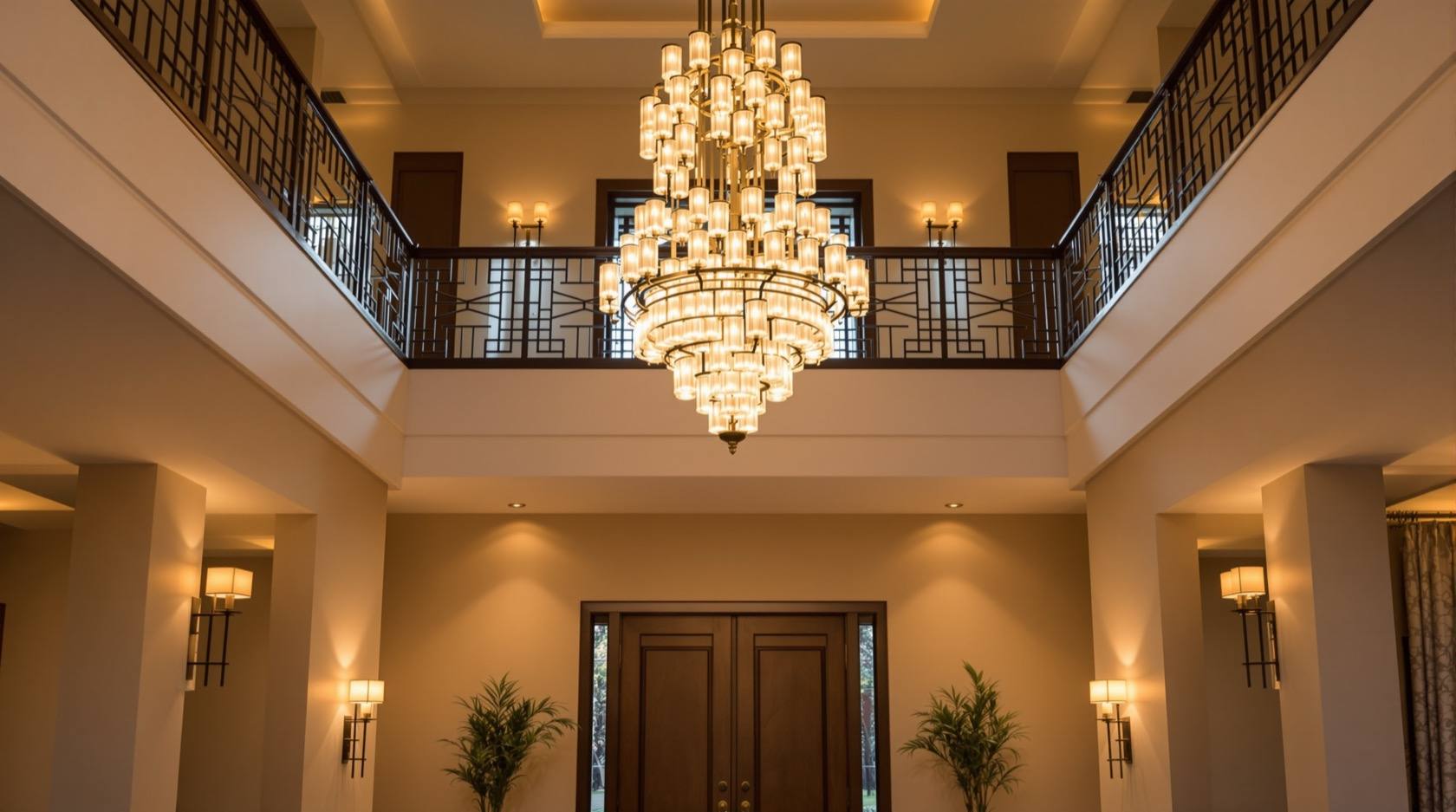
Chandeliers Guide: Sizing, Placement & Care for Indian Homes (2026)
How to choose, size and hang a chandelier as the statement fixture of a room — the room length-plus-width sizing rule, the right height over a foyer void or a dining table, the styles that suit Indian homes, and why the fixing and wiring must go to a licensed electrician.
A chandelier is the one light fixture people notice before they notice the room. It is the jewellery of a home — a statement piece that anchors a foyer, crowns a dining table, or fills a double-height void with sparkle. In Indian homes it carries an extra charge: the grandeur of a wedding hall brought home, the fixture that makes a house feel finished the day guests arrive for Diwali or a house-warming. But a chandelier is also the fixture most often bought at the wrong size, hung at the wrong height, and mounted on a ceiling hook that was never meant to carry it. This guide is about getting all three right.
This is a fixture-type guide in the Studio Matrx Lighting hub. It is design-led: it helps you choose, size, place and style a chandelier, and it hands the wiring, load and fixing off to the people qualified to do them. If you want the sibling decorative fixtures — a run of pendants over an island or wall lights and sconces flanking the piece — those have their own guides.
Scope & how to read this. This is a design and specification guide — where a chandelier works, how big it should be, how high to hang it, and how to style it. Every dimension and cost band is typical and indicative, meant to help you plan and brief a professional, not a firm figure. The fixing and the wiring are safety-critical and NOT DIY. A chandelier can weigh many kilograms hanging over the spot where people sit and eat; anchoring it and wiring it are the work of a licensed electrician, and a genuinely heavy piece needs a structural check of the ceiling and its embedded hook or box. Do the design here; hand the anchor, the load and the circuit to the electrician. Costs are relative bands — get local quotes.
What a chandelier is for — and what it is not
A chandelier is a decorative, multi-arm or multi-light fixture hung as the visual centrepiece of a space. Its first job is presence: it declares "this is the important room". Its second job is a soft, glittering pool of ambient light. What it is not is a room's whole lighting scheme. Even the grandest chandelier throws light downward and outward in a limited pool; it leaves corners dark, casts shadows on faces, and does nothing for task areas. Treat it as the top layer of a layered lighting scheme — the star turn that sits on top of ambient and accent light, never a substitute for them.
That distinction matters because the commonest chandelier mistake in Indian homes is buying one magnificent fixture and stopping there, then wondering why the room feels gloomy at the edges. The chandelier is decorative first. Plan the working light around it.
Where a chandelier earns its place
Not every room wants one. A chandelier needs height, a clear central spot, and a reason to draw the eye. The classic homes for it:
| Location | Why it works | What to watch |
|---|---|---|
| Double-height foyer or living void | The vertical drop is the whole point; a tiered piece fills the void and greets from the landing above | Needs real height (typically 4.5 m+ voids); scale up boldly |
| Over a dining table | The archetypal chandelier spot — light and occasion focused on the table | Size to the table, not the room; keep it low and centred |
| Grand stairwell | A long vertical cascade read from several floors at once | Sightlines from every landing; servicing access for cleaning |
| High-ceiling bedroom | A softer, romantic centrepiece over the bed or a sitting nook | Scale down; warm dimming; not directly clashing with a fan |
| Formal living / drawing room | Anchors the seating and lifts the whole room's status | Clearance above head height; balance with lamps and sconces |
A standard 2.7 m flat ceiling in a compact apartment rarely wants a full chandelier — a pendant or a flush semi-flush fixture usually reads better. Save the chandelier for where the architecture gives it room to perform.
Sizing: the room length-plus-width rule
The most useful sizing rule in lighting is disarmingly simple. Add the room's length and width in feet; the sum is a good target chandelier diameter in inches. A room that is 16 ft by 12 ft suggests a fixture about 28 inches (roughly 70 cm) across. It sounds crude, but it reliably lands a fixture that reads as substantial without swallowing the room.
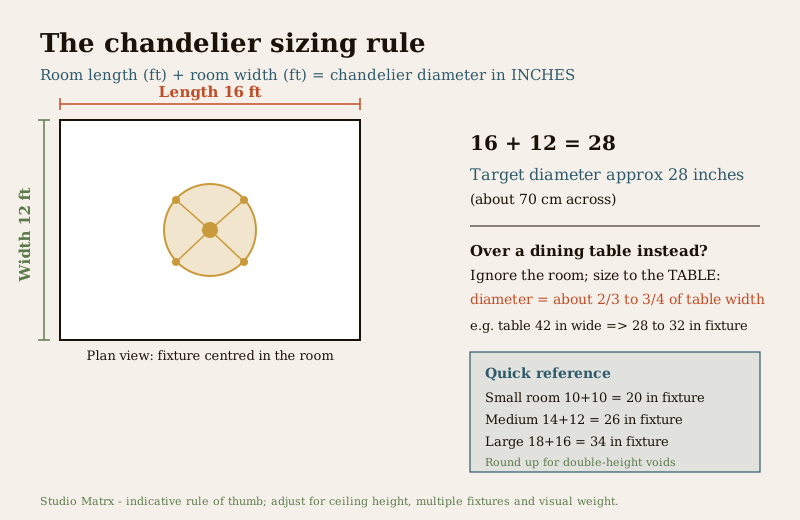
Over a dining table the rule changes: you ignore the room and size to the table. A chandelier over a table should be roughly two-thirds to three-quarters of the table's width — wide enough to feel deliberate, narrow enough that no one at the ends bumps their head or loses the person across from them. A 42-inch-wide table wants a fixture of about 28 to 32 inches. For a long rectangular table, a linear multi-light fixture usually beats a single round one.
| Situation | Sizing method | Worked example |
|---|---|---|
| Room centrepiece | Length (ft) + width (ft) = diameter (inches) | 14 + 12 = a 26-inch fixture |
| Small room | Same rule, err on the smaller side | 10 + 10 = a 20-inch fixture |
| Large / formal room | Same rule; consider two fixtures if very long | 20 + 18 = a 38-inch fixture |
| Over a dining table | 2/3 to 3/4 of the table width | 48-inch table = a 32 to 36-inch fixture |
| Double-height void | Scale up; add visual height in tiers | Round up, and add drop, not just width |
Two adjustments. In a double-height void the fixture is seen from far away and from above, so go bolder than the flat number and think about drop (the vertical length) as much as diameter — a tall tiered cascade reads better than a wide flat disc. And where a single fixture would look mean in a very long room, two smaller chandeliers spaced along the axis beat one awkward giant. The fixture quantity calculator and the lighting spacing calculator help you sanity-check how many fixtures a long or open-plan space wants.
Height and clearance: how high to hang it
Getting the height wrong undoes a perfectly sized fixture. The two governing cases:
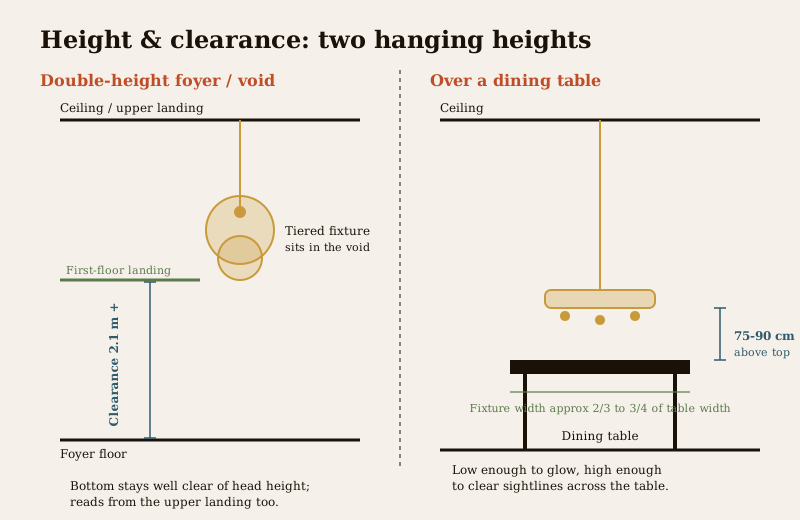
Over a dining table. Hang the bottom of the chandelier about 75 to 90 cm (30 to 36 inches) above the table top. Low enough that it glows and frames the meal, high enough to clear sightlines across the table. This is measured from the tabletop, not the floor, because the table is where the fixture is "used".
In a foyer or open room, off a table. Here the fixture must clear the tallest head plus a comfortable margin. Keep the bottom at least 2.1 m (about 7 ft) above the finished floor in any walking area — more in a grand foyer where the fixture should float well overhead. A common rule for tiered pieces in tall rooms is to allow roughly one tier, or about 30 cm of fixture height, for every 30 cm of ceiling above 2.4 m — so a taller void carries a taller fixture gracefully.
| Placement | Height guide | Measured from |
|---|---|---|
| Over a dining table | 75-90 cm above the table top | Tabletop |
| Foyer / walking area | 2.1 m+ clear at the bottom | Finished floor |
| Double-height void | Position in the upper third of the void; read from the landing | Floor + upper level sightline |
| High-ceiling bedroom | 2.1 m+ clear; higher if over a bed you walk around | Finished floor |
| Below a ceiling fan | Keep the fan and fixture from clashing; often choose one or the other | Ceiling / fan sweep |
The ceiling height decides everything. A flat 2.7 m ceiling has almost no room for a chandelier to drop before it hits head height, which is why chandeliers belong in taller rooms and voids. In a double-height space the fixture wants to sit high in the void, luminous and legible from the floor and the landing at once — under-sizing it here is the classic anticlimax.
Weight and fixing: the part that is not DIY
This is the section to take seriously. A chandelier is a heavy object suspended over the exact spot where people sit, eat and sleep. A crystal or brass piece can weigh anywhere from a few kilograms to well over twenty, and a builder's standard ceiling rose or a plastic fan hook is not rated to carry that. A chandelier that comes down is not an inconvenience; it is a serious injury.
So the fixing and the wiring are professional work, full stop:
- A properly anchored ceiling point. The fixture must hang from a metal ceiling hook, box or bracket that is embedded in or bolted through the slab and load-rated for the weight of the specific fixture — never from a light plastic rose or a fan hook repurposed. In an RCC slab this often means a cast-in or drilled-and-anchored hook; in a false ceiling the load must be carried back to the structural slab, never by the gypsum board or the false-ceiling frame.
- A licensed electrician does the wiring and hanging. The connection, the earthing and the mounting are the electrician's job. Electrical work is safety-critical and regulated; leave the circuit, the switch and the connection to a qualified professional. The deep technicals — circuits, load, dimmer wiring — live in the electrical lighting hub.
- A structural check for very heavy pieces. For a large crystal chandelier, a stone-and-metal statement piece, or anything hung in a double-height void where servicing is hard, have the ceiling fixing point checked by the site engineer before you buy. It is a small, sensible step for a heavy object over people's heads.
- False ceilings need planning. If the chandelier sits below a gypsum false ceiling, the anchor and the wiring must be provided before the false ceiling closes up, tied to the slab above. Retrofitting a heavy fixing into a finished false ceiling is far harder — see the false ceiling guide.
Design the fixture here; let a licensed electrician anchor and wire it, and bring in the engineer for anything genuinely heavy.
Styles: choosing the look
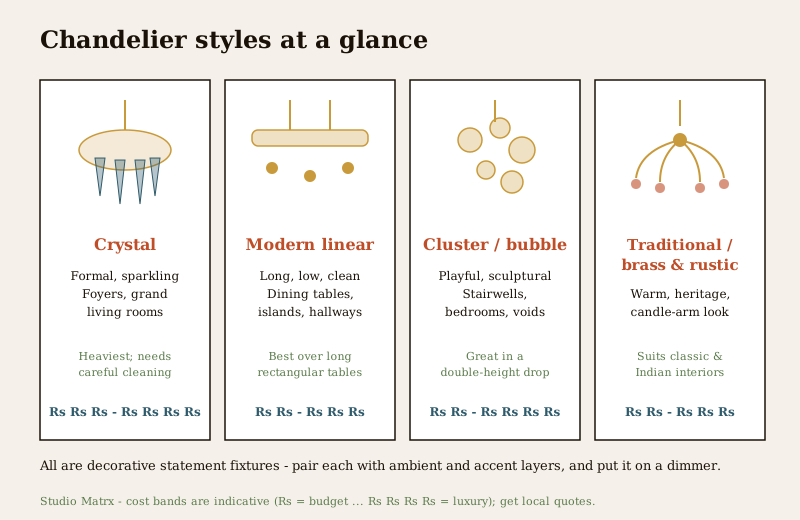
The style sets the mood as much as the size sets the scale. The main families you will shop across in India:
| Style | Character | Suits | Notes |
|---|---|---|---|
| Crystal | Formal, sparkling, classic | Grand foyers, formal living, dining | Heaviest; needs regular, careful cleaning |
| Modern linear | Long, low, minimal | Dining tables, kitchen islands, hallways | Ideal over rectangular tables |
| Cluster / bubble | Playful, sculptural, contemporary | Stairwells, bedrooms, double-height voids | Great as a vertical cascade in a drop |
| Traditional brass | Warm, heritage, candle-arm look | Classic and Indian-traditional interiors | Pairs well with wood and stone |
| Rustic / wood & iron | Earthy, informal, farmhouse | Villas, farmhouses, casual dining | Softer, matte glow rather than sparkle |
Whatever the style, two things make or break the effect. First, warm light and dimming. A chandelier should glow, not glare — choose warm-white lamps (a warm colour temperature) and put the fixture on a dimmer so it can be a bright centrepiece for a gathering and a soft anchor for a quiet evening. The colour temperature and CRI guide explains how to pick the tone and the LED lighting guide covers the lamps. Note that dimming and dimmer wiring are again the electrician's domain. Second, the bulbs are part of the design — exposed decorative filament lamps read very differently from hidden diffused ones, so choose them with the fixture, not as an afterthought.
The layered reality — and maintenance
A chandelier is the top layer, and it needs the layers beneath it. Around and below the statement piece, plan ambient light (recessed downlights, cove light, or a soft ceiling wash) so the room is evenly lit when the chandelier is dimmed, and accent light (wall sconces, picture lights, lamps) so faces and surfaces are not left in shadow. This is the whole argument of the functional-vs-ambient-vs-accent guide: the chandelier sets the mood; the other layers do the work. A pair of wall sconces flanking a foyer piece, or table lamps in a living room, complete the composition.
On maintenance: a chandelier is a dust magnet, and a crystal one especially so — plan for how you will reach and clean it before you hang it in a hard-to-service void. Crystals dull with dust and lose their sparkle; brass and metal want a gentle wipe; height makes both harder. Think about a servicing route (or a lowering mechanism for very tall voids) at the design stage. A dedicated chandelier care and cleaning routine is worth following, and we will link a detailed care guide here as the hub grows.
Cost bands and the Indian context
Chandeliers span an enormous range. Treat these as indicative bands, not quotes — the fixture, the electrician's charge, and any structural work are all separate line items, and you should get local quotes for each.
| Tier | Indicative fixture band | Typical pieces |
|---|---|---|
| Budget / decorative | Lower band | Small metal or acrylic multi-light fixtures, cluster pendants |
| Mid-range | Middle band | Modern linear fixtures, mid-size crystal-effect, good brass |
| Premium | Upper band | Large real-crystal, designer brass, sculptural cluster pieces |
| Luxury / bespoke | Top band | Imported crystal, custom cascades for double-height voids |
Add to the fixture the electrician's fee for anchoring and wiring, a dimmer, and — for a heavy piece — the structural check. For the Indian home, the chandelier often carries a particular ambition: the grandeur of a wedding hall or a banquet brought into a private foyer, a fixture that turns a house-warming or a Diwali gathering into an occasion. That ambition is worth serving well — but serve it with the right size, the right height and a properly anchored, professionally wired fixing, so the statement piece is a joy for decades and never a hazard. For inspiration on how a statement fixture sits within a whole scheme, the designer lighting for luxury homes guide and the luxury interiors hub are the places to browse.
How it connects
- Start with the complete guide to lighting — the pillar — for the whole scheme, then read layered lighting to place the chandelier as the top decorative layer.
- Compare the sibling decorative fixtures: pendant lighting for islands and clusters, and wall lights and sconces for the flanking accent layer.
- For the statement and luxury angle, see decorative lighting, designer lighting for luxury homes and the luxury interiors hub.
- Size and space the fixtures with the fixture quantity calculator and the lighting spacing calculator.
- Hand the wiring, load, dimmer and circuit to a licensed electrician via the electrical lighting hub; plan a heavy fixing into any false ceiling before it closes.
- Browse how statement fixtures sit in real rooms on moodboards.
Key takeaways
- A chandelier is a decorative statement fixture and the top layer of a scheme — never a room's whole lighting; plan ambient and accent light around it.
- It earns its place in double-height voids, over a dining table, grand stairwells, high-ceiling bedrooms and formal living rooms — not on a flat 2.7 m apartment ceiling.
- Size it with the rule: room length + width in feet = target diameter in inches; over a table, use 2/3 to 3/4 of the table width instead.
- Hang it right: 75-90 cm above a dining table top; 2.1 m+ clear in a walking area; high in a double-height void, read from the landing.
- The fixing and wiring are safety-critical and NOT DIY — a load-rated anchored ceiling hook, a licensed electrician for the wiring and hanging, and a structural check for very heavy pieces.
- Choose warm light and a dimmer, match the style to the room, and plan how you will clean and service the fixture before you hang it.
- All sizes and costs here are indicative — confirm against relevant standards, and get local quotes for the fixture, the electrician and any structural work.
References
- National Building Code of India, NBC (SP 7:2026), Bureau of Indian Standards — general provisions for building illumination and services (named generally).
- IS 3646 — code of practice for interior illumination and recommended lux levels (named generally).
- IS 10322 / IEC 60598 — luminaire safety requirements for fixtures such as chandeliers (named generally).
- IS 16107 — performance requirements for LED luminaires and lamps used in decorative fixtures (named generally).
- Licensed electrician and site structural engineer — mandatory for the ceiling anchor, load rating, wiring, earthing and dimmer of a suspended chandelier.
- Manufacturer's fixture weight, mounting and lamp specifications — the load and lamp figures the electrician and engineer must design to.
All dimensions, heights, weights and cost bands here are indicative planning aids only; confirm the governing values against the relevant IS codes and NBC (SP 7:2026), get local quotes for cost, and have a licensed electrician wire and hang the fixture and a structural engineer check the fixing for any heavy chandelier — electrical and overhead-load work is safety-critical and not a DIY task.
Export this guide
Related Guides — Deep-dive reading
Pendant Lighting Guide: Sizing, Height & Placement for Indian Homes (2026)
The design guide to pendant lights for Indian homes — what pendants are and where they earn their place, the four types, and the two numbers that make or break the look: hanging height and size. Plus dimming, style, scale and the clean hand-off to your electrician.
LightingDining Room Lighting Design: The Pendant & the Glow (2026)
How to light a dining area the design way — the pendant or chandelier as the hero over the table, warm and dimmable for the meal, layered with soft ambient fill and a buffet accent, and centred on the table (not the room) before the ceiling point is ever wired.
LightingLiving Room Lighting Design for Indian Homes (2026)
The design guide to lighting the most-used, most-layered room in the house - how to build a flexible, dimmable, multi-scene living room scheme with ambient, task, accent and decorative layers, warm evening light, a comfortable TV wall and open-plan zoning.
LightingRelated Tools — Try Free
False Ceiling Cost Estimator
Live ₹/sqft across 8 ceiling types — POP, gypsum, designer, metal, PVC, wooden — with cove and spot lighting for 20 Indian cities.
Cost CalculatorCircadian Light Meter
Patient-centric circadian lighting visualizer for Indian healthcare design — time-of-day × intensity → CCT, melanopic lux (EML / mEDI), melatonin suppression, and an alertness curve. Calibrated against WELL v2 L03 Circadian Lighting Design, CIE S 026:2018, Brainard 2001, and Lucas et al. 2014.
Circadian ToolApartment vs Villa Interior Planning Guide
Compare ceiling height, structural flexibility, lighting, storage, and services between apartments and villas.
Planning Guide