
Layered Lighting Explained: Ambient, Task & Accent for Indian Homes (2026)
The single most important idea in lighting design, in plain language: why one central light flattens a room, and how three working layers — ambient, task and accent — plus a decorative sparkle layer combine on separate dimmable controls to make an Indian home feel lit, useful and alive.
Walk into most Indian rooms and you meet a single light in the middle of the ceiling — a tube light, a flush fitting, or the modern version, a grid of identical downlights all on one switch. It floods the room evenly, and that is exactly the problem. Flat, even light has no shadows to give shape, no bright pools to draw you in, no dim corners to make a place feel calm. It is lit, but it is lifeless — and it is stuck on one setting, glaring at a dinner party and a movie night alike.
Layered lighting is the fix, and it is the single most important idea in the whole subject. Instead of one light doing everything badly, you use several kinds of light, each with a job, layered on top of one another and on separate controls so you can mix them. This guide explains the layers in plain language, shows how they combine in a real living room, and gives you a repeatable method to plan them for any room. It is the concept the rest of the Lighting hub builds on — so if you read one guide, read this one.
Scope & how to read this. This is a design guide — it helps you plan the scheme, choose fixtures and set the mood. It is not a wiring manual. The moment layers become separate circuits, switches, dimmers and load, that is safety-critical electrical work that a licensed electrician must design, install and certify — never DIY a mains circuit or a dimmer. Automation and app scenes belong to the Smart Home hub; exact lumen, lux and CRI numbers to the Electrical hub. Any cost here is an indicative band, not a quote — get local ones.
Why one central light fails
A single overhead source lights everything from the same angle at the same strength. Three things go wrong every time:
- It is flat. With no interplay of light and shadow, surfaces, textures and faces lose their depth. The room reads like a passport photo — evenly exposed and completely dull.
- It casts unkind shadows. A light directly overhead throws hard shadows straight down — under the brow, the nose and the chin. It is unflattering on people and it leaves worktops, the sofa and the dining table in your own shadow when you lean in.
- It has one mood, forever. Bright enough to clean the room is far too bright to relax in. A single switch cannot be cheerful at breakfast and soft at night — so it ends up wrong for most of the day.
Layering solves all three at once by splitting the work. For a fuller catalogue of what goes wrong, see common lighting mistakes; for the design thinking behind the fix, lighting design principles.
The three working layers (plus a fourth you see)
The heart of the idea is three functional layers, each answering a different question. Designers often add a fourth — the decorative layer — which is really about the look of the fixture rather than the light it throws.
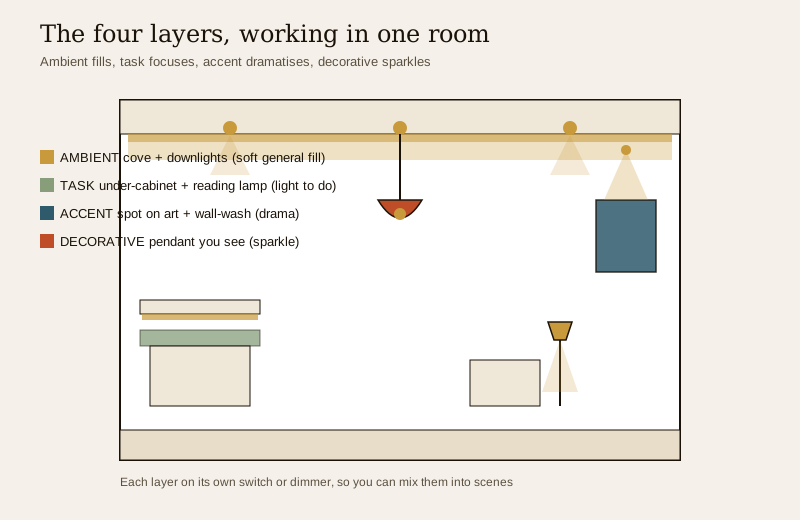
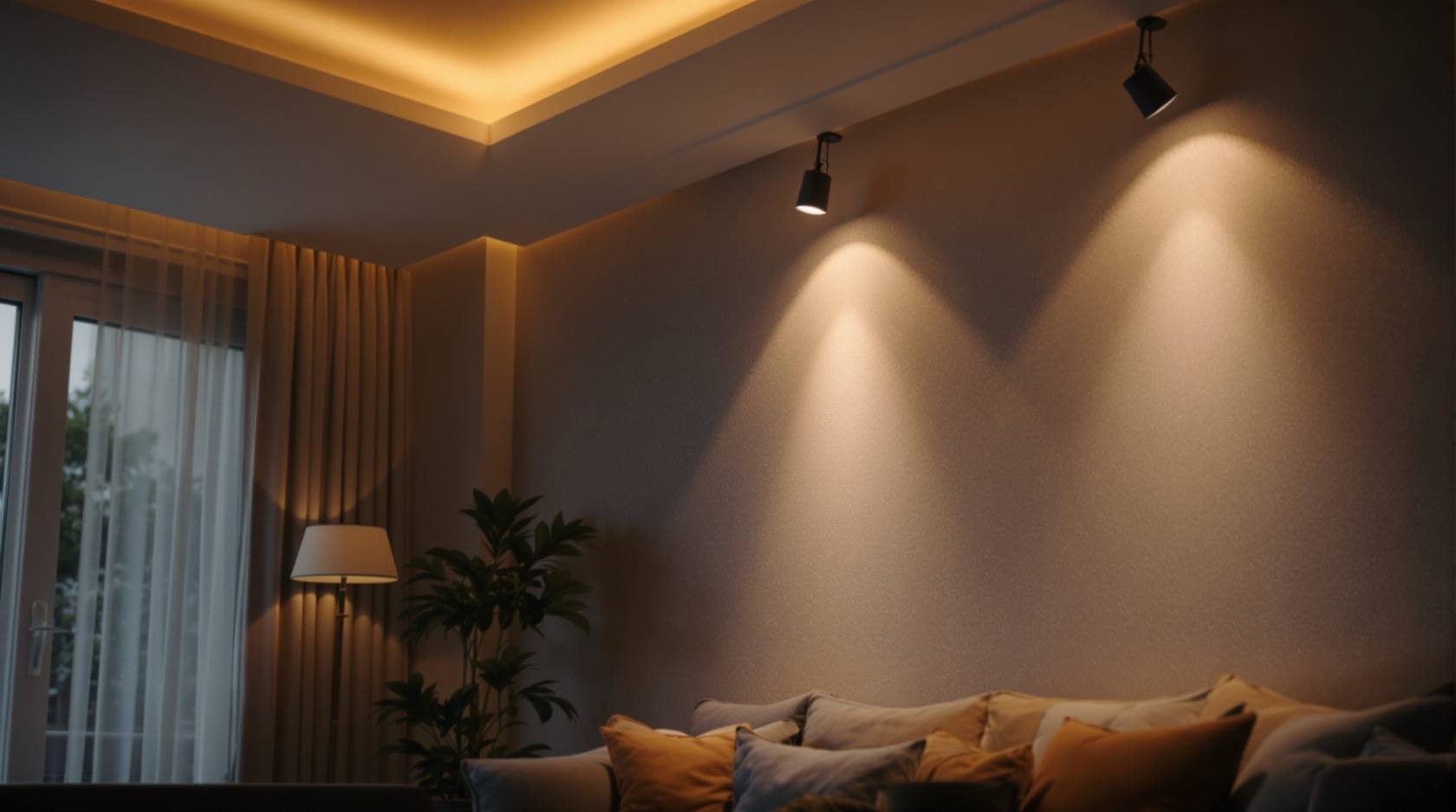
- Ambient (general fill). The soft, even base that lets you move around safely and see the whole room. It answers "can I see?" In Indian homes the false-ceiling cove is the classic ambient layer — a hidden LED strip washing the ceiling with indirect glow — alongside recessed downlights and, historically, the central fitting.
- Task (light to do things by). Focused, brighter light exactly where a job happens — so you are not working in your own shadow. It answers "can I do this?" Think under-cabinet strips over the kitchen counter, a reading lamp beside the armchair, lights flanking the bathroom mirror, a desk or study lamp.
- Accent (drama and highlight). Directional light that picks out one thing and lets the rest fall away — the layer that creates mood and depth. It answers "where should I look?" Spotlights on art, wall-washing a stone or texture, a cove grazing a feature wall, uplights behind a plant.
- Decorative (sparkle). The fixtures you are meant to see — the chandelier over the dining table, pendants over the island, pretty wall brackets. They add jewellery and a point of sparkle but should not be relied on as a main light source. This is the decorative lighting layer.
A well-lit room usually carries all four. Here is the same information as a comparison you can plan against:
| Layer | Its job (the question) | Typical fixtures | Usual height / position | Control |
|---|---|---|---|---|
| Ambient | General fill — "can I see?" | Cove strip, downlights, central fitting | Ceiling / ceiling perimeter | Dimmable, own circuit |
| Task | Light to do by — "can I do this?" | Under-cabinet, reading/desk lamp, mirror lights | At the work surface / eye level | Local switch, dimmable |
| Accent | Drama — "where should I look?" | Adjustable spots, wall-washers, uplights | Ceiling-mounted or low, aimed | Own circuit, dimmable |
| Decorative | Sparkle — the fixture you see | Chandelier, pendants, wall brackets | Hung low over tables / on walls | Often on a dimmer |
Separate controls are the whole point
Layers you cannot control independently are not really layers — they are just more lights on one switch. The magic of a layered scheme is that each layer sits on its own switch or dimmer, so you can blend them into different scenes: all four up bright for cleaning; ambient low with accent and decorative up for a relaxed evening; task alone over the kitchen while the rest sleeps. Same room, completely different feeling, at the turn of a dimmer.
This is where design meets electrical work, and where you must hand off. Deciding which layers get which controls is design; running the circuits, wiring the switch banks, and installing dimmers is safety-critical work for a licensed electrician — get it wrong and you risk fire or shock, and many LED sources also need a compatible dimmer to avoid flicker or buzz. Plan the control zones on paper early (it is far cheaper before the walls are closed), then have the electrician execute. For app-based scenes, presets and voice control, that is the province of smart lighting and choosing smart lighting — but the layering logic below comes first, with or without automation.
A worked example: layering a living room
Take a typical 12 x 16 ft Indian living room with a sofa set, a TV, a console with framed art, and a corner reading chair.
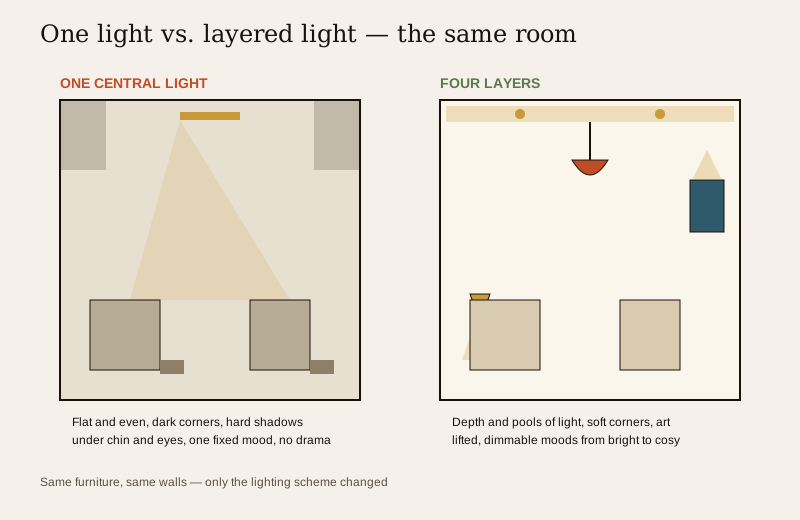
1. Ambient. A warm cove along the false-ceiling perimeter plus a few recessed downlights give the soft general fill — enough to walk in and see everyone, never harsh.
2. Task. A floor or table lamp beside the reading chair puts light on the page without lighting the whole room. If there is a study nook, a small desk lamp does the same there.
3. Accent. Two adjustable spots graze the framed art on the console wall, and a discreet uplight or cove grazes the TV-unit's textured back panel — this is what gives the room depth after dark.
4. Decorative. A pendant or a modest chandelier over the seating adds the sparkle and a design anchor overhead.
Now the controls: ambient on one dimmer, accent on another, task lamps switched locally, decorative on its own. A "bright" scene brings everything up; a "movie" scene drops ambient low, kills the accent glare near the screen and leaves a soft wash; an "evening" scene runs low ambient with accent and decorative up. One room, several lives. To turn quantities into fittings, the Home Lighting Planner walks the room fixture by fixture, and for style direction browse living-room design ideas.
A repeatable method for any room
The same five-move recipe works for a kitchen, a bedroom, a pooja room or a balcony. Do it in this order every time.
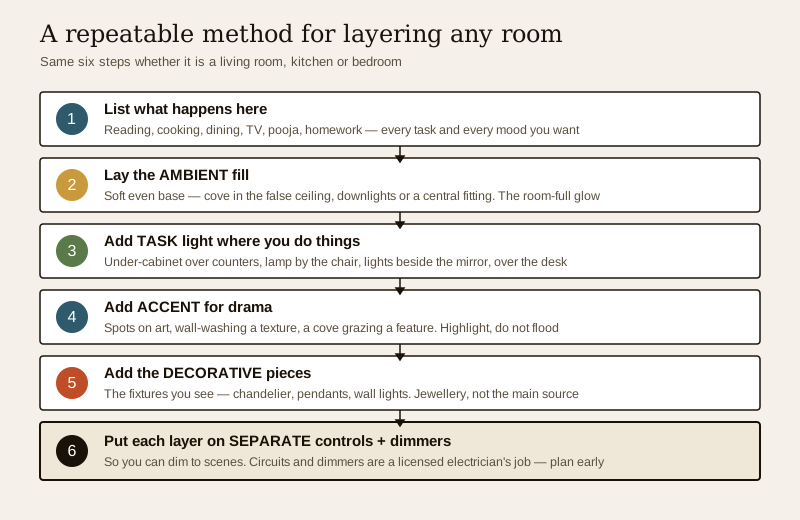
1. List what happens here. Every task (cooking, reading, homework, grooming, pooja) and every mood you want (bright, relaxed, romantic). This list drives everything.
2. Lay the ambient fill so the whole room is comfortably visible — cove, downlights or a central source.
3. Add task light at each activity spot from the list, so no one works in their own shadow.
4. Add accent to give drama — pick the two or three things worth highlighting (art, a texture, a plant) and leave the rest.
5. Add the decorative pieces where a fixture should be seen — then put every layer on separate, dimmable controls.
The room-by-room shape of this recipe looks like:
| Room | Ambient | Task | Accent | Decorative |
|---|---|---|---|---|
| Living | Cove + downlights | Reading lamp | Spots on art, TV-wall wash | Pendant / chandelier |
| Kitchen | Downlights / ceiling | Under-cabinet + over-hob | Toe-kick or open-shelf glow | Pendants over island |
| Bedroom | Soft cove, low | Bedside + wardrobe | Headboard wall-wash | Statement pendant |
| Dining | Downlights | Bright over table | Crockery-unit accent | Chandelier over table |
| Bath | Ceiling fill | Mirror-side lights | Niche / shower accent | Decorative wall bracket |
For a whole-home version of this, see the residential lighting design guide and, for flats specifically, apartment lighting planning; the kitchen's own pitfalls are in kitchen lighting mistakes.
Balance and proportion — do not over-light
Layering is not "more light everywhere." A room where every layer is on full is as flat as a single bright bulb — you have simply flooded it from more directions. The art is contrast: bright where it matters, gentle elsewhere, some corners left in shade so the bright bits read. A good rule is that accent should feel a few times brighter than the ambient around it to actually stand out; if everything is equally lit, nothing is special.
Over-lighting is one of the most common Indian mistakes — a ceiling peppered with a dozen downlights, all blazing. It wastes energy (watch lighting power density under the ECBC approach and BEE-rated LEDs), and it kills the mood the layers were meant to create. Fewer, better-placed fittings on good dimmers beat a grid of glare every time. To sanity-check how many lumens a room actually needs before you buy, use the Lumen Requirement Calculator and the Lux Level Calculator — they anchor your plan to the recommended lux (IS 3646) instead of guesswork.
The India context
A few things make layering distinctly Indian:
- The false-ceiling cove is your ambient workhorse. Most Indian living and dining rooms already have a POP or gypsum false ceiling — the perfect place for a hidden warm LED cove that does the soft-fill job beautifully. See the false ceiling guide for how the cove detail is built.
- Festivals and pooja want an accent and warm layer. Diwali, weddings and pooja need a warm, celebratory glow — a dedicated warm accent layer (and outlets for diyas and string lights) planned in advance beats scrambling every year.
- Mixed warm and cool. Indian homes juggle warm relaxing light for living areas and cooler task light for kitchens and study; a layered scheme lets each layer carry its own colour temperature — the detail lives in the colour temperature and CRI guide.
- Value first. You do not need imported fixtures to layer well; ordinary LED downlights, a strip for the cove and a couple of adjustable spots go a long way. The designer lighting and architectural lighting guides show where spending more actually pays.
How it connects
- This guide is the concept; the complete guide to lighting is the map of the whole hub, and functional vs ambient vs accent lighting drills into telling the working layers apart.
- Turn the plan into rooms with the residential lighting design guide and the home lighting design guide; avoid the traps in common lighting mistakes.
- Size the layers with the Lux Level Calculator, Lumen Requirement Calculator and Home Lighting Planner; style them with living-room design ideas and moodboards.
- Hand the controls and scenes to smart lighting; the sparkle layer to decorative lighting; and every circuit, switch and dimmer to a licensed electrician via the Electrical hub.
Key takeaways
- One central light fails three ways — it is flat, it casts unkind shadows, and it is stuck on one mood. Layering fixes all three.
- Use the three working layers — ambient (fill), task (do), accent (drama) — plus a decorative sparkle layer of fixtures you see.
- Separate, dimmable controls are the whole point — they let you blend layers into scenes; the same room can be bright, relaxed or cinematic.
- Wiring, circuits and dimmers are a licensed electrician's job and are safety-critical — plan the control zones on paper, then have a professional install and certify them.
- Plan any room with the same recipe: list tasks, lay ambient, add task, add accent, add decorative, then split the controls.
- Do not over-light — contrast, not flood, is what makes a layered room feel alive; check quantities against recommended lux (IS 3646) with the calculators.
- In India the false-ceiling cove is your ambient workhorse, and a planned warm accent layer carries festivals and pooja.
References
- National Building Code of India, NBC (SP 7:2026), Bureau of Indian Standards — general provisions for interior illumination and lighting (named generally).
- IS 3646 — code of practice for interior illumination, including recommended illuminance (lux) levels for rooms and tasks (named generally).
- National Lighting Code and IS 16107 / IS 10322 (IEC 60598) — LED luminaire performance and safety (named generally).
- Energy Conservation Building Code (ECBC) and BEE star rating — lighting power density and efficient LED selection (named generally).
- A licensed electrician / electrical contractor — design, installation and certification of all circuits, switching, dimmers and load for a layered scheme.
All quantities, layers and cost bands here are indicative design aids only; confirm illuminance against IS 3646 and NBC (SP 7:2026), size fittings with the calculators, and have a licensed electrician design, install and certify every circuit, switch and dimmer — electrical work is safety-critical and never a DIY task.
Export this guide
Related Guides — Deep-dive reading
Lighting Controls & Dimming Design: Zones, Scenes & Switches (2026)
How to plan lighting control so an Indian home's light is flexible — split each room's layers onto separate switches, choose dimmers that actually work with LEDs, add two-way switching where you need it, and layer scenes on top. The design decisions you must settle before the electrician wires.
LightingThe Homeowner's Guide to Lighting Your Home: Start to Finish (2026)
The warm, plain-English capstone for the whole Lighting hub - how to light an Indian home from empty to done, in the order things actually happen, with the one rule that saves you the most money: decide the whole scheme before the electrician wires.
LightingBedroom Lighting Design for Indian Homes: Calm, Layered & Dimmable (2026)
How to light an Indian bedroom for rest first and function second — why the harsh central tube light in your eyeline is the classic mistake, how to layer soft ambient, bedside reading task, accent and a low night light, and how to specify warm 2700K, dimming and two-way switching so the room winds down with you.
LightingRelated Tools — Try Free
False Ceiling Cost Estimator
Live ₹/sqft across 8 ceiling types — POP, gypsum, designer, metal, PVC, wooden — with cove and spot lighting for 20 Indian cities.
Cost CalculatorApartment Furniture Size Chart
Standard furniture dimensions for Indian apartments — sofas, beds, tables, dining, storage.
Reference ChartBathroom Lighting Calculator
A lux-based bathroom lighting plan — total lumens, number of LED downlights, mirror task lighting and indicative wattage.
Bathroom Calculator