
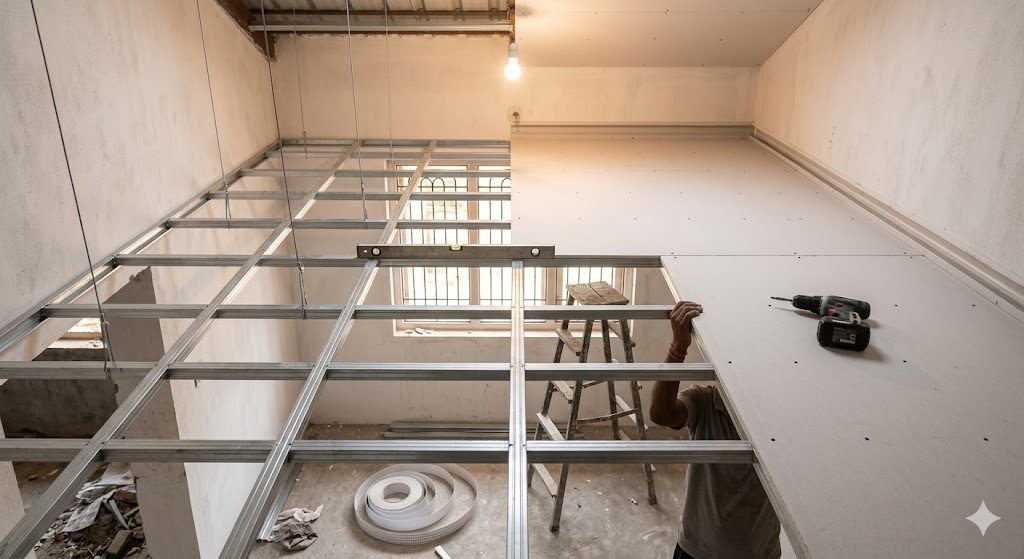
False Ceiling Design Guide
Types, Materials, Lighting Integration, Room-by-Room Design & Costs
The false ceiling — also called a suspended ceiling or drop ceiling — has become one of the defining features of modern Indian interiors. What was once a functional solution for concealing AC ducts and electrical conduits has evolved into a primary design element that shapes the character of every room.
Yet most homeowners approach false ceilings with only a vague idea — "I want a nice ceiling with lights." They don't know the material options, structural requirements, lighting integration possibilities, or cost implications. The result is often either an overdone ceiling that dominates the room or a poorly executed one that cracks, sags, or yellows within a few years.
This guide covers everything about false ceilings — materials, construction methods, lighting design, room-by-room recommendations, structural requirements, AC and service integration, maintenance, and detailed cost breakdowns. For homeowners planning their interiors and designers specifying ceiling systems.
Why False Ceilings?
| Purpose | Explanation |
|---|---|
| Concealment | Hide AC ducting, electrical conduits, plumbing, structural beams |
| Lighting design | Integrate recessed downlights, cove lighting, profile lights, and accent lighting |
| Thermal insulation | Air gap between slab and false ceiling provides insulation (important for top-floor apartments and terraces) |
| Acoustic control | Absorbs sound in home theatres, bedrooms, and living rooms |
| Aesthetic design | Creates visual layers, defines zones, adds architectural character |
| Height management | Reduces disproportionately tall rooms to a more intimate scale |
When NOT to Do a False Ceiling
- Floor-to-floor height below 9'6" (2.9m) — after a false ceiling drop of 6-8 inches, the room will feel oppressively low
- Budget is extremely tight — a painted ceiling with surface-mounted lights is perfectly fine; don't force a false ceiling
- Room is very small (<100 sqft) — a full false ceiling in a small room can make it feel like a box
- Structural slab has beautiful exposed concrete — some contemporary designs celebrate exposed slab + services as an aesthetic choice
False Ceiling Materials — Complete Comparison
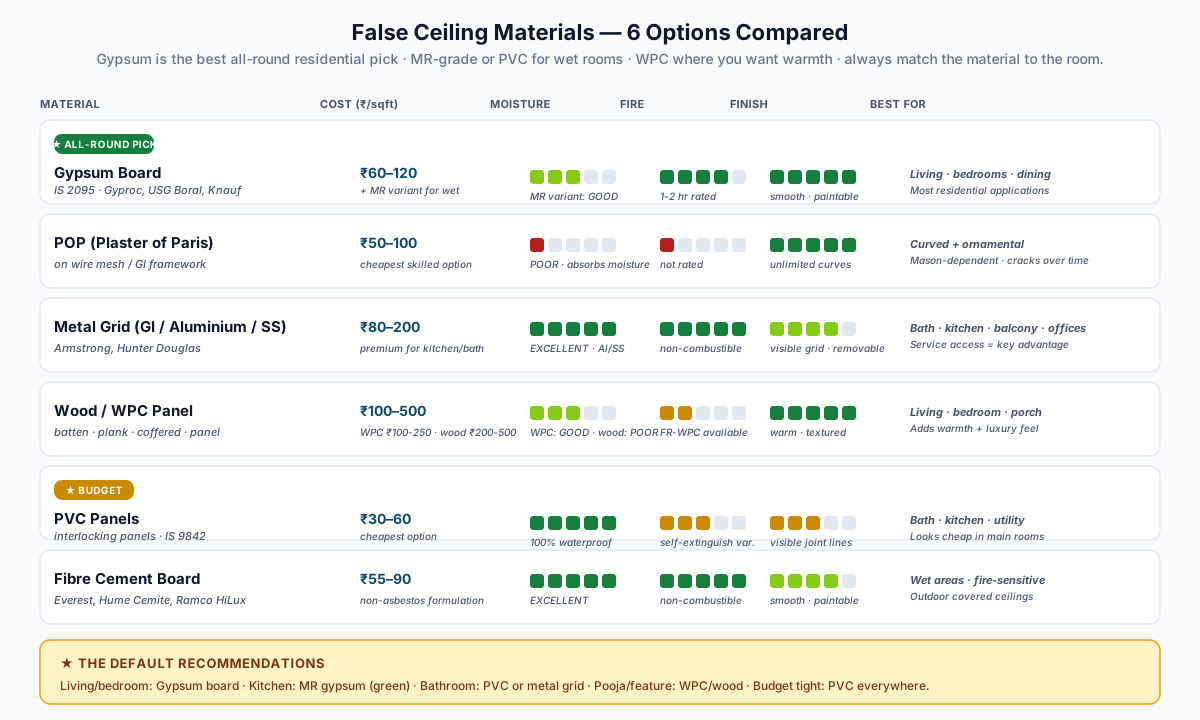
Gypsum Board (Plasterboard)
| Parameter | Details |
|---|---|
| What it is | Gypsum plaster sandwiched between paper liners, fixed to a metal framework (GI channels) |
| Standard thickness | 12.5mm (residential), 15mm (commercial/high traffic) |
| IS Code | IS 2095 (Gypsum plaster boards) |
| Finish | Smooth, seamless — joints filled with tape + compound; then painted |
| Fire rating | 1-2 hours (fire-rated variants available) |
| Moisture resistance | Standard: Poor. Green board (MR): Good for bathrooms/kitchens |
| Acoustic | Basic sound absorption. Acoustic variants (perforated) available |
| Cost | ₹60-120/sqft (material + framework + labour + finish) |
| Best for | Living rooms, bedrooms, dining — most residential applications |
Gypsum board types:
| Type | Colour Code | Application |
|---|---|---|
| Standard | White/Ivory face | General rooms — living, bedroom, dining |
| Moisture Resistant (MR) | Green face | Bathrooms, kitchens, utility areas |
| Fire Resistant (FR) | Pink face | Kitchen adjacent areas, fire escape routes |
| Acoustic | Perforated face | Home theatre, music room |
Top brands: Saint-Gobain Gyproc, USG Boral, Knauf, Everest
POP (Plaster of Paris)
| Parameter | Details |
|---|---|
| What it is | Gypsum powder mixed with water, applied on wire mesh or GI framework |
| Finish | Smooth, highly customisable — can create any curve, cove, or pattern |
| Fire rating | Not rated (combustible in thin sections) |
| Moisture resistance | Poor — absorbs moisture, can develop fungus |
| Acoustic | Moderate |
| Cost | ₹50-100/sqft (material + mesh + labour + finish) |
| Best for | Curved designs, ornamental ceilings, budget projects |
POP vs Gypsum Board:
| Factor | POP | Gypsum Board |
|---|---|---|
| Finish quality | Excellent (seamless) | Excellent (with proper joint treatment) |
| Crack resistance | Poor — cracks common at joints | Good — paper-reinforced joints |
| Execution speed | Slow (wet process, curing needed) | Fast (dry process, screw-fixed) |
| Weight | Heavy | Lighter (8-10 kg/sqm) |
| Moisture behaviour | Absorbs and weakens | MR variant resists moisture |
| Customisation | Unlimited — any shape possible | Limited to straight lines and gentle curves |
| Consistency | Depends on mason skill | Factory-made — uniform quality |
Metal Grid Ceiling
| Parameter | Details |
|---|---|
| What it is | Metal tiles/planks suspended on a T-grid framework |
| Types | Lay-in tiles, clip-in tiles, linear planks, baffle ceiling |
| Materials | GI (galvanised iron), aluminium, stainless steel |
| Finish | Powder-coated, pre-painted, perforated, plain |
| Fire rating | Excellent — non-combustible |
| Moisture resistance | Excellent (aluminium and SS) |
| Acoustic | Good (with acoustic backing pad) |
| Cost | ₹80-200/sqft (material + grid + labour) |
| Best for | Commercial spaces, bathrooms, kitchens, covered balconies, offices |
| Key advantage | Individual tiles can be removed for service access — critical for maintenance |
Top brands: Armstrong, Hunter Douglas, Aerocon, USG Boral
Wooden / WPC Ceiling
| Parameter | Details |
|---|---|
| What it is | Natural wood planks, engineered wood, or WPC (Wood Polymer Composite) panels on framework |
| Types | Plank ceiling, panel ceiling, batten ceiling (slatted), coffered ceiling |
| Finish | Natural wood grain, stained, painted |
| Fire rating | Poor (natural wood). WPC: Moderate (fire-retardant variants) |
| Moisture resistance | Poor (natural wood). WPC: Good |
| Cost | ₹100-250/sqft (WPC), ₹200-500/sqft (natural wood) |
| Best for | Living rooms, bedrooms, porches, covered outdoor areas |
| Key advantage | Warmth, texture, luxury feel — unmatched by other materials |
PVC Ceiling
| Parameter | Details |
|---|---|
| What it is | PVC panels interlocked on a metal or wood framework |
| Finish | Smooth, printed patterns (wood grain, marble, plain) |
| Fire rating | Fair — self-extinguishing variants available |
| Moisture resistance | Excellent — 100% waterproof |
| Cost | ₹30-60/sqft (most affordable option) |
| Best for | Bathrooms, kitchens, utility rooms, budget ceilings |
| Limitations | Looks cheap in living rooms/bedrooms, visible joint lines, limited design flexibility |
Fibre Cement Board
| Parameter | Details |
|---|---|
| What it is | Cement + fibre composite board (non-asbestos) |
| Finish | Smooth — paintable surface |
| Fire rating | Excellent — non-combustible |
| Moisture resistance | Excellent |
| Cost | ₹55-90/sqft |
| Best for | Wet areas (bathrooms, kitchens), outdoor covered ceilings, areas with fire requirements |
Top brands: Everest, Hume Cemite, Ramco HiLux
False Ceiling Design Types
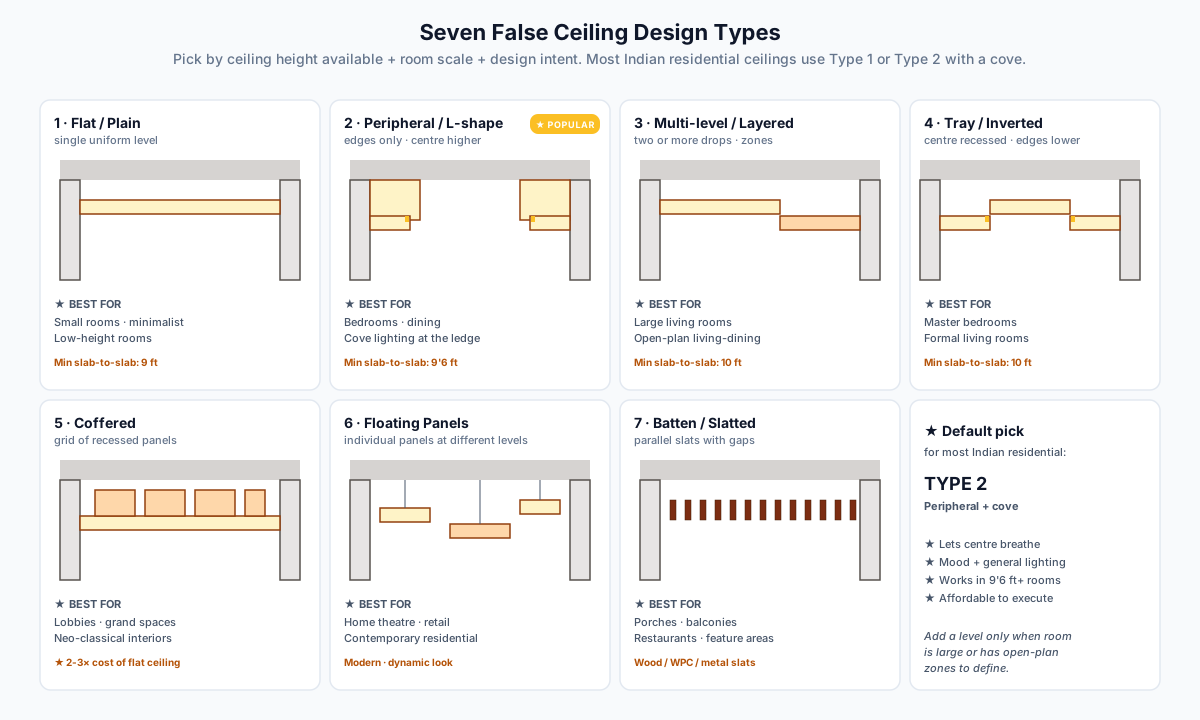
1. Flat / Plain Ceiling
- Entire ceiling at one level, smooth finish
- Conceals services, provides uniform lighting plane
- Best for: Small rooms, minimalist design, low-height rooms
- Minimum height needed: 9' slab-to-slab
2. Peripheral / L-Shaped Ceiling
- False ceiling only around the edges; centre is higher (exposed slab or higher ceiling)
- Creates depth, accommodates cove lighting at the ledge
- Best for: Bedrooms, dining rooms, rooms where centre height matters
- Most popular design in Indian homes
3. Multi-Level / Layered Ceiling
- Two or more ceiling levels creating a stepped effect
- Defines zones (dining vs living), creates dramatic lighting opportunities
- Best for: Large living rooms, open-plan spaces
- Minimum height needed: 10' slab-to-slab (to accommodate multiple drops)
4. Tray / Inverted Ceiling
- Centre is recessed (higher), edges are lower — opposite of peripheral
- Creates a floating effect in the centre; dramatic with cove lighting
- Best for: Master bedrooms, formal living rooms
- Minimum height needed: 10' slab-to-slab
5. Coffered Ceiling
- Grid of recessed panels creating a waffle-like pattern
- Classical, grand, architectural
- Best for: Large living rooms, lobbies, traditional/neo-classical interiors
- Cost: Premium — 2-3x the cost of flat ceiling
6. Floating Panels
- Individual ceiling panels suspended at different heights — not a continuous surface
- Modern, dynamic, creates visual interest
- Best for: Commercial, retail, contemporary residential, home theatres
7. Batten / Slatted Ceiling
- Parallel slats (wood, WPC, or metal) with gaps between them
- Adds texture, depth, and warmth; partially reveals services above
- Best for: Porches, balconies, living rooms, restaurants
Lighting Integration — The Main Event
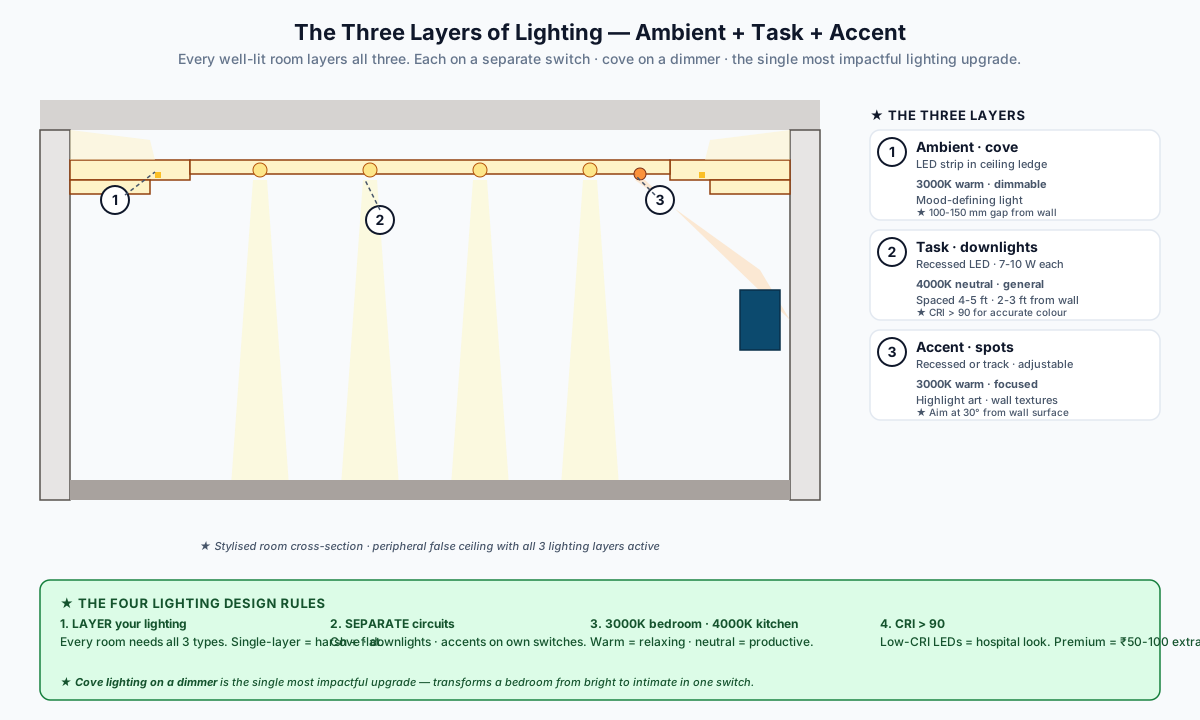
False ceilings exist primarily for lighting. The ceiling design and lighting design should be done simultaneously, not sequentially.
Lighting Types for False Ceilings
| Light Type | Where It Goes | Purpose | Colour Temperature | Cost per Point |
|---|---|---|---|---|
| Recessed downlight (LED) | Cut into the ceiling surface | Task and general lighting | 4000K (neutral) for general; 3000K (warm) for bedrooms | ₹300-800 |
| Cove light (LED strip) | Hidden in the ceiling ledge, light washes the upper surface | Ambient/mood lighting | 3000K (warm) — most popular | ₹80-150/running foot |
| Profile light (linear LED) | Surface-mounted or recessed linear channel | Modern task/accent lighting | 4000K for workspaces, 3000K for living | ₹200-500/running foot |
| Panel light (LED) | Surface-mounted or recessed square/round panel | General lighting — replaces tube lights | 4000K (neutral white) | ₹400-1,200 |
| Spot light (adjustable) | Recessed or track-mounted; adjustable angle | Accent — highlight art, wall textures | 3000K (warm) | ₹500-1,500 |
| Pendant light | Suspended from ceiling — passes through false ceiling | Decorative + task (dining, island) | Depends on fixture | ₹1,500-15,000 |
| Chandelier | Suspended from slab (not from false ceiling!) | Decorative focal point | Warm — 2700-3000K | ₹5,000-50,000+ |
Lighting Design Rules
| Rule | Explanation |
|---|---|
| Layer your lighting | Every room needs 3 layers: ambient (cove), task (downlights), accent (spots). Never use just one type. |
| 3000K for bedrooms, 4000K for kitchens | Warm light = relaxing. Neutral light = productive. Mix in living rooms. |
| Downlight spacing | 4-5 feet apart, 2-3 feet from walls. Too close = bright spots; too far = dark patches. |
| Cove gap | 100-150mm gap between the cove ledge and the wall for even light wash |
| LED strip quality | Use 60 LED/metre minimum (120 LED/m for premium). CRI > 90. Use aluminium channel for heat dissipation. |
| Separate circuits | Cove lights, downlights, and accent lights on separate switches for layered control |
| Dimmer for bedrooms | Cove lighting on a dimmer switch transforms the bedroom from bright to intimate |
| Never light from one direction | Light from multiple sides to avoid harsh shadows |
Colour Temperature Guide
| Room | Recommended | Effect |
|---|---|---|
| Living room | 3000-4000K (tuneable white ideal) | Versatile — warm for evenings, neutral for day |
| Bedroom | 2700-3000K | Warm, calming, sleep-friendly |
| Kitchen | 4000-5000K | Bright, clear — see food colours accurately |
| Bathroom | 4000K | True colour rendering for grooming |
| Study/office | 4000-5000K | Alert, productive |
| Dining | 2700-3000K | Warm — food looks appetising, faces glow |
| Pooja room | 3000K (warm white) | Serene, golden tone |
| Home theatre | RGB/tuneable | Dynamic — adjustable per content |
Room-by-Room False Ceiling Guide
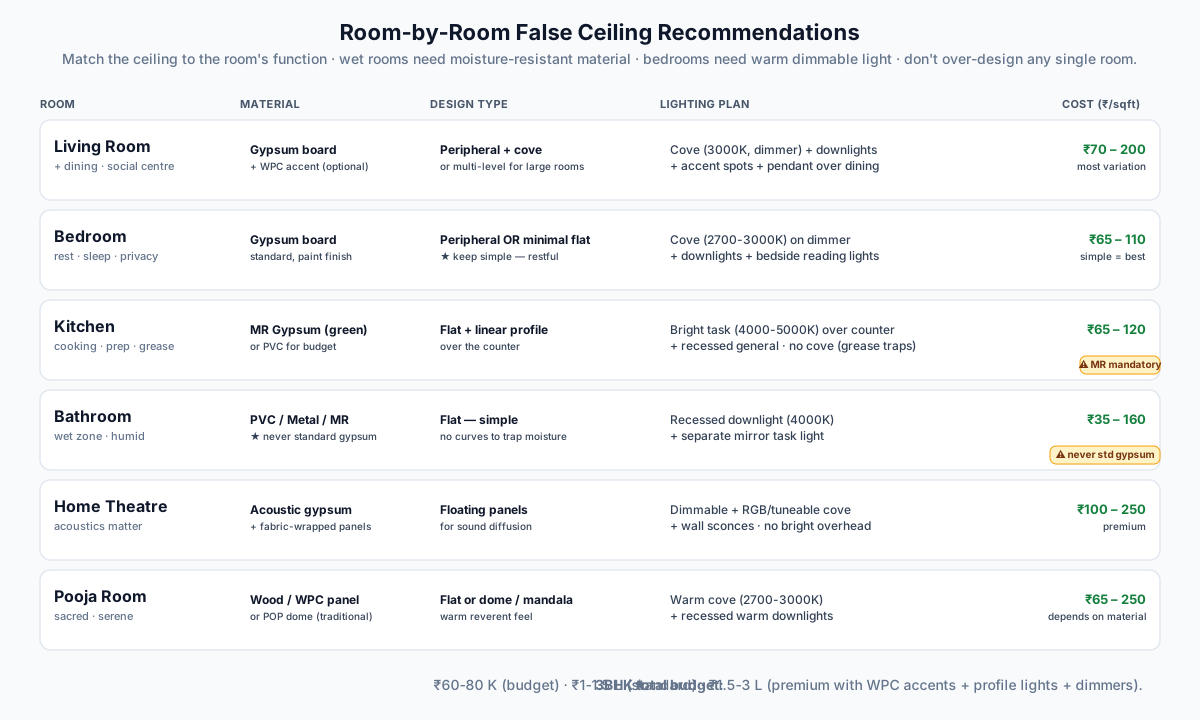
Living Room
| Design | Description | Cost (₹/sqft) |
|---|---|---|
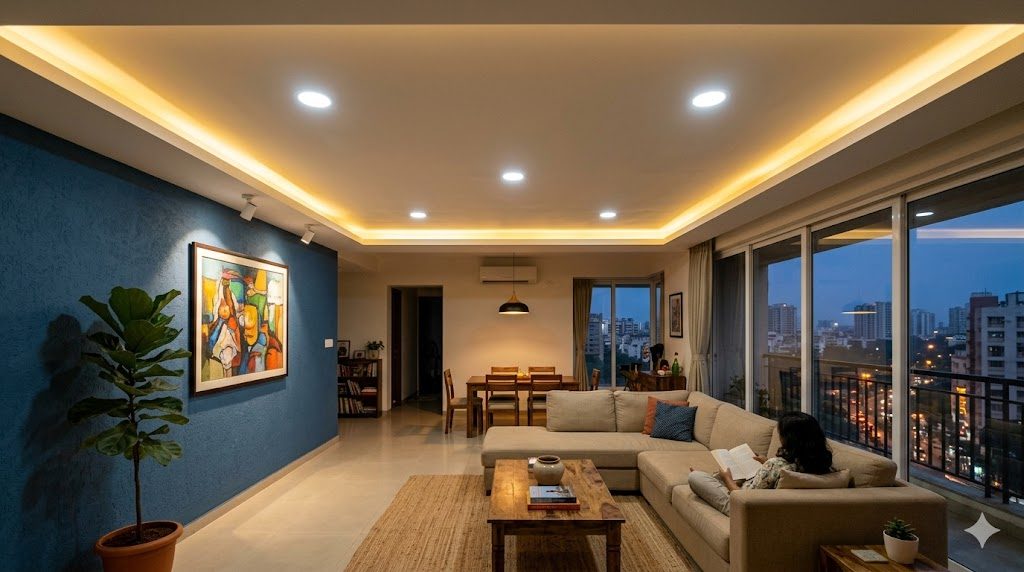
| Peripheral with cove | False ceiling along edges, cove lighting at ledge, centre open or flat | ₹70-110 |
| Multi-level with zones | Different ceiling levels over dining vs sitting vs passage | ₹90-150 |
| Tray ceiling | Recessed centre with cove lighting all around | ₹80-130 |
| Wooden batten accent | WPC/wood batten panel on one section + gypsum rest | ₹120-200 |
Lighting plan: Cove (warm ambient) + Recessed downlights (general) + Spot lights for art/wall accents + Pendant over dining
Bedroom
| Design | Description | Cost (₹/sqft) |
|---|---|---|
| Peripheral with cove | Ceiling only around edges, cove light on dimmer | ₹65-100 |
| Above-bed feature | Ceiling element aligned with headboard wall | ₹70-110 |
| Minimal flat | Full flat ceiling with recessed lights only | ₹60-85 |
Lighting plan: Cove on dimmer (primary night mood) + Recessed downlights (general) + Bedside pendants or wall lights (reading)
Key rule: Keep bedroom ceilings simple. Elaborate ceilings in bedrooms cause visual restlessness — the opposite of sleep.
Kitchen
| Design | Description | Cost (₹/sqft) |
|---|---|---|
| Flat gypsum (MR) | Simple flat ceiling, moisture-resistant board | ₹65-90 |
| Flat with profile lights | Flat ceiling with linear LED profiles over counter | ₹80-120 |
| PVC panels | Waterproof panels for budget kitchens | ₹35-55 |
Material: Always use moisture-resistant (green) gypsum board or PVC/metal in kitchens. Standard gypsum will absorb cooking steam and develop yellow stains.
Lighting: Bright task lighting (4000-5000K) over the counter. Avoid cove lighting in kitchens — it traps grease.
Bathroom
| Design | Description | Cost (₹/sqft) |
|---|---|---|
| PVC panels | Waterproof, easy to clean, budget-friendly | ₹35-55 |
| Metal grid | Aluminium clip-in tiles — premium, moisture-proof | ₹90-160 |
| Fibre cement board | Non-combustible, moisture-resistant | ₹60-90 |
| MR gypsum board | Smooth finish, moisture-resistant | ₹70-100 |
Material: Must be 100% moisture-resistant. Standard gypsum and POP will fail in bathrooms. Use PVC, metal, fibre cement, or MR gypsum.
Home Theatre / Media Room
| Design | Description | Cost (₹/sqft) |
|---|---|---|
| Acoustic gypsum | Perforated gypsum boards with acoustic wool above | ₹100-150 |
| Fabric-wrapped panels | Acoustic panels wrapped in fabric, fixed to ceiling | ₹120-200 |
| Floating panels | Individual panels at different heights for sound diffusion | ₹150-250 |
Key: Use acoustic treatment — not just aesthetics. Sound absorption at the ceiling dramatically improves audio clarity.
Pooja Room
| Design | Description | Cost (₹/sqft) |
|---|---|---|
| Wooden / WPC panel | Warm wood tone ceiling with recessed warm light | ₹120-250 |
| POP with dome | Traditional dome or mandala design in POP | ₹100-180 |
| Simple flat with warm cove | Minimalist — flat ceiling, warm 3000K cove light | ₹65-90 |
Structural Requirements
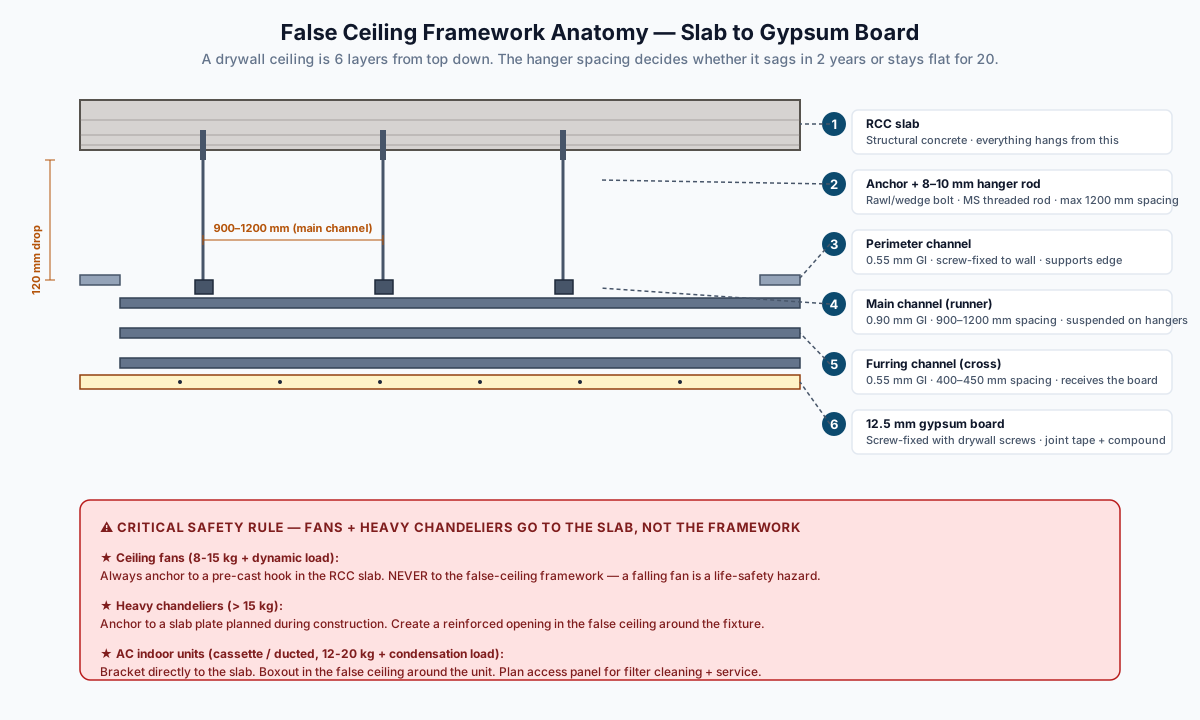
Framework Specifications
| Component | Standard | Premium |
|---|---|---|
| Perimeter channel | 0.55mm GI channel | 0.55mm GI channel |
| Main channel (runner) | 0.90mm GI channel | 1.00mm GI channel |
| Furring channel (cross) | 0.55mm GI channel | 0.55mm GI channel |
| Hanger rod | 8mm MS threaded rod | 10mm MS threaded rod |
| Anchor | Rawl bolt (concrete slab) | Wedge anchor (concrete slab) |
| Screws | Drywall screws (25mm for board, 35mm for double layer) | Same |
| Main channel spacing | 1200mm (4 feet) | 900mm (3 feet) for heavy ceilings |
| Furring channel spacing | 450mm (18 inches) | 400mm (16 inches) for sag-free |
| Hanger spacing | 1200mm maximum | 900mm for heavy loads |
Load-Bearing Considerations
| Item | Weight | Fixing Method |
|---|---|---|
| Gypsum board ceiling | 8-12 kg/sqm | Suspend from slab via hangers |
| POP ceiling | 15-25 kg/sqm | Suspend from slab via hangers |
| Chandelier (<15 kg) | Up to 15 kg | Can fix to double-layered gypsum with toggle bolt |
| Heavy chandelier (>15 kg) | 15-50+ kg | Must fix directly to RCC slab — not to false ceiling. Provide slab hook/plate during construction |
| Ceiling fan | 8-15 kg + dynamic load | Always fix to RCC slab — never to false ceiling. Plan fan hook location during slab casting |
| AC indoor unit | 12-20 kg | Fix to slab with brackets. Create boxout in false ceiling around the unit |
Critical safety rule: Ceiling fans and heavy chandeliers must ALWAYS be fixed to the RCC slab — NEVER to the false ceiling framework. A falling fan or chandelier is a life-safety hazard. Plan fan and chandelier locations during structural design, and cast hooks/plates into the slab.
AC Integration
| AC Type | Ceiling Treatment | Drop Height Needed |
|---|---|---|
| Split AC (wall-mounted) | No false ceiling needed. Boxout around piping if concealed. | None |
| Split AC (cassette type) | 600x600mm cassette recessed into false ceiling. Plan location carefully. | 300-350mm minimum |
| Split AC (ducted) | Full false ceiling conceals ducting. Diffusers flush with ceiling surface. | 250-350mm minimum |
| VRV/VRF system | Ducted system with multiple diffusers. Full false ceiling required. | 300-400mm |
Ducted AC planning:
- Duct routes must be planned during false ceiling design — not after
- Supply diffusers (blowing cold air): Away from seating areas, toward room perimeter
- Return air grille: Usually near the indoor unit
- Provide access panels near the indoor unit for maintenance (filter cleaning, service)
- Acoustic lining inside ducts reduces noise
Common Mistakes
1. False ceiling in a low room — if slab height is below 9'6", skip the false ceiling or do peripheral only
2. Too many levels — three or more levels look dated and overwhelming. Modern design = 1-2 levels maximum
3. Ignoring fan hook — deciding on fan location after the false ceiling is done requires breaking and remaking
4. Standard gypsum in bathroom — will absorb moisture and fail. Use MR gypsum, PVC, or metal
5. Cove lighting too close to wall — creates a hot spot instead of a wash. Maintain 100-150mm gap
6. Cheap LED strips — low-CRI LEDs make your home look like a hospital. Use CRI > 90, 60+ LED/metre
7. No access panels — services behind the ceiling (AC, electrical junction boxes) need access. Plan hatch panels
8. Heavy chandelier on false ceiling — chandelier must bolt to the RCC slab, with a reinforced opening in the false ceiling
9. Single light circuit — all lights on one switch means it's all-or-nothing. Separate circuits for cove, downlights, and accents
10. Over-designing — the ceiling should complement the room, not dominate it. When in doubt, do less
Maintenance
| Issue | Cause | Fix |
|---|---|---|
| Hairline cracks at joints | Thermal expansion, building settlement | Re-tape and compound the joint, repaint |
| Sagging | Moisture absorption (POP/standard gypsum), insufficient framework | Replace affected boards, add hangers, check for water source |
| Yellow stains | Kitchen steam, roof leakage above | Fix the water source first, then repaint with stain-blocker primer |
| Peeling paint | Moisture, poor primer | Sand, apply waterproof primer, repaint |
| Fan vibration noise | Fan bolts loose, false ceiling touching fan rod | Tighten slab bolts, ensure 25mm gap between false ceiling and fan rod |
Cost Summary
False Ceiling Cost for a Typical 3BHK (1200 sqft carpet)
| Room | Area (sqft) | Type | Rate (₹/sqft) | Cost |
|---|---|---|---|---|
| Living + Dining | 250 | Peripheral gypsum + cove | ₹90 | ₹22,500 |
| Master Bedroom | 150 | Peripheral gypsum + cove | ₹80 | ₹12,000 |
| Bedroom 2 | 120 | Flat gypsum + downlights | ₹70 | ₹8,400 |
| Bedroom 3 | 100 | Flat gypsum + downlights | ₹70 | ₹7,000 |
| Kitchen | 80 | Flat MR gypsum | ₹75 | ₹6,000 |
| Bathrooms (2) | 80 | PVC panels | ₹45 | ₹3,600 |
| Passages | 60 | Flat gypsum | ₹65 | ₹3,900 |
| Lighting (all rooms) | — | Downlights + cove + spots | — | ₹25,000 |
| Painting (ceiling) | 840 sqft | Primer + 2 coats emulsion | ₹12/sqft | ₹10,000 |
| Total | ₹98,400 |
Approximate range for a 3BHK:
- Budget: ₹60,000-80,000 (flat ceilings, basic lighting)
- Standard: ₹1,00,000-1,50,000 (peripheral ceilings, cove + downlights)
- Premium: ₹1,50,000-3,00,000 (multi-level, WPC accents, profile lights, dimmers)
Key Takeaways
- Gypsum board is the best all-round material for residential false ceilings — smooth, consistent, affordable, fire-rated
- Use MR (green) gypsum or PVC in wet areas — standard gypsum and POP will fail in bathrooms and kitchens
- Light in three layers — ambient (cove), task (downlights), accent (spots). Never just one type.
- 3000K for bedrooms, 4000K for kitchens — colour temperature is as important as brightness
- Ceiling fans and heavy fixtures MUST fix to the RCC slab — never to the false ceiling framework
- Plan fan hooks and AC locations during structural design — not after the false ceiling is installed
- Less is more — modern false ceiling design trends toward minimal, clean lines with good lighting. Over-designed ceilings look dated.
- Budget ₹1-1.5 lakh for a 3BHK — including material, framework, lighting, and painting
- Cove lighting on a dimmer is the single most impactful lighting upgrade for any room
See it before you build it. Browse 25 false-ceiling designs — peripheral cove and tray ceilings, coffered and wooden-rafter looks, clean minimal gypsum, and statement backlit and chandelier ceilings — and recolour each one instantly across five finishes to find the ceiling that suits your room.
References:
- IS 2095 — Gypsum Plaster Boards
- IS 2547 — Gypsum Building Plaster
- IS 9842 — PVC Panels for Ceiling
- NBC 2016, Part 4 — Fire and Life Safety (ceiling fire ratings)
- Saint-Gobain Gyproc — Technical Installation Guide
- USG Boral — Ceiling Systems Manual
- Armstrong Ceiling Solutions — Product Catalogue India
- Hettich India — Lighting Integration Guidelines
- IESNA (Illuminating Engineering Society) — Lighting Standards
- Bureau of Energy Efficiency (BEE) — LED Standards India
- CPWD Specifications Vol. 2 — False Ceiling and Finishing
Interactive · False ceiling previewer
Cove Lighting · Gypsum Board · 150mm drop · 2.85m clear height
Standard slab 3000mm → final height 2.85m. NBC minimum 2.4m.
Continuous peripheral drop with hidden LED strip — soft ambient wash.
Gypsum Board pros
Smooth finish, easy paint, fire-rated
Cons
Vulnerable to water leaks above
Indicative cost (Gypsum Board): ₹85-130/sqft
Export this guide
Related Guides — Deep-dive reading
Bathroom False Ceiling India: PVC, Gypsum, Aluminium Panels, Cost & the #1 Moisture Rule
A complete guide to bathroom false ceilings for Indian homes — why you fit one, the material choices (PVC, moisture-resistant gypsum, aluminium and metal panels, ACP), access panels, integrating the exhaust fan and lights, and a rupee cost comparison — with the one rule that keeps a wet-zone ceiling from sagging.
BathroomsPorcelain, Ceramic & Sintered-Stone Facade Cladding in India: A Practical Guide
Thin large-format porcelain and sintered-stone slabs can clad a building with the look of marble, concrete or weathered steel at a fraction of stone's weight — but on a facade, the fixing system is a life-safety decision, not a finish choice.
Building FacadesApartment Lighting Planning Guide
How to light a deep, dark apartment floor plate in layers — before the wiring is chased into the walls
Apartment LivingRelated Tools — Try Free
False Ceiling Cost Estimator
Live ₹/sqft across 8 ceiling types — POP, gypsum, designer, metal, PVC, wooden — with cove and spot lighting for 20 Indian cities.
Cost CalculatorDoor Material Comparison Tool
Compare 2–4 door materials on cost, durability, maintenance, security and moisture resistance.
Comparison ToolAcoustic Privacy (STC) Visualizer
Indian healthcare acoustic visualizer — compare wall assemblies and noise sources, see received SPL after STC attenuation, and check FGI 2018 / IS 1950 / NABH speech-privacy compliance with live dual-canvas waveform.
Acoustic Tool