
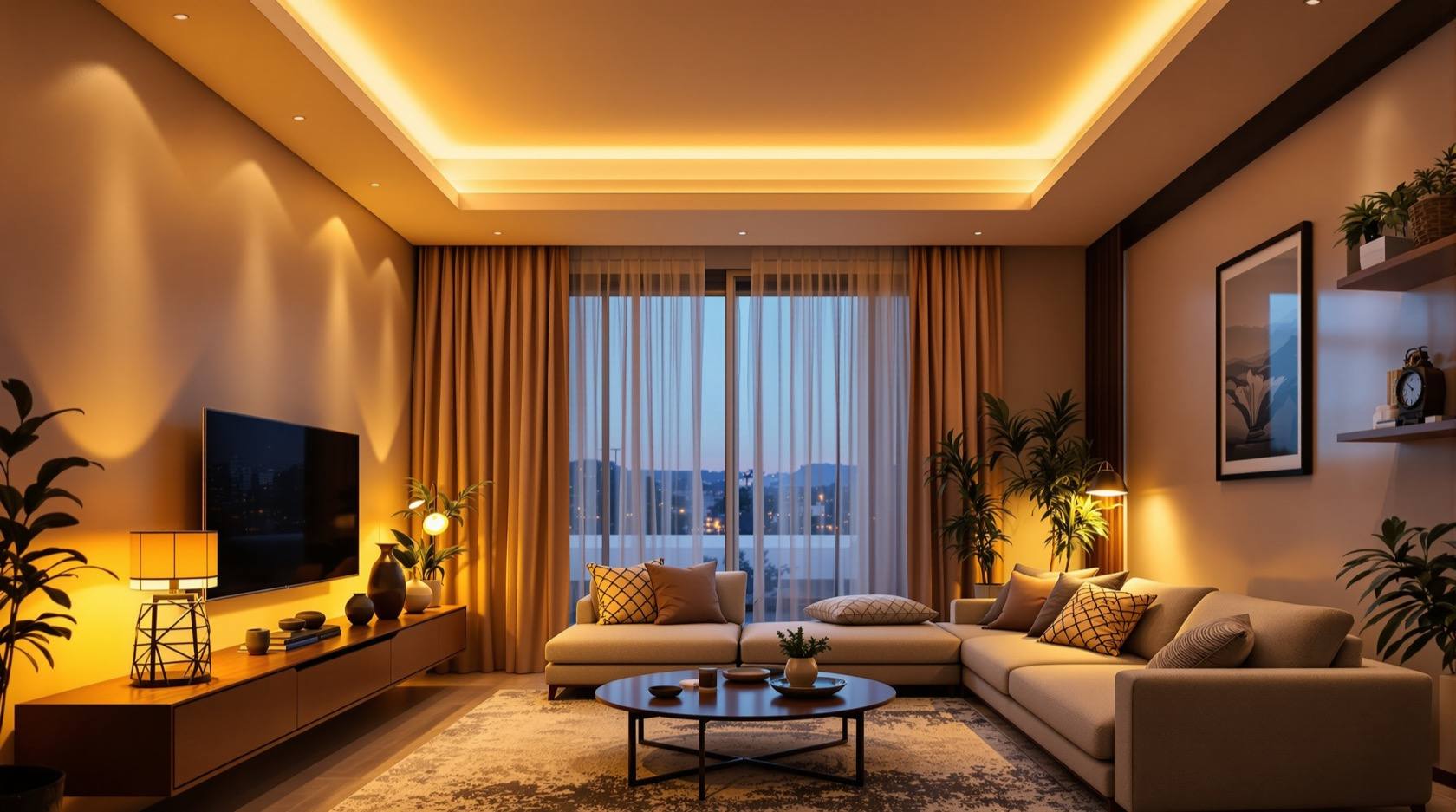
The Complete Guide to Home Lighting Design in India (2026)
The start-here master guide to designing light for an Indian home — what good lighting really does, the layered-design mindset that replaces the single ceiling tubelight, the decision sequence from tasks to budget, and where the design work hands off to a licensed electrician.
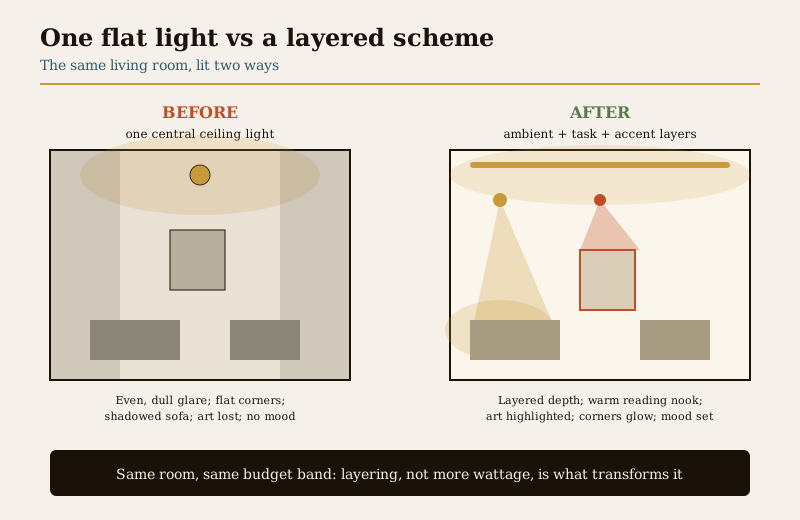
Walk into most Indian homes after dark and you meet the same thing: one bright fitting in the middle of the ceiling, flooding the room with flat, even light and leaving the corners dull, the faces shadowed and the mood switched permanently to "office". It is the single most common lighting mistake in the country, and it is not a wiring problem — it is a design problem. Good lighting is not one bright light. It is several quiet ones, placed on purpose.
This is the master, start-here guide for the Lighting hub. It is about the design of light — what light does for a room, how to think in layers, how to choose fixtures and set the mood, and the order to make the decisions in. It deliberately does not teach wiring. You design and specify the scheme; a licensed electrician does the circuits, load and dimmer install. From here you can branch to the sibling guides on layered lighting, the three light functions, design principles, a residential walk-through and the common mistakes to avoid — and out to the deep technical guides when you need lumens, LED-buying or CRI numbers.
Scope & how to read this. This hub is design-led: it helps you plan the scheme, choose luminaires and set the mood room by room. Every lux band, Kelvin figure and rupee range here is indicative — for planning and briefing, not a firm spec or quote. All the wiring, circuits, load calculation, earthing and dimmer installation are safety-critical work for a licensed electrician, and any statutory or emergency-lighting compliance is theirs to certify — we flag each hand-off. Automation lives in the Smart Home hub; daylight lives with windows and natural light. Confirm the technical numbers against IS 3646, NBC (SP 7:2026) and a professional, and get local quotes for cost.
What good lighting design actually does
Before choosing a single fitting, be clear about what you are asking light to do — because it does far more than let you see.
- Function. It puts the right amount of light on the right task: enough to chop vegetables safely, read without strain, or do your face at the mirror. Under-lighting a work surface causes eye fatigue; the deep lux numbers sit in colour temperature and CRI and the technical home lighting design guide.
- Mood and atmosphere. The same room can feel like a clinic or a retreat depending only on how it is lit. Warmth, dimming and a few pools of light instead of one flat wash are what make an evening room feel calm.
- Spatial perception. Light shapes how big, tall and welcoming a room reads. Washing a wall makes it recede; grazing a texture makes it advance; lighting the ceiling perimeter lifts it. You can change the felt size of a room without moving a brick.
- Beauty. Light is what reveals your interiors — the colour of a wall, the grain of wood, the art you hung, the plants you love. Unlit, all of it goes grey after sunset.
- Wellbeing. Bright, cooler light in the morning and warmer, dimmer light at night suits how the body naturally winds down. This is the gentle logic behind planning for natural light in Indian homes by day and warm layers by night — a comfort principle, not a medical claim.
A room that does all five feels "right" without anyone being able to say why. A room lit by a single ceiling fitting does none of them well. Holding these five jobs in mind is the whole shift from buying lights to designing lighting.
The design mindset: light the tasks, the layers and the character
The habit to unlearn is "one light in the middle of the ceiling." The mindset to replace it with has three moves.
1. Light the tasks, not the room. Ask what people actually do in the space and put light where that happens — over the hob, at the mirror, beside the reading chair — rather than blasting the geometric centre and hoping it reaches.
2. Build in layers. Use several sources at different heights and brightnesses so the room has depth and can change through the evening, instead of a single on-off flood. This layered idea is the backbone of the whole hub — the layered lighting guide goes deep.
3. Light the room's character. Reveal what makes the space itself — its height, its best wall, its textures, its art — so the lighting belongs to the interior rather than just illuminating it.
The three layers — the heart of good lighting
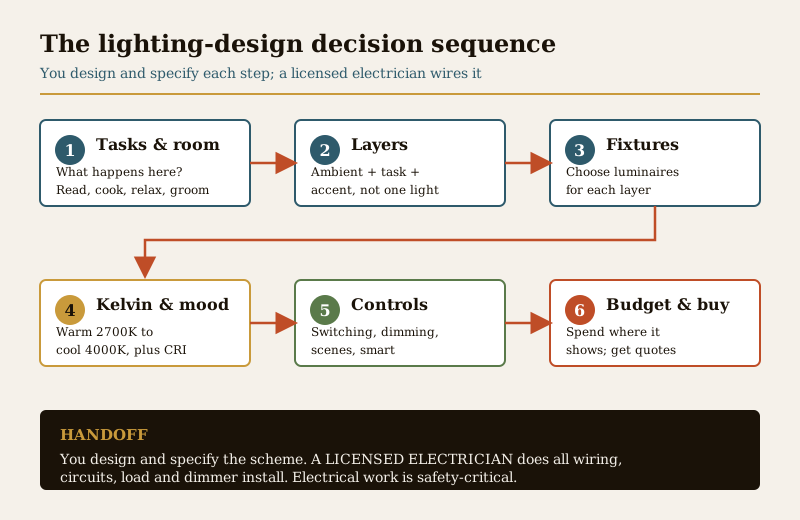
Almost every good scheme is built from three layers stacked in one room. Get these three working together and you have designed lighting; use only the first and you have the tubelight problem.
| Layer | What it does | Typical fittings | Get it wrong and... |
|---|---|---|---|
| Ambient | Soft, general fill that lets you move around safely — the base level | Cove/perimeter LED, ceiling downlights, a central fitting on a dimmer | Too much and it is a flat glare; too little and the room feels a cave |
| Task | Focused, brighter light exactly where a job happens | Under-cabinet strips, pendant over a table, reading lamp, mirror lights | Missing task light means shadows fall on your own work |
| Accent | Highlights that create interest and mood — the "jewellery" | Wall washers, picture lights, spots on art, niche and shelf lights | Skipped, so the room is functional but lifeless |
The art is in the mix and the balance between them, which the ambient-vs-task-vs-accent guide and the design principles guide cover in detail. The one rule to carry everywhere: never rely on ambient alone.
The design decision sequence
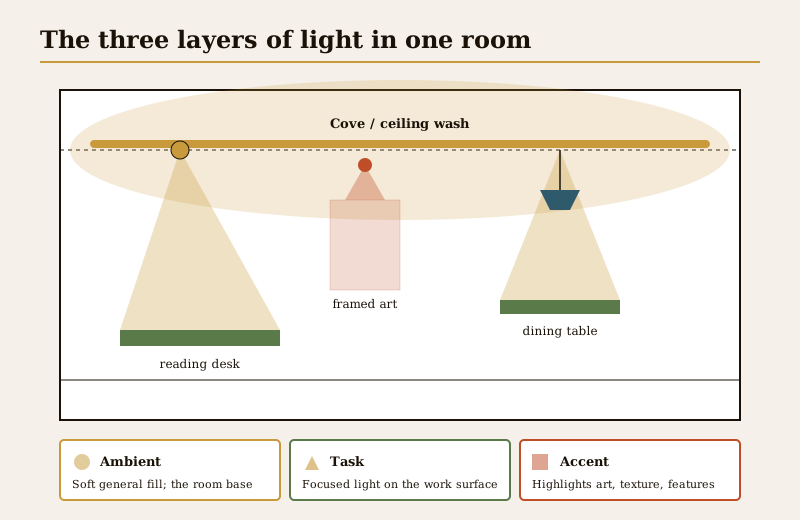
Make the decisions in this order and each one narrows the next. Jump ahead — buy pretty pendants before you know the layers — and you pay to redo it.
1. Understand the room and its tasks. List what actually happens in the space and where. This drives everything.
2. Plan the layers. Decide the ambient base, where task light is needed, and what deserves an accent — on paper or with the Home Lighting Planner, before buying anything.
3. Choose fixtures and luminaires. Pick the actual downlights, strips, pendants and lamps for each layer — look, beam, quality and IP rating for wet zones. Deep buying help is in the LED lighting guide and LED vs CFL.
4. Set colour temperature and mood. Choose the Kelvin (warm to cool) and the colour rendering (CRI) per room — the colour temperature and CRI guide has the numbers.
5. Plan controls and dimming. Decide which layers switch separately, what dims, and where you want scenes. Dimming is where mood actually lives — but the wiring and dimmer install are the electrician's, and full automation is the smart lighting guide.
6. Budget. Spend where it shows — task and accent in the rooms you live in — and save on cupboards and utility. Costs are bands, not quotes.
7. Buy, install and maintain. Confirm quantities, brief a licensed electrician for the install, and plan for cleaning and lamp replacement.
The same sequence, read as a responsibility map, makes clear who does what.
| Stage | You (the homeowner) decide | Who executes / certifies |
|---|---|---|
| Room & tasks | What the space is used for | You |
| Layers | The ambient/task/accent plan | You (design) |
| Fixtures | Look, beam, IP rating, quality | You specify; supplier confirms |
| Kelvin & mood | Warm vs cool per room, CRI | You specify |
| Controls & dimming | Which layers switch/dim, scenes | Licensed electrician wires; smart via Smart Home |
| Circuits, load, earthing | Nothing — brief the electrician | Licensed electrician (safety-critical) |
| Emergency / statutory light | Flag that you need it | Licensed electrician per emergency lighting |
| Buy & maintain | Budget and upkeep routine | You + electrician for install |
Setting colour temperature and mood
Colour temperature (Kelvin) is the single biggest lever on how a room feels, and Indian homes get it wrong most often by flooding living and bedroom spaces with cool, bluish "daylight" tubes that belong in a workshop.
| Space | Suggested warmth | Why |
|---|---|---|
| Living, bedroom, dining | Warm white, around 2700K | Relaxing, flattering to skin and wood, the evening mood |
| Kitchen work zones, study | Neutral, around 3500-4000K | Alert and clear for close, careful tasks |
| Bathroom mirror | Neutral with high CRI | True skin and colour for grooming |
| Pooja room, festive corners | Warm, dimmable | Warmth suits worship and the diya-and-lamp tradition; dim for aarti, lift for cleaning |
Two habits transform the feel of a home for very little money: keep living and sleeping spaces warm, and choose good colour rendering (CRI) so your walls, wood and food look true. During festivals — Diwali especially — warm, dimmable layers let the same room shift from bright and celebratory to soft and intimate. The colour temperature and CRI guide has the full detail.
Fixtures, controls and the false-ceiling reality
Choosing luminaires is where taste meets performance. A fixture has to look right, throw the right beam for its layer, survive its location (an IP44-plus rating near a shower or outdoors, per the usual IP ratings), and be from a make you can get spares for. Decorative and statement pieces — chandeliers, designer pendants — are a layer of their own, covered in decorative lighting and designer lighting for luxury homes.
Controls are where a good scheme comes alive. At minimum, switch each layer separately so you are not forced into "all on"; better, put ambient and accent on dimmers so one room can be bright for cleaning and soft for an evening. Anything beyond that — app control, scenes, voice, sensors — is automation, and belongs to the smart lighting guide and the Smart Home hub. Whatever you choose, the dimmer and switch wiring is a licensed electrician's job: the wrong dimmer on an LED flickers or fails, and mains work is not a DIY task.
A word on the Indian false-ceiling and cove habit. Cove lighting is genuinely useful ambient light and it hides the source beautifully — but a continuous warm cove alone is still one flat layer. Use the false ceiling to carry your layers (cove for ambient, downlights aimed at task zones, spots for accent), not just to run a single band of light around the room. The false ceiling guide covers the build side.
Budgeting — where to spend and where to save
Lighting rewards spending where it is seen and used. Treat these as indicative bands, and always get local quotes.
| Priority | Spend the money on | Save on |
|---|---|---|
| High | Living/dining task + accent, kitchen work light, bathroom mirror | — |
| Medium | Bedroom layered + dimmable, good dimmers on key rooms | — |
| Low | Store, utility, staircase (functional is fine) | Decorative fittings in low-use rooms |
The bigger truth is that the flat-lit and the layered version of a room can cost roughly the same in fittings — the difference is design thinking, not budget. Where cost really moves is quality of fittings, quantity of accent points and automation. Estimate quantities and levels with the Lux Level Calculator, the Lumen Requirement Calculator and the Home Lighting Planner before you brief anyone.
The honest India picture
A few realities worth naming, because they shape most Indian homes:
- Layered lighting is still underused. The default remains one central fitting per room; even new, well-finished flats often skip task and accent light entirely.
- The single-tubelight habit runs deep. Cool, bright tubes in living rooms and bedrooms are common — cheap and functional, but they flatten mood and flatter nothing.
- False-ceiling cove culture is everywhere but often used as a single decorative band rather than as a true ambient layer among others.
- Warmth matters culturally. The diya, the lamp and the pooja corner all want warm, gentle light; homes that go all-cool lose that feeling after dark.
- Cost anxiety is real, so people under-invest in the design and over-buy on a few showy fittings. The fix is layers and good colour, not more chandeliers.
The common mistakes guide walks through the specific errors — and the kitchen lighting mistakes and apartment lighting planning guides handle the two settings most homes are.
Who does what — the responsibilities in one line
- You design and specify the scheme: the tasks, the layers, the fixtures, the Kelvin, the mood, the budget.
- A licensed electrician does all the electrical work — wiring, circuits, load, earthing, dimmer and switch installation, and any emergency or statutory lighting. This is safety-critical; it is never a DIY job.
- Automation — apps, scenes, sensors, voice — is planned via the Smart Home hub.
- Daylight — windows, orientation, natural light — is planned via daylighting design; good lighting works with the daylight, not against it.
How it connects
- Go deeper on the design thinking: layered lighting, functional vs ambient vs accent, lighting design principles and the residential lighting walk-through; then avoid the common lighting mistakes.
- For the technicals — buying, lumens, CRI, energy — see the LED lighting guide, colour temperature and CRI, LED vs CFL and the technical home lighting design guide in the Electrical hub.
- Plan light room by room in the room-by-room hub, and get the decor layer from decorative lighting and designer lighting for luxury homes in luxury interiors.
- Work with daylight via daylighting design and natural light planning; take outdoor and garden light to landscape lighting.
- Automate it through the smart lighting guide and Smart Home hub.
- Size it with the Lux Level Calculator, the Lumen Requirement Calculator and the Home Lighting Planner, and gather looks from living room design ideas and moodboards.
Key takeaways
- Good lighting does five jobs at once — function, mood, spatial perception, beauty and wellbeing — and one central fitting does none of them well.
- The design shift is from buying lights to designing lighting: light the tasks, build in layers, and light the room's character.
- Almost every good scheme stacks three layers — ambient, task and accent — in one room; never rely on ambient alone.
- Follow the sequence: room and tasks, layers, fixtures, Kelvin and mood, controls, budget, buy and maintain — each step narrows the next.
- Keep living and sleeping spaces warm (around 2700K) with good CRI; the false ceiling and cove should carry your layers, not just one decorative band.
- You design and specify; a licensed electrician does all wiring, load and dimmer install — this is safety-critical and never DIY; automation is the Smart Home hub's, daylight is the windows hub's.
- The layered version of a room often costs about the same in fittings as the flat one — the difference is design thinking, not budget. Every figure here is indicative; confirm against IS 3646 and NBC (SP 7:2026) and get local quotes.
References
- National Building Code of India, NBC (SP 7:2026), Bureau of Indian Standards — general provisions for illumination and lighting in buildings (named generally).
- IS 3646 — code of practice for interior illumination, recommended lux levels for tasks and spaces (named generally).
- National Lighting Code and IS 16107 / IS 10322 / IEC 60598 — LED luminaire performance and luminaire safety (named generally).
- IP rating classification per IS/IEC 60529 — ingress protection for fittings in dry, splash and wet/outdoor locations (named generally).
- ECBC (Energy Conservation Building Code) and BEE star rating — lighting power density and LED energy efficiency (named generally).
- A licensed electrician and, where relevant, a lighting professional — for circuits, load, earthing, dimmer install and emergency-lighting compliance.
All lux bands, Kelvin figures, IP notes and cost ranges here are indicative planning aids only; confirm the governing values against IS 3646, NBC (SP 7:2026) and the relevant standards, get local quotes for cost, and have a licensed electrician design, install and certify all wiring, circuits, load and dimmer work.
Export this guide
Related Guides — Deep-dive reading
The Homeowner's Guide to Lighting Your Home: Start to Finish (2026)
The warm, plain-English capstone for the whole Lighting hub - how to light an Indian home from empty to done, in the order things actually happen, with the one rule that saves you the most money: decide the whole scheme before the electrician wires.
LightingCommon Home Lighting Mistakes in India (and How to Fix Them) (2026)
The most common lighting mistakes in Indian homes — one bright tubelight per room, everything blue-white, glare, no dimming, dark stairs — and the specific, affordable fix for each, plus the one habit that causes half of them: not planning the scheme before the electrician wires.
LightingLayered Lighting Explained: Ambient, Task & Accent for Indian Homes (2026)
The single most important idea in lighting design, in plain language: why one central light flattens a room, and how three working layers — ambient, task and accent — plus a decorative sparkle layer combine on separate dimmable controls to make an Indian home feel lit, useful and alive.
LightingRelated Tools — Try Free
Circadian Light Meter
Patient-centric circadian lighting visualizer for Indian healthcare design — time-of-day × intensity → CCT, melanopic lux (EML / mEDI), melatonin suppression, and an alertness curve. Calibrated against WELL v2 L03 Circadian Lighting Design, CIE S 026:2018, Brainard 2001, and Lucas et al. 2014.
Circadian ToolCross-Ventilation Analyzer
Estimate airflow and air changes per hour (ACH) from room size, window areas, layout, and local wind — with NBC 2016 Part 8 compliance check.
Ventilation CalculatorBathroom Lighting Calculator
A lux-based bathroom lighting plan — total lumens, number of LED downlights, mirror task lighting and indicative wattage.
Bathroom Calculator