
Lighting Buying Guide India: How to Buy Fixtures & Bulbs Well (2026)
The practical, non-technical how-to-buy guide for home lighting in India — where to shop, how to read a bulb or fixture pack, the numbers that actually matter, buying by layer and room, spotting quality, and what to avoid so you never buy the wrong light twice.
Most bad lighting is not badly designed — it is badly bought. Someone walks into a shop, points at a bulb that looks bright, matches the wattage of the old one, and ends up with a room that feels cold, patchy, or tiring to sit in. Lighting is one of the few home purchases where the box tells you almost everything you need — if you know which four or five numbers to read. This guide is the shopping companion: how to decide what to buy, where to buy it, how to decode the pack, and how to avoid the mistakes that send people back to the shop twice.
This is a buying guide, not a design course and not a wiring manual. If you have not yet planned the scheme, start with the complete guide to lighting and the layered lighting guide — those tell you what each room needs before you spend a rupee. Come here to turn that plan into a good purchase.
Scope & how to read this. This guide helps you choose and buy fixtures and bulbs well; it does not cover installation. Any circuit, switchboard, dimmer wiring or fixed-fixture mounting is electrical work — get a licensed electrician to install it. Electrical work is safety-critical. Every rupee figure here is an indicative band to help you budget, not a quote — get local prices. Match numbers on the pack against BEE star labels, IS 16107 (LED performance) and IP ratings per IS/IEC 60529, and confirm brightness and colour needs against IS 3646 / NBC (SP 7:2026) illumination guidance.
Where to buy — four routes, four trade-offs
You can buy the same LED five different ways in India, at five different prices. Where you shop should follow what you are buying.
| Where | Best for | Watch for |
|---|---|---|
| Local electrical / lighting shop | Everyday bulbs, downlights, drivers, quick replacements, advice from a person who fits them daily | Limited range; push on whatever is in stock; ask to see it lit |
| Brand showroom / exclusive counter | Decorative pendants, chandeliers, a coherent range in one colour temperature, warranty clarity | Premium pricing; still check the actual specs, not just the look |
| Online marketplaces | Comparing lumens, CRI and price across brands; reading reviews; strips and smart bulbs | Fake or padded specs, grey-market stock, no local warranty support |
| Imported / designer / architect-specified | Statement fixtures, specific optics, high-CRI, unusual finishes | Long lead times, costly spares, driver/voltage compatibility (220-240V, Indian fittings) |
A sensible split for most homes: buy your workhorse bulbs and downlights locally (easy warranty, easy re-buy), your decorative hero pieces from a showroom or trusted online listing where the look and finish matter, and treat imported fixtures as considered one-offs, not the bulk of the house. Whatever the route, never buy a light you have not seen switched on — a photograph does not tell you its colour or glare.
How to read a bulb or fixture pack
This is the single most useful skill in the whole guide. The pack (or the online spec table) carries the numbers that decide how the light performs. Learn to scan these in order.
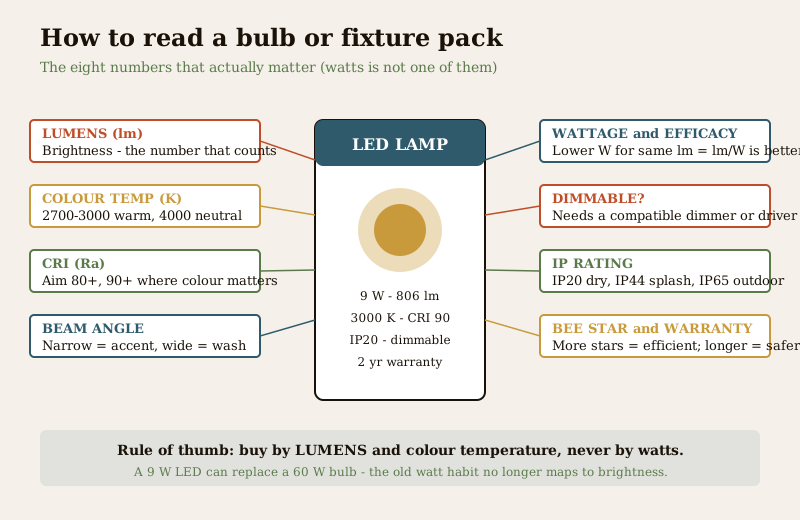
| On the pack | What it means | What to look for |
|---|---|---|
| Lumens (lm) | Actual brightness | The number that matters. Roughly: 400-500 lm for a bedside, 800 lm for a general bulb, 1200-1500+ lm for a kitchen or bright task |
| Watts (W) | Power drawn, not brightness | Only useful next to lumens. A good 9W LED gives what a 60W old bulb did |
| Efficacy (lm/W) | How efficient it is | Higher is better — 100+ lm/W is good for a plain LED. This is your running-cost signal |
| Colour temperature (K) | Warm vs cool white | 2700-3000K warm (living, bedroom, pooja); 4000K neutral (kitchen, study); 5000K+ cool (utility only) |
| CRI / Ra | How true colours look | Aim 80+ everywhere; 90+ where colour matters — wardrobes, kitchens, mirrors, art, pooja |
| Beam angle | How wide the light spreads | Narrow (15-24 deg) for accent/spot; wide (60-120 deg) for general wash |
| Dimmable? | Whether it can be dimmed | Only if it says so — and only with a compatible dimmer/driver (see below) |
| IP rating | Water/dust protection | IP20 for dry indoors; IP44 for bathroom zones and covered outdoors; IP65+ for open outdoor and wet |
| BEE star rating | Energy efficiency | More stars = less electricity for the same light |
| Warranty | The maker's confidence | 2 years is a floor for a decent LED; longer is a genuine quality signal |
If a listing hides the lumens, CRI or colour temperature and only shouts watts and price, treat that as a warning, not a bargain.
Buy by layer and by room — not one bulb at a time
The commonest buying mistake is filling a trolley with identical bulbs and hoping the room works out. Good lighting is layered — ambient, task, accent and decorative — and you should shop that way: decide the layers each room needs, then buy a fixture for each. The functional vs ambient vs accent lighting guide explains the layers; here is how they map to a shopping list.
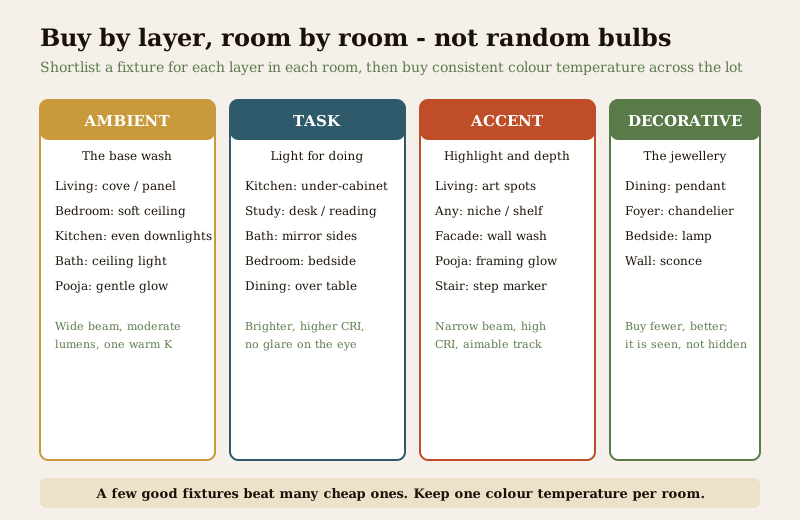
| Buy for the room | Ambient (base wash) | Task (light for doing) | Accent / decorative |
|---|---|---|---|
| Living | Cove or ceiling panel, warm | Reading lamp near the sofa | Art spots + one pendant or floor lamp |
| Bedroom | Soft, dimmable ceiling | Bedside lamps / wall reading lights | Optional cove or feature pendant |
| Kitchen | Even downlights, neutral | Under-cabinet strips over the counter | — |
| Bathroom | Ceiling light (IP-rated) | Vertical lights beside the mirror | — |
| Dining | Gentle ambient fill | Pendant/s over the table | The pendant is also the decorative piece |
| Pooja | Warm gentle glow | Focused light on the deity | Framing accent / small spots |
| Study / office | Neutral even ceiling | High-CRI desk lamp, no glare | — |
Two rules make a bought scheme feel designed rather than assembled. First, keep one colour temperature per room — mixing 3000K and 5000K bulbs in one space reads as a fault, not a feature. Second, buy a few good fixtures rather than many cheap ones; the money is better spent on the pieces you see and touch than on doubling the count. Room-by-room shopping lists live in the living room, bedroom, kitchen and pooja room guides.
Judging quality — what makes an LED last
An LED is only as good as its weakest part, and price alone will not tell you which is which. Two bulbs claiming the same lumens can differ hugely in how long they last and how true they stay.
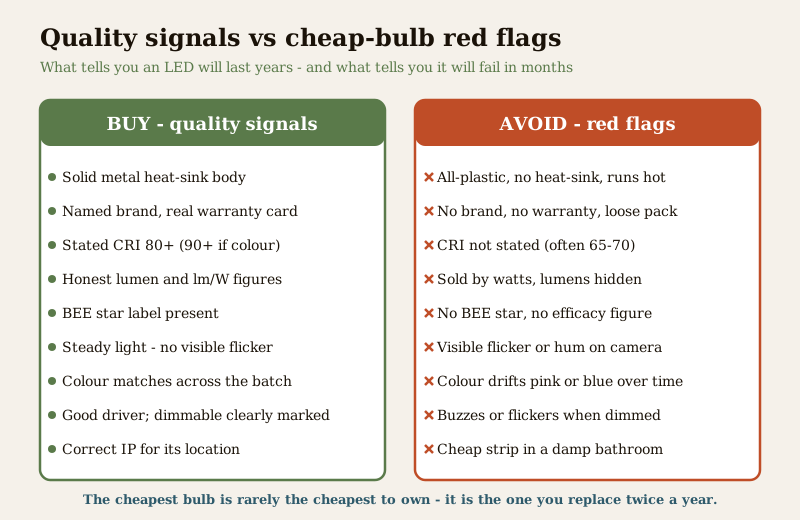
- Heat management. LEDs die from heat. A solid metal (aluminium) heat-sink body that stays warm-not-hot outlives an all-plastic bulb that runs scorching. Feel the weight — quality LEDs are heavier for a reason.
- The driver. The small electronic driver is what usually fails, not the LED chip. Known brands use better drivers; that is much of what you pay for, and much of why a cheap strip dies first.
- No flicker, no colour shift. Point your phone camera at a lit bulb — visible banding on screen means flicker your eyes are tiring on too. Good LEDs hold their colour for years; cheap ones drift pink or blue and mismatch their neighbours within months.
- Brand and warranty. For anything you cannot easily replace — recessed downlights, integrated fixtures, strips behind a false ceiling — buy a known LED brand with a real warranty. The label on the box is your only recourse when one fails in year two.
The technical depth on chips, binning and lumen maintenance sits in the LED lighting guide and the colour temperature and CRI guide — read those if you want to understand why these signals work.
Dimmable and smart — buy the pieces together
The most avoidable regret in lighting is buying a bulb, then wanting to dim it. A non-dimmable LED cannot be dimmed by any switch, and forcing it causes flicker, buzz and early failure. If dimming is even a maybe, buy a dimmable lamp or driver and a compatible dimmer at the same time — compatibility is specific, and a mismatched pair hums and stutters. The same goes for smart: decide upfront whether you want app or voice control, because a smart bulb, a smart switch, and a dumb bulb on a smart switch are three different purchases. Plan all of this in the lighting controls and dimming design guide before you buy, and hand the actual dimmer and switch wiring to a licensed electrician — see the modular switches guide and smart switches guide for the hardware.
Fixtures vs the bulb inside — the repairability trade-off
A modern fixture is one of two things, and it changes what happens when the light fails:
- Integrated LED — the LED is built in and cannot be swapped. Sleeker, often brighter and better sealed, but when it fails you replace the whole fixture. Fine for design-led pieces; risky if the brand or spares vanish.
- Replaceable lamp (a fitting with a standard base — B22, E27, GU10) — you change only the bulb when it dies. Less sleek, but cheap and forgiving to maintain for decades.
For hard-to-reach or long-life spots (a tall foyer, an outdoor fitting, a rarely-changed downlight), a replaceable-lamp fixture from a lasting brand is often the wiser buy. For a statement pendant you will love for its form, integrated is fine — just accept it as a design object, not an heirloom.
Imported vs Indian, and what to avoid
Indian brands now make genuinely good LEDs at every price point, with local warranty and easy re-buy — the sensible default for the bulk of a home. Reserve imported and designer fixtures for specific optics, finishes or statement pieces, and check three things first: voltage (220-240V), the fitting/base, and spare availability. A beautiful imported fixture with a proprietary lamp you cannot source in India becomes scrap the day it fails.
Finally, the buying mistakes that cost people the most:
- Buying by watts. The old habit that leaves rooms too dim or too bright. Buy by lumens.
- Ignoring CRI. Cheap bulbs skip it because it is low. Skin, food, fabric and pooja items look dull and off under CRI 70. Insist on 80+, 90+ where colour matters.
- Non-dimmable then wanting to dim. Decide first; buy the matched pair.
- The wrong IP near water. A dry-rated (IP20) light in a bathroom wet zone or open outdoors is a safety hazard, not just a durability problem — match the lighting safety and IP ratings guide.
- Cheap strips and mixed colour temperatures. The fastest way to make a nice room look cheap. Buy one good strip and one K per room.
- Buying on price alone. The cheapest bulb is usually the one you replace twice a year — count the cost of ownership, not the sticker.
Pre-purchase checklist
Before you pay, run down this list — it fits every fixture and bulb:
1. Lumens right for the job (not watts)?
2. Colour temperature consistent with the rest of the room?
3. CRI 80+ (90+ where colour matters)?
4. Beam angle suited to the layer — narrow accent, wide wash?
5. Dimmable if you want it, with a compatible dimmer bought together?
6. IP rating correct for the location (wet/outdoor)?
7. BEE star and honest efficacy (lm/W) stated?
8. Brand + warranty you can actually claim locally?
9. Integrated vs replaceable — can you maintain it in five years?
10. Seen it switched on before buying?
How it connects
- Plan before you buy: the complete guide to lighting (the pillar) and layered lighting guide tell you what each room needs.
- Budget it with the lighting cost guide and the lighting cost calculator; size brightness with the wattage to lumen calculator.
- Get the numbers right: colour temperature and CRI, the LED lighting guide, and the colour temperature selector.
- Run it cheaply and safely: energy-efficient lighting, lighting safety and IP ratings, and controls and dimming design.
- New to all of it? The homeowner's guide to lighting is the gentle start-here overview.
- Installation is a licensed electrician's job — never wire a dimmer, downlight or circuit yourself.
Key takeaways
- Read the pack, not the price. Lumens, colour temperature, CRI, beam angle, IP and warranty tell you almost everything — watts alone tells you nothing useful.
- Buy by lumens, keep one colour temperature per room, and shop by layer (ambient, task, accent, decorative), not by the bulb.
- A few good fixtures beat many cheap ones; quality shows in the heat-sink, the driver, the CRI figure, a known brand and a real warranty.
- Decide dimming and smart control before you buy — a non-dimmable LED can never be dimmed, and dimmer compatibility must be bought as a pair.
- Match the IP rating to the location — wet and outdoor lights are a safety matter, not just durability.
- Prefer replaceable-lamp fixtures for hard-to-reach or long-life spots; reserve integrated and imported pieces for considered design choices.
- Everything here is indicative — confirm against BEE labels, IS 16107, IP ratings and IS 3646 / NBC (SP 7:2026), get local quotes, and leave installation to a licensed electrician.
References
- National Building Code of India, NBC (SP 7:2026), Bureau of Indian Standards — general illumination and lighting provisions (named generally).
- IS 3646 — code of practice for interior illumination; recommended lux levels for domestic spaces (named generally).
- IS 16107 — performance requirements for LED luminaires and lamps (named generally).
- IS 10322 / IEC 60598 — luminaire safety and construction (named generally).
- IP ratings per IS / IEC 60529 — ingress protection classes for dust and water (IP20, IP44, IP65).
- Bureau of Energy Efficiency (BEE) — star rating and efficacy labelling for LED lamps.
- Licensed electrician — installation, dimmer and driver wiring, and any fixed-fixture or circuit work.
All brightness, colour, cost and durability figures here are indicative buying aids only; confirm the exact values on the product against BEE labels, IS 16107, IP ratings (IS/IEC 60529) and IS 3646 / NBC (SP 7:2026), get local quotes for price, and have a licensed electrician carry out all installation and wiring — electrical work is safety-critical.
Export this guide
Related Guides — Deep-dive reading
The Homeowner's Guide to Lighting Your Home: Start to Finish (2026)
The warm, plain-English capstone for the whole Lighting hub - how to light an Indian home from empty to done, in the order things actually happen, with the one rule that saves you the most money: decide the whole scheme before the electrician wires.
LightingKitchen Lighting Design for Indian Homes: Task-First & Shadow-Free (2026)
The design guide to lighting an Indian kitchen where task and safety matter most: the one rule that ends counter shadows, the ambient-task-accent layers, the right lux, neutral colour and high CRI so food looks true, and where wiring near water hands off to a licensed electrician.
LightingLighting Controls & Dimming Design: Zones, Scenes & Switches (2026)
How to plan lighting control so an Indian home's light is flexible — split each room's layers onto separate switches, choose dimmers that actually work with LEDs, add two-way switching where you need it, and layer scenes on top. The design decisions you must settle before the electrician wires.
LightingRelated Tools — Try Free
False Ceiling Cost Estimator
Live ₹/sqft across 8 ceiling types — POP, gypsum, designer, metal, PVC, wooden — with cove and spot lighting for 20 Indian cities.
Cost CalculatorBathroom Lighting Calculator
A lux-based bathroom lighting plan — total lumens, number of LED downlights, mirror task lighting and indicative wattage.
Bathroom CalculatorFull-Room BOQ — Living, Bedroom, Kitchen, Bath
Room-wise BOQ across living, bedrooms, kitchen, utility, and bathrooms with line-item pricing.
Full-Room BOQ